GCC Macro Daily(Beta Mode)
Aramco Q2 Profit Jumps 44% on Higher Oil Prices
Market Snapshot
| Asset | Level | Change |
|---|---|---|
| Saudi Aramco | 26.74 | -0.59% |
| MSCI Saudi | 37.83 | -0.29% |
| MSCI UAE | 19.97 | -0.15% |
| MSCI Qatar | 17.82 | +0.08% |
| MSCI Kuwait | 37.05 | -0.00% |
| Brent Crude | 79.86 | +0.63% |
| WTI Crude | 75.52 | -0.33% |
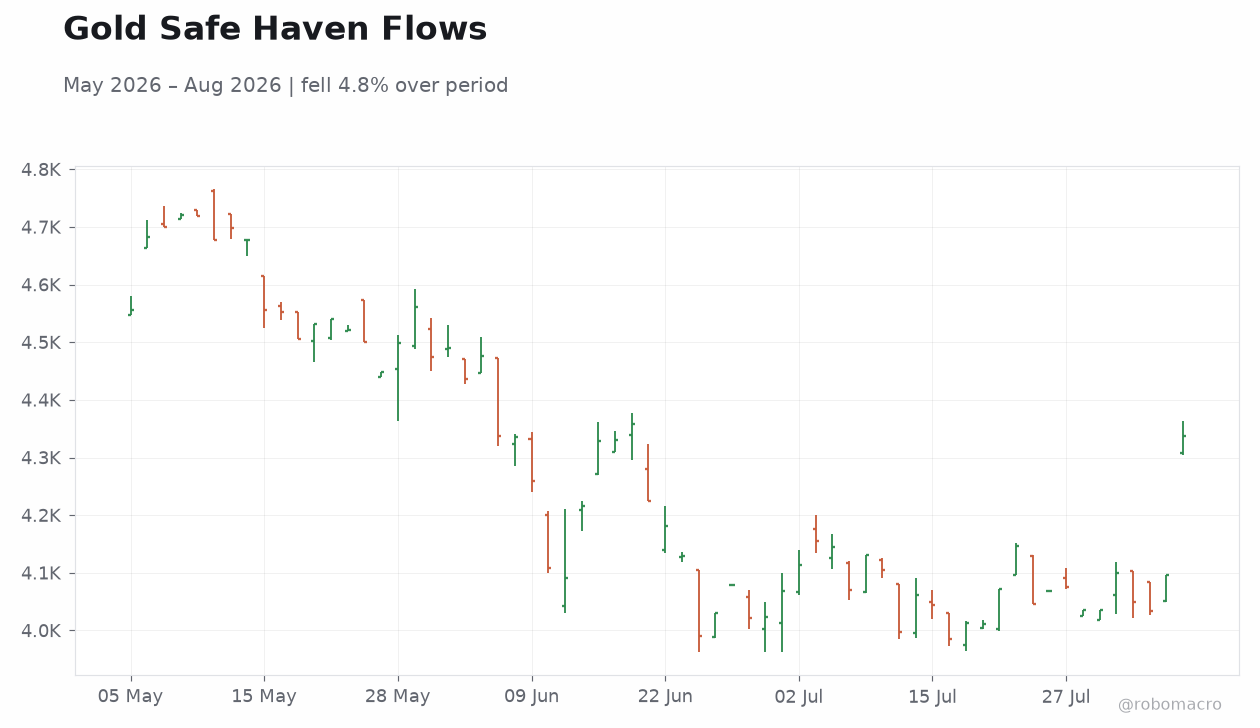
| Gold | 4,337.80 | +5.92% |
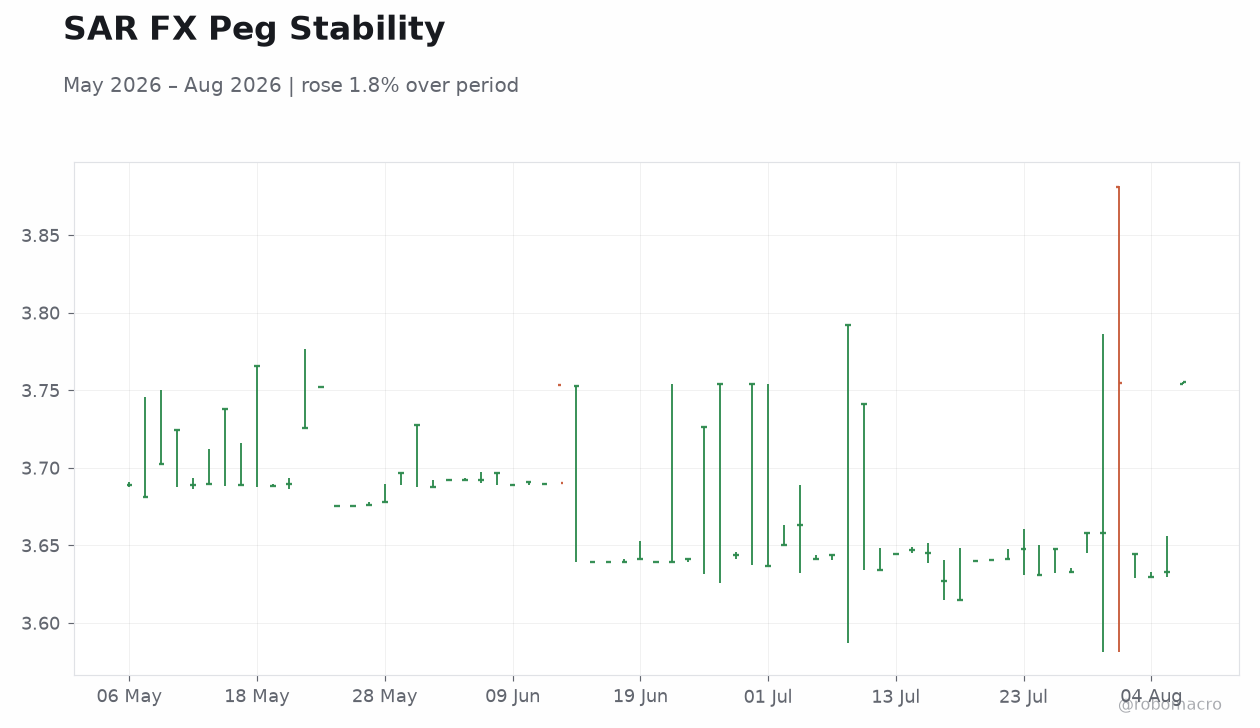
| USD/SAR | 3.76 | +3.38% |
| USD/AED | 3.67 | +0.00% |
| USD/KWD | 0.31 | -0.63% |
| Bitcoin | 64,487.90 | +0.67% |
Prior Economic Events
| Data | Prior | Cons | Actual |
|---|---|---|---|
| No events available | |||
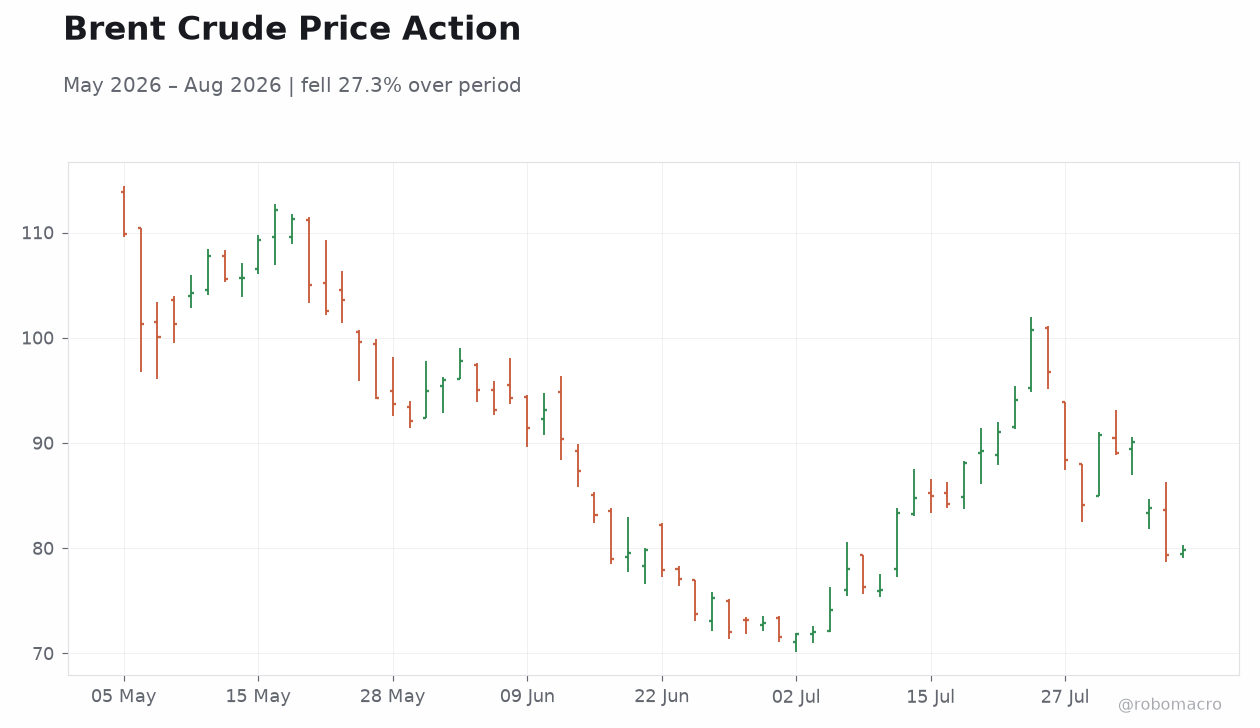 Brent Crude Price Action | Type: market_hloc | Price: 79.83 (2026-08-05) | Range: 71.57–112.1 | Trend(5pt): 109.9,93.71,77.9,84.95,79.83
Today's Economic Events
| Data | Prior | Cons | Time |
|---|---|---|---|
| No events available | |||
- Saudi Aramco Q2 net income rose 44% y/y on elevated crude prices despite lower volumes.
- Brent crude gained 0.63% to $79.86 while MSCI Saudi and UAE indices declined 0.29% and 0.15%.
- Gold surged 5.92% to $4,337.80 as regional conflict drove safe-haven demand across GCC assets.
Yesterday's Recap
Saudi Aramco reported a sharp 44% year-on-year increase in second-quarter net profit, driven by higher realized crude prices that offset reduced sales volumes amid ongoing Middle East hostilities. Equity markets across the GCC posted modest losses, with MSCI Saudi falling 0.29% to 37.83 and MSCI UAE declining 0.15% to 19.97, while MSCI Qatar edged up 0.08%. Brent crude rose 0.63% to $79.86 on supply-risk concerns after Iran-related disruptions at the Strait of Hormuz, though WTI crude slipped 0.33%.
Gold prices jumped 5.92% to $4,337.80, reflecting heightened geopolitical premium that also lifted USD/SAR by 3.38%. Saudi Arabia continued redirecting oil exports via the Red Sea after Hormuz closures, though capacity and security constraints on that route are tightening. Kuwait’s dinar strengthened 0.63% against the dollar, consistent with its basket peg amid regional volatility.
No major macroeconomic data releases occurred across the six GCC states.
The Day Ahead
Markets will monitor any further developments in US-Iran talks that could affect Strait of Hormuz reopenings and oil supply flows. Saudi Arabia and the UAE are expected to maintain elevated defense spending and energy rerouting operations in response to Houthi and proxy threats. Investors will watch Aramco’s ongoing production adjustments and any signals from OPEC+ members on quota compliance.
Broader GCC equity flows may remain sensitive to daily updates on Red Sea security and sovereign credit spreads. Central banks across the region are likely to keep policy settings aligned with the Federal Reserve while tracking interbank rates such as SAIBOR and EIBOR. No scheduled economic releases are listed for the GCC tomorrow.
Other Economic Notes
Elevated oil prices continue to support fiscal balances across GCC hydrocarbon exporters, yet the loss of more than 2.6 billion barrels since February underscores the scale of supply disruption. Saudi Arabia’s Vision 2030 and UAE 2050 diversification programs face renewed pressure as defense outlays rise and non-oil growth momentum slows. Regional airports in Dubai and Doha remain fully operational, supporting trade and tourism recovery, while Kuwait maintains restrictions.
<i>↓ p.2</i>