GCC Macro Daily(Beta Mode)
Oil Rises as Saudi Arabia Signs Defense Pact
Market Snapshot
| Asset | Level | Change |
|---|---|---|
| Saudi Aramco | 26.50 | -0.90% |
| MSCI Saudi | 37.65 | +0.00% |
| MSCI UAE | 19.74 | +0.41% |
| MSCI Qatar | 17.78 | +0.25% |
| MSCI Kuwait | 36.97 | +0.09% |
| Brent Crude | 83.55 | +1.29% |
| WTI Crude | 78.18 | +1.15% |
| Gold | 4,340.70 | +2.33% |
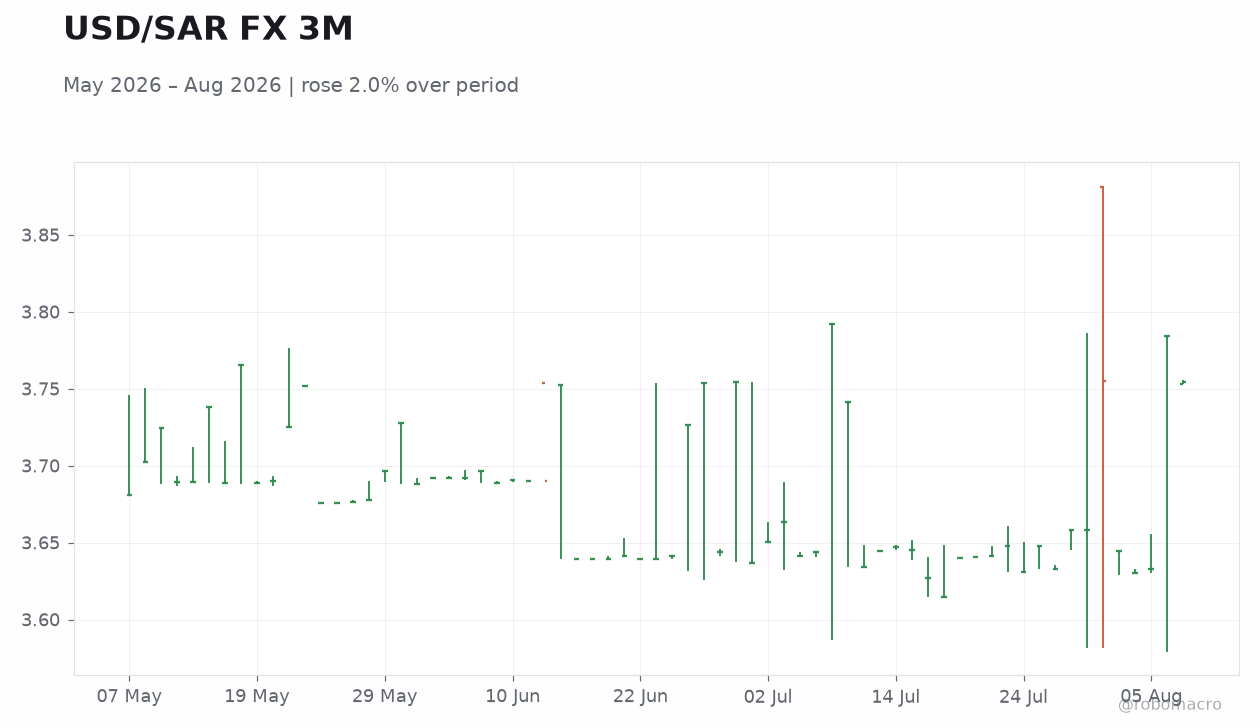
| USD/SAR | 3.75 | -0.78% |
| USD/AED | 3.67 | +0.04% |
| USD/KWD | 0.31 | -0.18% |
| Bitcoin | 64,766.03 | -0.18% |
Prior Economic Events
| Data | Prior | Cons | Actual |
|---|---|---|---|
| No events available | |||
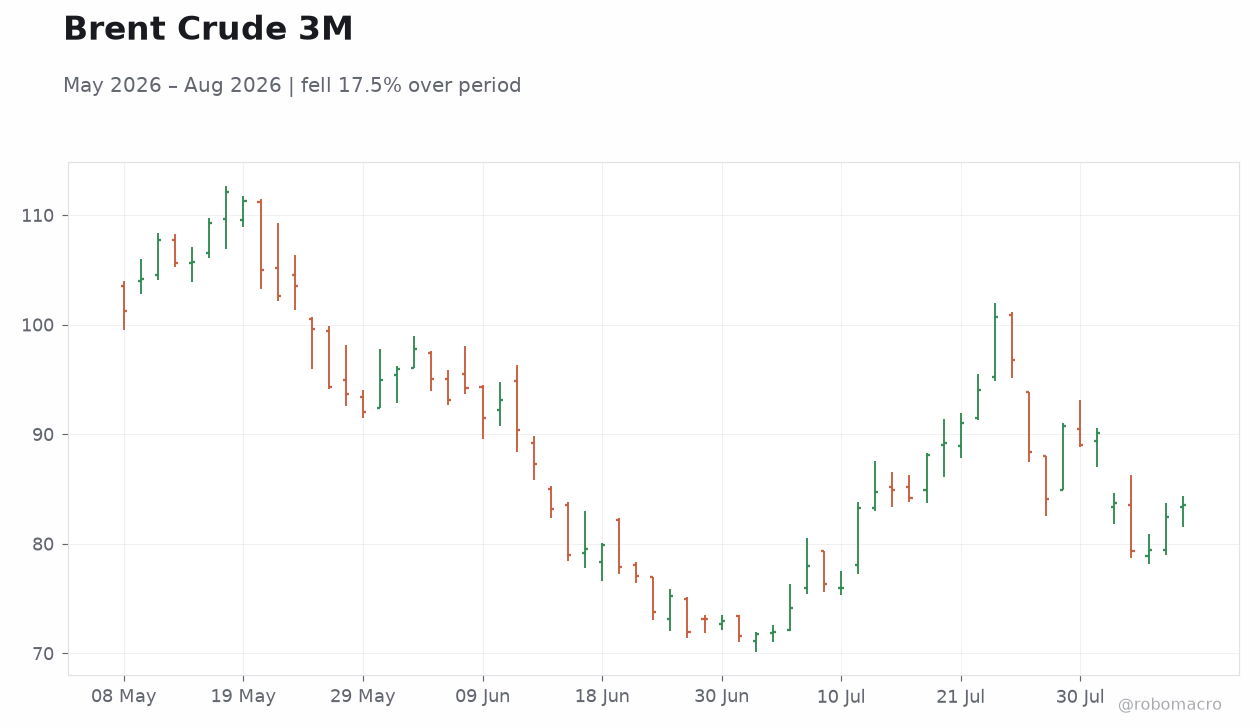 Brent Crude 3M | Type: market_hloc | Brent USD/bbl: 83.55 (2026-08-07) | Range: 71.57–112.1 | Trend(6pt): 101.3,94.98,77.08,84.95,79.45,83.55
Today's Economic Events
| Data | Prior | Cons | Time |
|---|---|---|---|
| No events available | |||
- Brent crude climbs 1.29% to $83.55 amid Red Sea and Hormuz tensions.
- MSCI UAE and Qatar post modest gains while Saudi Aramco slips 0.90%.
- Saudi Arabia, Turkey and Pakistan sign mutual defense pact; Houthi strikes continue.
Yesterday's Recap
Saudi Arabia led regional news flow with the signing of a trilateral defense pact alongside Turkey and Pakistan that commits each party to treat an attack on one as an attack on all. The agreement comes as Houthi forces launched fresh drone and missile strikes on Saudi-backed positions in Yemen, raising risks to Red Sea shipping lanes. Brent crude advanced 1.29% to $83.55 while WTI rose 1.15% to $78.18 on supply-disruption concerns.
Saudi Aramco shares fell 0.90% to 26.50 despite higher oil prices, while the MSCI Saudi index closed flat at 37.65. MSCI UAE gained 0.41% to 19.74 and MSCI Qatar rose 0.25% to 17.78 on steady energy flows. MSCI Kuwait edged up 0.09% to 36.97.
GCC FX pegs remained stable with USD/SAR at 3.75 and USD/AED at 3.67. Gold surged 2.33% to 4,340.70 as investors sought safe-haven assets amid escalating Gulf tensions. Bitcoin edged 0.18% lower to 64,766.
The Day Ahead
No major economic releases are scheduled across the six GCC states. Markets will monitor Houthi activity near the Bab al-Mandeb strait and any follow-through on the new Mecca defense pact. UAE crude loadings through the Strait of Hormuz remain elevated and will be watched for further resilience.
Regional equity volumes are expected to stay light ahead of the weekend. OPEC+ compliance rhetoric from Riyadh and Abu Dhabi will continue to set the tone for near-term oil prices. Elevated oil prices above $83 provide direct fiscal support to Saudi Arabia and the UAE while also lifting non-oil revenues through higher domestic spending.
Saudi diversification under Vision 2030 continues to attract foreign capital into defense and logistics despite regional security risks. Kuwait and Oman remain more exposed to oil-price volatility given slower non-hydrocarbon growth.
Other Economic Notes
Bahrain’s fiscal position benefits indirectly from higher Gulf-wide energy receipts through GCC support mechanisms. The new Saudi-Turkish-Pakistani pact adds a layer of regional deterrence that could reduce reliance on direct US security guarantees. Iran’s demands regarding Hormuz transit and reported missile activity near UAE waters keep shipping risk premia elevated.
Global LNG markets remain supported by Qatar’s North Field expansion, which is on track to add 16 million tons of annual capacity by year-end. <i>↓ p.2</i>