GCC Macro Daily(Beta Mode)
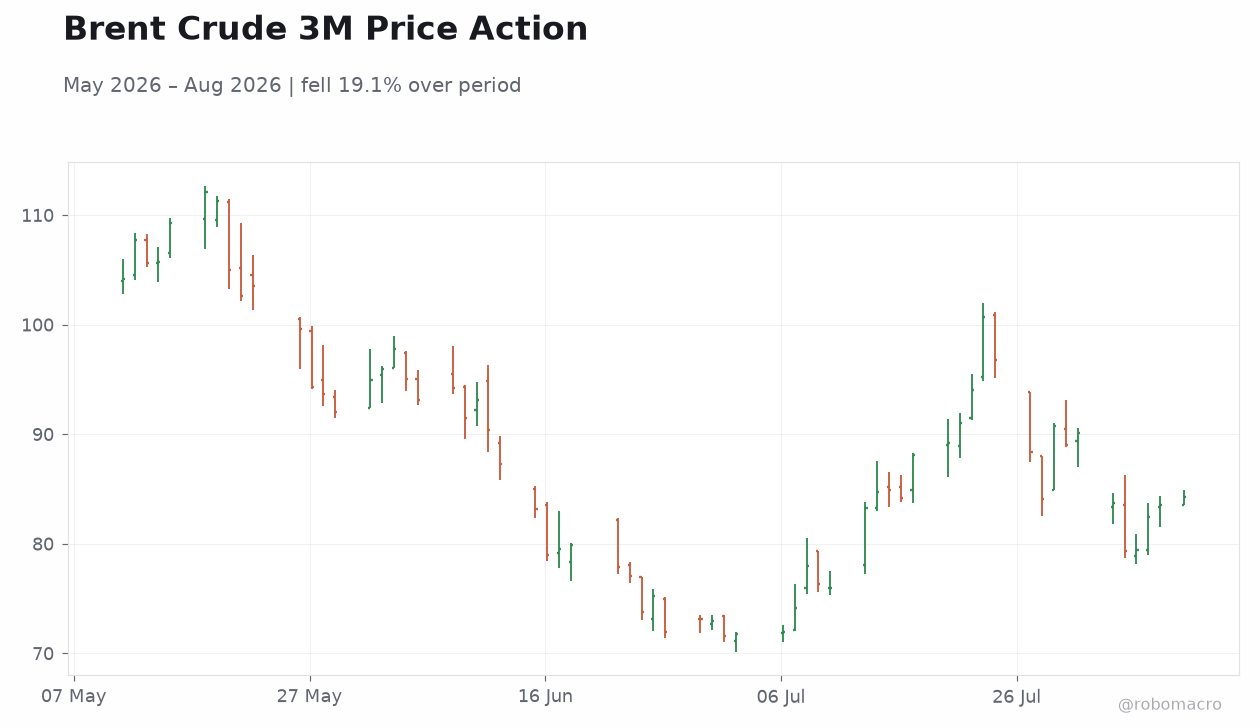
Houthi Claims Lift Oil, Weigh on Aramco
Market Snapshot
| Asset | Level | Change |
|---|---|---|
| Saudi Aramco | 26.50 | -0.90% |
| MSCI Saudi | 37.65 | +0.00% |
| MSCI UAE | 19.74 | +0.41% |
| MSCI Qatar | 17.78 | +0.25% |
| MSCI Kuwait | 36.97 | +0.09% |
| Brent Crude | 84.27 | +0.86% |
| WTI Crude | 78.67 | +0.63% |
| Gold | 4,378.60 | +0.87% |
| USD/SAR | 3.75 | +3.10% |
| USD/AED | 3.67 | +0.04% |
| USD/KWD | 0.31 | -0.70% |
| Bitcoin | 64,943.05 | +0.06% |
Prior Economic Events
| Data | Prior | Cons | Actual |
|---|---|---|---|
| No events available | |||
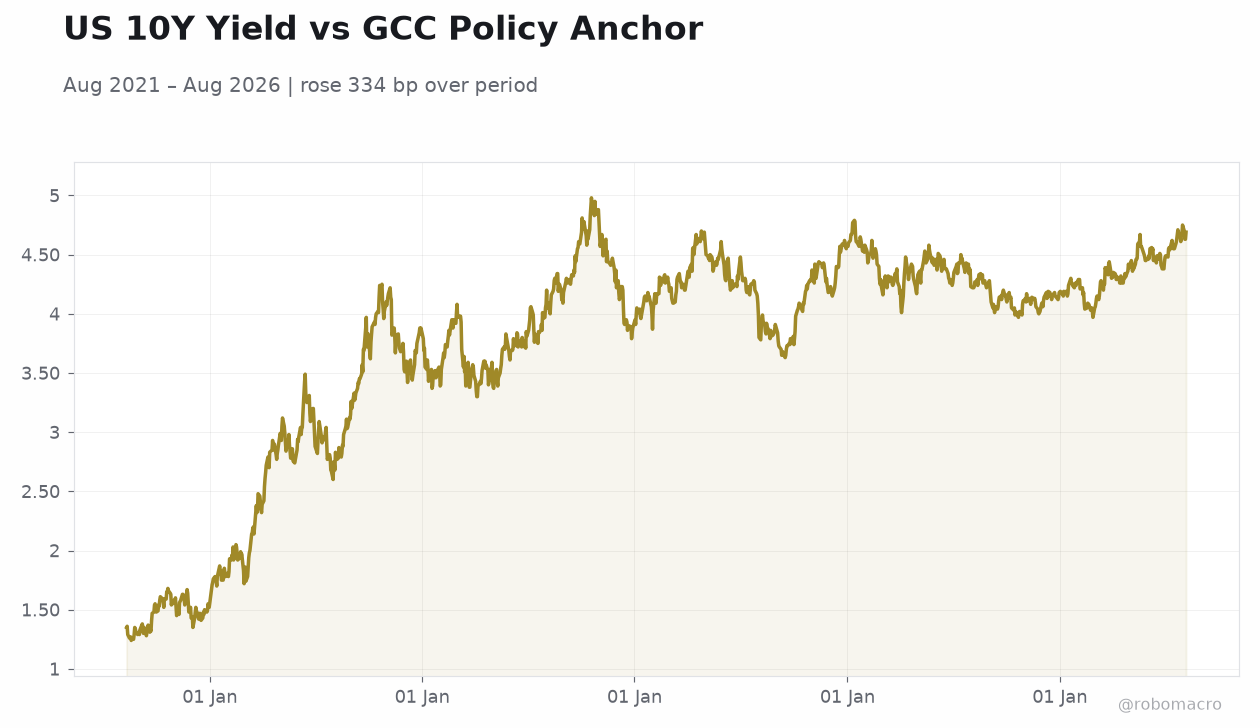 US 10Y Yield vs GCC Policy Anchor | Type: macro_line | Yield %: 4.69 (2026-08-06) | Range: 1.24–4.98 | Trend(6pt): 1.35,4.14,4.09,4.26,4.63,4.69
Today's Economic Events
| Data | Prior | Cons | Time |
|---|---|---|---|
| No events available | |||
- Houthi drone claim on Saudi refinery lifts Brent to $84.27 as Hormuz tensions rise
- MSCI UAE leads regional equities with +0.41% gain while Aramco falls 0.90%
- GCC currencies hold pegs steady; USD/SAR at 3.75 amid elevated risk premium
Yesterday's Recap
Regional equity markets showed mixed performance as geopolitical risks dominated trading. Saudi Aramco declined 0.90% to 26.50 after Iran-aligned Houthis claimed a drone strike on a Saudi oil facility, raising supply concerns. MSCI UAE advanced 0.41% to 19.74 while MSCI Qatar rose 0.25% to 17.78, reflecting investor preference for UAE exposure amid shipping resilience.
MSCI Kuwait gained 0.09% to 36.97 and MSCI Saudi was flat at 37.65. Brent crude gained 0.86% to 84.27 and WTI added 0.63% to 78.67 on heightened Hormuz risk. Gold climbed 0.87% to 4,378.60 as a safe-haven bid emerged.
USD/SAR held at 3.75 with a 3.10% move reflecting wider spreads, while USD/AED rose 0.04% to 3.67 and USD/KWD eased 0.70% to 0.31. Bitcoin edged up 0.06% to 64,943.05. No major macroeconomic data releases occurred across Saudi Arabia, UAE, Qatar, Kuwait, Oman or Bahrain.
The Day Ahead
Markets will monitor further Houthi statements and any Iranian moves on Strait of Hormuz navigation. UAE National Oil Company’s Umm Shaif gas project remains in focus for supply diversification. Traders await any OPEC+ commentary on production quotas given elevated prices.
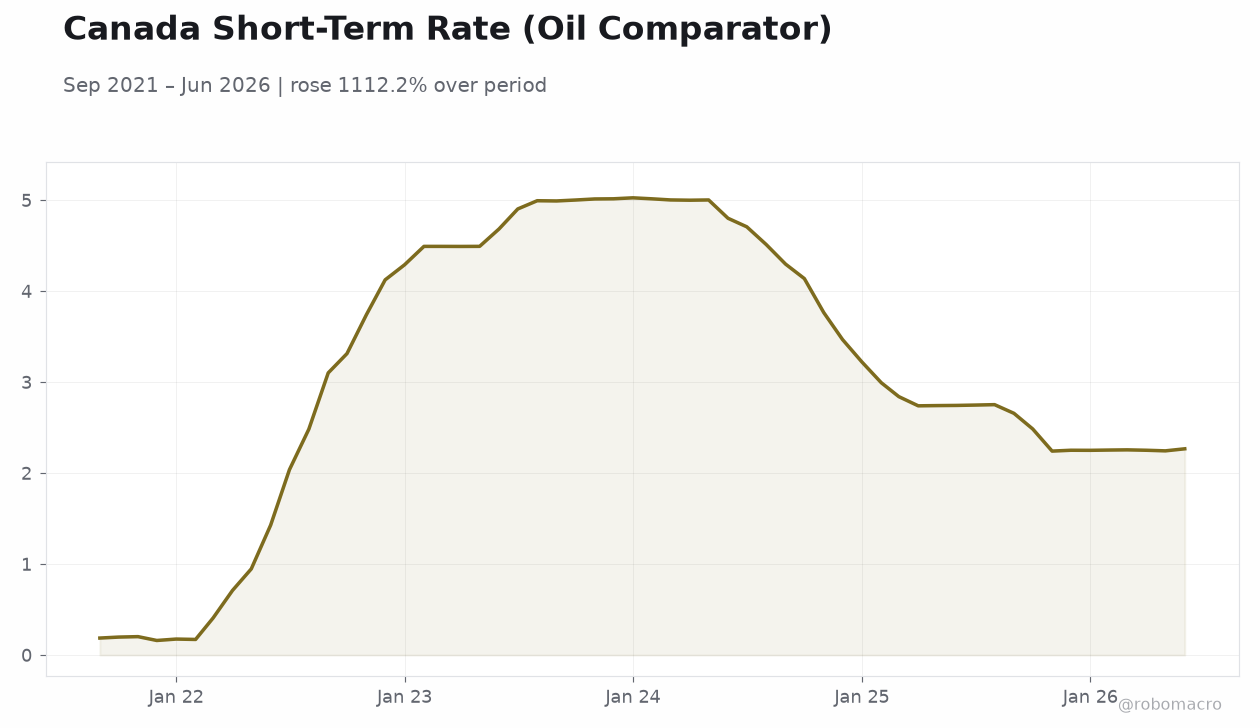
Regional central banks are expected to maintain policy alignment with the Federal Reserve amid stable interbank rates. Shipping data from the UAE will be watched for continued Hormuz throughput resilience. Broader sentiment hinges on de-escalation signals between Riyadh and Tehran-linked actors.
Other Economic Notes
Elevated oil prices support fiscal balances across GCC states but increase the urgency of non-oil diversification under Saudi Vision 2030 and UAE 2050 programs. Sovereign credit spreads have widened modestly on security risks, though reserve buffers remain adequate. Defense pacts signed by Saudi Arabia, Turkey and Pakistan may ease some procurement costs over time.
Egypt’s exposure to Red Sea disruptions highlights regional energy infrastructure vulnerabilities that could indirectly affect GCC export routes. Private equity interest in UAE energy and aesthetic sectors continues despite macro uncertainty.