GCC Macro Daily(Beta Mode)
Oil Rises on Hormuz Risks, Defense Pact Signed
Market Snapshot
| Asset | Level | Change |
|---|---|---|
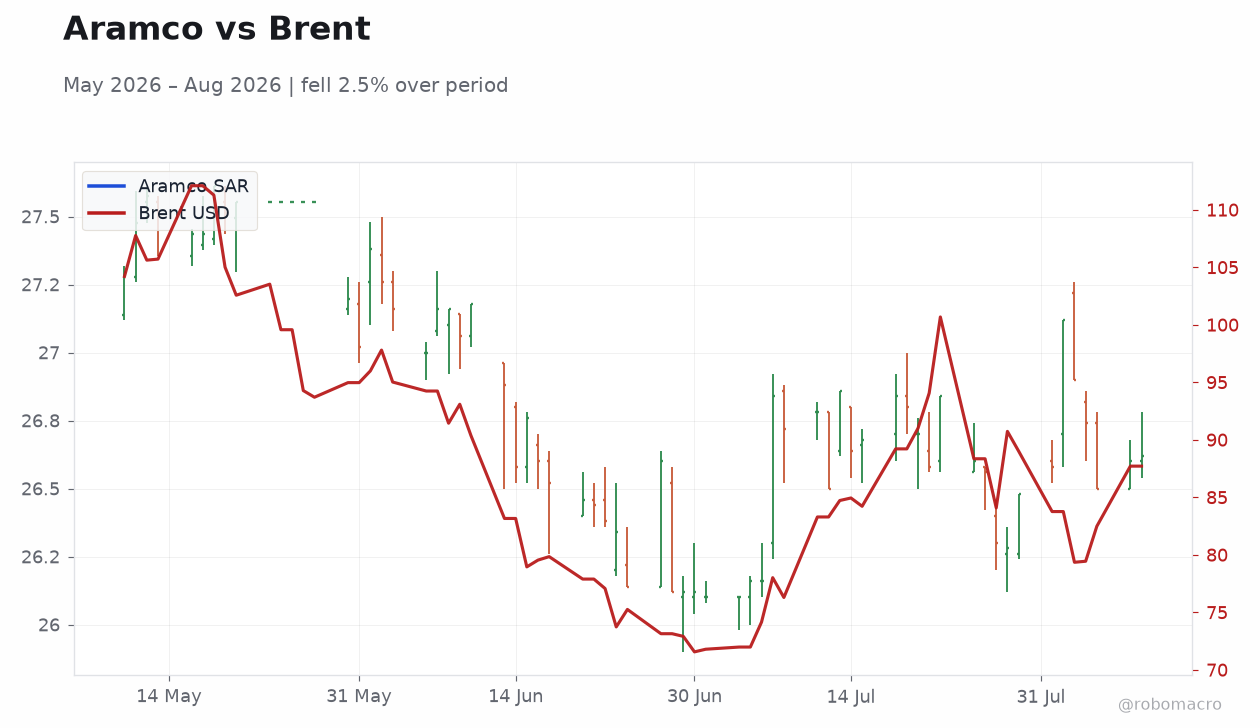
| Saudi Aramco | 26.60 | -0.08% |
| MSCI Saudi | 37.79 | -0.16% |
| MSCI UAE | 19.58 | -0.33% |
| MSCI Qatar | 17.66 | -0.37% |
| MSCI Kuwait | 37.24 | +0.00% |
| Brent Crude | 89.61 | +2.15% |
| WTI Crude | 83.97 | +2.24% |
| Gold | 4,471.20 | +2.51% |
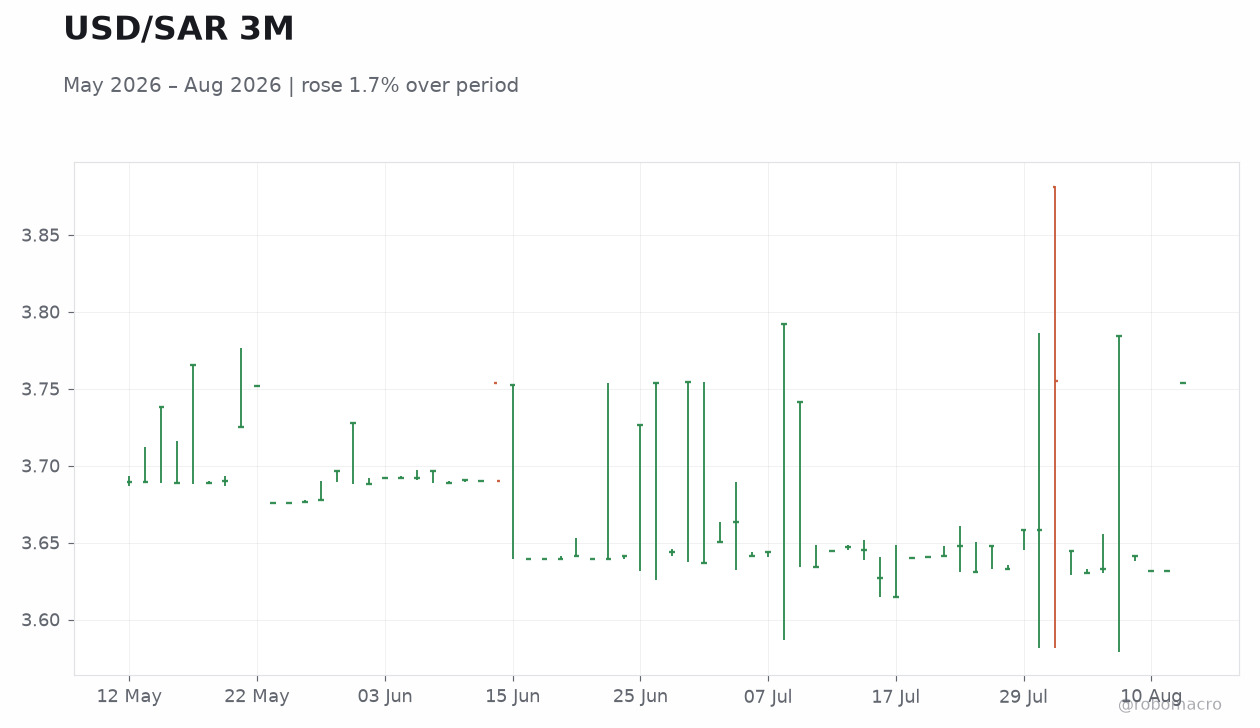
| USD/SAR | 3.75 | +3.36% |
| USD/AED | 3.67 | +0.02% |
| USD/KWD | 0.31 | -0.50% |
| Bitcoin | 63,733.67 | -0.28% |
Prior Economic Events
| Data | Prior | Cons | Actual |
|---|---|---|---|
| No events available | |||
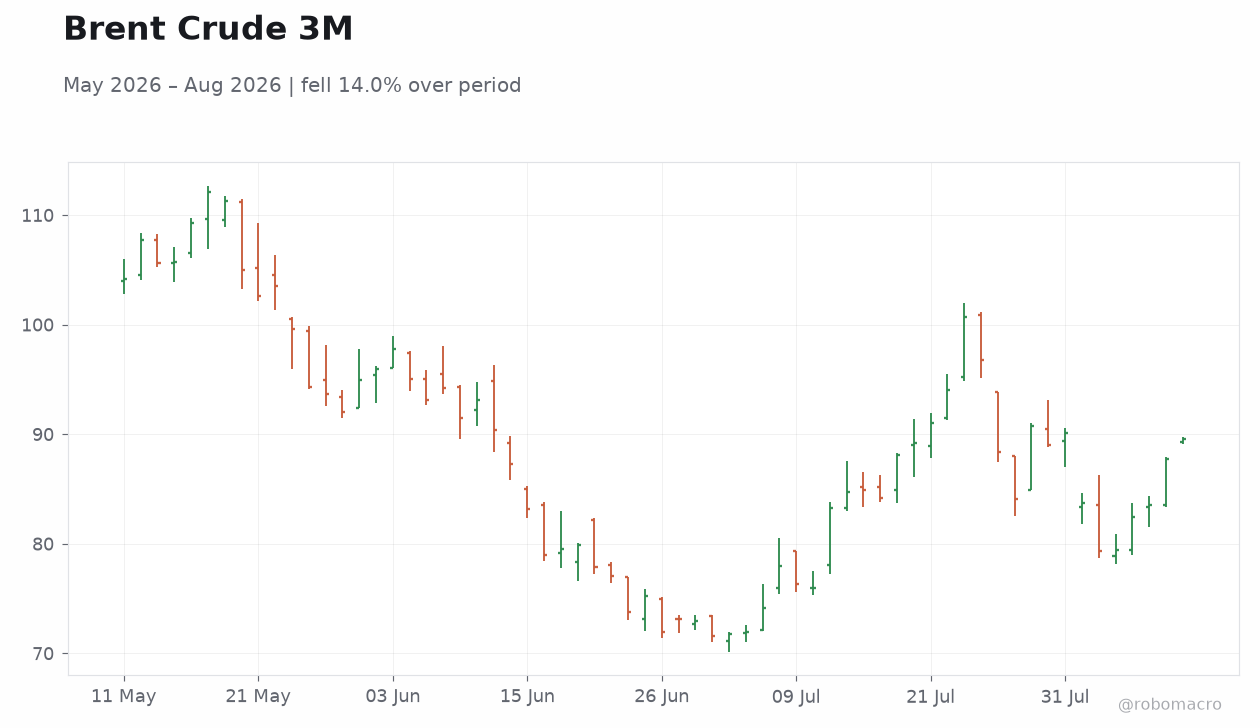 Brent Crude 3M | Type: market_hloc | Brent USD/bbl: 89.61 (2026-08-11) | Range: 71.57–112.1 | Trend(5pt): 104.2,97.81,71.99,91.01,89.61
Today's Economic Events
| Data | Prior | Cons | Time |
|---|---|---|---|
| No events available | |||
- Brent crude jumps 2.15% to $89.61 on Strait of Hormuz tensions
- Saudi Arabia, Turkey and Pakistan sign joint defense pact in Mecca
- MSCI UAE and Qatar indices fall 0.33% and 0.37% amid regional strains
Yesterday's Recap
Regional security developments dominated GCC markets on August 10. Saudi Arabia, Turkey and Pakistan formalized a mutual defense agreement in Mecca, committing each party to treat an attack on one as an attack on all. The pact signals a shift toward greater Gulf autonomy in security arrangements as tensions with Iran persist.
Brent and WTI crude rose sharply, with Brent gaining 2.15% to $89.61 and WTI advancing 2.24% to $83.97, reflecting supply-risk premiums tied to Hormuz and Bab al-Mandeb chokepoints. Saudi Aramco shares slipped 0.08% to 26.60 while MSCI Saudi declined 0.16%. UAE and Qatar equity indices posted larger losses of 0.33% and 0.37%, respectively, as investors weighed potential disruptions to energy exports.
Gold climbed 2.51% to 4,471.20, underscoring safe-haven demand. Kuwait’s MSCI index remained flat. No major macroeconomic data releases occurred across the six GCC economies.
Iran stated a deal on Strait of Hormuz control with Oman is close but will not open the waterway unilaterally. UAE crude exports continued at pace despite risks, positioning the emirates as a key supplier. Houthi activity and strikes on infrastructure added to supply concerns across the region.
The Day Ahead
The economic calendar remains light across Saudi Arabia, UAE, Qatar, Kuwait, Oman and Bahrain. Markets will continue to monitor developments around the Strait of Hormuz and any follow-through from the Mecca defense agreement. Oil-price volatility is expected to stay elevated given ongoing regional frictions.
Sovereign credit spreads and interbank rates such as SAIBOR and EIBOR will be watched for any signs of stress. Investors will also track global risk sentiment for spillovers into GCC equity and FX markets. UAE crude flows through Hormuz have defied risks in recent months, providing a buffer for global supply.
Broader energy markets face uncertainty from attacks on Russian infrastructure and Red Sea disruptions. Defense cooperation among Saudi Arabia, Turkey and Pakistan could alter regional power balances and reduce reliance on external security guarantees.
Other Economic Notes
Elevated oil prices provide near-term fiscal relief for GCC governments but also highlight the urgency of diversification programs. Saudi Vision 2030 and UAE 2050 initiatives continue to attract foreign direct investment despite security concerns. <i>↓ p.2</i>