GCC Macro Daily(Beta Mode)
Hormuz Attacks Condemned as Oil Edges Higher
Market Snapshot
| Asset | Level | Change |
|---|---|---|
| Saudi Aramco | 26.48 | -0.45% |
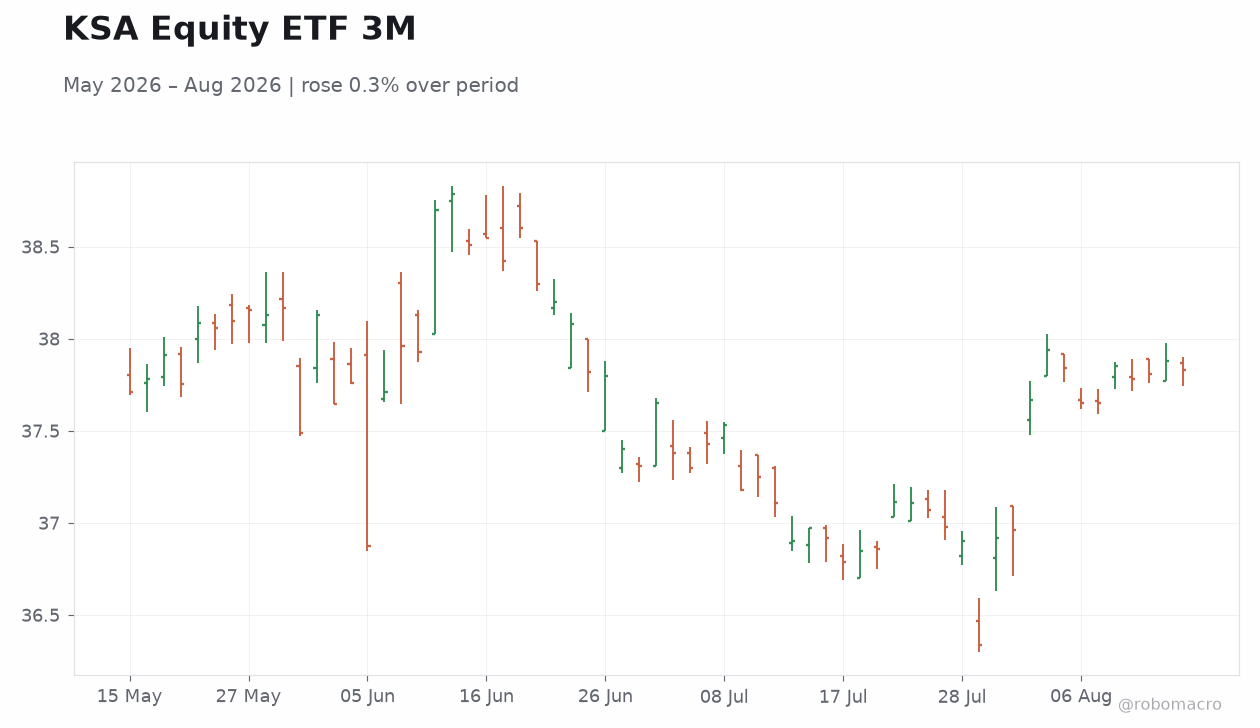
| MSCI Saudi | 37.83 | -0.13% |
| MSCI UAE | 19.62 | +0.15% |
| MSCI Qatar | 17.64 | -0.03% |
| MSCI Kuwait | 37.38 | -0.33% |
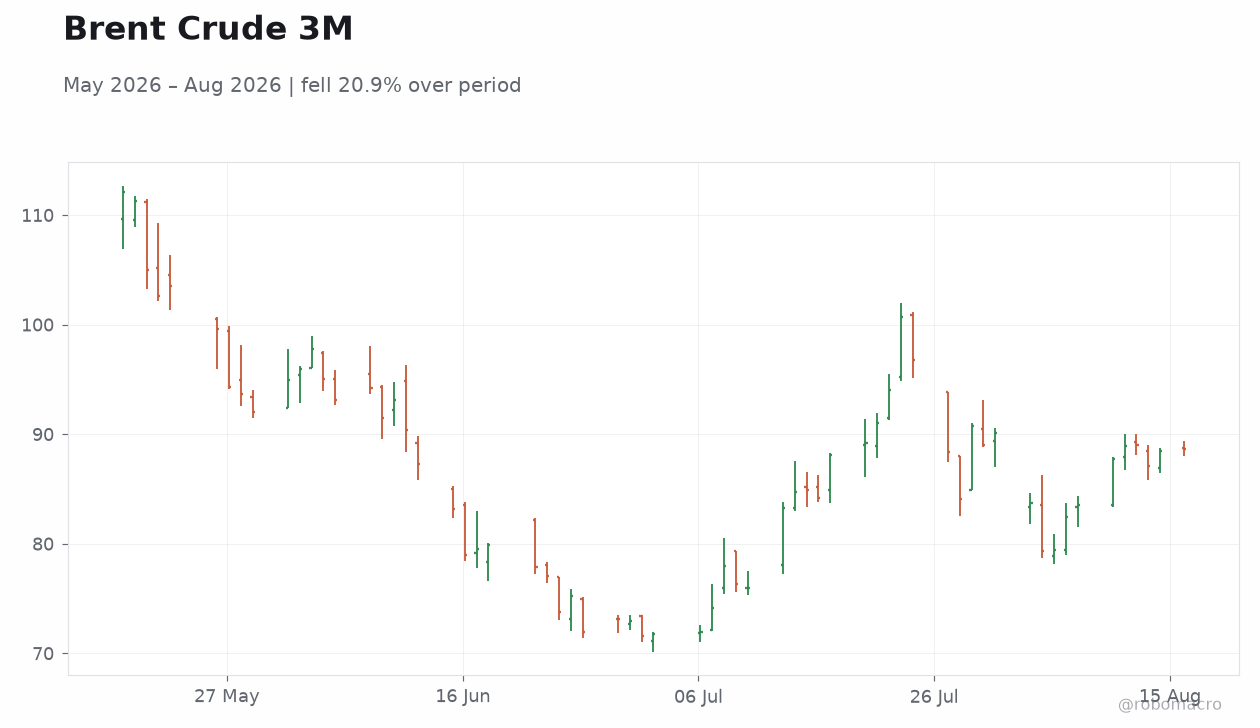
| Brent Crude | 88.86 | +0.38% |
| WTI Crude | 82.37 | -0.04% |
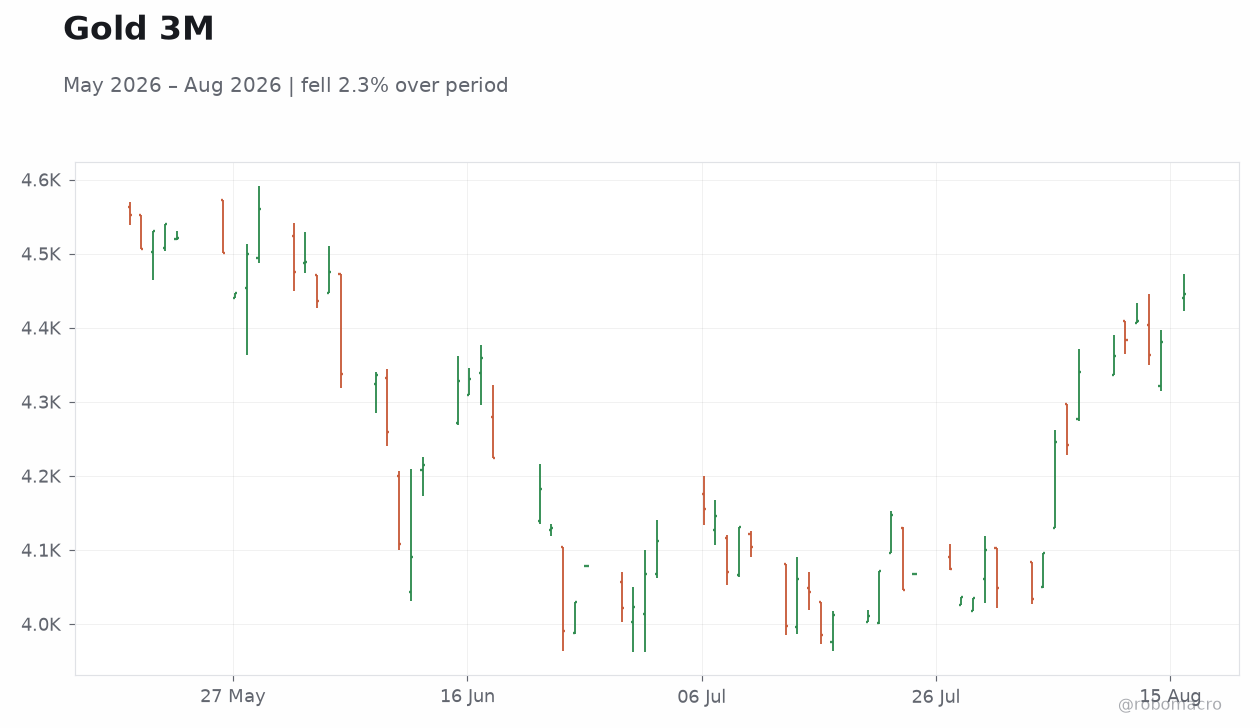
| Gold | 4,450.30 | +1.60% |
| USD/SAR | 3.75 | +3.79% |
| USD/AED | 3.67 | +0.03% |
| USD/KWD | 0.31 | -0.36% |
| Bitcoin | 63,324.39 | +0.48% |
Prior Economic Events
| Data | Prior | Cons | Actual |
|---|---|---|---|
| No events available | |||
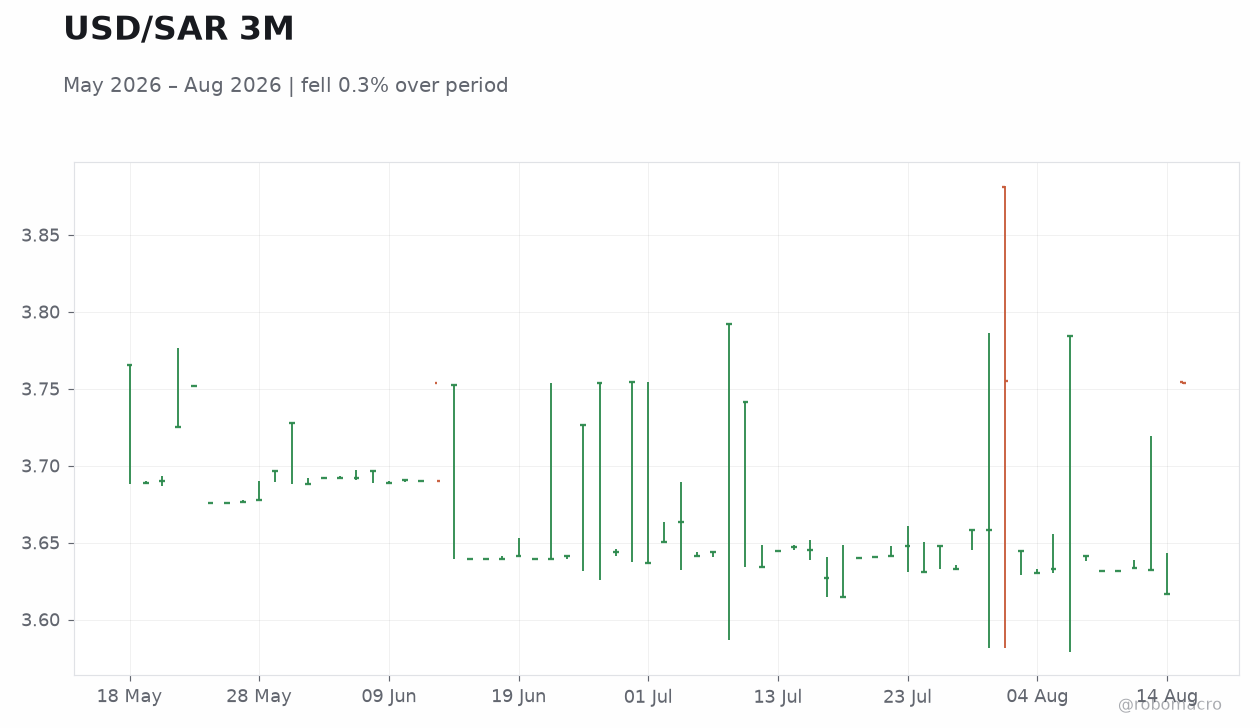 USD/SAR 3M | Type: market_hloc | Rate: 3.754 (2026-08-17) | Range: 3.615–3.792 | Trend(6pt): 3.765,3.689,3.637,3.648,3.617,3.754
Today's Economic Events
| Data | Prior | Cons | Time |
|---|---|---|---|
| No events available | |||
- GCC states condemn Iranian attack on UAE tankers in Strait of Hormuz
- Brent crude rises 0.38% to $88.86 while MSCI UAE gains 0.15%
- Gold jumps 1.60% to $4,450.30 on heightened supply-risk premium
Yesterday's Recap
Qatar, Saudi Arabia, and Kuwait joined the Arab League and Arab Parliament in condemning the attack on two UAE oil tankers in the Strait of Hormuz, underscoring unified regional security concerns. UAE state oil company confirmed the incident, which raised immediate questions over tanker traffic through the chokepoint that handles most GCC crude exports. Saudi POS spending remained above $3.5bn despite a weekly slowdown, indicating resilient consumer activity in the kingdom’s non-oil sector.
Equity markets showed mixed moves, with MSCI UAE advancing 0.15% while MSCI Saudi slipped 0.13% and MSCI Kuwait fell 0.33%. Brent crude posted a modest gain of 0.38% to $88.86, reflecting limited immediate supply disruption. Gold surged 1.60% to $4,450.30 as investors sought safe-haven assets amid the geopolitical flare-up.
No major macroeconomic data releases occurred across the GCC on 15 August. Saudi Arabia continued advancing Vision 2030 digital-infrastructure projects through global partnerships aimed at diversifying growth, while authorities set water-conservation fines of up to SR200,000 and banned mobile vendors from nine locations.
The Day Ahead
No scheduled economic releases or central-bank meetings are listed for 16 August across the six GCC states. Markets will continue to monitor tanker traffic through the Strait of Hormuz following yesterday’s incident and the coordinated condemnations. Saudi Arabia’s ongoing digital-economy initiatives and water-conservation measures may generate additional policy commentary.
Regional airlines face potential flight disruptions linked to the security situation, with Emirates, Etihad, and Air Arabia issuing updated advisories. Investors will watch Brent and WTI crude for any sustained risk premium that could support fiscal revenues across the GCC. Heavy thunderstorms are forecast across Saudi Arabia through Saturday, while UAE gaming authority signed a deal with Abu Dhabi financial regulator to strengthen oversight.
Other Economic Notes
Oil-price stability remains the dominant macro driver for all six GCC economies given their heavy reliance on hydrocarbon revenues. Saudi Arabia continues to advance Vision 2030 digital-infrastructure projects through global partnerships aimed at diversifying growth. UAE authorities are strengthening oversight of the gaming sector via a new agreement between the gaming authority and Abu Dhabi’s financial regulator.
<i>↓ p.2</i>