| Asset | Level | Change |
|---|---|---|
| Saudi Aramco | 26.58 | +0.23% |
| MSCI Saudi | 38.06 | +0.61% |
| MSCI UAE | 19.68 | +0.31% |
| MSCI Qatar | 17.37 | -1.53% |
| MSCI Kuwait | 36.95 | -1.15% |
| Brent Crude | 91.75 | +0.97% |
| WTI Crude | 84.83 | +0.39% |
| Gold | 4,405.90 | -0.27% |
| USD/SAR | 3.75 | +3.34% |
| USD/AED | 3.67 | +0.03% |
| USD/KWD | 0.31 | -0.37% |
| Bitcoin | 64,345.51 | -0.25% |
| Data | Prior | Cons | Actual |
|---|---|---|---|
| No events available | |||
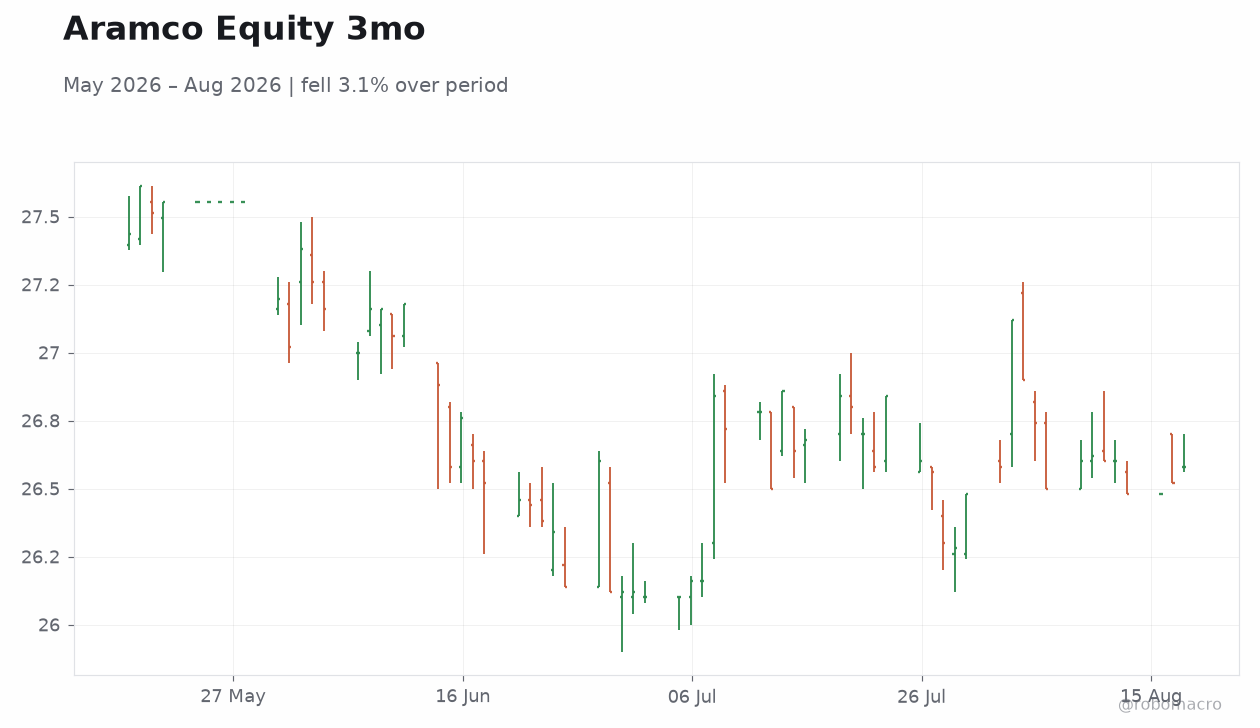
Aramco Equity 3mo | Type: market_hloc | Price: 26.58 (2026-08-18) | Range: 26.1–27.61 | Trend(6pt): 27.44,27.16,26.12,26.84,26.48,26.58
| Data | Prior | Cons | Time |
|---|---|---|---|
| No events available | |||
Saudi equity markets advanced with Aramco gaining 0.23% to 26.58 and MSCI Saudi rising 0.61% to 38.06 on heavy energy and banking flows. PIF’s near-$100bn contribution to the non-oil economy highlighted continued diversification momentum under Vision 2030. Aramco and Maaden signed a joint venture to explore minerals across 10% of Saudi territory, expanding hard-rock mining capacity.
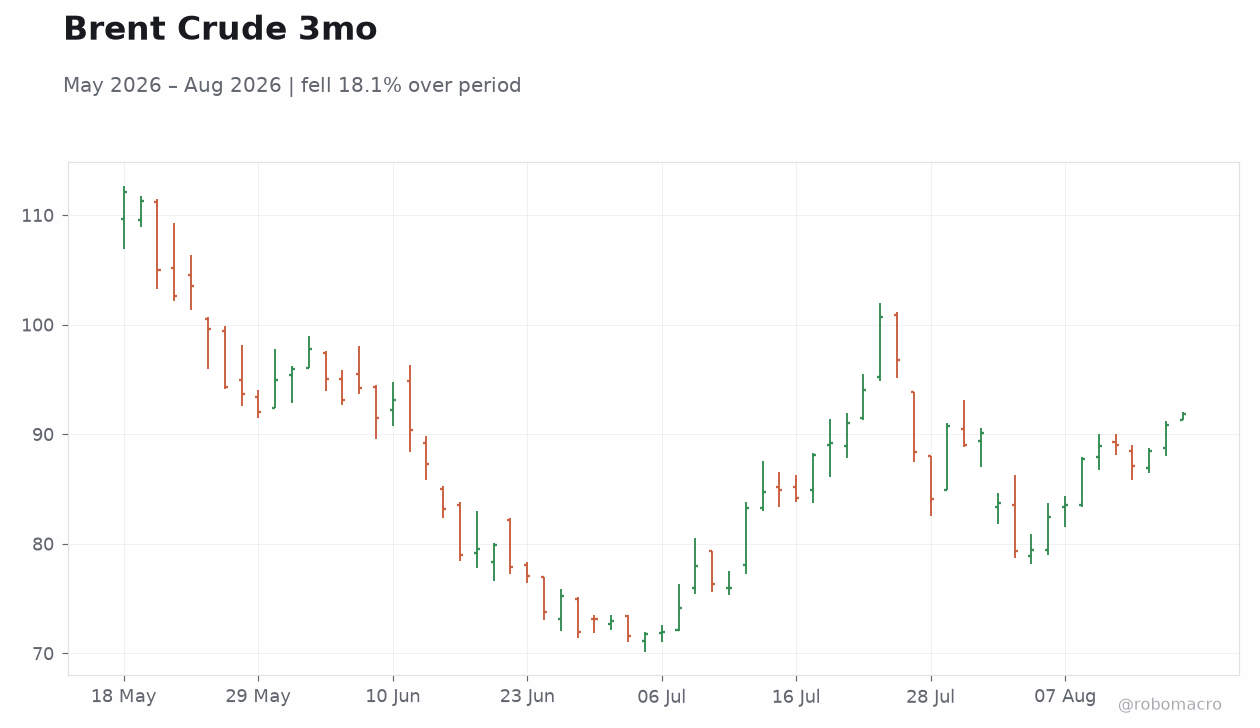
MSCI UAE edged 0.31% higher to 19.68, supported by real-estate and financial names in Dubai. In contrast, MSCI Qatar fell 1.53% to 17.37 and MSCI Kuwait declined 1.15% to 36.95 amid profit-taking in banks. Brent crude settled at $91.75 after a 0.97% gain, reinforcing fiscal revenue expectations across GCC exporters.
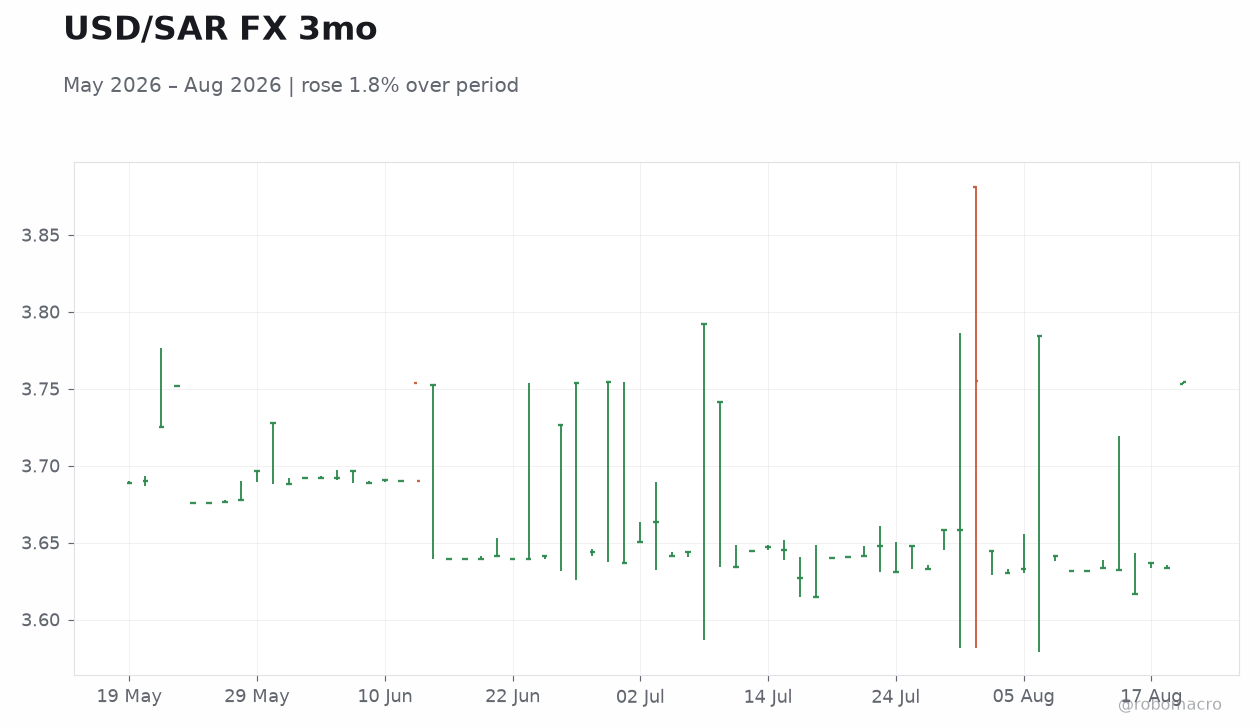
USD/SAR held at 3.75 while USD/AED stayed at 3.67, confirming peg stability. Gold eased 0.27% to 4,405.90 as safe-haven demand moderated. WTI crude added 0.39% to 84.83.
Bitcoin slipped 0.25% to 64,345.51 with limited regional impact. Saudi Arabia’s move of crude sales to Omani waters underscored Red Sea routing adjustments. Microsoft Arabia outlined AI priorities focused on digital infrastructure and global partnerships.
UAE traffic and flight disruptions from ongoing regional tensions affected Deira, Dubai Airport and Sharjah routes, while Emirates NBD launched the UAE’s first Transition Finance Framework.
No major data releases are scheduled across the six GCC economies today. Markets will monitor Brent crude movements for signals on OPEC+ compliance ahead of the September ministerial meeting. Regional investors may watch Aramco-Maaden JV updates and any fresh PIF project announcements.
Geopolitical developments in the Red Sea and Strait of Hormuz remain key risk factors for oil supply and sovereign spreads. UAE and Saudi equity flows are expected to stay sensitive to global energy sentiment. Quiet calendar leaves room for follow-through on yesterday’s mineral and digital-economy news.
Saudi Arabia and Sudan established a Joint Coordination Council to explore Red Sea economic links. Qatar’s plans for a Gulf-specific electric vehicle factory advance regional clean-energy manufacturing. Broader investor attention turns to any fresh PIF 2025 annual report details on growth metrics.
Subscribe to GCC Macro Daily and get each new issue delivered to your inbox.
Already a member? Visit robomacro.com to log in and manage subscriptions, or use Forgot Password to set a password.
Brent Crude 3mo | Type: market_hloc | Price USD: 91.83 (2026-08-18) | Range: 71.57–112.1 | Trend(5pt): 112.1,93.1,71.99,84.09,91.83
USD/SAR FX 3mo | Type: market_hloc | Rate: 3.754 (2026-08-19) | Range: 3.615–3.792 | Trend(6pt): 3.688,3.691,3.65,3.631,3.637,3.754
Saudi Arabia’s non-oil diversification continues to accelerate through PIF capital deployment and new mining partnerships. Innovation and digital infrastructure investments are reshaping the kingdom’s growth model away from hydrocarbons. UAE retail and transport sectors show resilience with new metro-based store formats and transition-finance frameworks.
Broader GCC economies benefit from elevated oil prices that support fiscal balances and FX reserves. Regional equity divergence underscores varying exposure to energy versus banking cycles. Aramco and Maaden’s joint venture targets mineral exploration across 10% of Saudi Arabia, reviving energy supply chains through offshore rig restarts.
UAE expats plan Tk 1,000cr investments in Bangladesh, extending GCC capital reach. Saudi academic proposals to turn the Red Sea into an economic bridge with Sudan add to cross-border connectivity themes.
Brent’s advance to $91.75 reflects sustained OPEC+ output discipline and Red Sea routing adjustments by Saudi crude sales. Global energy equities offset bond-market jitters, providing a supportive backdrop for GCC hydrocarbon revenues. Gold’s modest decline to $4,405.90 signals reduced safe-haven demand amid contained geopolitical risk premia.
Bitcoin’s 0.25% dip to $64,345.51 had negligible spillover into regional portfolios. Egypt-UAE talks on electricity and renewables highlight growing cross-border clean-energy cooperation. Broader emerging-market flows remain cautious ahead of any Fed signals on rate paths that mechanically influence GCC monetary settings.
Dubai and HKMA co-hosted the third Joint Climate Finance Conference, while Qatar advances plans for a Gulf climate-specific electric vehicle factory. Santos targets Papua LNG go-ahead after first-half profit dips, illustrating global LNG project timelines relevant to Qatar’s North Field expansion.
All six GCC central banks maintained policy rates aligned with the Fed, preserving currency pegs. SAMA and CBUAE kept interbank rates steady with SAIBOR and EIBOR showing no material shifts. QCB and CBK held policy unchanged, while Kuwait’s dinar basket peg continued to track its reference currencies without adjustment.
CBO and CBB likewise left rates on hold, supported by adequate FX reserve coverage. No divergences emerged among the six institutions, reflecting coordinated commitment to USD-linked stability. Interbank liquidity remained ample across Saudi, UAE, and Qatari markets.
USD/KWD eased 0.37% to 0.31, consistent with basket mechanics.