GCC Macro Daily(Beta Mode)
Oil Declines as GCC Equities Advance
Market Snapshot
| Asset | Level | Change |
|---|---|---|
| Saudi Aramco | 26.10 | -0.68% |
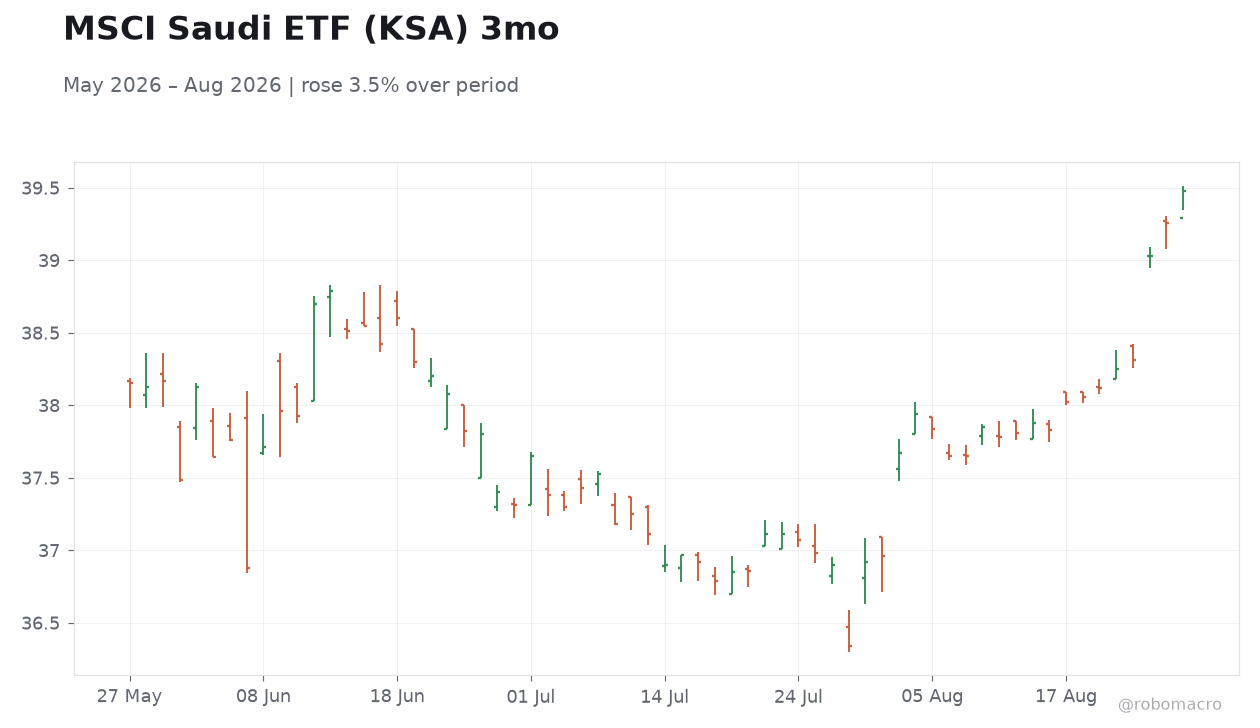
| MSCI Saudi | 39.38 | +0.32% |
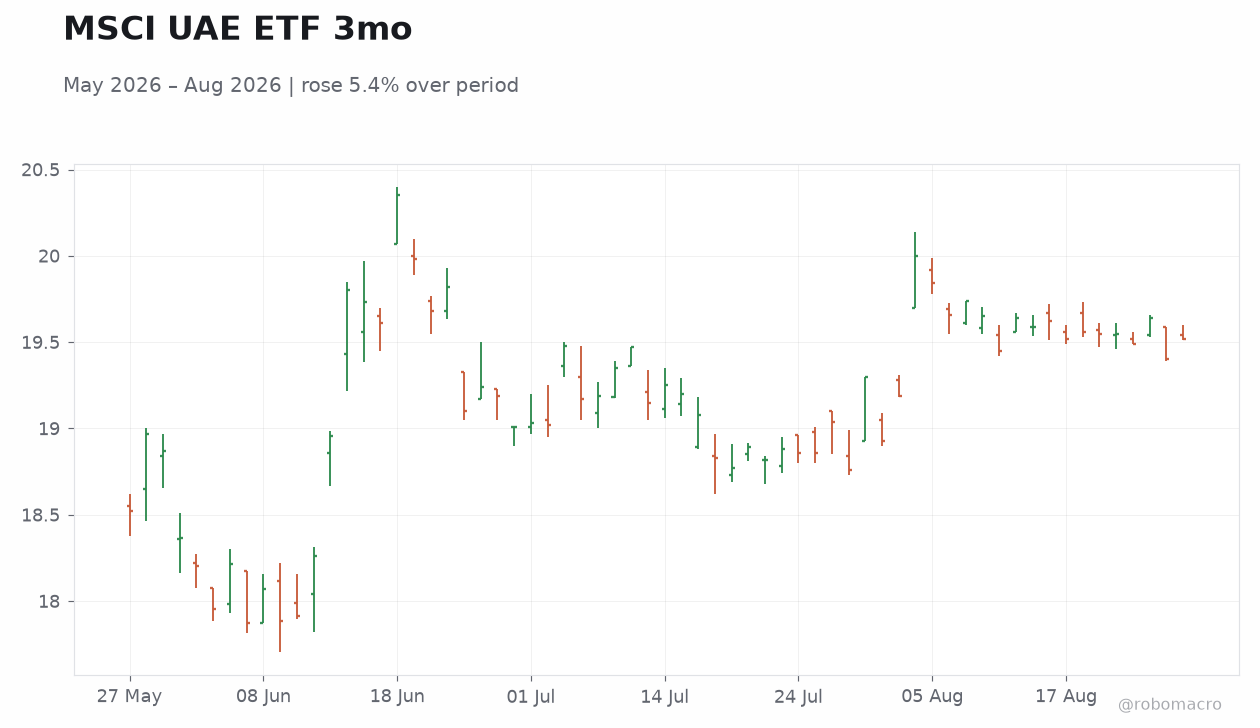
| MSCI UAE | 19.57 | +0.88% |
| MSCI Qatar | 17.30 | +0.45% |
| MSCI Kuwait | 37.64 | +0.00% |
| Brent Crude | 86.32 | -2.55% |
| WTI Crude | 81.69 | -0.81% |
| Gold | 4,687.00 | +1.05% |
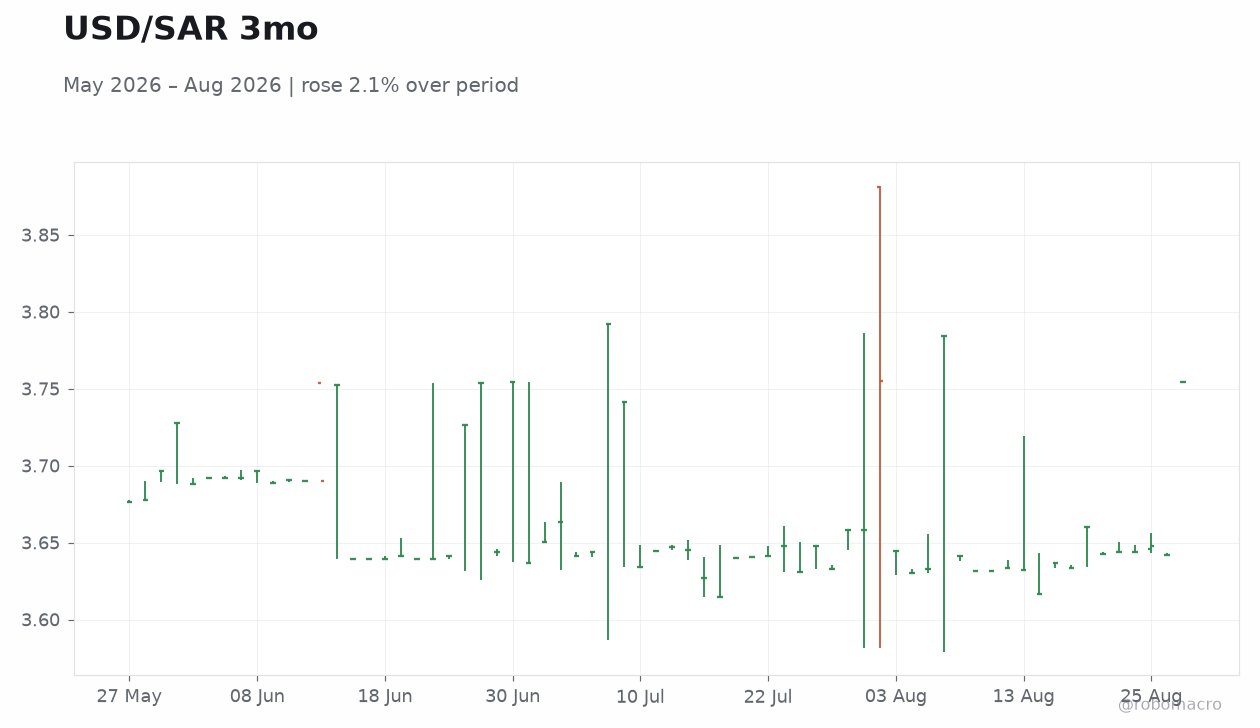
| USD/SAR | 3.75 | +3.09% |
| USD/AED | 3.67 | +0.03% |
| USD/KWD | 0.31 | -0.41% |
| Bitcoin | 78,632.06 | +0.09% |
Prior Economic Events
| Data | Prior | Cons | Actual |
|---|---|---|---|
| No events available | |||
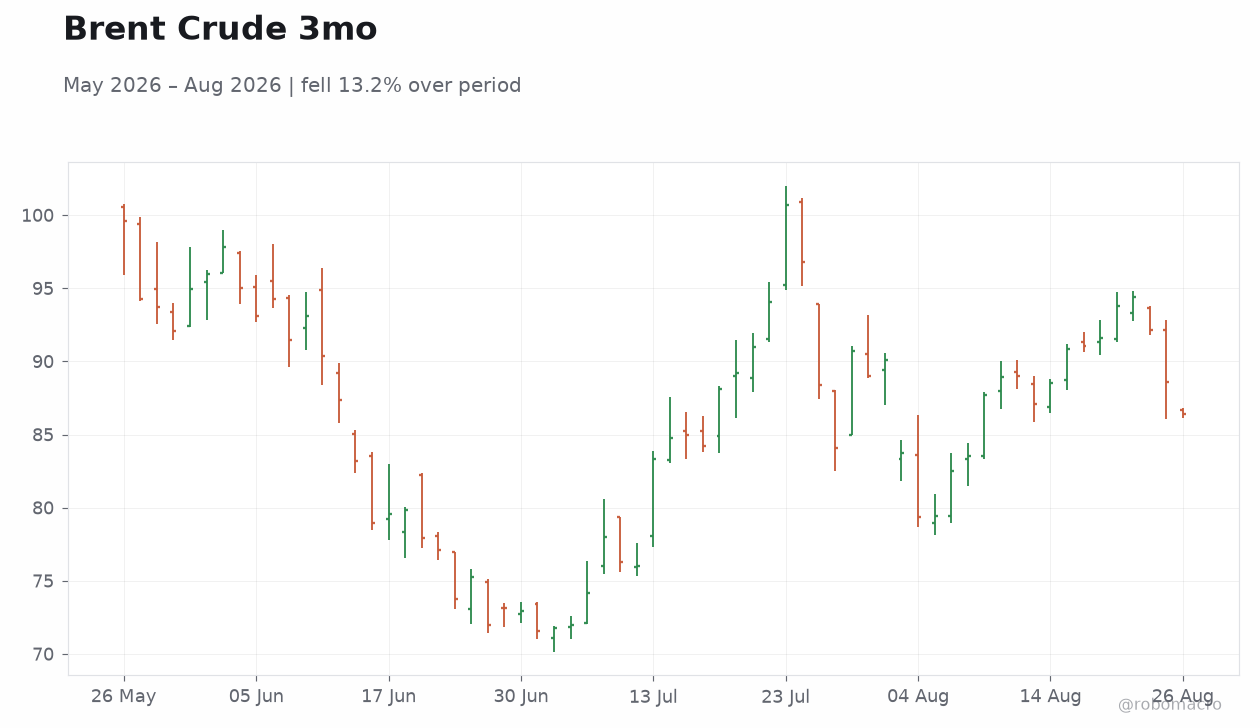 Brent Crude 3mo | Type: market_hloc | USD/bbl: 86.4 (2026-08-26) | Range: 71.57–100.7 | Trend(5pt): 99.58,79.55,83.3,79.36,86.4
Today's Economic Events
| Data | Prior | Cons | Time |
|---|---|---|---|
| No events available | |||
- Brent crude falls 2.55% to $86.32 amid muted reaction to Iran sanctions
- MSCI UAE rises 0.88% while Saudi Aramco declines 0.68% to 26.10
- USD/SAR holds at 3.75 peg level as regional currencies show limited movement
Yesterday's Recap
GCC equity markets advanced modestly despite a sharp drop in oil prices. MSCI UAE led regional gains with a 0.88% increase, followed by MSCI Qatar up 0.45% and MSCI Saudi rising 0.32%. Saudi Aramco shares fell 0.68% to 26.10, reflecting pressure from lower crude benchmarks.
Brent crude declined 2.55% to $86.32 while WTI crude eased 0.81% to $81.69. Gold rose 1.05% to $4,687, providing a hedge amid softer energy prices. USD/SAR remained fixed at 3.75 and USD/AED at 3.67, consistent with the dollar pegs.
Kuwait’s USD/KWD eased 0.41% to 0.31. No major macroeconomic data releases occurred across Saudi Arabia, UAE, Qatar, Kuwait, Oman or Bahrain. Bitcoin edged up 0.09% to $78,632.06.
Regional investors noted limited immediate supply impact from the latest US sanctions on Iran, allowing equities to decouple from energy weakness. The absence of economic prints left markets focused on ongoing diversification efforts and geopolitical signals.
The Day Ahead
Markets await the US inflation report that could shape near-term Fed policy expectations and, by extension, GCC rate settings. Regional investors will monitor any follow-through on the $7bn France-Saudi theme park agreement and Saudi nuclear cooperation accord sent to Congress. Oil traders will track further developments around US sanctions on Iran and their limited immediate impact on supply.
Saudi Arabia’s push for cheaper marine insurance to boost shipping volumes may generate sector-specific commentary. Broader attention remains on non-oil diversification progress in Saudi Arabia and the UAE, including bio-economy initiatives in genomics, biofuels and diagnostics. BNP Paribas received Saudi registration for its regional headquarters, underscoring continued financial-sector inflows.
Saudi Arabia also offered condolences on the Pakistan hospital fire and welcomed integration of Syrian Democratic Forces into national military institutions.
Other Economic Notes
Saudi Arabia and the UAE continue advancing bio-economy initiatives focused on genomics, biofuels and diagnostics as part of long-term diversification strategies. Saudi Arabia is expanding stored-energy capacity alongside solar and wind projects to support grid stability. The kingdom is also evaluating measures to lower insurance costs for shipping in the Middle East to strengthen trade logistics.
<i>↓ p.2</i>