GCC Macro Daily(Beta Mode)
Brent Rises as UAE Property Market Booms
Market Snapshot
| Asset | Level | Change |
|---|---|---|
| Saudi Aramco | 26.10 | +0.00% |
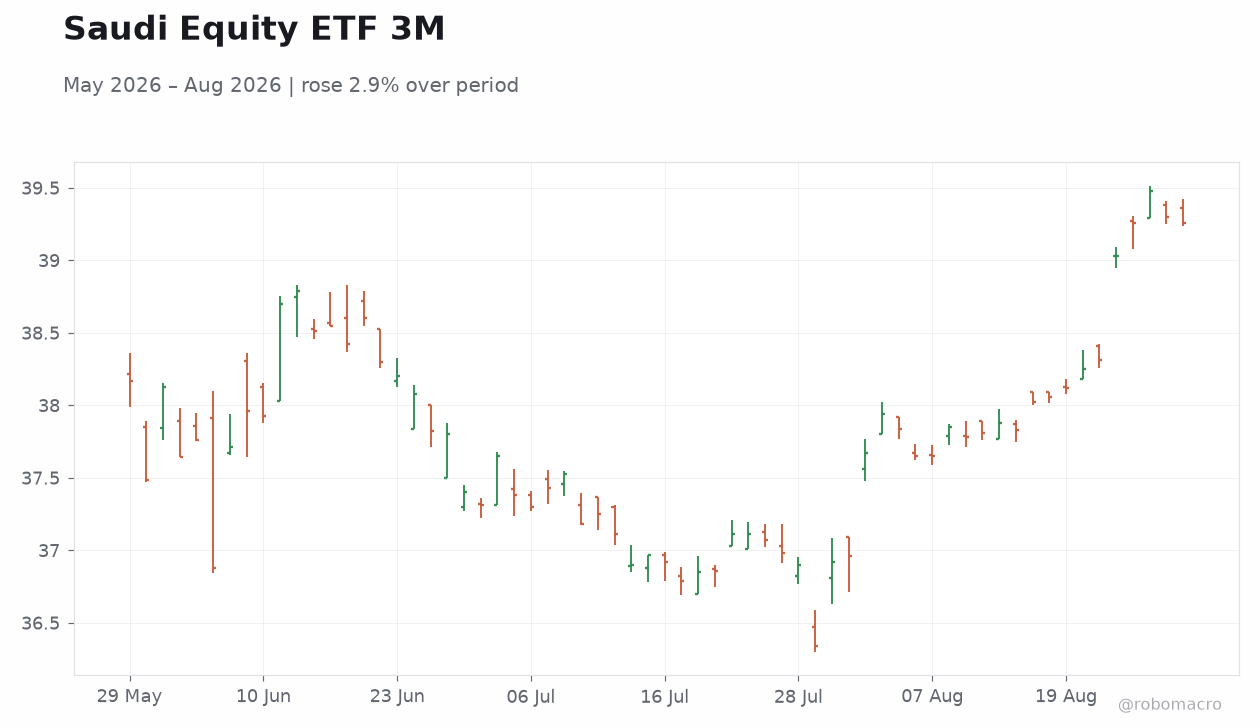
| MSCI Saudi | 39.26 | -0.10% |
| MSCI UAE | 19.59 | +0.18% |
| MSCI Qatar | 17.39 | +0.14% |
| MSCI Kuwait | 37.73 | +0.25% |
| Brent Crude | 90.18 | +0.97% |
| WTI Crude | 85.12 | +2.06% |
| Gold | 4,472.20 | -0.13% |
| USD/SAR | 3.75 | +3.08% |
| USD/AED | 3.67 | +0.03% |
| USD/KWD | 0.31 | -0.43% |
| Bitcoin | 77,616.00 | -0.28% |
Prior Economic Events
| Data | Prior | Cons | Actual |
|---|---|---|---|
| No events available | |||
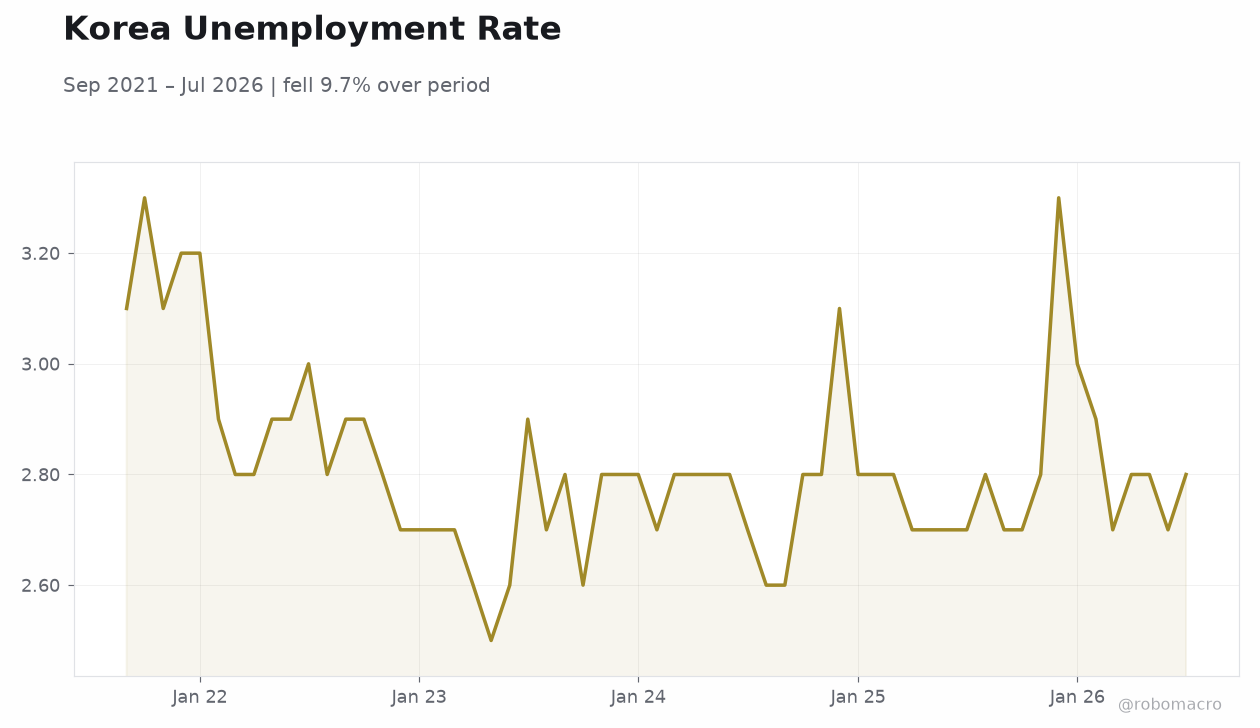 Korea Unemployment Rate | Type: macro_line | Percent: 2.8 (2026-07-01) | Range: 2.5–3.3 | Trend(5pt): 3.1,2.8,2.8,2.8,2.8
Today's Economic Events
| Data | Prior | Cons | Time |
|---|---|---|---|
| No events available | |||
- Brent crude rose 0.97% to $90.18 as supply concerns linger near Hormuz.
- MSCI UAE gained 0.18% while MSCI Kuwait advanced 0.25% on banking strength.
- UAE H1 property transactions more than doubled year-over-year, led by Abu Dhabi.
Yesterday's Recap
Regional equity markets posted modest gains with limited volatility. MSCI UAE rose 0.18% as Abu Dhabi real estate transaction values more than doubled in H1 2026, reflecting broad-based expansion across all emirates. MSCI Kuwait added 0.25% while MSCI Qatar edged 0.14% higher on steady banking flows.
Saudi Aramco closed flat at 26.10 despite Brent’s advance to 90.18. USD/SAR held at the 3.75 peg and USD/AED remained at 3.67. No macroeconomic data releases occurred across Saudi Arabia, UAE, Qatar, Kuwait, Oman or Bahrain.
Trading volumes stayed light outside the Tadawul. Oman and Saudi Arabia advanced economic and trade integration talks in Salalah, while Saudi bio-economy initiatives in genomics and biofuels drew investor interest aligned with Vision 2030 diversification.
The Day Ahead
No scheduled economic releases or central bank meetings are set for the six GCC states. Markets will monitor ongoing Qatar-Iran diplomatic talks in Tehran for any signals on Hormuz traffic. UAE real estate momentum and Saudi bio-economy initiatives in genomics and biofuels are expected to draw continued investor attention.
OPEC+ production schedules remain unchanged through September, keeping focus on voluntary cuts by Saudi Arabia. Regional FX pegs are likely to stay anchored to the dollar absent any Fed surprises. Saudi Arabia’s condemnation of developments in Niamey and its foiling of a major amphetamine smuggling attempt underscore ongoing security vigilance that supports stable market sentiment.
Other Economic Notes
UAE property market expansion supports non-oil diversification under the 2050 strategy and bolsters fiscal buffers. Saudi Arabia’s push into genomics and biofuels aligns with Vision 2030 goals to reduce hydrocarbon dependence. Qatar’s extended LNG force majeure highlights vulnerability of export volumes to Strait of Hormuz disruptions.
Broader GCC equity performance remains tied to Brent above $90, which improves fiscal balances across all six members. Sovereign CDS spreads stayed stable, reflecting contained geopolitical risk premia. Iraq’s sentencing of a US-sanctioned oil official and Iran’s strained economy from lower Hormuz flows add external pressure that could indirectly benefit GCC producers through sustained energy prices.