GCC Macro Daily(Beta Mode)
Saudi Pipeline Shutdown Lifts Oil, Equities Slide
Market Snapshot
| Asset | Level | Change |
|---|---|---|
| Saudi Aramco | 25.52 | -0.55% |
| MSCI Saudi | 37.28 | -1.38% |
| MSCI UAE | 19.91 | -0.70% |
| MSCI Qatar | 17.29 | -0.14% |
| MSCI Kuwait | 37.74 | +0.00% |
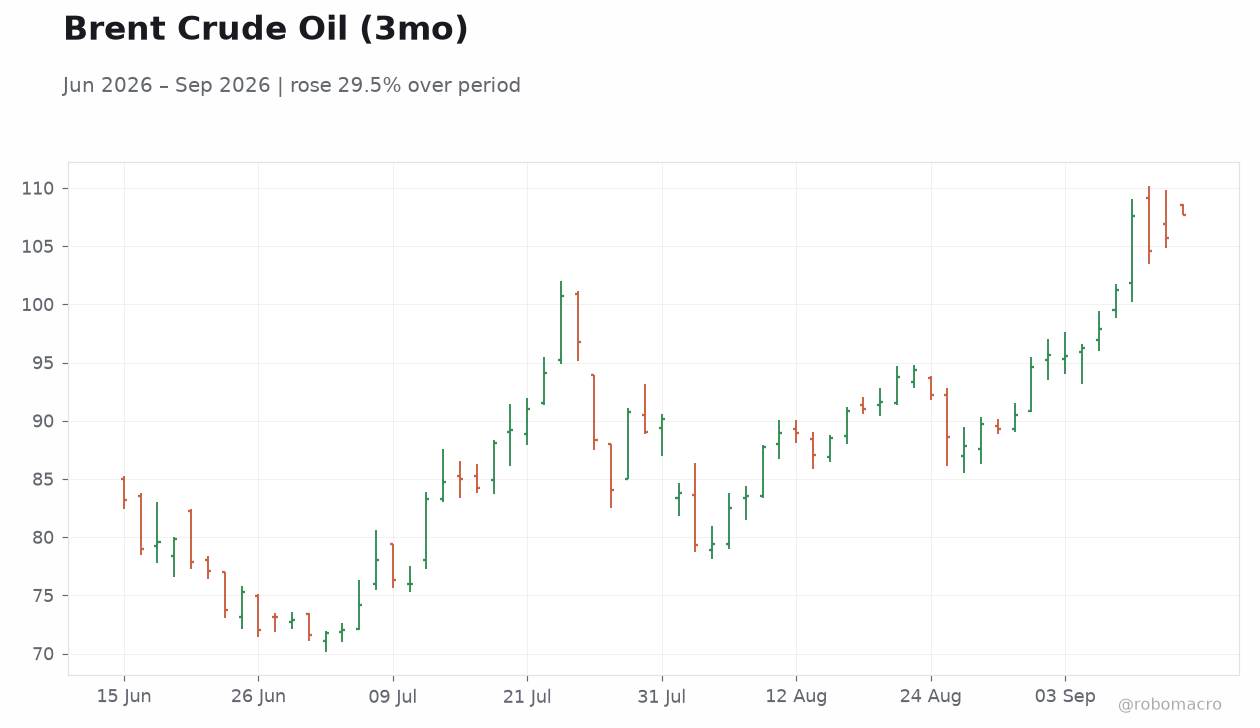
| Brent Crude | 107.82 | +2.02% |
| WTI Crude | 104.50 | +3.07% |
| Gold | 4,370.30 | +0.42% |
| USD/SAR | 3.76 | +3.22% |
| USD/AED | 3.67 | +0.03% |
| USD/KWD | 0.31 | +0.14% |
| Bitcoin | 75,989.99 | -2.78% |
Prior Economic Events
| Data | Prior | Cons | Actual |
|---|---|---|---|
| No events available | |||
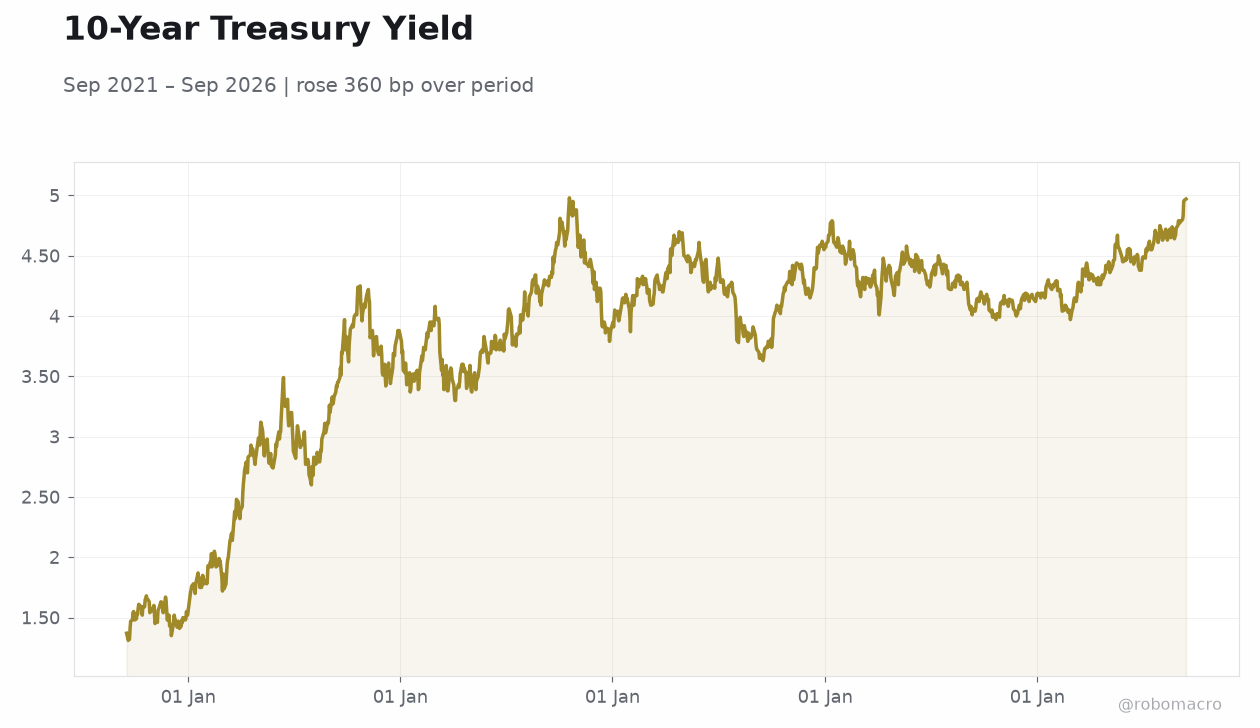 10-Year Treasury Yield | Type: macro_line | Percent: 4.97 (2026-09-14) | Range: 1.31–4.98 | Trend(6pt): 1.37,3.48,4.31,4.41,4.96,4.97
Today's Economic Events
| Data | Prior | Cons | Time |
|---|---|---|---|
| No events available | |||
- Saudi East-West pipeline closed after drone attack, pushing Brent to 107.82 and WTI to 104.50.
- MSCI Saudi fell 1.38% and Aramco declined 0.55% as regional risk premia rose.
- Saudi Arabia announced $24bn domestic content investment and 48 Vision 2030 projects.
Yesterday's Recap
Saudi Arabia shut its East-West Pipeline following a drone attack linked to Houthi activity, with US Energy Secretary Chris Wright indicating flows could resume within days. The closure lifted Brent crude 2.02% to 107.82 and WTI 3.07% to 104.50, tightening near-term supply expectations across GCC fiscal projections. Saudi equities led regional declines, with MSCI Saudi dropping 1.38% to 37.28 and Aramco falling 0.55% to 25.52 on heightened sovereign CDS spreads.
MSCI UAE eased 0.70% to 19.91 while MSCI Qatar slipped 0.14% to 17.29; MSCI Kuwait held steady at 37.74. USD/SAR jumped 3.22% to 3.76 amid the risk repricing, and gold advanced 0.42% to 4,370.30 as a safe-haven bid emerged. No macroeconomic data releases occurred in Saudi Arabia, UAE, Qatar, Kuwait, Oman or Bahrain on 14 September.
Gulf-Iran talks were postponed while Houthi accusations of Saudi strikes on Yemeni schools added to security tensions.
The Day Ahead
No official economic releases, central bank decisions or sovereign auctions are scheduled across the six GCC states on 15 September. Markets will monitor any updates on East-West pipeline restart timelines and potential OPEC+ quota compliance signals. Regional equity and FX desks are expected to track further developments in Yemen-related security incidents and their effect on oil supply risk.
Sovereign CDS and interbank rates such as SAIBOR and EIBOR may see continued pressure if geopolitical headlines intensify. Non-oil diversification news, including progress on Saudi Vision 2030 projects, could provide offsetting sentiment.
Other Economic Notes
Saudi Arabia’s $24bn domestic content programme aims to deepen local supply chains and reduce import dependence under Vision 2030. Forty-eight major projects are currently reshaping the kingdom’s economy, spanning energy, logistics and tourism infrastructure. Tradeshift’s incorporation of Tradeshift Arabia signals continued foreign interest in Saudi digital economy initiatives.
Broader GCC non-oil growth remains supported by these capital expenditure programmes even as oil price volatility affects fiscal balances. UAE-led Arab trade continues to expand, with Egypt’s merchandise exports rising 21.7% in 2025 on stronger regional demand.