GCC Macro Daily(Beta Mode)
GCC CBs Hike Rates as Oil Slides on Pipeline Hit
Market Snapshot
| Asset | Level | Change |
|---|---|---|
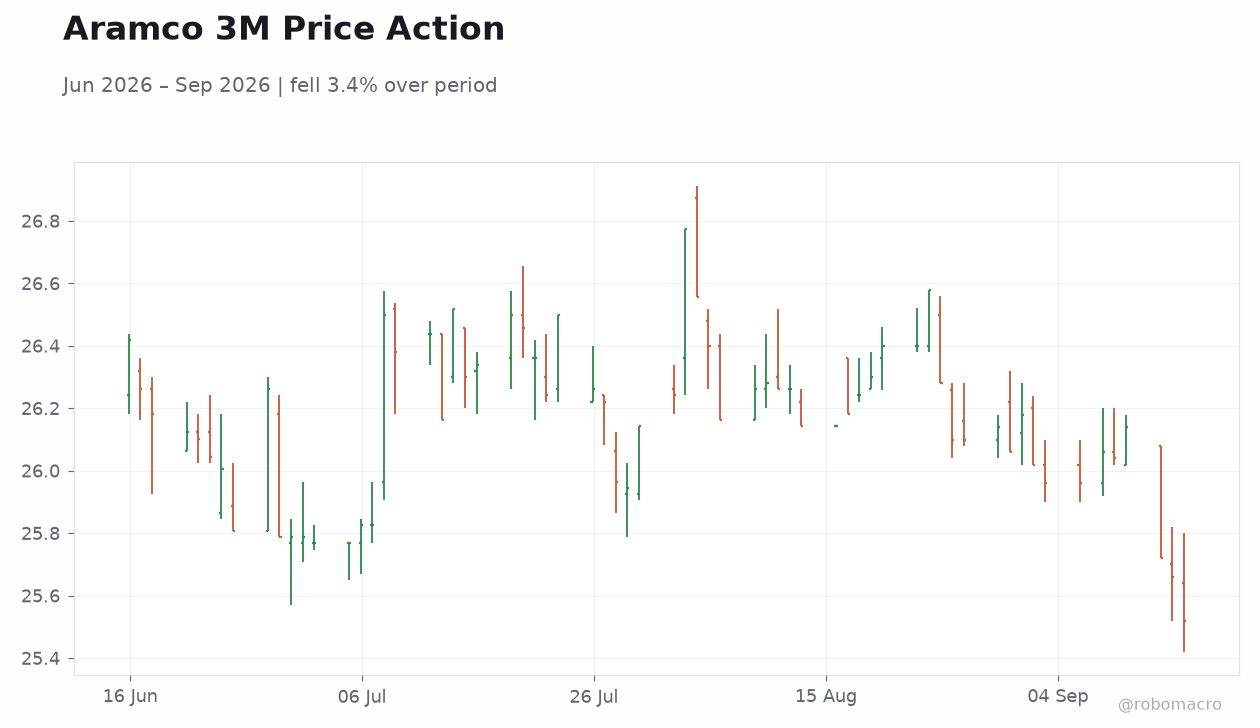
| Saudi Aramco | 25.68 | +0.63% |
| MSCI Saudi | 37.36 | -0.16% |
| MSCI UAE | 20.13 | +1.01% |
| MSCI Qatar | 17.02 | -0.99% |
| MSCI Kuwait | 37.63 | +0.00% |
| Brent Crude | 105.89 | -2.63% |
| WTI Crude | 102.40 | -3.24% |
| Gold | 4,323.60 | -0.21% |
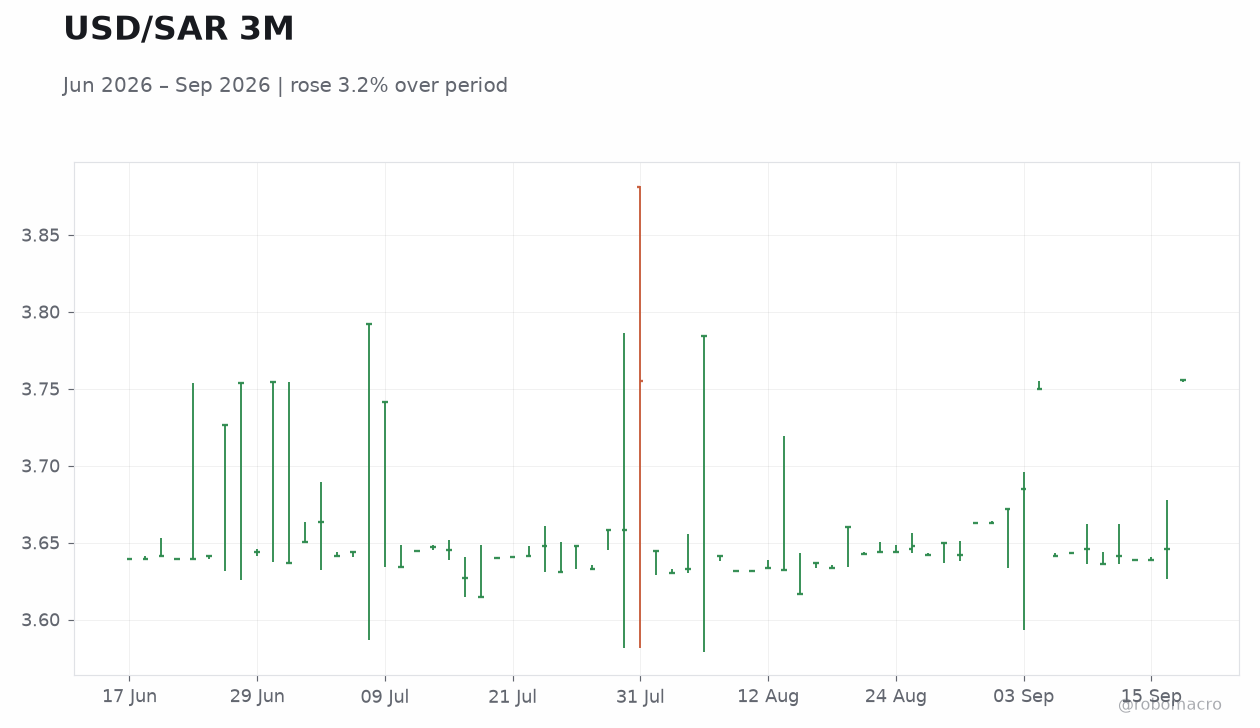
| USD/SAR | 3.76 | +3.02% |
| USD/AED | 3.67 | +0.03% |
| USD/KWD | 0.31 | -0.03% |
| Bitcoin | 76,355.42 | +0.98% |
Prior Economic Events
| Data | Prior | Cons | Actual |
|---|---|---|---|
| Central Bank Interest Rate Decision | 4.25 | - | 4.50 |
| Central Bank Interest Rate Decision | 3.65 | - | 3.90 |
| Central Bank Interest Rate Decision | 4.35 | - | 4.60 |
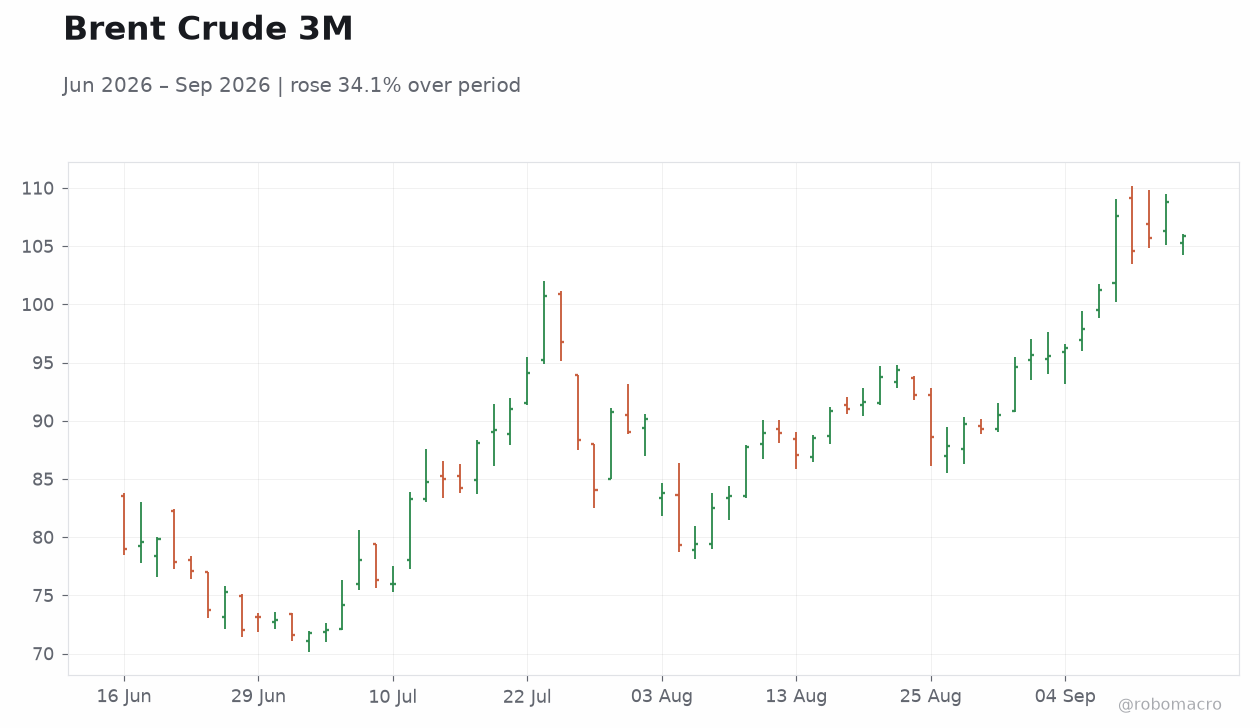 Brent Crude 3M | Type: market_hloc | Brent $/bbl: 105.9 (2026-09-16) | Range: 71.57–108.8 | Trend(5pt): 78.96,76.01,83.77,88.58,105.9
Today's Economic Events
| Data | Prior | Cons | Time |
|---|---|---|---|
| No events available | |||
- Saudi Arabia, UAE and Qatar raise policy rates while Kuwait holds steady
- Brent crude falls 2.63% after Saudi offers extra supply via Oman despite pipeline damage
- MSCI UAE gains 1.01% while MSCI Qatar drops 0.99% amid Houthi attacks
Yesterday's Recap
Saudi Arabia’s central bank lifted its policy rate to 4.5% from 4.25%, the UAE raised its rate to 3.9% from 3.65%, and Qatar increased its rate to 4.6% from 4.35%. Kuwait’s central bank left its rate unchanged. Houthi strikes damaged Saudi Arabia’s East-West oil pipeline, prompting Aramco to target half-capacity restoration within days.
Saudi Arabia offered additional crude cargoes via Oman, which helped push Brent down 2.63% to 105.89 and WTI down 3.24% to 102.40. Saudi Aramco shares rose 0.63% to 25.68 while MSCI Saudi slipped 0.16%. MSCI UAE advanced 1.01% to 20.13 and MSCI Qatar fell 0.99% to 17.02.
USD/SAR jumped 3.02% to 3.76 as regional security concerns intensified. MSCI Kuwait stayed flat at 37.63. Gold eased 0.21% to 4,323.60 and Bitcoin rose 0.98% to 76,355.42.
Saudi Arabia’s annual inflation held steady at 1.8% in August.
The Day Ahead
No economic data releases or central bank decisions are scheduled across the GCC today. Markets will monitor restoration progress on Saudi Arabia’s East-West pipeline and any further Houthi activity. Traders will also track Brent crude and any updates on Strait of Hormuz vessel movements.
Sovereign bond auctions remain absent from the calendar. Equity flows may stay light absent fresh macro catalysts. Regional security posture stays elevated following postponed Gulf-Iran talks and ongoing accusations over Yemen strikes.
Other Economic Notes
Saudi Arabia’s annual inflation held at 1.8% in August, supporting real income stability. Non-oil diversification efforts continue under Vision 2030 and UAE 2050 programs despite elevated security risks. Regional equity markets showed limited reaction to the rate decisions, suggesting investors focused more on oil supply signals.
Fiscal balances across the GCC remain sensitive to Brent levels near 106. LNG supply concerns linked to Hormuz constraints have not yet translated into higher spot prices. UAE flights face ongoing delays while high-speed rail plans and tourism branding advance.