| Asset | Level | Change |
|---|---|---|
| Saudi Aramco | 25.56 | -0.47% |
| MSCI Saudi | 37.43 | -0.08% |
| MSCI UAE | 19.93 | -1.34% |
| MSCI Qatar | 16.95 | -0.35% |
| MSCI Kuwait | 37.49 | +0.03% |
| Brent Crude | 103.87 | -0.91% |
| WTI Crude | 100.30 | -1.58% |
| Gold | 4,424.90 | +0.57% |
| USD/SAR | 3.76 | +0.73% |
| USD/AED | 3.67 | +0.04% |
| USD/KWD | 0.31 | -0.36% |
| Bitcoin | 80,263.34 | -0.79% |
| Data | Prior | Cons | Actual |
|---|---|---|---|
| No events available | |||
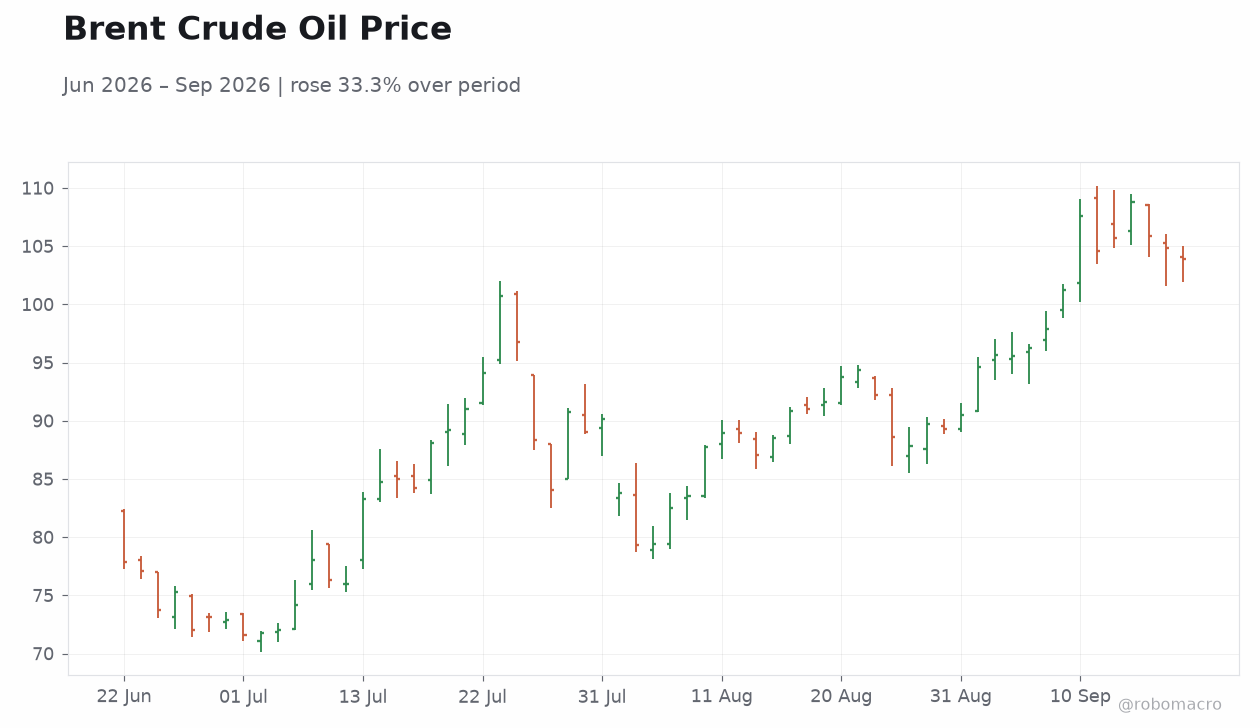
Brent Crude Oil Price | Type: market_hloc | USD/bbl: 103.9 (2026-09-18) | Range: 71.57–108.8 | Trend(6pt): 77.9,84.73,79.36,88.58,105.8,103.9
| Data | Prior | Cons | Time |
|---|---|---|---|
| No events available | |||
Saudi-focused developments dominated GCC markets on 18 September. Aramco announced it would halt October crude deliveries to several European buyers while simultaneously offering additional barrels through Oman, contributing to the day’s oil price decline. Moody’s upgraded its Saudi GDP growth projections and an IMF official projected 4.3% expansion in the Kingdom’s non-oil sector.
Separate reports highlighted the Saudi economy’s resilience in May and its insulation from external turmoil. Equity markets reflected the softer energy tone, with MSCI UAE posting the steepest loss at 1.34% while MSCI Saudi eased 0.08% and MSCI Kuwait edged 0.03% higher. Brent and WTI crude fell 0.91% and 1.58% respectively, weighing on energy-linked names across the region.
Gold rose 0.57% to 4,424.90 as a modest hedge. USD/SAR strengthened 0.73% to 3.76 while USD/KWD eased 0.36% to 0.31. Bitcoin declined 0.79% to 80,263.34.
No macroeconomic data prints emerged from the UAE, Qatar, Kuwait, Oman or Bahrain. Regional security remained stable with no incidents reported in the Gulf, Red Sea or Strait of Hormuz. UAE capacity-expansion plans stayed on track according to officials.
No new OPEC+ quota adjustments or LNG developments from Qatar were reported. Saudi Vision 2030 project spending continued to generate domestic supplier activity.
The economic calendar remains empty across all six GCC states for 19–20 September. Markets will therefore focus on any fresh OPEC+ signals or comments from Saudi energy officials regarding supply adjustments. Regional equity and fixed-income desks are expected to monitor global oil price action closely given its direct fiscal impact.
UAE capacity-expansion plans and Saudi non-oil diversification metrics may attract renewed analyst attention in the absence of hard data. Investors will also watch for any updates on the long-standing US F-35 sale discussions with Saudi Arabia. Quiet conditions should keep attention on oil-supply risk and sovereign-fund flows.
Currency pegs are expected to hold steady with no intervention signals anticipated from SAMA, CBUAE, QCB, CBB, CBK or CBO.
Subscribe to GCC Macro Daily and get each new issue delivered to your inbox.
Already a member? Visit robomacro.com to log in and manage subscriptions, or use Forgot Password to set a password.
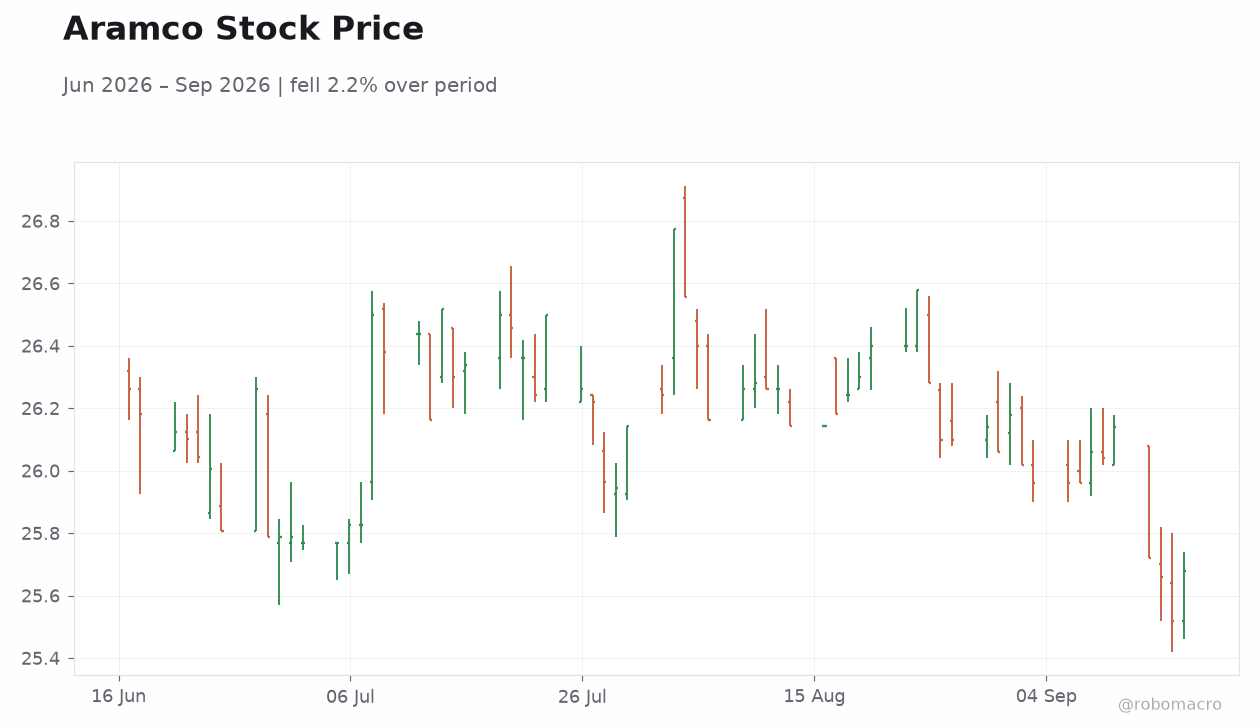
Aramco Stock Price | Type: market_hloc | Price: 25.68 (2026-09-16) | Range: 25.52–26.77 | Trend(6pt): 26.26,26.38,26.24,26.58,25.52,25.68
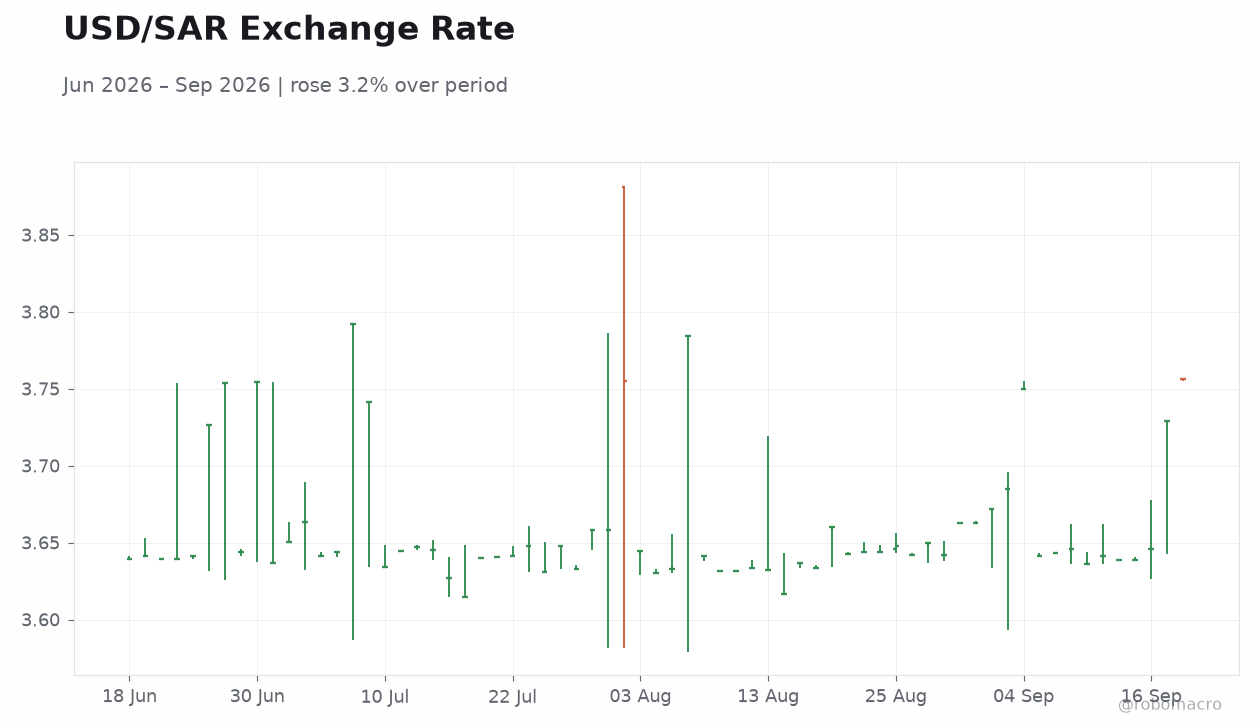
USD/SAR Exchange Rate | Type: market_hloc | Rate: 3.756 (2026-09-18) | Range: 3.615–3.792 | Trend(6pt): 3.64,3.634,3.644,3.648,3.646,3.756
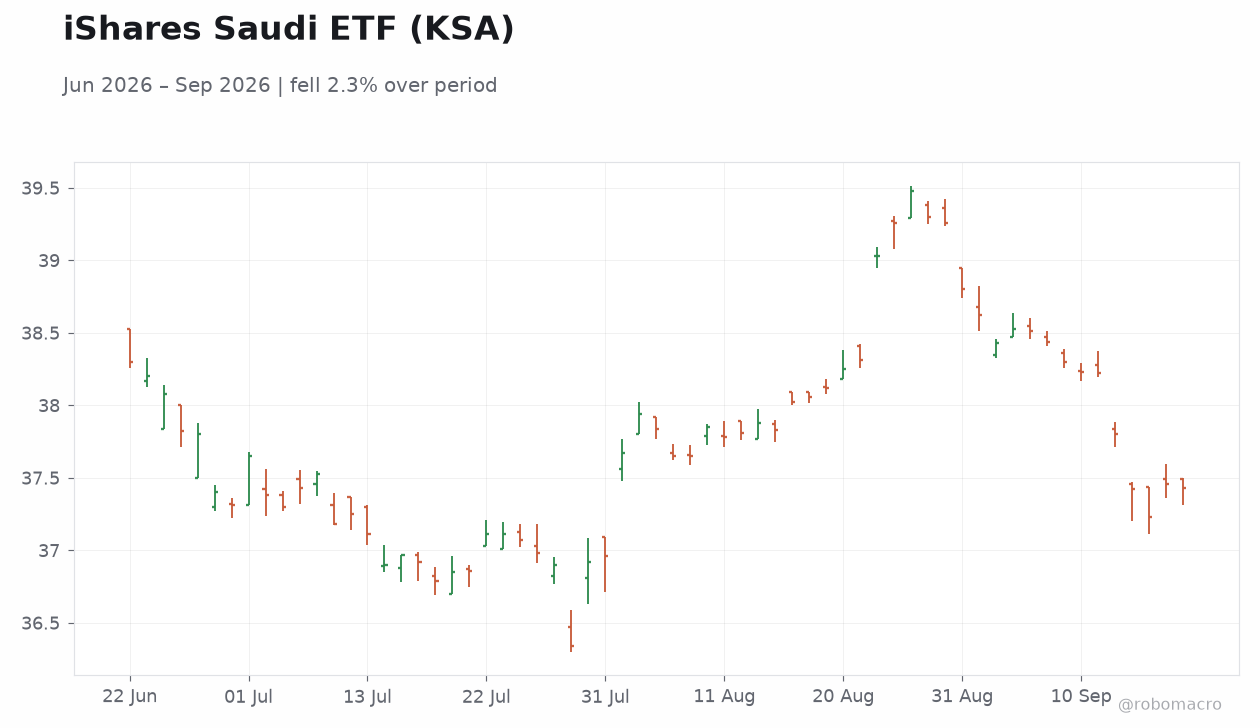
iShares Saudi ETF (KSA) | Type: market_hloc | Price: 37.43 (2026-09-18) | Range: 36.34–39.48 | Trend(6pt): 38.3,36.9,37.94,39.26,37.23,37.43
Saudi Vision 2030 continues to generate supplier-economy activity as project spending shifts toward domestic content. The Kingdom’s fiscal position remains supported by elevated oil revenues despite the recent price softening. Non-oil growth momentum at the projected 4.3% pace would further reduce reliance on hydrocarbon receipts over the medium term.
Regional peers such as the UAE maintain parallel capacity-expansion programmes that should sustain output flexibility. Overall GCC fiscal buffers stay ample, limiting near-term vulnerability to oil-price volatility. Hospitality and tourism investments in Saudi Arabia are building on established cultural strengths to support broader economic diversification.
US and Chinese officials discussed lowering tariffs on US LNG ahead of a planned Xi visit, a move that could ease global energy-market tensions. Brent crude’s decline reflected both the Aramco supply announcements and broader demand concerns. Gold rose 0.57% to 4,424.90, offering a modest hedge amid the softer energy complex.
No immediate supply disruptions were reported in the Strait of Hormuz or Red Sea corridors. Broader equity sentiment stayed cautious as Bitcoin fell 0.79%. Currency pegs held steady, with USD/SAR rising 0.73% while USD/KWD eased 0.36%.
Global LNG and oil dynamics remain the dominant external variables for GCC fiscal and external balances. Russia has yet to finalize its stance ahead of potential deeper OPEC+ oil cuts.
All six GCC central banks maintained existing policy settings aligned with their respective currency pegs. SAMA and CBUAE continue to track Fed policy mechanically through their USD pegs, keeping interbank rates (SAIBOR and EIBOR) stable. QCB and CBB likewise held rates unchanged, preserving ample FX reserve coverage.
CBK’s basket peg to a USD-weighted mix allowed a modest 0.36% softening in USD/KWD without triggering intervention. CBO maintained its USD peg with no reported pressure on Omani reserves. No divergences in rate paths or reserve-adequacy concerns surfaced among the six institutions, supporting coordinated monetary conditions across the bloc.