GCC Macro Daily(Beta Mode)
Houthi Strike Hits Saudi, Oil Plunges 6%
Market Snapshot
| Asset | Level | Change |
|---|---|---|
| Saudi Aramco | 25.56 | -0.47% |
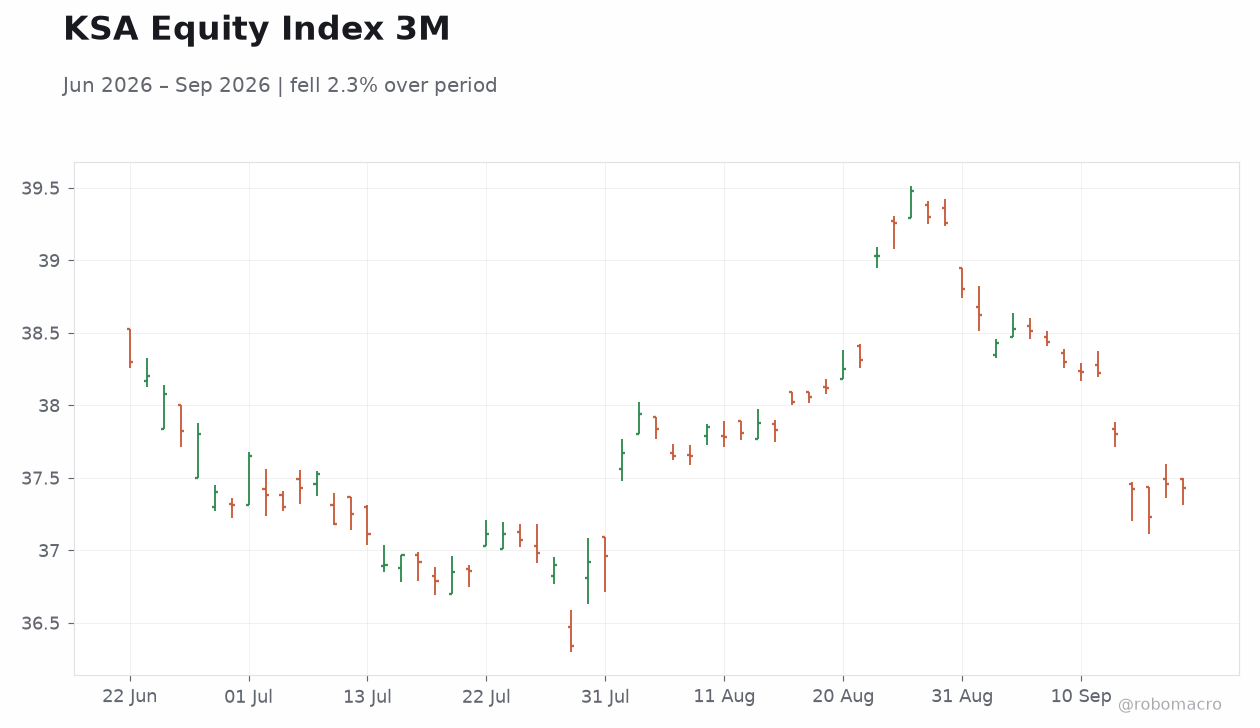
| MSCI Saudi | 37.43 | -0.08% |
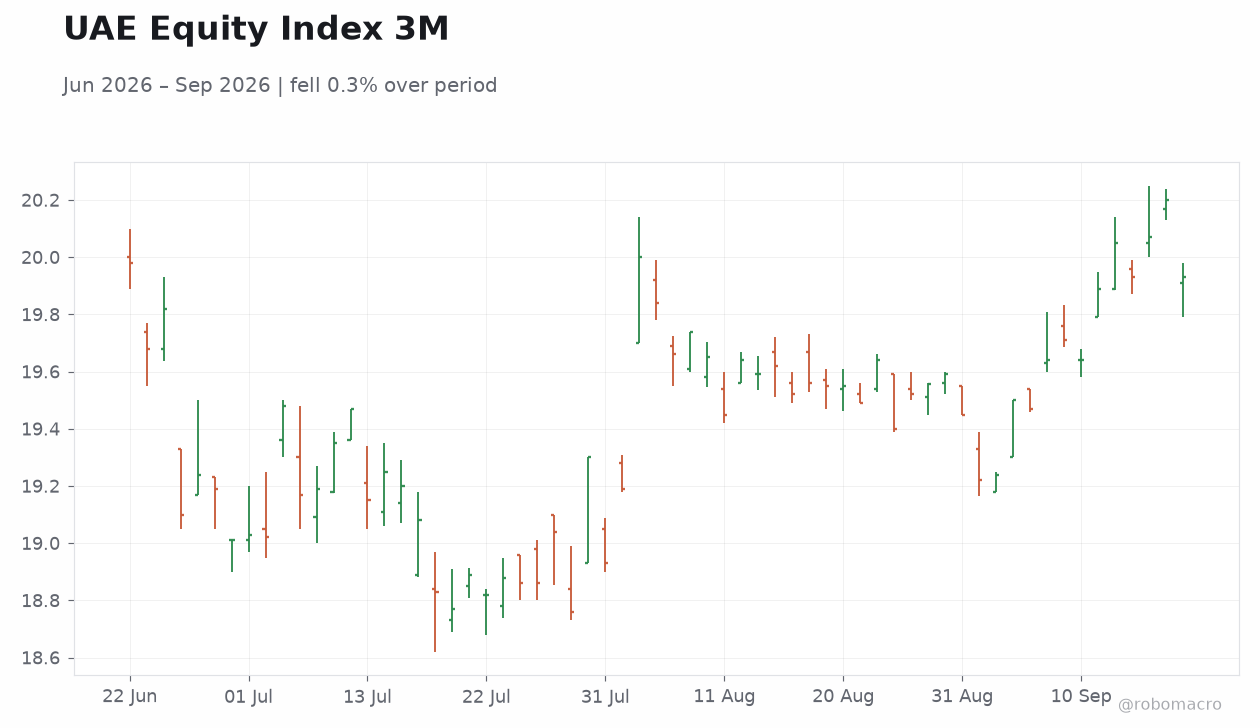
| MSCI UAE | 19.93 | -1.34% |
| MSCI Qatar | 16.95 | -0.35% |
| MSCI Kuwait | 37.49 | +0.03% |
| Brent Crude | 97.57 | -6.07% |
| WTI Crude | 94.05 | -6.23% |
| Gold | 4,399.50 | -0.57% |
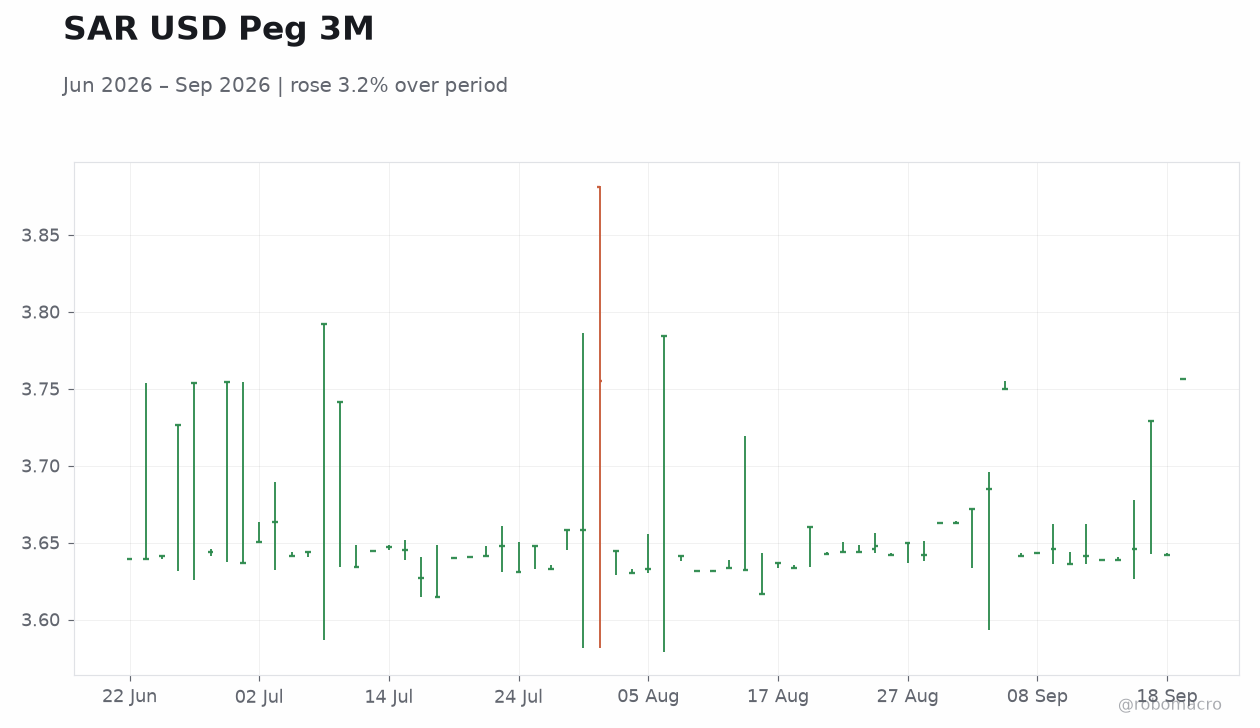
| USD/SAR | 3.76 | +3.13% |
| USD/AED | 3.67 | +0.03% |
| USD/KWD | 0.31 | -0.22% |
| Bitcoin | 81,374.99 | +0.17% |
Prior Economic Events
| Data | Prior | Cons | Actual |
|---|---|---|---|
| No events available | |||
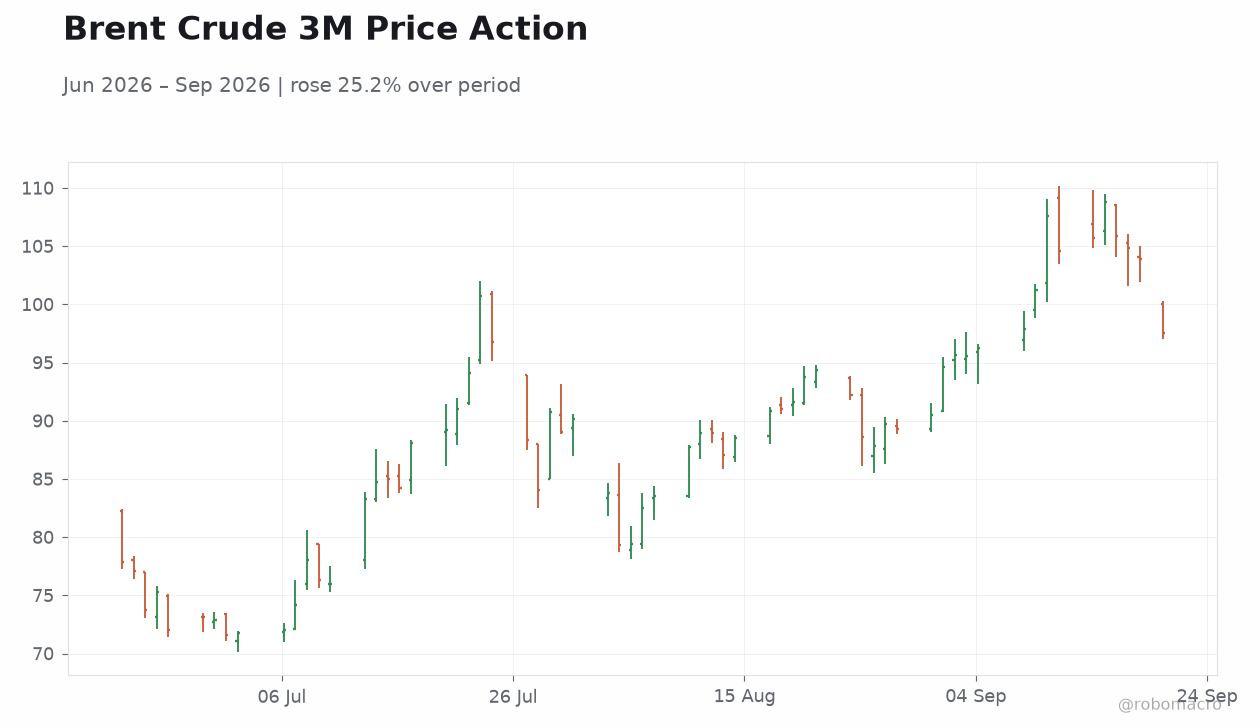 Brent Crude 3M Price Action | Type: market_hloc | Brent (USD/bbl): 97.52 (2026-09-20) | Range: 71.57–108.8 | Trend(5pt): 77.9,84.95,82.49,89.31,97.52
Today's Economic Events
| Data | Prior | Cons | Time |
|---|---|---|---|
| No events available | |||
- Houthi missiles struck Riyadh, elevating regional risk premia and oil supply concerns.
- Brent crude fell 6.07% to 97.57 as Saudi adjusted October supply allocations.
- Moody’s upgraded Saudi GDP forecasts while UAE outlined plans to double economy size.
Yesterday's Recap
Houthi missiles struck the Saudi capital, marking a direct escalation in Yemen-related conflict with immediate implications for regional security and oil supply risk. Saudi Aramco declined 0.47% to 25.56 while MSCI Saudi eased 0.08%. MSCI UAE led losses with a 1.34% drop to 19.93 amid the sharp energy sell-off.
MSCI Qatar eased 0.35% to 16.95 and MSCI Kuwait edged up 0.03% to 37.49. Brent crude plunged 6.07% to 97.57 and WTI fell 6.23% to 94.05 after Saudi Arabia cut October crude allocations to European buyers yet offered additional volumes via Oman. Gold slipped 0.57% to 4,399.50.
USD/SAR rose 3.13% to 3.76 while USD/AED gained 0.03% to 3.67 and USD/KWD fell 0.22% to 0.31. Bitcoin added 0.17% to 81,374.99. Multiple reports confirmed Saudi Arabia’s economy remained robust in May and insulated from global turmoil, with Moody’s raising GDP growth forecasts and an IMF official projecting 4.3% non-oil expansion.
The UAE minister stated plans to double the economy to 3 trillion dirhams over ten years, underscoring diversification momentum across the region.
The Day Ahead
No major data releases are scheduled across the GCC. Attention will center on OPEC+ member positioning ahead of potential deeper production adjustments, with Russia’s stance still pending. Geopolitical developments around the Strait of Hormuz and Red Sea lanes could influence sentiment, particularly for QatarEnergy’s expansion timeline.
Markets will monitor any follow-through on Saudi supply signals and UAE economic diversification updates. Sovereign credit spreads and interbank rates such as SAIBOR and EIBOR are expected to remain stable given the USD peg framework.
Other Economic Notes
Saudi non-oil growth continues to benefit from ongoing project pivots that are building domestic supplier ecosystems. The UAE’s decade-long target to double GDP size highlights parallel efforts to expand non-hydrocarbon sectors. Broader GCC economies remain supported by elevated oil prices despite the daily decline, preserving fiscal balances and FX reserve buffers.
Diversification initiatives under Vision 2030 and UAE 2050 are gaining traction without requiring immediate monetary policy shifts.