GCC Macro Daily(Beta Mode)
Saudi Pipeline Restart Offsets Oil Slide
Market Snapshot
| Asset | Level | Change |
|---|---|---|
| Saudi Aramco | 25.64 | -0.16% |
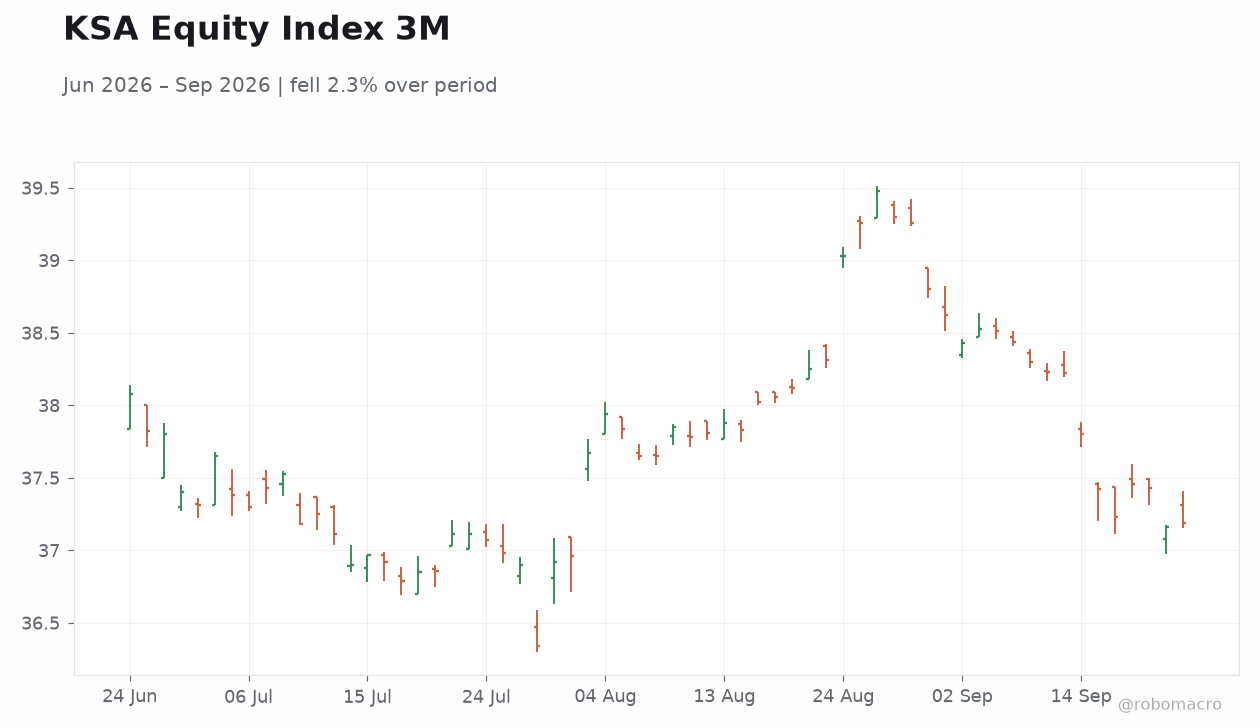
| MSCI Saudi | 37.19 | -0.17% |
| MSCI UAE | 20.12 | -0.02% |
| MSCI Qatar | 16.76 | -0.06% |
| MSCI Kuwait | 36.48 | -1.38% |
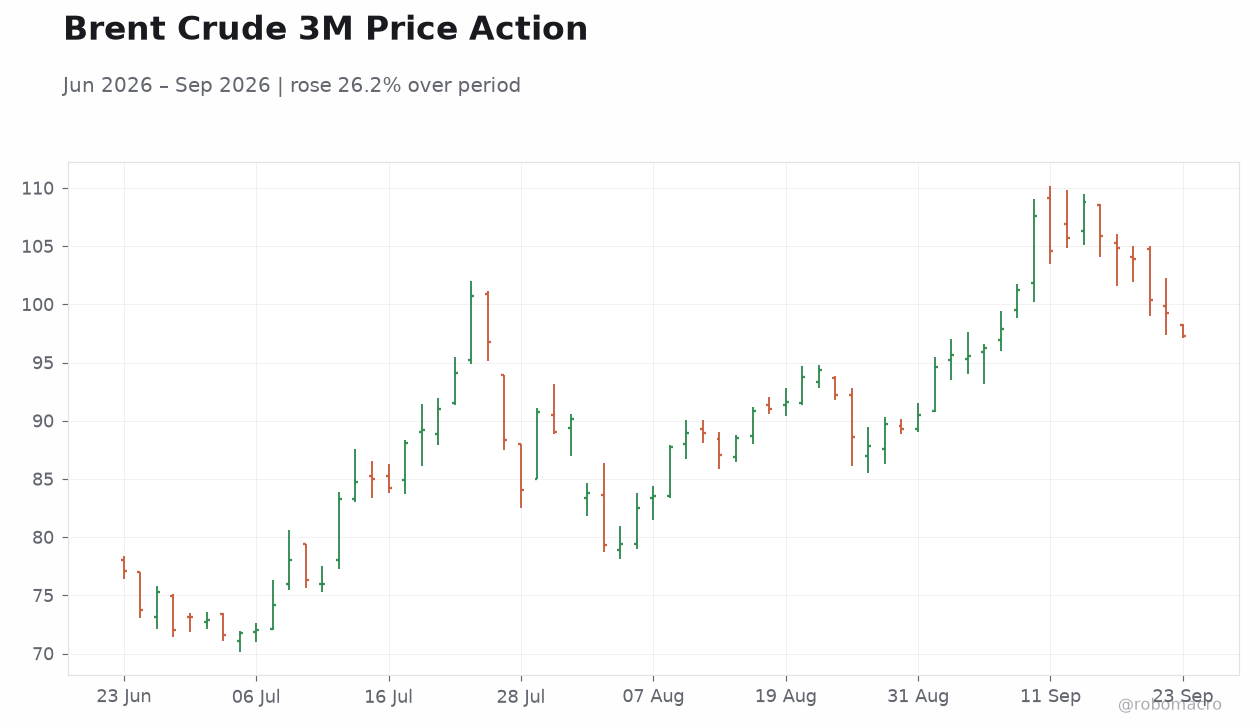
| Brent Crude | 97.28 | -1.98% |
| WTI Crude | 91.32 | -3.46% |
| Gold | 4,321.30 | -1.26% |
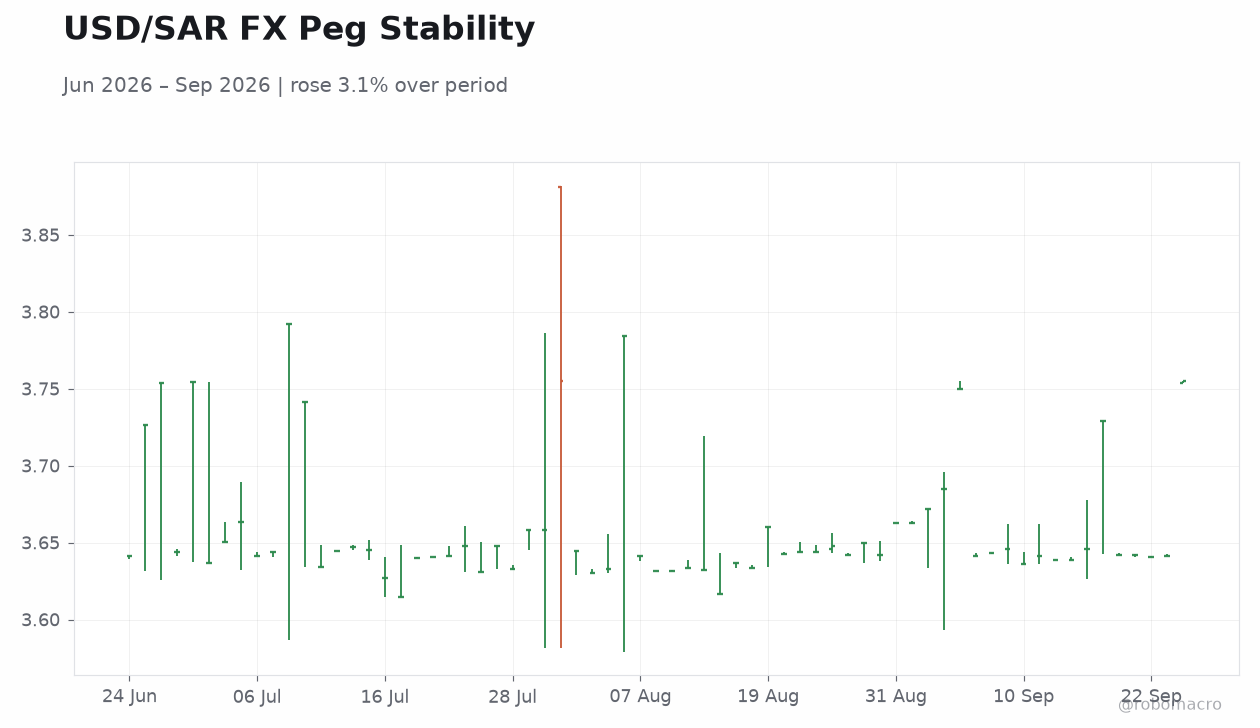
| USD/SAR | 3.76 | +3.12% |
| USD/AED | 3.67 | +0.03% |
| USD/KWD | 0.31 | -0.21% |
| Bitcoin | 84,241.67 | -2.24% |
Prior Economic Events
| Data | Prior | Cons | Actual |
|---|---|---|---|
| No events available | |||
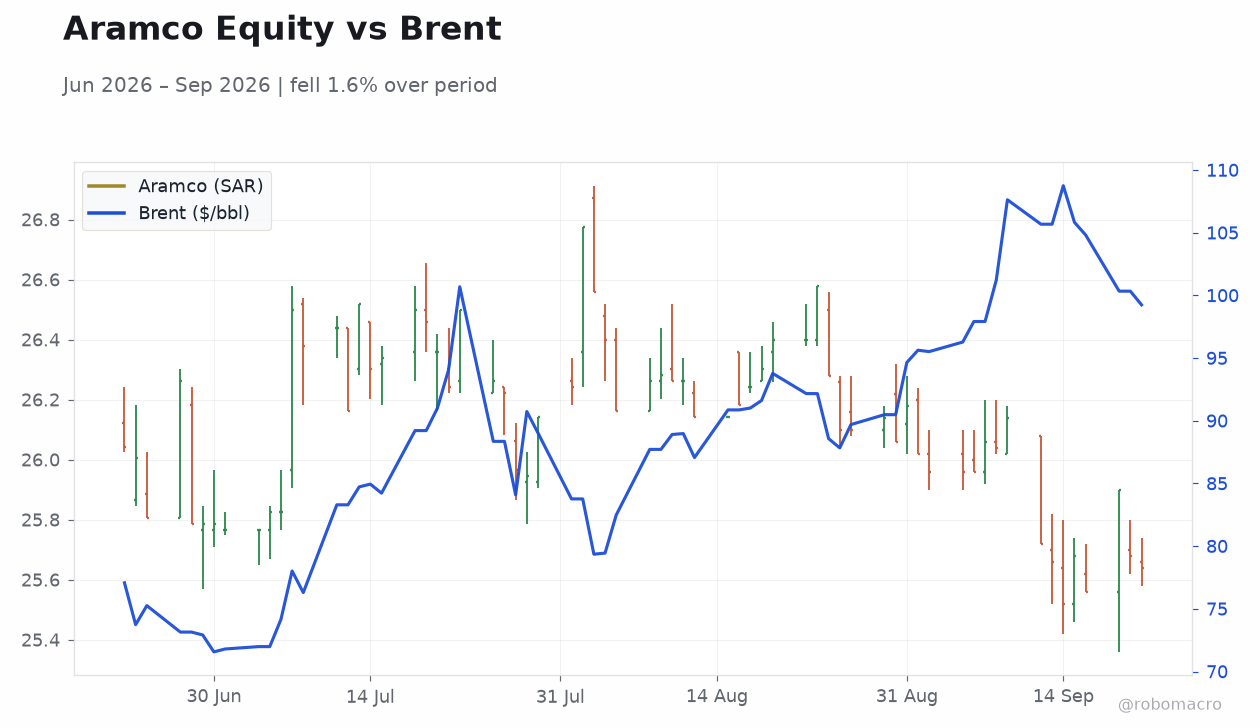 Aramco Equity vs Brent | Type: market_hloc | Aramco (SAR): 25.64 (2026-09-22) | Range: 25.52–26.77 | Trend(6pt): 26.04,26.3,26.16,26.14,25.68,25.64 | Brent ($/bbl): 97.28 (2026-09-23) | Range: 71.57–108.8 | Trend(5pt): 77.08,84.23,83.55,90.49,97.28
Today's Economic Events
| Data | Prior | Cons | Time |
|---|---|---|---|
| No events available | |||
- Saudi Arabia restarts East-West pipeline to bypass Hormuz, supporting export flexibility amid Brent’s 1.98% drop to 97.28.
- Saudi non-oil economy advances with digital sector near 16% of GDP; 2026 contraction of 1.8% expected before 4.1% rebound in 2027.
- GCC equities ease modestly; MSCI Kuwait falls 1.38% while UAE and Qatar indices hold near flat.
Yesterday's Recap
Saudi Arabia restarted its East-West oil pipeline, allowing Aramco to resume exports from Yanbu and reduce reliance on the Strait of Hormuz. The move restores a strategic alternative route and lowers exposure to regional disruptions. Equity markets closed lower across the GCC, with MSCI Kuwait posting the steepest decline at 1.38% to 36.48 while MSCI Saudi slipped 0.17% to 37.19.
Brent crude fell 1.98% to 97.28 and WTI dropped 3.46% to 91.32, reflecting softer near-term sentiment. Saudi Arabia’s digital economy reached nearly 16% of GDP, underscoring progress in non-oil diversification under Vision 2030. The OECD projects Saudi GDP to contract 1.8% in 2026 before expanding 4.1% in 2027.
UAE and Saudi Arabia continue to lead Arab-region digital-economy metrics, with the UAE topping the 2026 Arab Digital Economy Index. No PMI, CPI or trade data were released across the GCC. Foreign business leads jumped 114%, drawing a wider mix of international firms.
No volume spikes appeared in equity trading.
The Day Ahead
No economic releases, central-bank decisions or sovereign auctions are scheduled for 23-24 September. Regional markets will monitor any updates on OPEC+ production compliance and Qatar’s LNG capacity timeline. Geopolitical headlines around Iran sanctions and flight suspensions may influence oil sentiment.
Investors will watch Aramco’s export volumes following the pipeline restart for signs of sustained flexibility. Broader attention remains on Fed policy signals that mechanically guide GCC rate paths through currency pegs. France signaled readiness to help secure Saudi energy infrastructure.
LNG Canada partners are poised to approve project expansion, potentially increasing competition for Asian buyers that Qatar also targets.
Other Economic Notes
Saudi Arabia’s non-oil transformation continues to accelerate, with foreign business leads rising 114% and a wider mix of international firms entering the market. The digital economy’s contribution near 16% of GDP highlights structural shifts away from hydrocarbons. UAE leadership in the Arab Digital Economy Index reinforces its position as a regional services and technology hub.
↓ p.2