GCC Macro Daily(Beta Mode)
Houthis Strike Aramco as Brent Slides
Market Snapshot
| Asset | Level | Change |
|---|---|---|
| Saudi Aramco | 25.28 | +0.24% |
| MSCI Saudi | 36.22 | +0.30% |
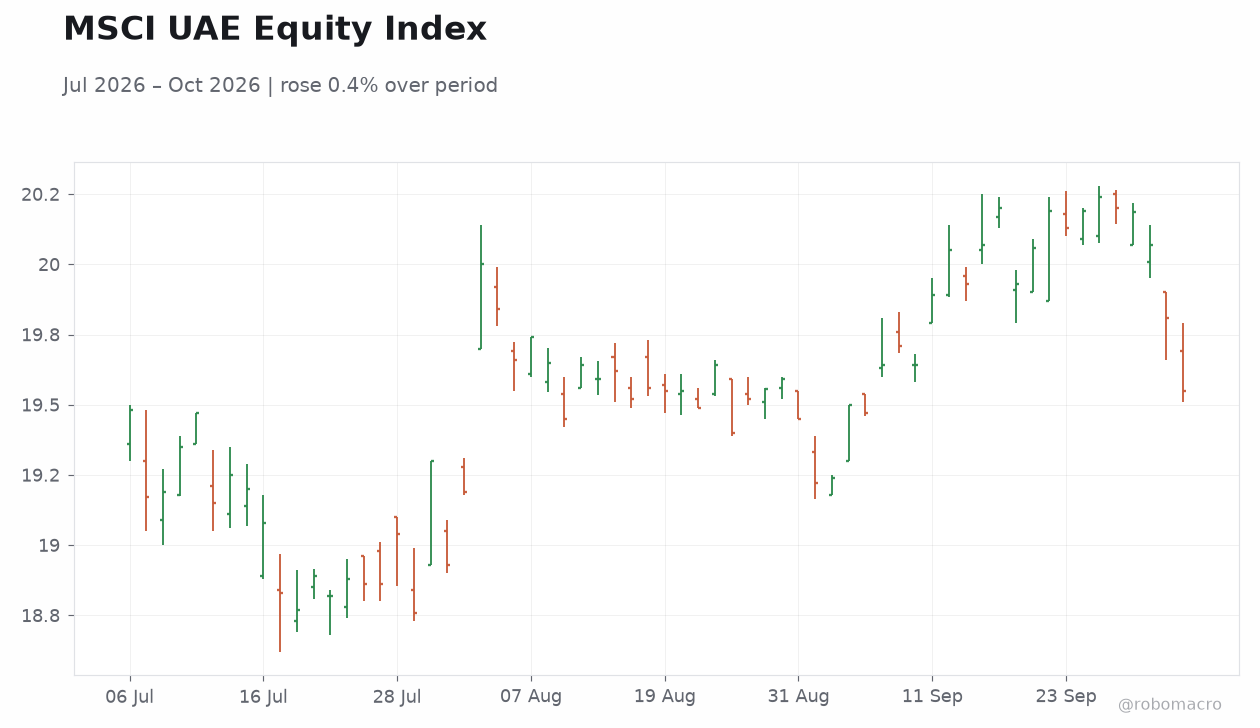
| MSCI UAE | 19.55 | -1.31% |
| MSCI Qatar | 16.29 | +0.49% |
| MSCI Kuwait | 36.34 | +0.14% |
| Brent Crude | 101.41 | -0.82% |
| WTI Crude | 90.03 | -1.19% |
| Gold | 4,164.60 | +0.06% |
| USD/SAR | 3.75 | +3.20% |
| USD/AED | 3.67 | +0.03% |
| USD/KWD | 0.31 | -0.14% |
| Bitcoin | 86,422.65 | +1.96% |
Prior Economic Events
| Data | Prior | Cons | Actual |
|---|---|---|---|
| No events available | |||
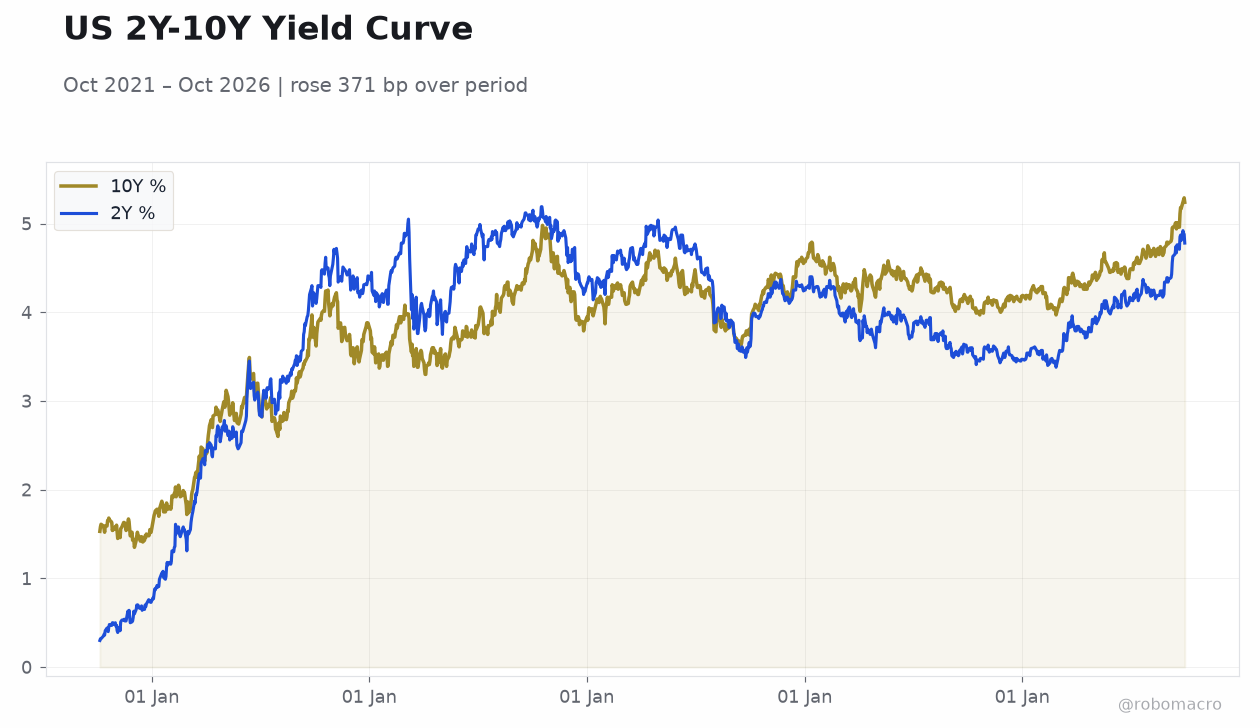 US 2Y-10Y Yield Curve | Type: macro_line | 10Y %: 5.24 (2026-10-01) | Range: 1.35–5.29 | Trend(6pt): 1.53,3.55,4.31,4.35,5.29,5.24 | 2Y %: 4.78 (2026-10-01) | Range: 0.3–5.19 | Trend(6pt): 0.3,4.24,4.65,3.88,4.88,4.78
Today's Economic Events
| Data | Prior | Cons | Time |
|---|---|---|---|
| No events available | |||
- Houthis claim ballistic strikes on Aramco facilities near Riyadh and Khurais, raising Saudi risk premia
- Saudi Aramco and MSCI Saudi advance while MSCI UAE drops 1.31% on uneven non-oil signals
- Brent falls 0.82% to 101.41 despite fresh supply-risk headlines; USD/SAR jumps 3.20%
Yesterday's Recap
Houthi military spokesman Yahya Saree announced ballistic-missile and drone strikes on major Aramco oil installations in Saudi Arabia on October 3, reporting visible fires and linking the action to prior Saudi raids on Sanaa. Saudi equity markets absorbed the news with resilience as Aramco rose 0.24% to 25.28 and MSCI Saudi gained 0.30% to 36.22, supported by ongoing oil-sector strength and diversification momentum. In contrast, MSCI UAE declined 1.31% to 19.55, reflecting investor caution over the pace of the emirates’ non-oil recovery.
MSCI Qatar advanced 0.49% to 16.29 while MSCI Kuwait edged 0.14% higher to 36.34. Brent crude fell 0.82% to 101.41 and WTI dropped 1.19% to 90.03 despite the attack, indicating markets priced limited immediate physical disruption. Gold edged 0.06% higher to 4,164.60.
USD/SAR rose 3.20% to 3.75, USD/AED ticked 0.03% higher to 3.67, and USD/KWD eased 0.14% to 0.31. Bitcoin gained 1.96% to 86,422.65. No official PMI, CPI or GDP prints were released across the GCC on the day.
Secondary analyst reports continued to highlight Saudi Arabia’s fiscal resilience and narrowing budget-deficit trajectory into 2027.
The Day Ahead
Markets will monitor any Saudi official response to the Houthi claims and potential further escalation around Red Sea shipping lanes. Regional equity desks await updates on Aramco production status and any OPEC+ commentary ahead of the November quota decision. UAE non-oil activity indicators and Saudi Vision 2030 project pipelines remain in focus for diversification progress.
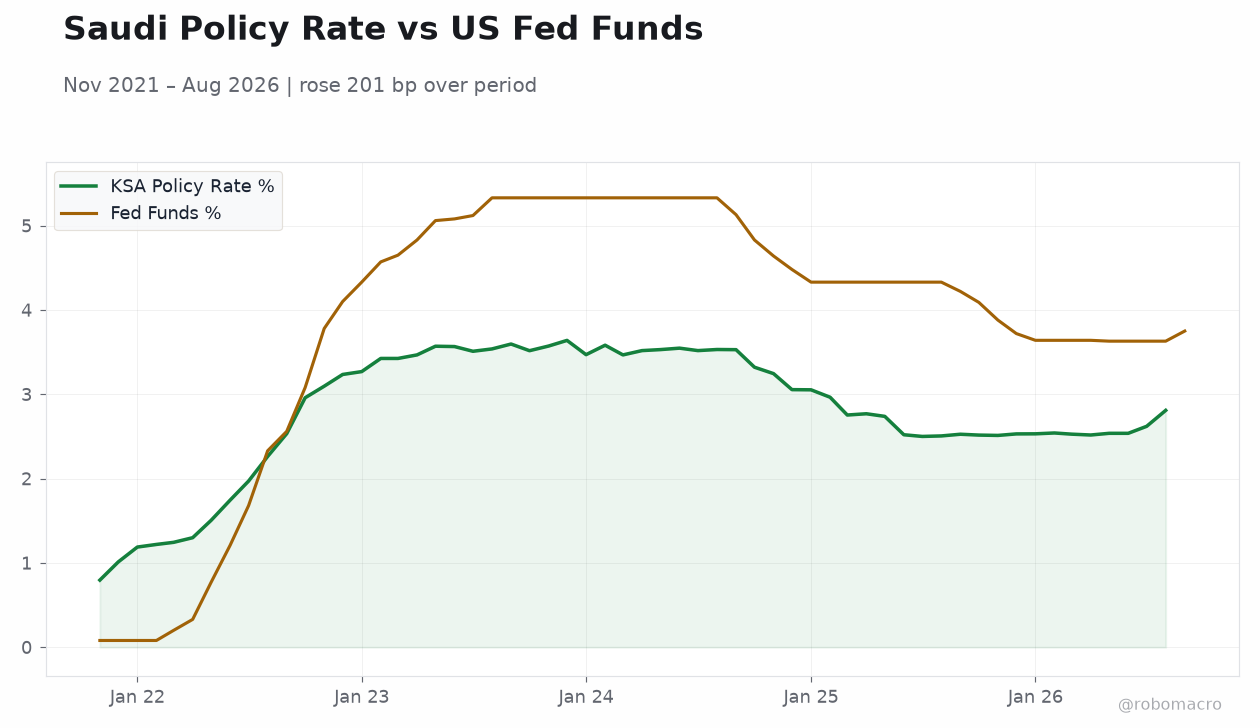
Analysts expect continued attention to sovereign CDS spreads in Saudi Arabia following the security incident. Broader GCC calendars stay light, directing attention to global oil-demand signals and Fed policy signals that mechanically influence local liquidity. Kuwaiti dinar basket dynamics and interbank rates across the pegged currencies will be watched for any divergence.
Other Economic Notes
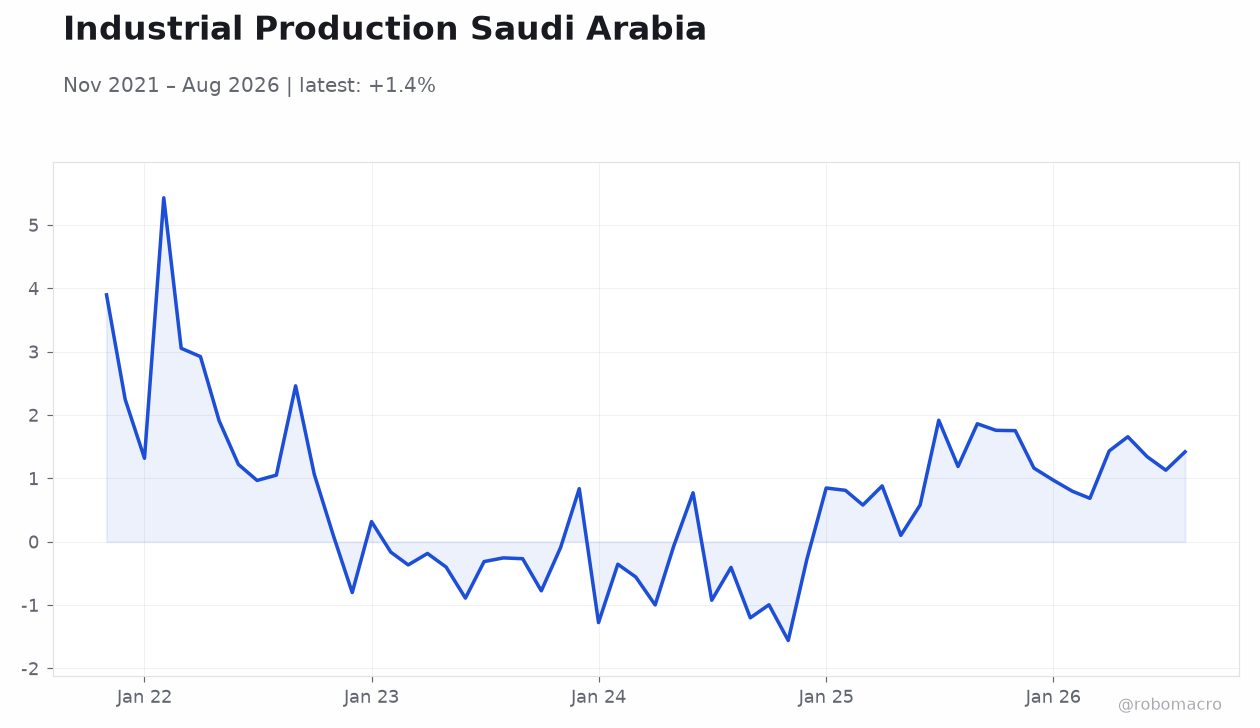
Saudi Arabia’s economy continues to demonstrate resilience through robust oil infrastructure and steady diversification under Vision 2030, with Al Rajhi Capital projecting a narrower budget deficit in 2027. UAE non-oil sectors lead the Gulf rebound yet show uneven momentum across emirates, underscoring the need for sustained policy support. ↓ p.2