GCC Macro Daily(Beta Mode)
Gulf Stocks Slip as Houthi Attacks Lift Oil
Market Snapshot
| Asset | Level | Change |
|---|---|---|
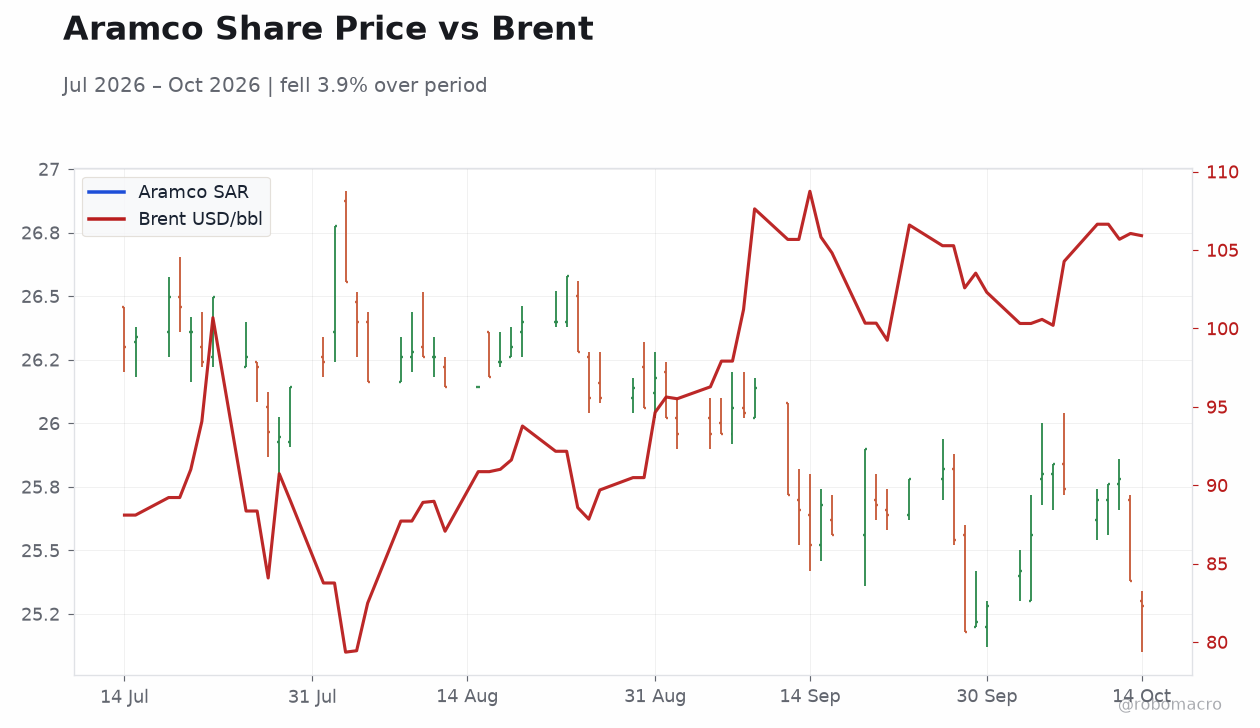
| Saudi Aramco | 25.28 | -0.39% |
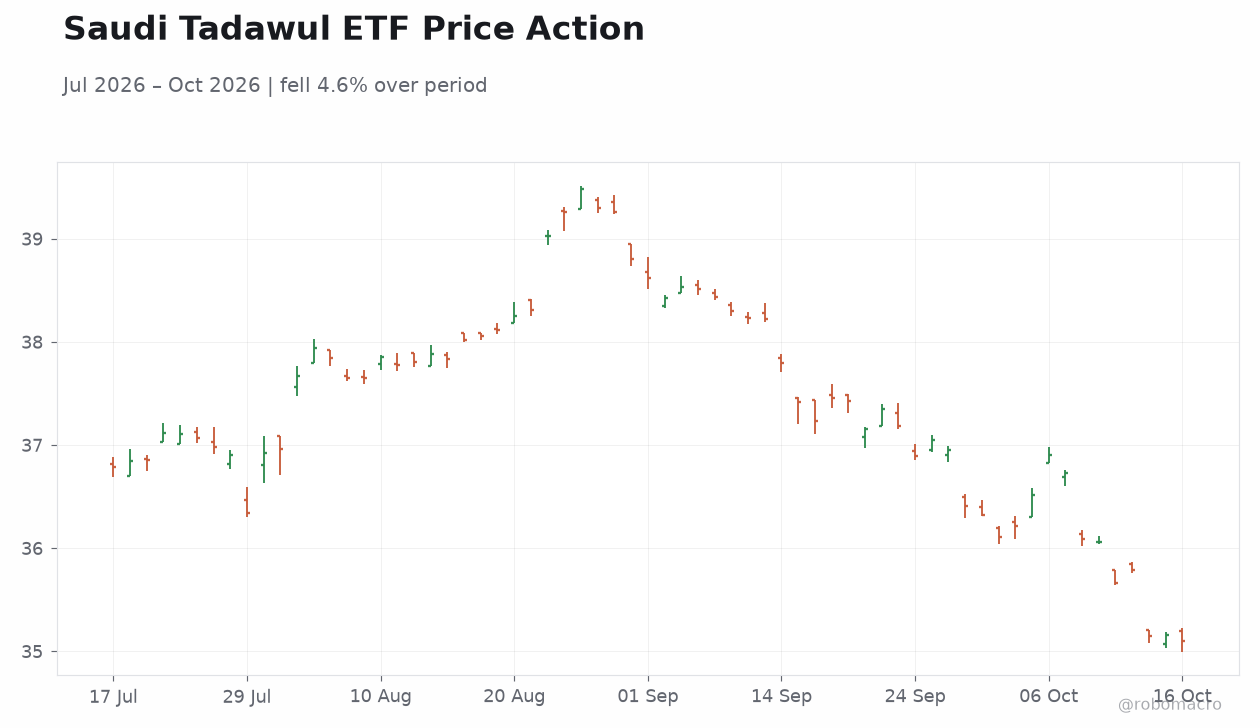
| MSCI Saudi | 35.10 | -0.17% |
| MSCI UAE | 19.52 | -0.20% |
| MSCI Qatar | 15.60 | -0.22% |
| MSCI Kuwait | 34.90 | -0.81% |
| Brent Crude | 109.86 | +3.72% |
| WTI Crude | 101.41 | +3.51% |
| Gold | 4,181.10 | +0.26% |
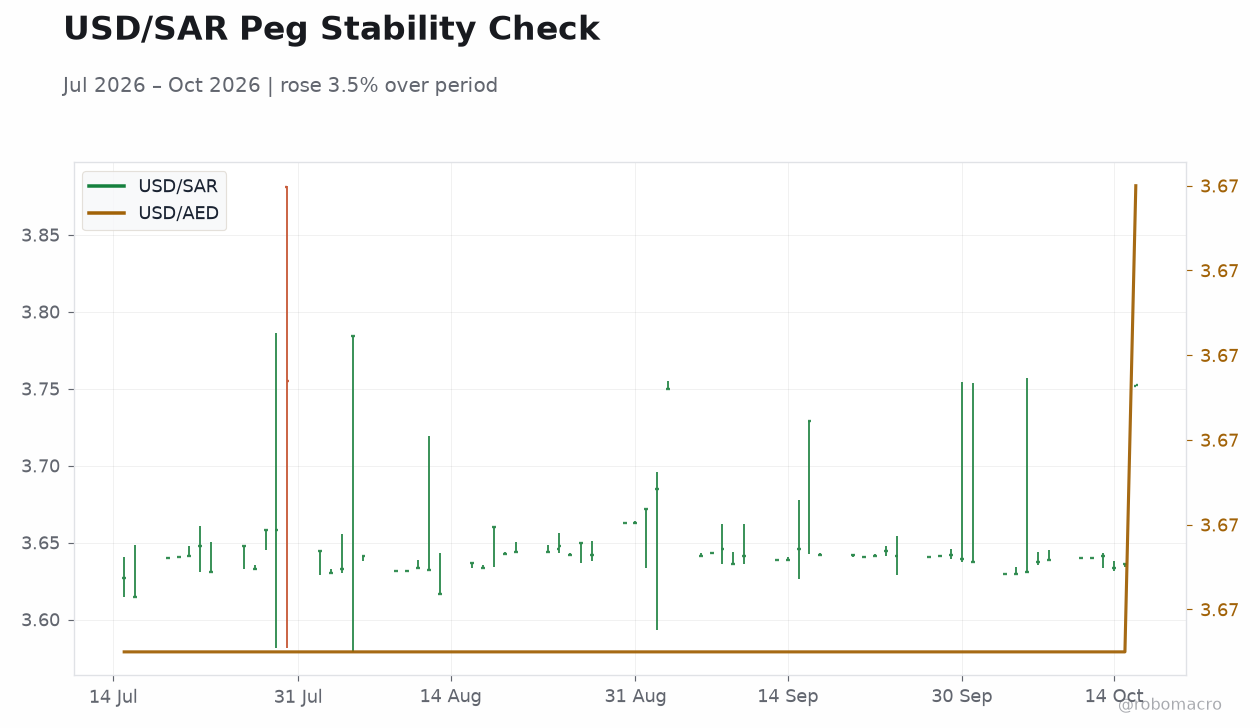
| USD/SAR | 3.75 | +3.21% |
| USD/AED | 3.67 | +0.03% |
| USD/KWD | 0.31 | -0.98% |
| Bitcoin | 81,732.04 | +0.28% |
Prior Economic Events
| Data | Prior | Cons | Actual |
|---|---|---|---|
| No events available | |||
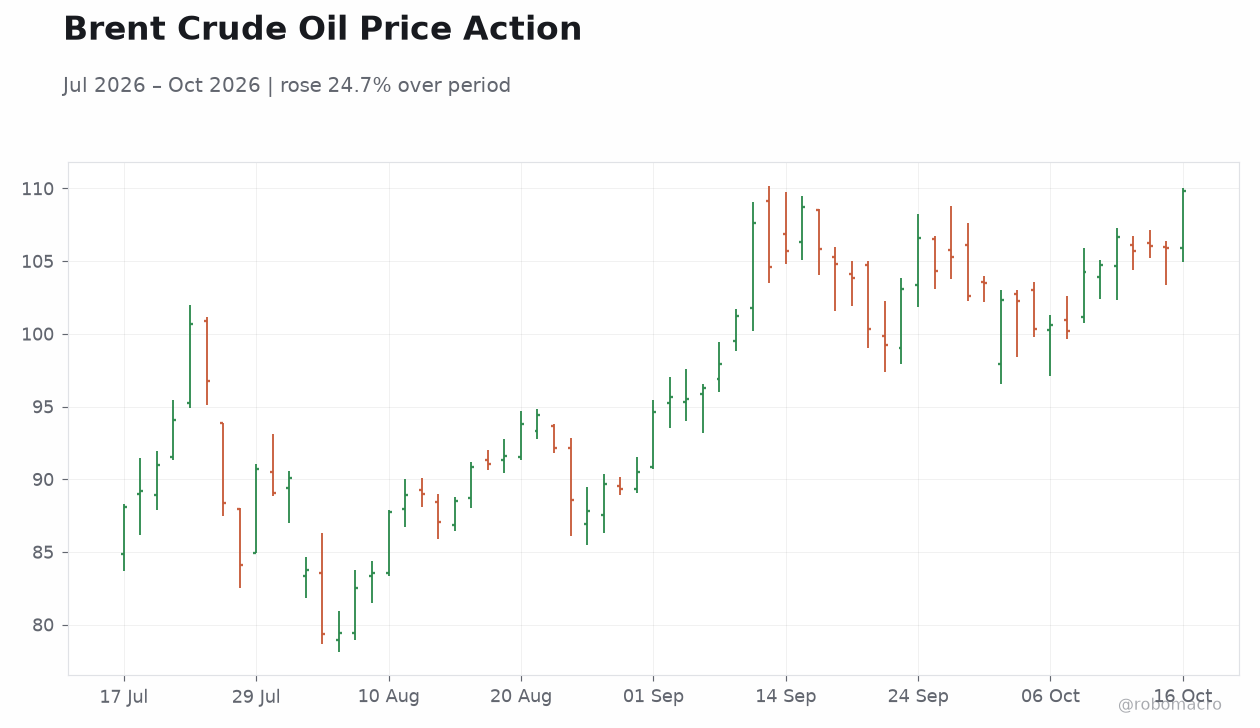 Brent Crude Oil Price Action | Type: market_hloc | Brent USD/bbl: 109.9 (2026-10-16) | Range: 79.36–109.9 | Trend(5pt): 88.1,87.72,94.65,106.6,109.9
Today's Economic Events
| Data | Prior | Cons | Time |
|---|---|---|---|
| No events available | |||
- Houthi missile and drone attacks on Saudi energy infrastructure dominate the regional narrative, with a tanker struck off the Saudi coast and flight disruptions rippling across Gulf hubs
- Brent crude surged 3.72% to $109.86/bbl and WTI gained 3.51% to $101.41/bbl, boosting GCC fiscal outlooks but stoking imported inflation and global growth concerns
- GCC equities closed broadly lower — MSCI Kuwait fell 0.81%, while Saudi, UAE, and Qatar indices slipped 0.17–0.22% — as investors weighed geopolitical risk against the oil windfall
Yesterday's Recap
Friday's session was dominated by escalating security developments around Saudi Arabia's energy corridor. UK Maritime Trade Operations confirmed an unknown projectile struck a tanker off Saudi Arabia's coast, while the Saudi-led coalition reported intercepting two missiles and a drone launched toward the Kingdom. The attacks triggered tangible operational disruption: Emirates, Etihad, flydubai, and Air Arabia cancelled services as Saudi flight disruptions dragged on, and Australia urged travellers to reroute through UAE and Qatar hubs.
Despite the supply-risk premium, the oil complex rallied sharply, with Brent up 3.72% to $109.86 and WTI 3.51% higher at $101.41 — a tailwind for GCC fiscal balances given the region's break-even assumptions. Equity markets, however, told a more cautious story: MSCI Kuwait underperformed at -0.81%, MSCI Saudi shed 0.17% with Aramco down 0.39% to 25.28, MSCI UAE eased 0.20%, and MSCI Qatar slipped 0.22%. Gold firmed 0.26% to $4,181.10 as haven demand persisted.
The USD/SAR print at 3.75 (+3.21% on the day) reflects normalisation after prior volatility rather than any peg stress, while USD/AED held steady at 3.67 and USD/KWD firmed 0.98% against the basket-pegged dinar.
The Day Ahead
The weekend pause in GCC markets leaves a thin calendar into Sunday's session, with no scheduled data releases across the six member states. Attention will centre on follow-through from the security situation — whether tanker traffic through the Red Sea and Southern Gulf normalises, and if further coalition intercepts are reported over the weekend. Regional press will parse Finance Minister Mohammed Al-Jadaan's remarks that Saudi investments mitigated the global energy-shock impact, a signal of Riyadh's stabiliser role.
Watch for updates on UAE flight operations and any extension of cancellations into Sunday, which would pressure tourism and logistics names. Qatar's proposed package to ease Lebanon's electricity crisis may generate headlines on Gulf statecraft. Energy markets reopen Monday with focus on physical crude differentials and freight rates, both sensitive to the security premium now embedded in Brent above $109.