GCC Macro Daily(Beta Mode)
Houthi Attacks Lift Oil, Pressure GCC Equities
Market Snapshot
| Asset | Level | Change |
|---|---|---|
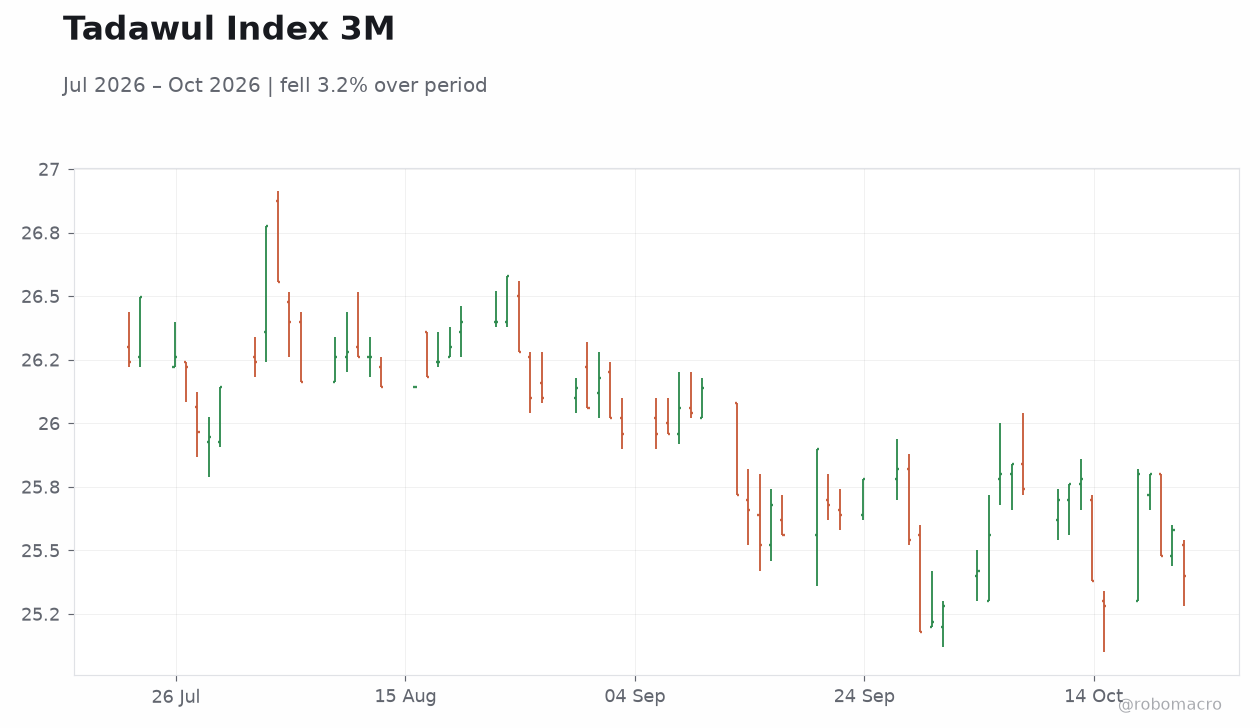
| Saudi Aramco | 25.40 | -0.70% |
| MSCI Saudi | 33.69 | -0.03% |
| MSCI UAE | 19.05 | -1.14% |
| MSCI Qatar | 15.18 | -0.74% |
| MSCI Kuwait | 34.32 | -0.71% |
| Brent Crude | 116.72 | +3.14% |
| WTI Crude | 103.27 | +3.82% |
| Gold | 4,007.90 | -1.29% |
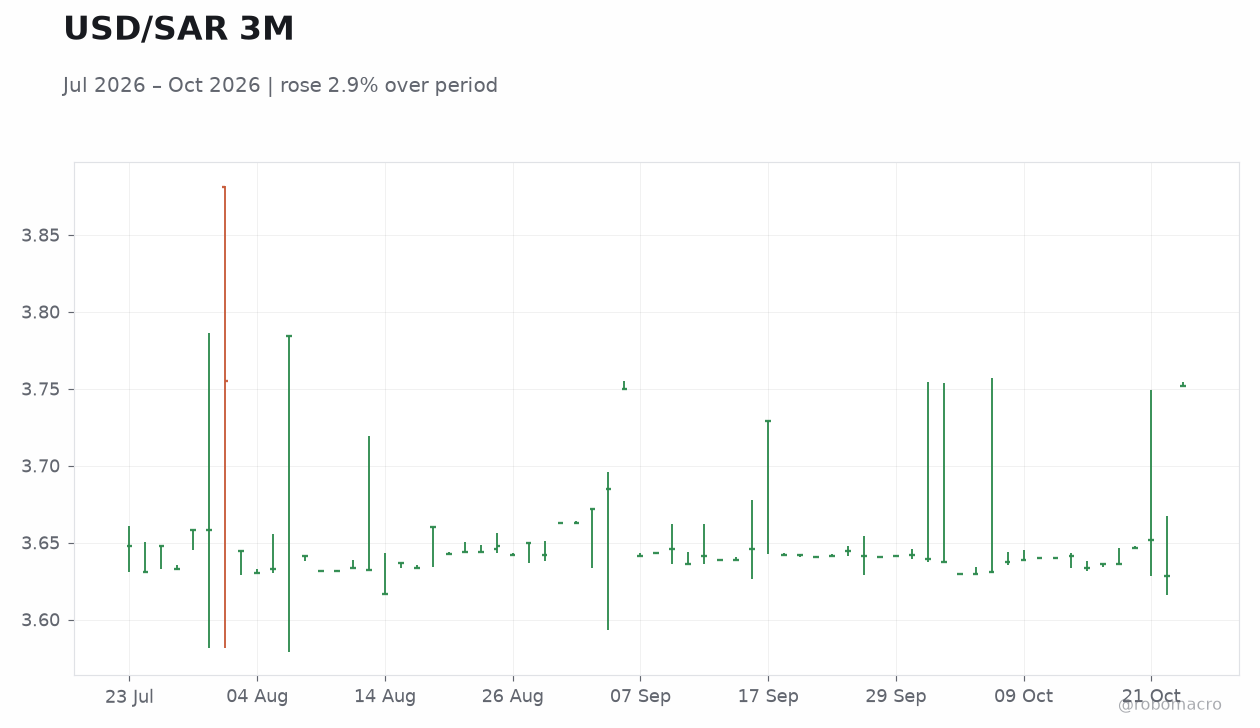
| USD/SAR | 3.75 | +3.41% |
| USD/AED | 3.67 | +0.03% |
| USD/KWD | 0.31 | -0.58% |
| Bitcoin | 80,800.01 | -0.34% |
Prior Economic Events
| Data | Prior | Cons | Actual |
|---|---|---|---|
| No events available | |||
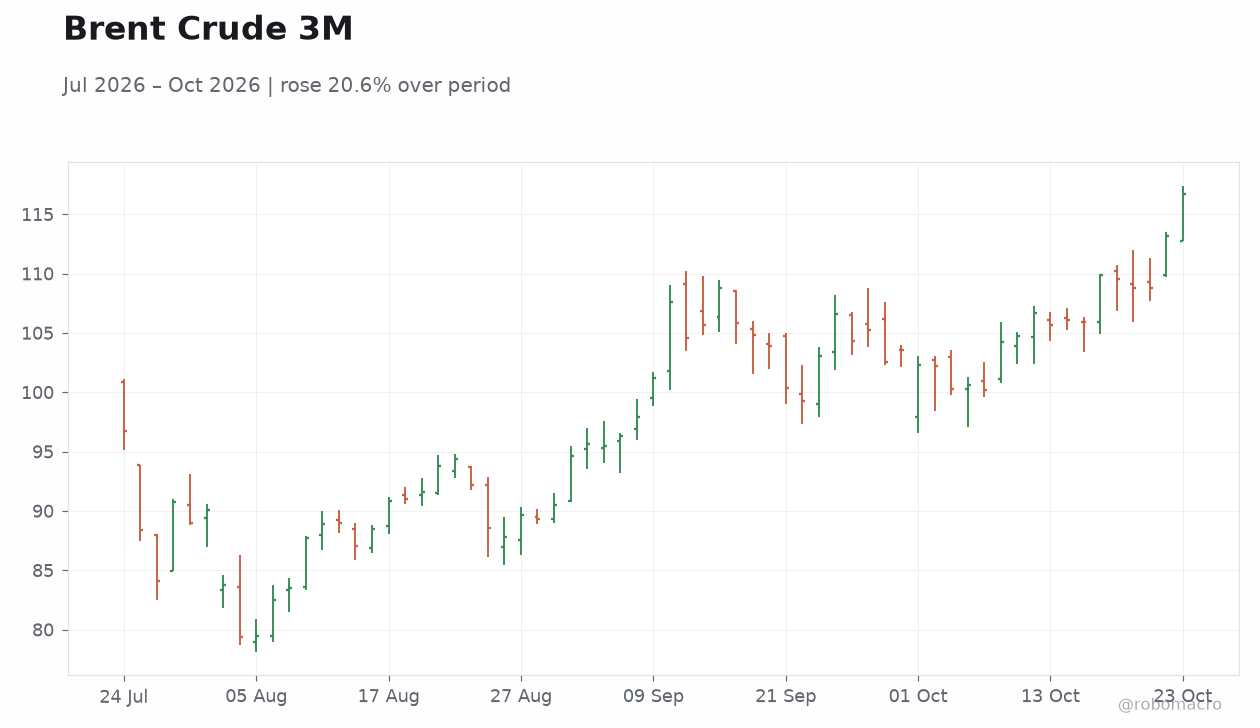 Brent Crude 3M | Type: market_hloc | USD/bbl: 116.7 (2026-10-23) | Range: 79.36–116.7 | Trend(5pt): 96.78,90.87,101.2,102.3,116.7
Today's Economic Events
| Data | Prior | Cons | Time |
|---|---|---|---|
| No events available | |||
- Brent crude jumps 3.14% to $116.72 on Houthi supply risks
- MSCI UAE and Qatar indices fall over 0.7% amid tensions
- UAE closes beaches after tanker oil spill hits Ras Al-Khaimah
Yesterday's Recap
Houthi missile and drone strikes targeting Saudi Arabia triggered immediate oil supply concerns, pushing Brent and WTI higher as markets priced in potential disruptions to Red Sea and Gulf shipping routes. Saudi-led coalition forces intercepted multiple projectiles aimed at Riyadh and Najran, underscoring persistent Yemen-related security threats that directly affect the Kingdom’s export infrastructure. Saudi Aramco shares declined 0.70% to 25.40 while MSCI Saudi edged 0.03% lower to 33.69, reflecting investor caution despite the oil price rally.
MSCI UAE fell 1.14% to 19.05 and MSCI Qatar dropped 0.74% to 15.18, with MSCI Kuwait declining 0.71% to 34.32. In the UAE, an oil spill from a tanker prompted authorities to shut beaches across Ras Al-Khaimah and Umm Al-Quwain, with cleanup operations underway and flight disruptions reported on Abu Dhabi–Saudi routes. Saudi Arabia postponed two major forums originally scheduled for late 2026 until 2027, citing logistical pressures from the regional security environment.
Oman continued efforts to attract digital-economy investments as part of broader diversification, while Kuwait’s equity market mirrored regional weakness. The moves highlighted how geopolitical incidents in Yemen and the Bab al-Mandab strait immediately transmit to GCC asset prices and fiscal risk perceptions. USD/SAR rose 3.41% to 3.75 and gold fell 1.29% to 4,007.90 amid the volatility.
The Day Ahead
Markets will monitor any further statements from Saudi and UAE officials on Houthi activity and maritime security in the Red Sea. OPEC+ members are expected to maintain current production guidance amid elevated prices, with attention on whether higher revenues ease fiscal pressures in Riyadh and Abu Dhabi. UAE authorities will continue spill containment and beach assessments, potentially affecting tourism and local sentiment.
Oman’s investment promotion efforts in technology sectors may generate follow-up announcements on project pipelines. Broader regional flight schedules remain subject to updates following Etihad’s cancellations. No major statistical releases are scheduled across the six GCC economies, leaving focus on security developments and any follow-through from the oil spill response.
Other Economic Notes
Elevated oil prices provide near-term fiscal relief for GCC hydrocarbon-dependent budgets, supporting Vision 2030 capital spending in Saudi Arabia and UAE 2050 infrastructure targets. Non-oil growth momentum remains uneven, with Oman accelerating digital initiatives to reduce reliance on energy exports. ↓ p.2