GCC Macro Daily(Beta Mode)
Houthi Strikes Shift Riyadh's Risk Calculus
Market Snapshot
| Asset | Level | Change |
|---|---|---|
| Saudi Aramco | 26.08 | +1.87% |
| MSCI Saudi | 34.65 | +1.90% |
| MSCI UAE | 19.57 | +2.06% |
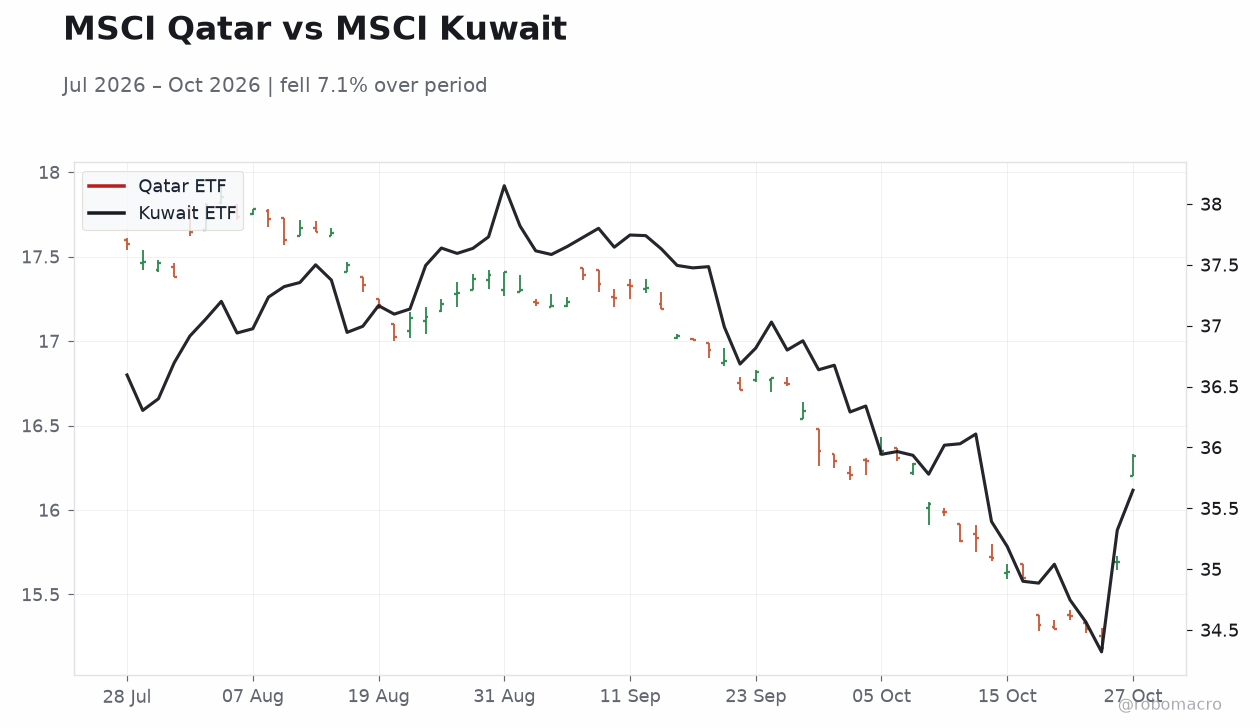
| MSCI Qatar | 16.29 | +3.82% |
| MSCI Kuwait | 35.57 | +0.71% |
| Brent Crude | 110.77 | -4.35% |
| WTI Crude | 101.15 | -0.60% |
| Gold | 4,061.70 | +0.58% |
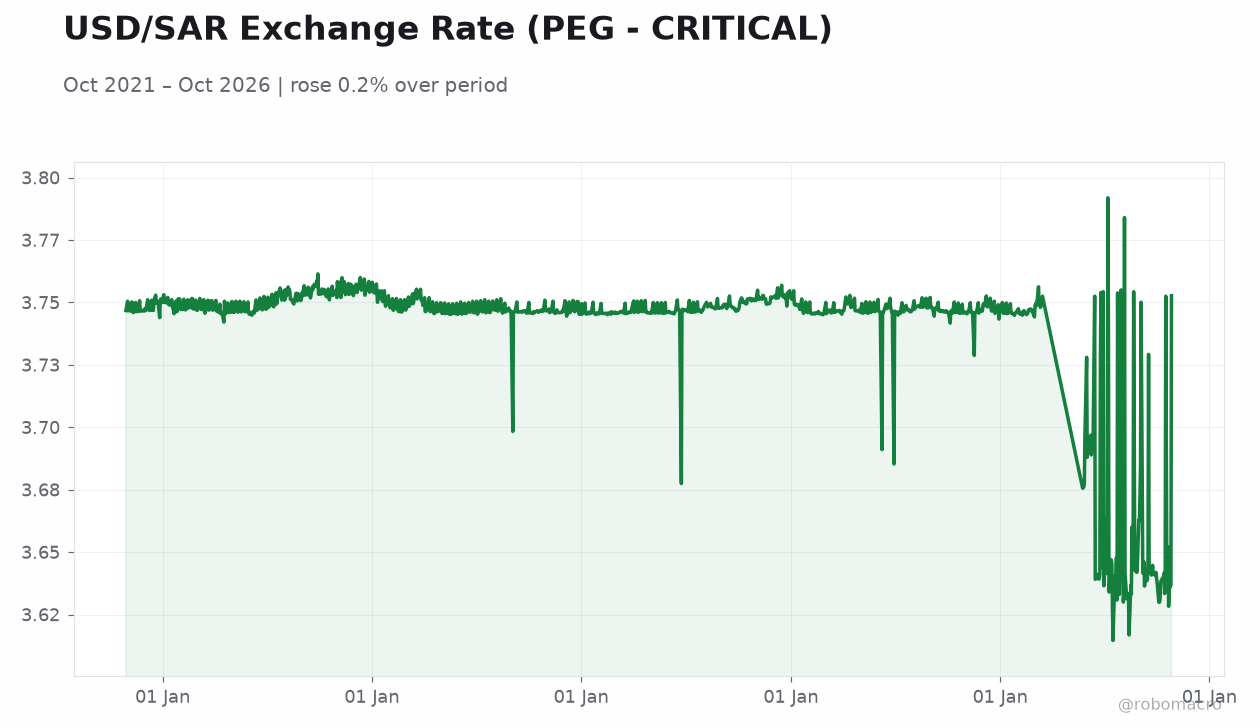
| USD/SAR | 3.75 | +3.43% |
| USD/AED | 3.67 | +0.03% |
| USD/KWD | 0.31 | -0.70% |
| Bitcoin | 80,827.57 | +1.03% |
Prior Economic Events
| Data | Prior | Cons | Actual |
|---|---|---|---|
| No events available | |||
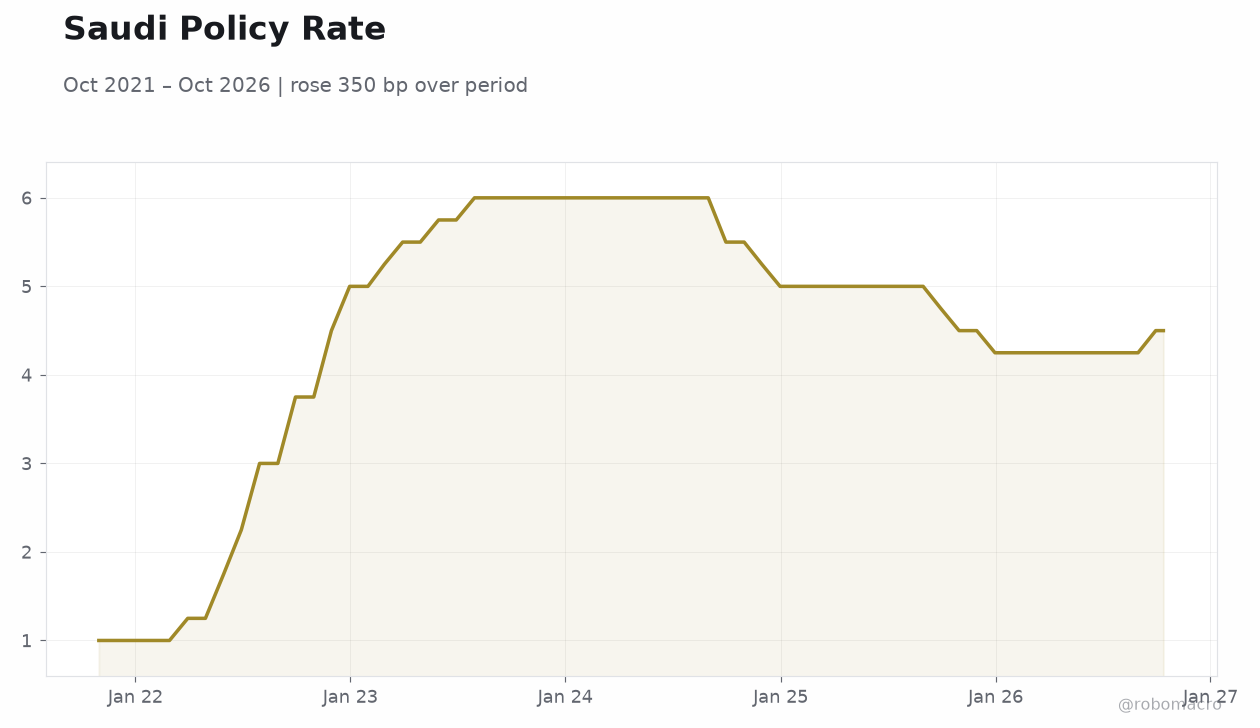 Saudi Policy Rate | Type: macro_line | SAMA policy rate %: 4.5 (2026-10-13) | Range: 1–6 | Trend(5pt): 1,5,6,5,4.5
Today's Economic Events
| Data | Prior | Cons | Time |
|---|---|---|---|
| GDP Growth Year-over-Year Preliminary | -4.70 | - | 01:00 |
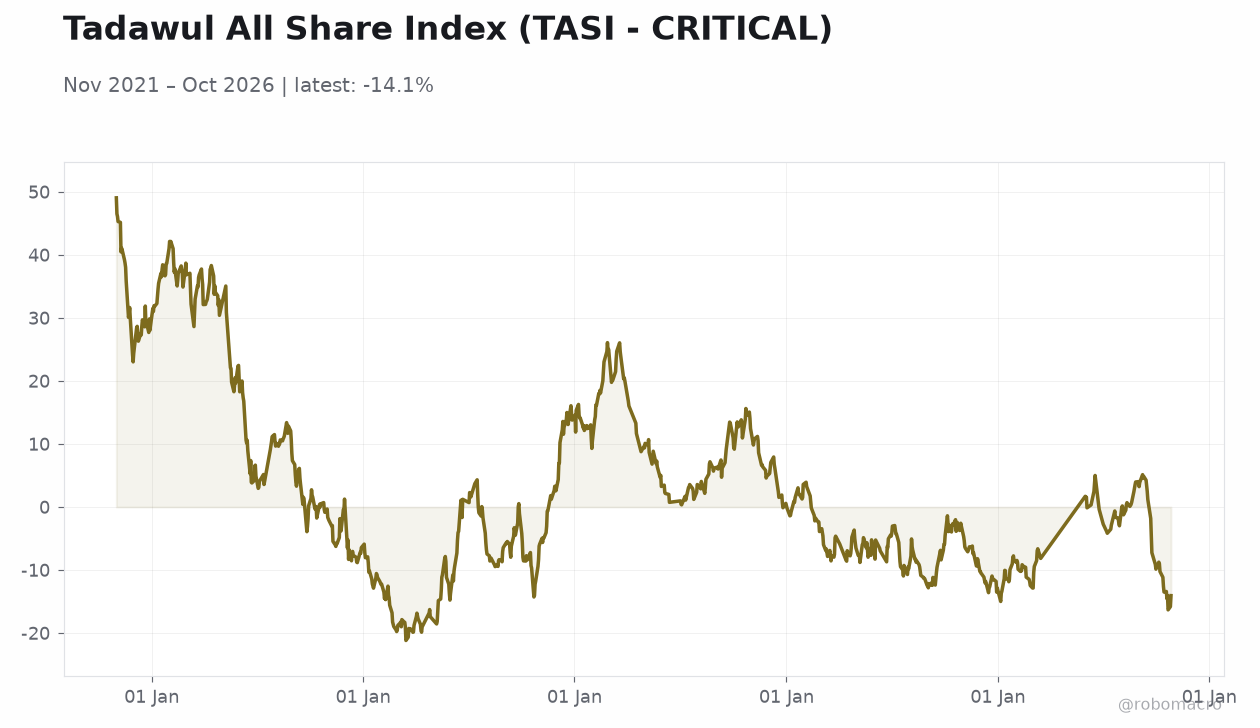
- Saudi Arabia's Houthi confrontation is reframing investor risk from oil infrastructure toward the non-oil economy, with Aramco and MSCI Saudi both up ~1.9% despite Brent's 4.35% slide to $110.77.
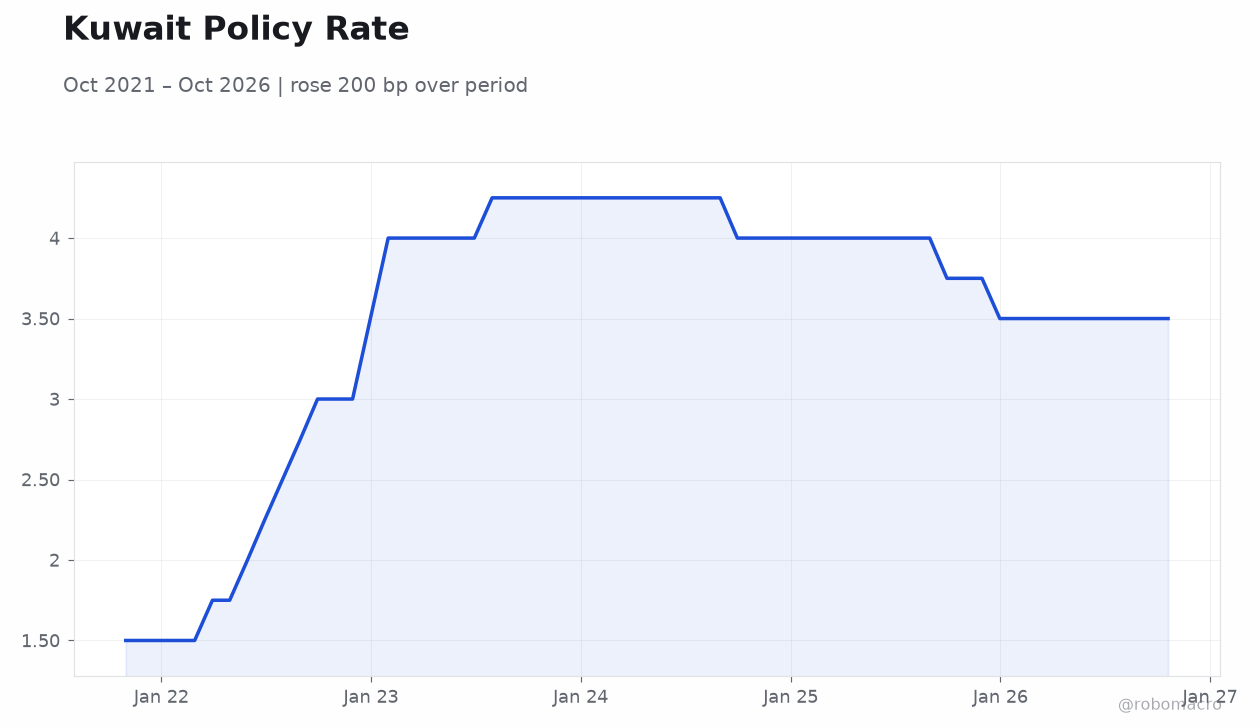
- Qatar leads GCC equity outperformance (+3.82% on MSCI Qatar) as Doha mediates Iran de-escalation talks, while Kuwait's dinar basket peg draws focus.
- Saudi preliminary GDP (prior -4.7%) headlines a thin regional calendar, though the release is dated November 1; Fed-anchored pegs keep all six central banks in a holding pattern.
Yesterday's Recap
Saudi Arabia dominated the tape as Houthi drone attacks on the kingdom's southern region — four intercepted by coalition air defenses — kept security risk at the fore, with Bloomberg and AGBI framing the conflict as a shift in fear from oil infrastructure toward the non-oil economy. Brent crude fell 4.35% to $110.77 and WTI eased 0.60% to $101.15, an odd pairing with the refinery-attack headlines that nonetheless reflects demand-side hedging. GCC equities diverged sharply from crude: MSCI Qatar surged 3.82% to 16.29, MSCI UAE rose 2.06% to 19.57, MSCI Saudi gained 1.90% to 34.65 and Saudi Aramco added 1.87% to SAR 26.08, while MSCI Kuwait lagged at +0.71%.
The USD/SAR print at 3.75 with a 3.43% change reflects a data-feed quirk rather than a peg break — the riyal remains firmly anchored. Gold firmed 0.58% to $4,061.70, underscoring persistent safe-haven demand. No GCC calendar events were scheduled for October 26, so the recap is market- and news-driven.
The Day Ahead
The calendar is thin, with Saudi Arabia's preliminary GDP growth year-over-year reading (prior -4.7%) the sole scheduled release, dated November 1 at 01:00 ET — technically outside the standard day-ahead window but the only item on the board. No GCC prints are slated for October 28, leaving markets to trade off oil, geopolitics and global risk sentiment. Traders will watch whether Brent stabilizes after Monday's slide and whether Qatari mediation headlines between Doha and Tehran sustain the Gulf's equity bid.
Regional bond desks will monitor any sovereign CDS widening tied to Houthi escalation. Liquidity in Saudi and UAE interbank markets should remain orderly absent fresh catalysts.
Other Economic Notes
Saudi Arabia's push to store crude in Singapore signals a strategic pivot toward Asian supply security, reinforcing the kingdom's downstream and logistics diversification agenda. Aramco's spot cargo offers to European buyers suggest it is managing outlet risk amid Red Sea disruption. The UAE continues to deepen its non-oil footprint, with Abu Dhabi's Manchester City ownership ties and Dubai's 2027 wealth-forum positioning underscoring the emirate's capital-attraction strategy.
↓ p.2