GCC Macro Daily(Beta Mode)
Aramco Attack; Oil Slips, Gold Surges
Market Snapshot
| Asset | Level | Change |
|---|---|---|
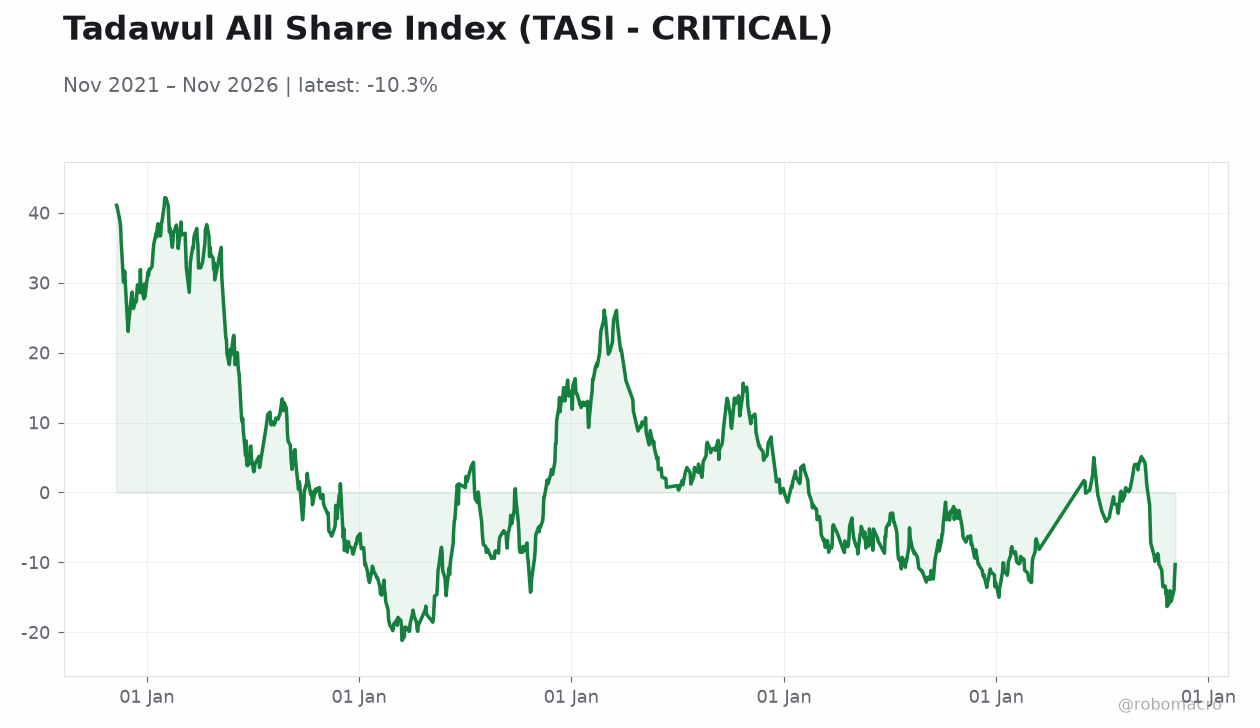
| Saudi Aramco | 26.16 | -0.30% |
| MSCI Saudi | 35.03 | +0.23% |
| MSCI UAE | 19.86 | +1.02% |
| MSCI Qatar | 17.60 | +0.74% |
| MSCI Kuwait | 36.00 | -0.68% |
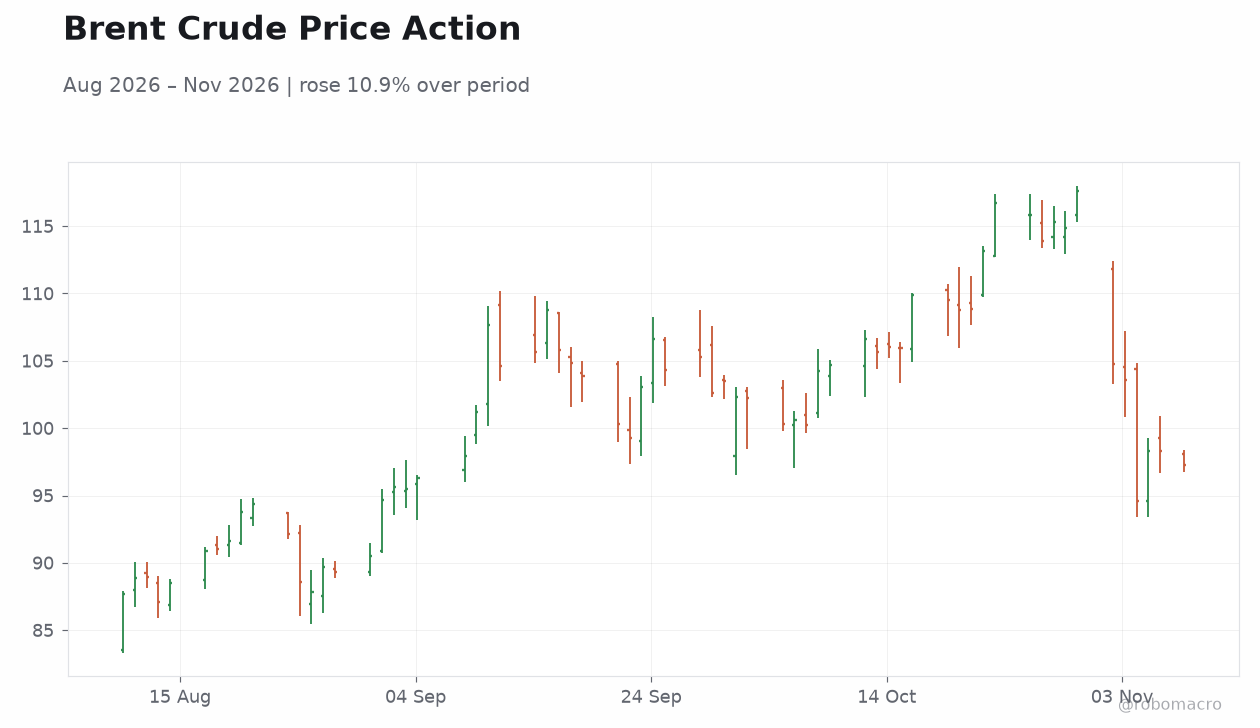
| Brent Crude | 97.19 | -1.15% |
| WTI Crude | 90.23 | -0.66% |
| Gold | 4,134.80 | +1.47% |
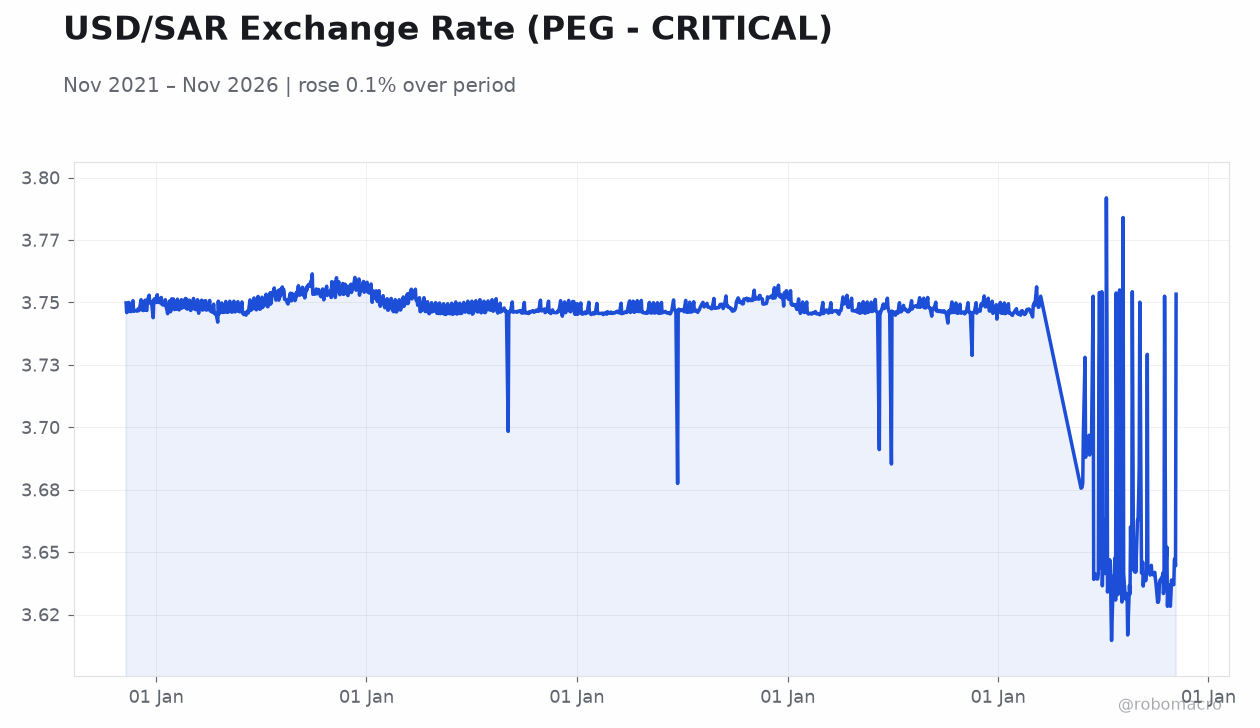
| USD/SAR | 3.75 | +3.20% |
| USD/AED | 3.67 | +0.03% |
| USD/KWD | 0.31 | -0.73% |
| Bitcoin | 75,232.08 | -0.68% |
Prior Economic Events
| Data | Prior | Cons | Actual |
|---|---|---|---|
| No events available | |||
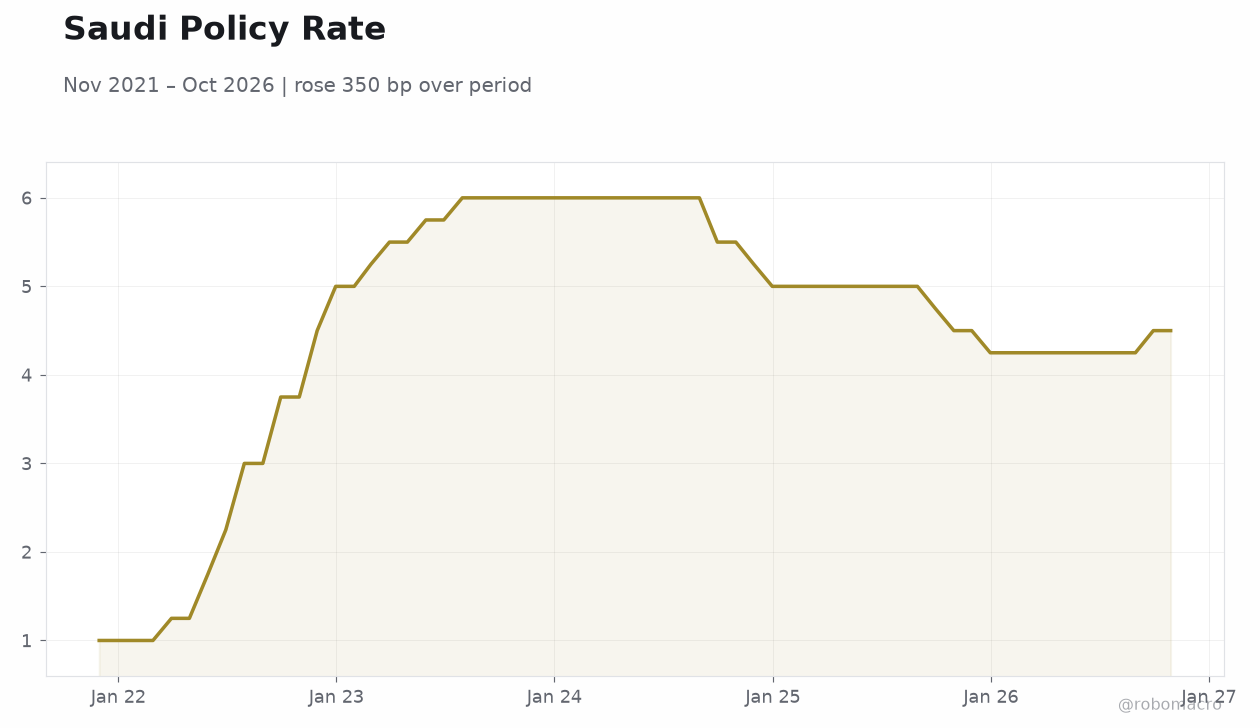 Saudi Policy Rate | Type: macro_line | Saudi policy rate (%): 4.5 (2026-10-29) | Range: 1–6 | Trend(5pt): 1,5.25,6,5,4.5
Today's Economic Events
| Data | Prior | Cons | Time |
|---|---|---|---|
| No events available | |||
- Minor damage reported after attempted attack on Saudi Aramco's Riyadh building; no casualties, crude still soft
- Brent falls 1.15% to $97.19 while gold jumps 1.47% to $4,134.80 on safe-haven demand
- UAE equities outperform (MSCI UAE +1.02%) as Abu Dhabi prepares to host Russia-Ukraine talks November 10-11
Yesterday's Recap
Saudi Arabia dominated the GCC news flow on Saturday, with the Energy Ministry confirming minor damage from an attempted attack on a Saudi Aramco building in Riyadh and no casualties reported — a reminder that security risk premia remain embedded in Saudi assets even as crude softened. Aramco shares slipped 0.30% to SAR 26.16, while the MSCI Saudi index edged up 0.23% to 35.03. The kingdom's macro narrative stayed constructive: Aramco profits surged, Riyadh extended a $3 billion lifeline to Pakistan, and the government continued mapping Red Sea depths to support a sustainable marine economy.
In the UAE, equities were the regional standout, with MSCI UAE gaining 1.02% to 19.86 and MSCI Qatar up 0.74% to 17.60, while MSCI Kuwait lagged, falling 0.68% to 36.00. Broader market moves were risk-off in energy: Brent dropped 1.15% to $97.19 and WTI fell 0.66% to $90.23, even as gold rallied 1.47% to $4,134.80. The USD/SAR print at 3.75 showed a 3.20% day change — a data artifact rather than a peg move, given the riyal's hard 3.75 anchor — while USD/AED held at 3.67 (+0.03%) and USD/KWD at 0.31 (-0.73%).
The Day Ahead
The GCC calendar is empty for Sunday, November 08, with no scheduled data releases across the six member states, so flows will be driven by oil price action and geopolitical headlines. Attention turns to Abu Dhabi, where US, Ukrainian and Russian delegations are scheduled to meet on November 10-11, with Steve Witkoff and Jared Kushner expected to attend — a high-profile diplomatic event that reinforces the UAE's role as a neutral convening power. Saudi Arabia's tourist visa expansion to four additional countries and ADNOC's 10-year, 4 million tonne LNG supply deal with India's Gujarat Energy are likely to feature in corporate and policy commentary.
Regional flydubai services to Riyadh and Abha remain suspended until November 16, a reminder of lingering operational disruptions. With no domestic prints, GCC traders will take their cue from Asian equity opens and any OPEC+ commentary.
Other Economic Notes
Saudi Arabia's non-oil diversification agenda remains the dominant structural theme, with Vision 2030 spending and Red Sea marine-economy mapping signaling continued state-led investment. The $3 billion support package to Pakistan underscores Riyadh's use of financial diplomacy to extend regional influence. ↓ p.2