GCC Macro Daily(Beta Mode)
Houthi Strikes Hit Saudi Oil Infrastructure
Market Snapshot
| Asset | Level | Change |
|---|---|---|
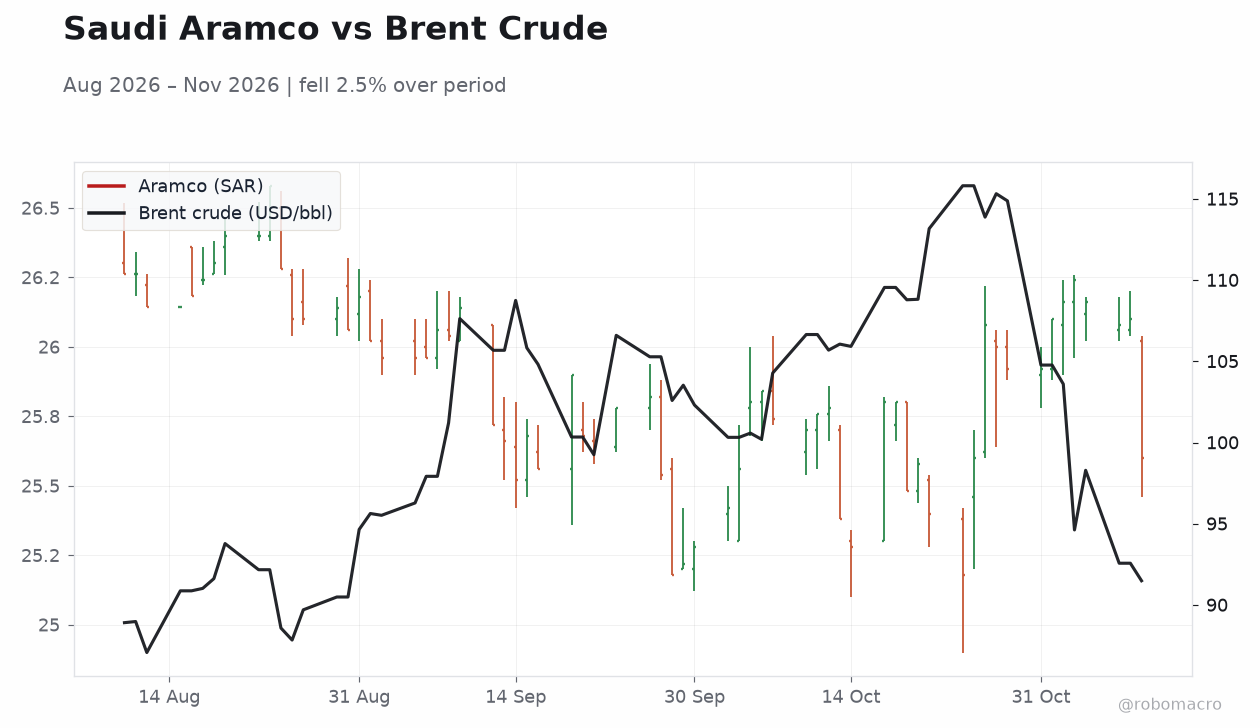
| Saudi Aramco | 26.02 | +1.64% |
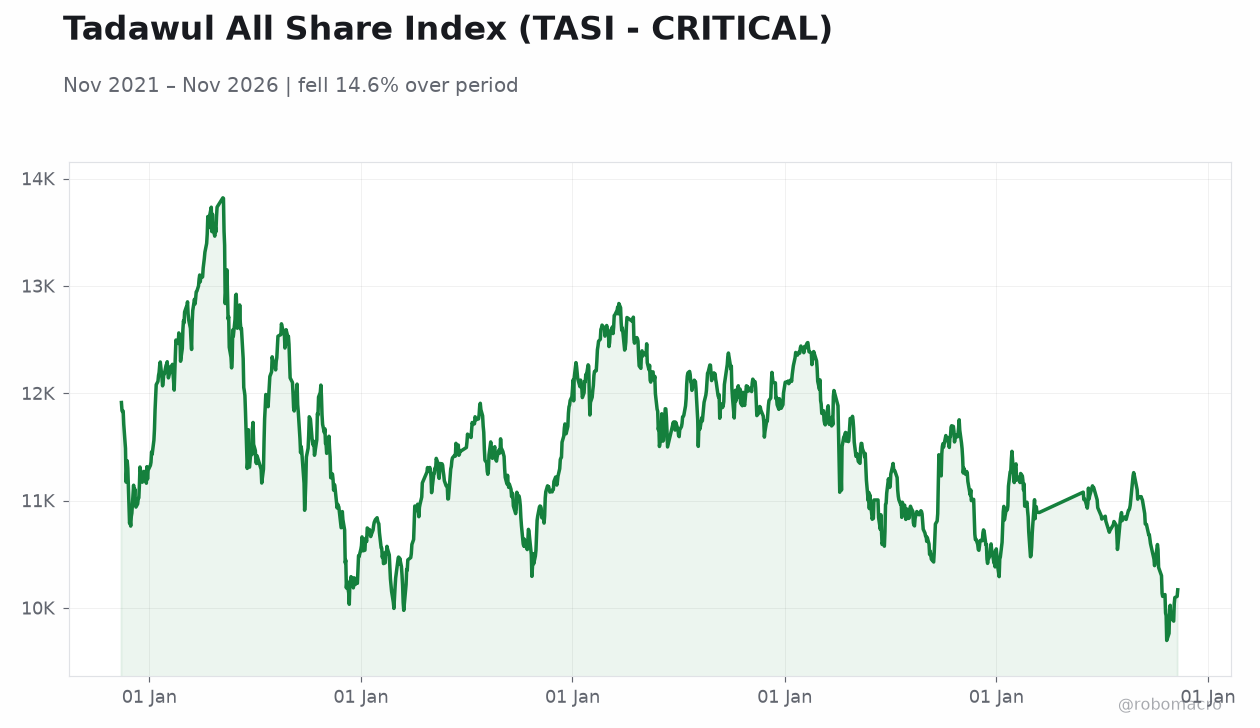
| MSCI Saudi | 36.00 | +1.18% |
| MSCI UAE | 20.59 | +1.03% |
| MSCI Qatar | 17.87 | -0.33% |
| MSCI Kuwait | 36.24 | +0.26% |
| Brent Crude | 91.80 | +0.34% |
| WTI Crude | 85.59 | -0.52% |
| Gold | 3,986.60 | -1.08% |
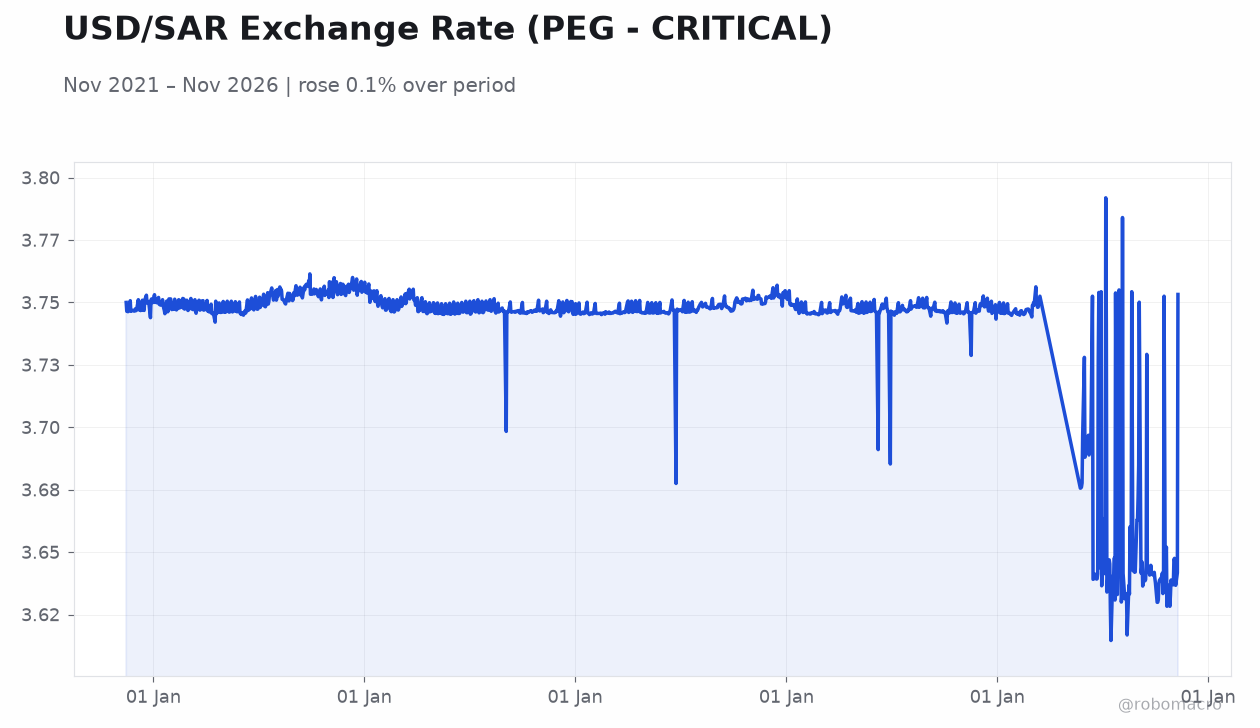
| USD/SAR | 3.75 | +2.97% |
| USD/AED | 3.67 | +0.03% |
| USD/KWD | 0.31 | +0.07% |
| Bitcoin | 73,626.44 | -0.13% |
Prior Economic Events
| Data | Prior | Cons | Actual |
|---|---|---|---|
| No events available | |||
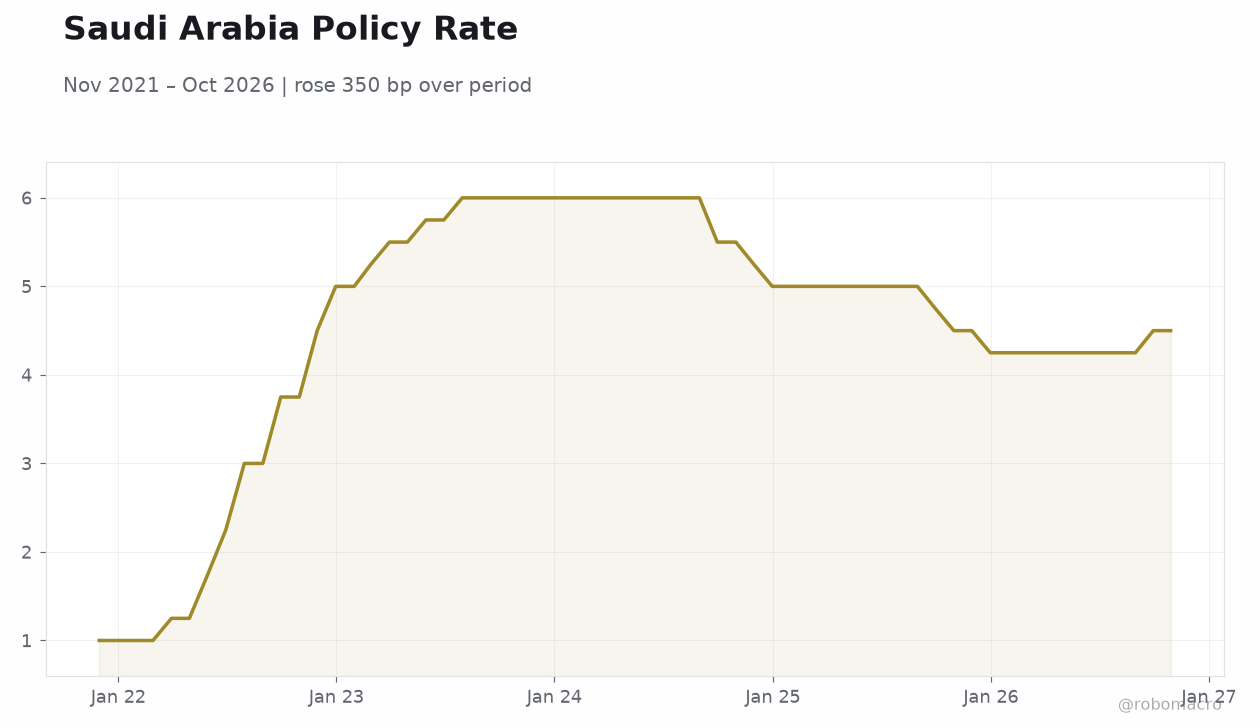 Saudi Arabia Policy Rate | Type: macro_line | SAMA policy rate (%): 4.5 (2026-10-29) | Range: 1–6 | Trend(5pt): 1,5.25,6,5,4.5
Today's Economic Events
| Data | Prior | Cons | Time |
|---|---|---|---|
| No events available | |||
- Houthi missile and drone attacks target Saudi oil infrastructure, with debris falling in the Mecca region and a pipeline fire reported; Brent holds above $91 on supply-risk premium.
- Saudi Arabia faces a liquidity crunch even as oil exports rebound to pre-war levels, while four international institutions converge on Saudi growth above 5% by 2027.
- Qatar's PM to brief the G7 and Saudi Arabia on Iran war mediation after positive responses from Washington and Tehran; Hormuz LNG traffic hits its highest level since the Iran war began.
Yesterday's Recap
Saudi Arabia dominated the tape as Houthi attacks prompted emergency measures, with missiles intercepted over the Kingdom and debris falling in the Mecca region; a strike damaged a Saudi Aramco building in Riyadh and an attack on an oil pipeline caused a fire. Despite the security escalation, Saudi equities rallied — the MSCI Saudi index gained 1.18% and Saudi Aramco rose 1.64% to SAR 26.02 — while Brent crude added 0.34% to $91.80 and WTI slipped 0.52% to $85.59. The UAE tracked the Saudi bid, with MSCI UAE up 1.03%, whereas Qatar lagged, MSCI Qatar falling 0.33%; Kuwait edged 0.26% higher.
Macro color centered on a liquidity crunch in Saudi Arabia even as oil exports rebounded to pre-war levels, alongside a three-place climb in financial inclusion rankings. The USD/SAR print at 3.75 showed a 2.97% move in the market feed, a reminder to treat the level, not the percentage, as the operative peg reference. Gold fell 1.08% to $3,986.60, and no GCC calendar releases were recorded for the session.
The Day Ahead
No GCC macro releases are scheduled for Wednesday, November 11, leaving markets to trade the geopolitical tape and oil price action. Attention stays fixed on Houthi attack headlines and any retaliatory escalation, which will drive sovereign CDS and equity risk premia across the Gulf. Qatar's prime minister's briefing to the G7 and Saudi Arabia on Iran war mediation is the key diplomatic event to watch for de-escalation signals.
With the calendar empty, interbank rates and FX forwards will be the main domestic indicators, and any Saudi liquidity measures will be scrutinized. Traders will also monitor Hormuz transit data after LNG traffic hit its highest level since the Iran war began.
Other Economic Notes
OPEC crude production rose by nearly 2 million bpd in October, a substantial supply addition that partially offsets the geopolitical risk premium embedded in Brent. Four international institutions now agree that the Saudi economy will resume growth above 5% by 2027, reinforcing the non-oil diversification narrative despite near-term liquidity strain. Saudi Arabia's improved financial inclusion ranking signals continued progress on Vision 2030 social and financial deepening.
↓ p.2