GCC Macro Daily(Beta Mode)
Houthi Drones Downed; Moody's Sees Saudi 2027 Rebound
Market Snapshot
| Asset | Level | Change |
|---|---|---|
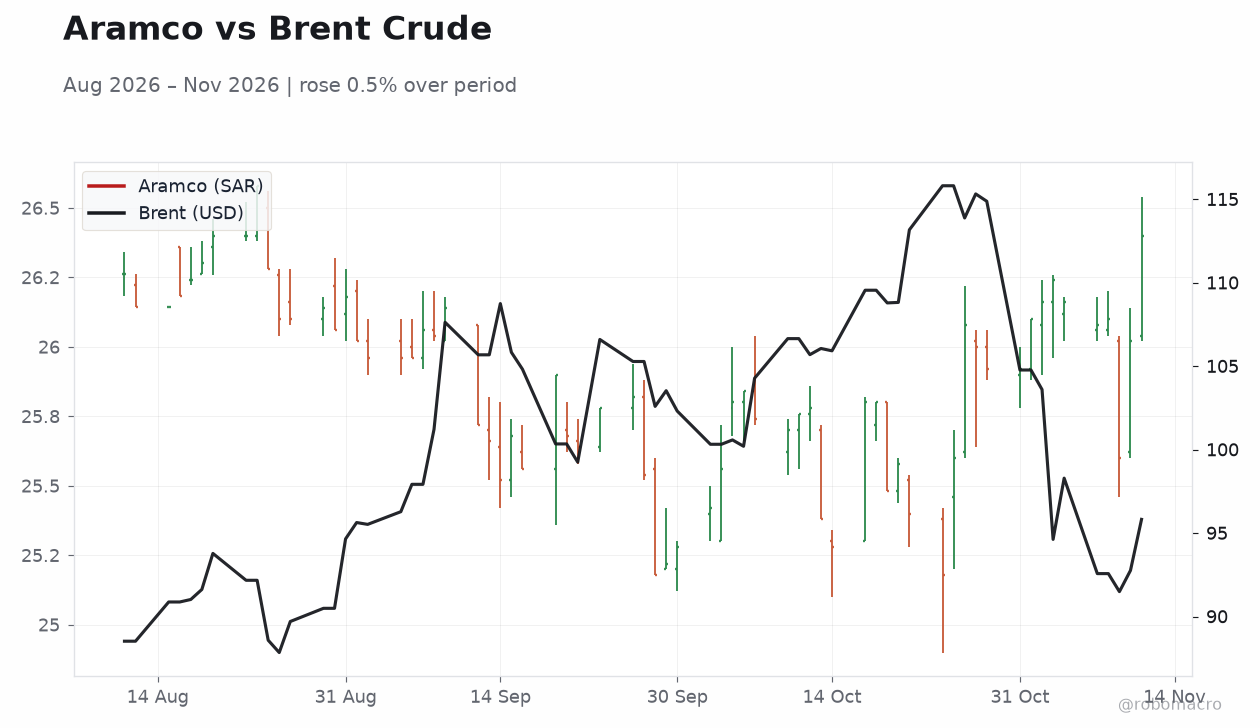
| Saudi Aramco | 26.40 | +1.46% |
| MSCI Saudi | 36.01 | -0.33% |
| MSCI UAE | 20.92 | -0.90% |
| MSCI Qatar | 17.63 | -0.11% |
| MSCI Kuwait | 36.31 | -0.10% |
| Brent Crude | 95.84 | +0.02% |
| WTI Crude | 88.56 | -0.20% |
| Gold | 3,886.30 | +0.03% |
| USD/SAR | 3.68 | +0.84% |
| USD/AED | 3.67 | +0.00% |
| USD/KWD | 0.31 | -0.53% |
| Bitcoin | 63,241.41 | -7.34% |
Prior Economic Events
| Data | Prior | Cons | Actual |
|---|---|---|---|
| No events available | |||
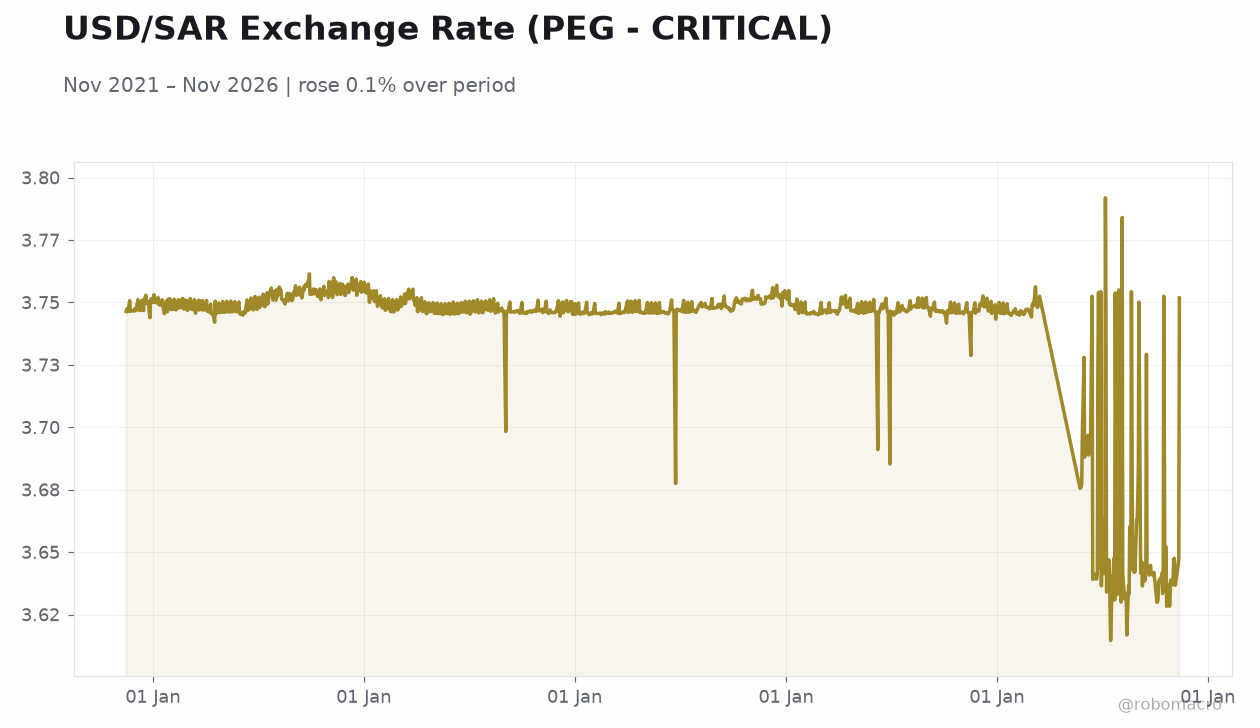 USD/SAR Exchange Rate (PEG - CRITICAL) | Type: macro_line | USD/SAR Exchange Rate (PEG - CRITICAL): 3.752 (2026-11-13) | Range: 3.615–3.792 | Trend(5pt): 3.746,3.75,3.746,3.746,3.752
Today's Economic Events
| Data | Prior | Cons | Time |
|---|---|---|---|
| No events available | |||
- Saudi-led coalition intercepts Houthi drones over Eastern Region; Gulf security premium persists
- Moody's projects Saudi economy to rebound in 2027 on oil output recovery
- Aramco shares gain 1.46% while regional equity benchmarks slip; Bitcoin tumbles 7.34%
Yesterday's Recap
Saudi Arabia dominated the GCC news flow on Friday, with coalition forces intercepting multiple Houthi drones over the Kingdom's Eastern Region — a reminder that Red Sea and Yemen-related security risks continue to command a premium in Gulf sovereign CDS and oil pricing. On the macro front, Moody's issued a constructive view on Saudi Arabia, projecting the economy to rebound in 2027 as oil output recovers, reinforcing the fiscal trajectory narrative underpinning Vision 2030 diversification spending. Riyadh also confirmed new dates for its flagship Future Investment Initiative (FII), signaling continued commitment to attracting foreign capital, and launched a new business platform aimed at streamlining foreign investor entry.
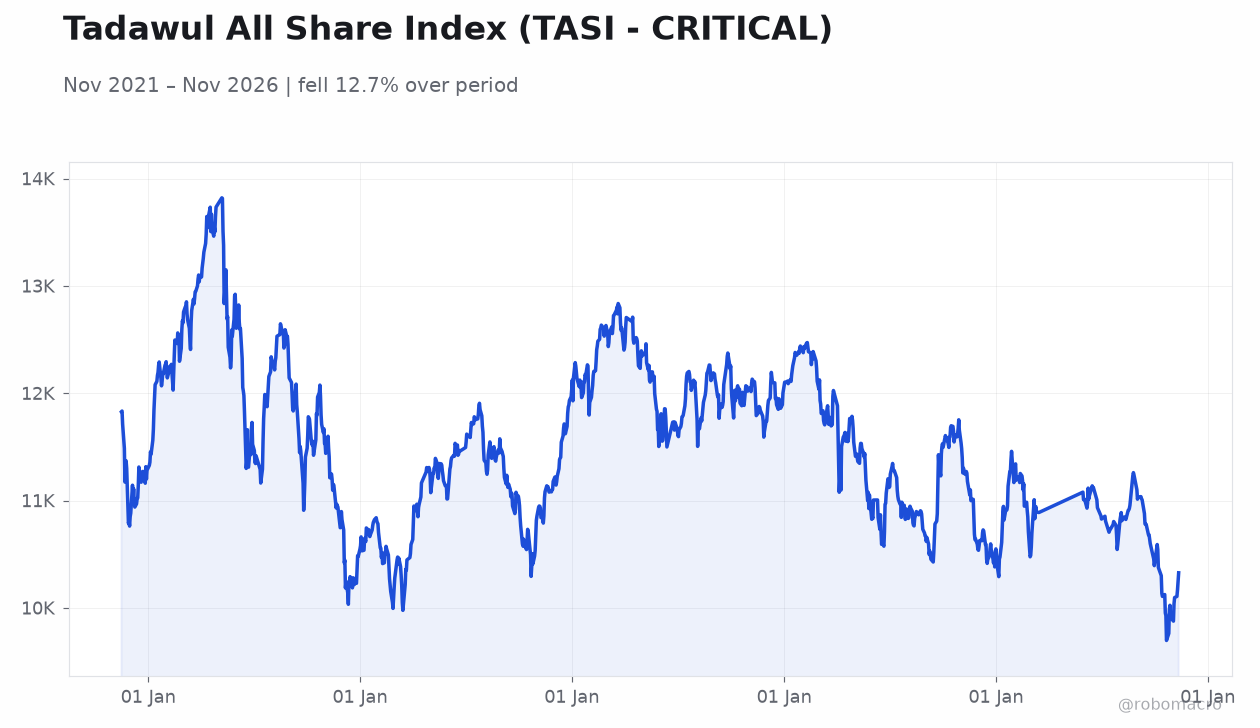
In markets, Saudi Aramco shares rose 1.46% to SAR 26.40, bucking the broader regional trend, while MSCI Saudi fell 0.33% to 36.01 and MSCI UAE dropped 0.90% to 20.92. MSCI Qatar and MSCI Kuwait posted marginal declines of 0.11% and 0.10% respectively. Brent crude held firm at $95.84 (+0.02%), with WTI at $88.56 (-0.20%), keeping oil revenue assumptions broadly intact across the six member states.
The Day Ahead
The calendar is light for Saturday, November 14, with no scheduled GCC macro data releases across the six member states. Market attention will instead center on geopolitical headlines out of Saudi Arabia's Eastern Region following Friday's drone interceptions, with any escalation likely to feed through to Sunday's oil open and GCC equity sentiment. Regional bourses are closed for the weekend, so positioning will be deferred to Sunday's sessions in Riyadh (Tadawul), Dubai (DFM), and Abu Dhabi (ADX).
Investors will also digest Moody's Saudi outlook commentary ahead of the coming week's data flow. With no tier-one prints scheduled, secondary focus falls on any OPEC+ commentary regarding production quotas into year-end.
Other Economic Notes
Saudi Arabia's non-oil diversification push continues to draw international attention, with the confirmed FII dates and the new foreign investor platform underscoring Riyadh's capital-attraction strategy. The UAE remains a dominant regional hub — President Mohamed bin Zayed and Dubai Ruler Mohammed bin Rashid met to discuss national growth plans, while the Emirates continues to feature prominently in global gold trade flows, particularly as the main destination for Sudanese and conflict-zone gold. ↓ p.2