GCC Macro Daily(Beta Mode)
Houthi Strike on Aramco Refinery Lifts Gulf Risk Premium
Market Snapshot
| Asset | Level | Change |
|---|---|---|
| Saudi Aramco | 26.48 | +0.15% |
| MSCI Saudi | 34.96 | -0.54% |
| MSCI UAE | 20.81 | -0.38% |
| MSCI Qatar | 17.57 | -0.48% |
| MSCI Kuwait | 35.27 | -0.91% |
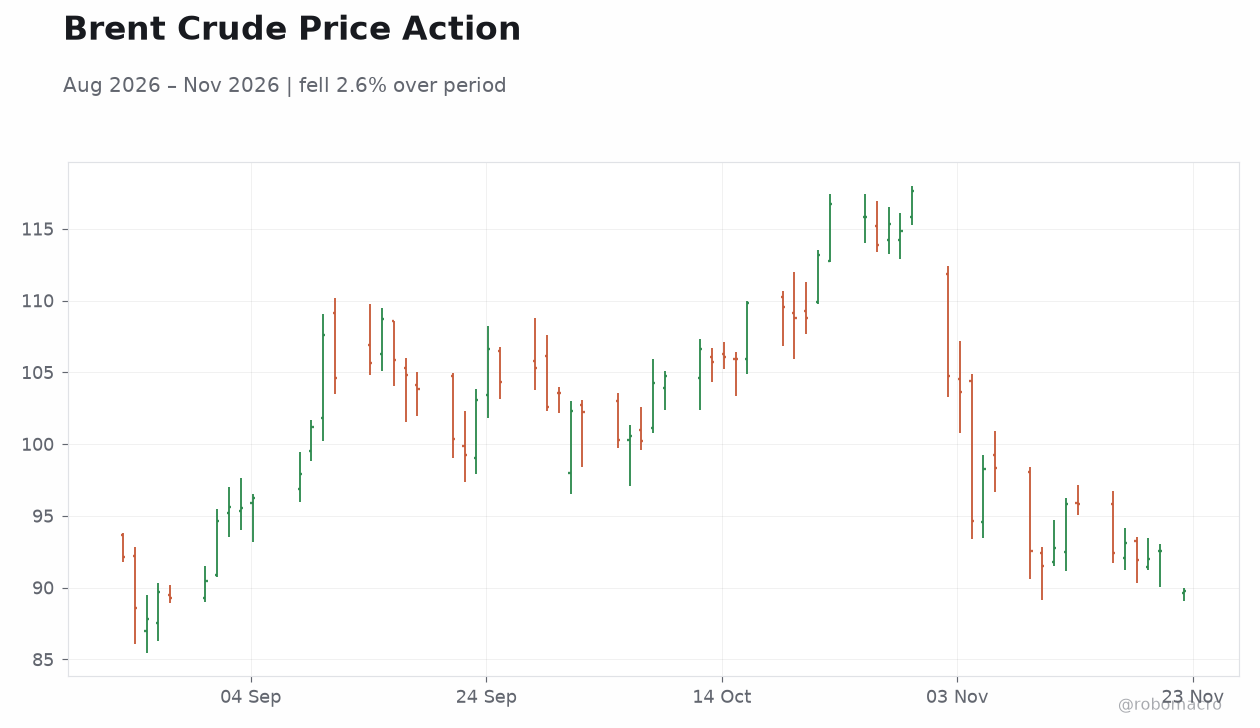
| Brent Crude | 89.74 | -3.06% |
| WTI Crude | 83.23 | -0.89% |
| Gold | 3,605.70 | +2.57% |
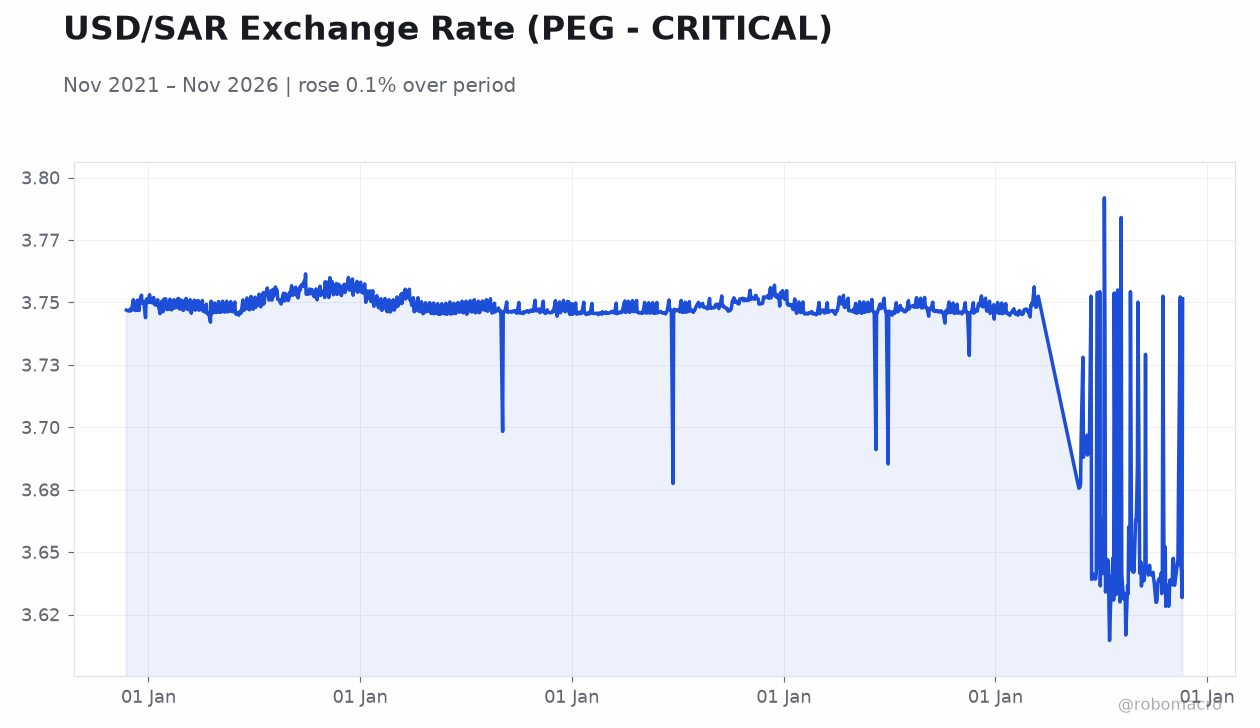
| USD/SAR | 3.75 | +3.22% |
| USD/AED | 3.67 | -0.01% |
| USD/KWD | 0.31 | -0.89% |
| Bitcoin | 60,748.91 | +1.09% |
Prior Economic Events
| Data | Prior | Cons | Actual |
|---|---|---|---|
| No events available | |||
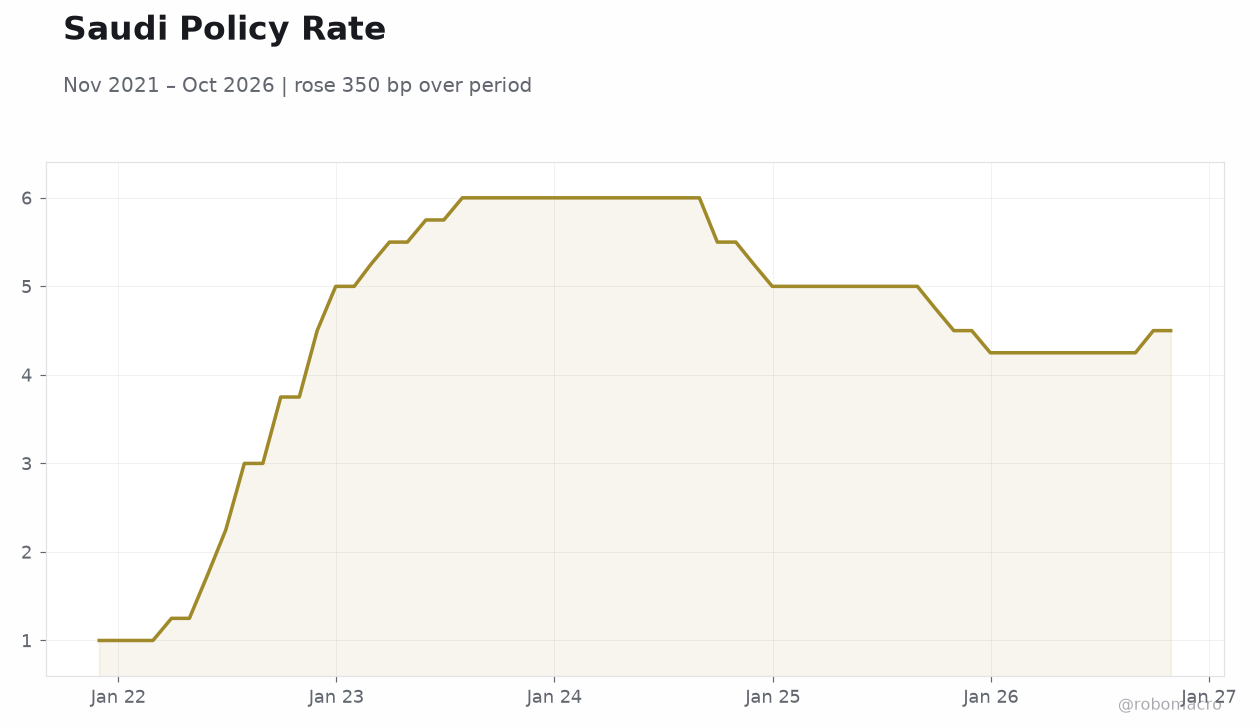 Saudi Policy Rate | Type: macro_line | Saudi policy rate (%): 4.5 (2026-10-29) | Range: 1–6 | Trend(5pt): 1,5.25,6,5,4.5
Today's Economic Events
| Data | Prior | Cons | Time |
|---|---|---|---|
| No events available | |||
- Houthis claim missile attack on Saudi Aramco's Rabigh refinery; Saudi Arabia, Qatar and UAE condemn Iranian strike on Bahrain, sharpening Gulf security risk.
- Brent settles at $89.74 (−3.06% d/d) even as headlines flag supply risk; gold jumps 2.57% to $3,605.70 as haven demand builds.
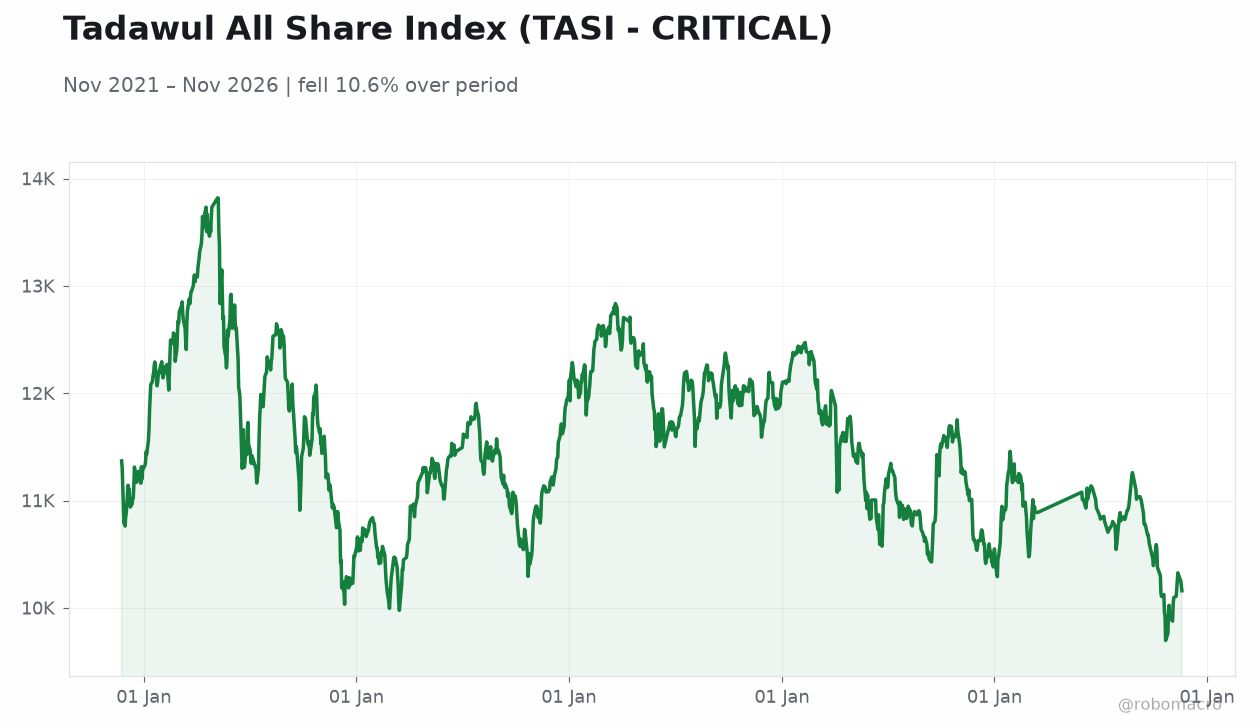
- GCC equities soften across the board — MSCI Kuwait −0.91%, Saudi −0.54%, Qatar −0.48%, UAE −0.38% — with Aramco shares up 0.15% at SAR 26.48.
Yesterday's Recap
The dominant macro event for GCC markets was the Houthi claim of a missile attack on Saudi Aramco's Rabigh refinery, which reintroduced a supply-risk premium into crude even as Brent settled lower at $89.74, down 3.06% on the day, and WTI at $83.23 (−0.89%). Saudi equities absorbed the news with restraint: MSCI Saudi fell 0.54% and Aramco itself edged up 0.15% to SAR 26.48, suggesting the market treated the strike as a contained event rather than a production outage. Regional risk was compounded by the Iranian attack on Bahrain, which drew condemnations from Saudi Arabia, Qatar and the UAE — a rare moment of visible GCC political coordination.
Kuwait was the weakest regional market, with MSCI Kuwait down 0.91%. Qatar's MSCI index slipped 0.48% and the UAE's 0.38%, tracking the broader risk-off tone. Gold's 2.57% rally to $3,605.70 and Bitcoin's 1.09% gain to $60,748.91 confirmed a defensive tilt in cross-asset positioning, while the USD/SAR print at 3.75 (+3.22%) reflects quotation conventions rather than any peg stress.
The Day Ahead
The GCC calendar is empty for Monday, November 23, leaving markets to trade off geopolitical headlines and crude price action rather than scheduled data. With no regional prints due, attention will center on whether the Rabigh strike escalates into further Houthi action against Saudi energy infrastructure and whether Brent holds above the $89 handle. Qatar's diplomatic track bears watching after the Qatari delegation's Tehran visit, with Doha positioning itself as a mediator between Iran and the Gulf.
Regional bourses reopen with the security overhang unresolved, and any confirmed production impact at Rabigh would be the key incremental variable for Saudi equities and sovereign CDS. Absent fresh data, positioning will likely stay defensive into the week.
Other Economic Notes
The Rabigh strike underscores the structural vulnerability of Saudi fiscal arithmetic to single-asset energy infrastructure, with Brent near $90 still well above the fiscal breakeven required to fund Vision 2030 spending. Qatar continues to leverage its LNG position diplomatically, with the QCB Governor meeting Canada's Minister of Finance and National Revenue — a signal of deepening bilateral financial ties. ↓ p.2