GCC Macro Daily(Beta Mode)
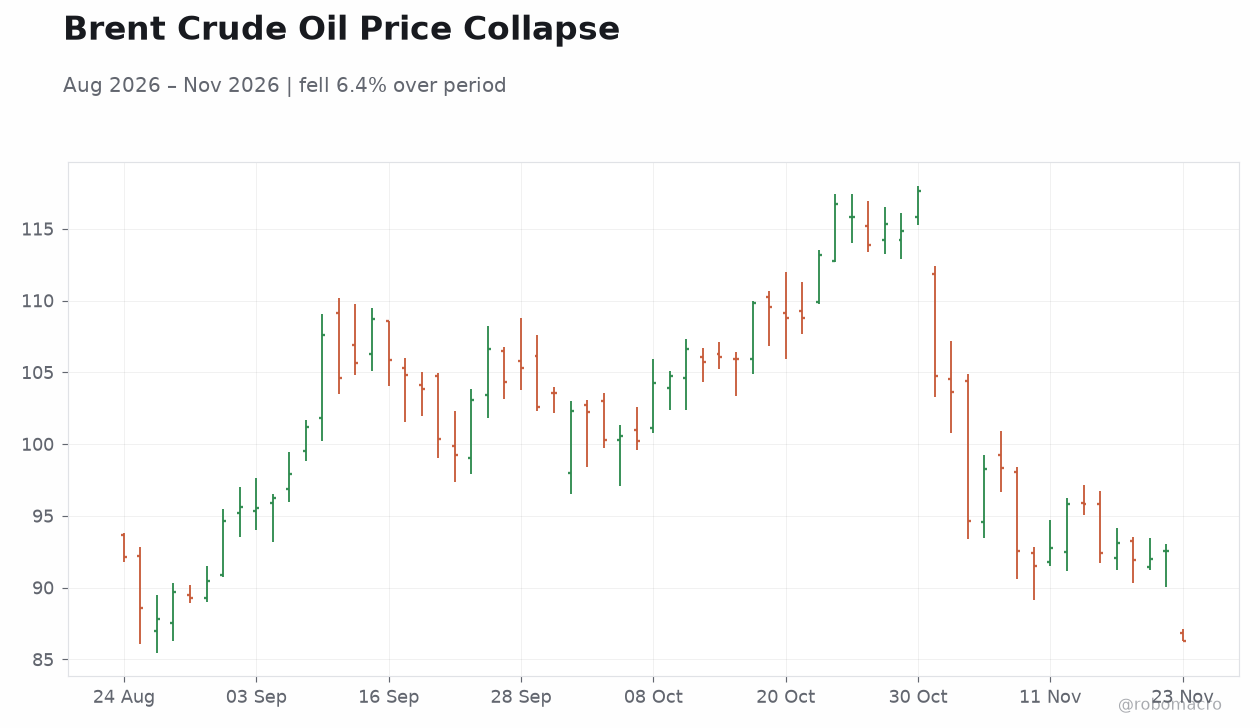
Oil Plunges 6.8% as Houthis Hit Aramco
Market Snapshot
| Asset | Level | Change |
|---|---|---|
| Saudi Aramco | 26.48 | +0.15% |
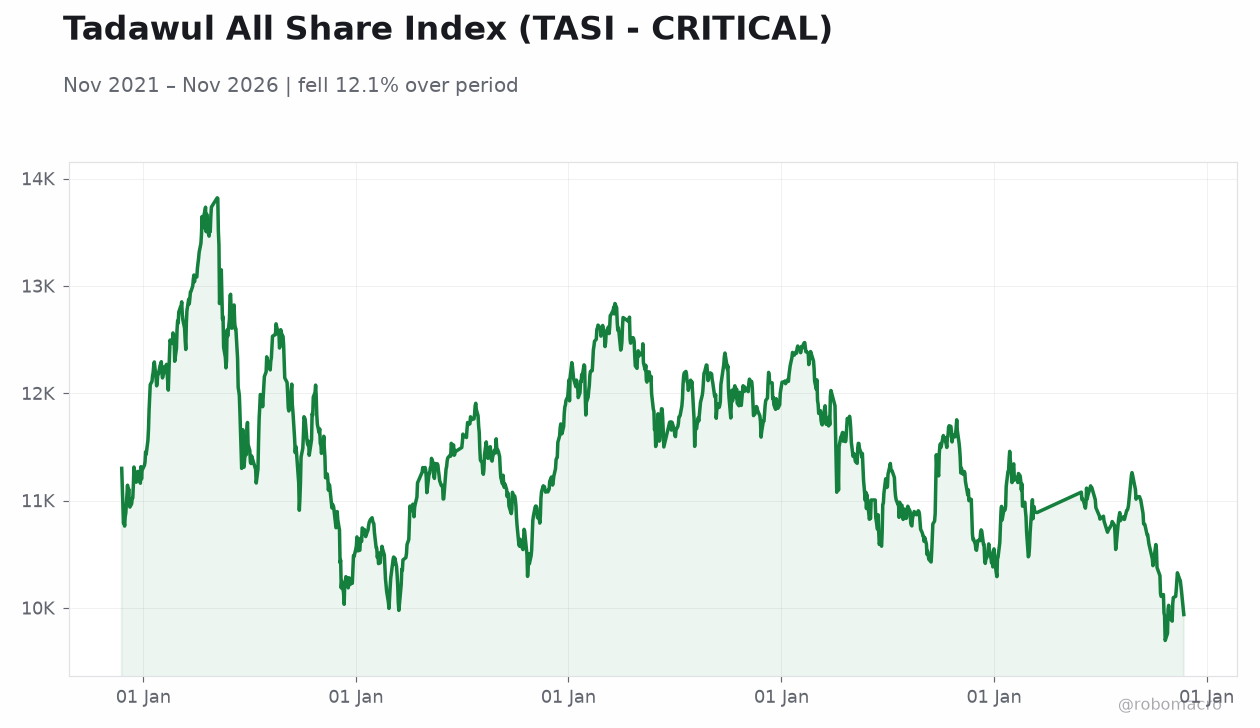
| MSCI Saudi | 34.96 | -0.54% |
| MSCI UAE | 20.81 | -0.38% |
| MSCI Qatar | 17.57 | -0.48% |
| MSCI Kuwait | 35.27 | -0.91% |
| Brent Crude | 86.27 | -6.81% |
| WTI Crude | 79.91 | -4.85% |
| Gold | 3,659.10 | +4.09% |
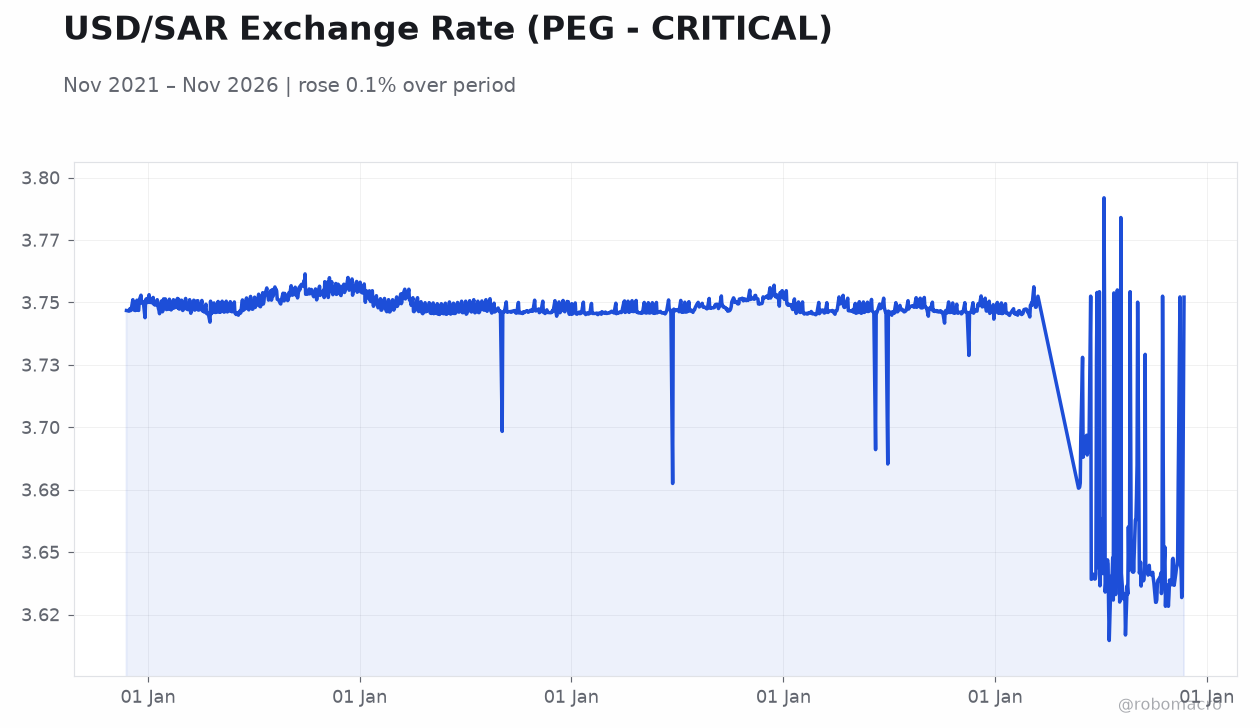
| USD/SAR | 3.75 | +3.26% |
| USD/AED | 3.67 | +0.03% |
| USD/KWD | 0.31 | -0.06% |
| Bitcoin | 60,887.89 | -0.45% |
Prior Economic Events
| Data | Prior | Cons | Actual |
|---|---|---|---|
| No events available | |||
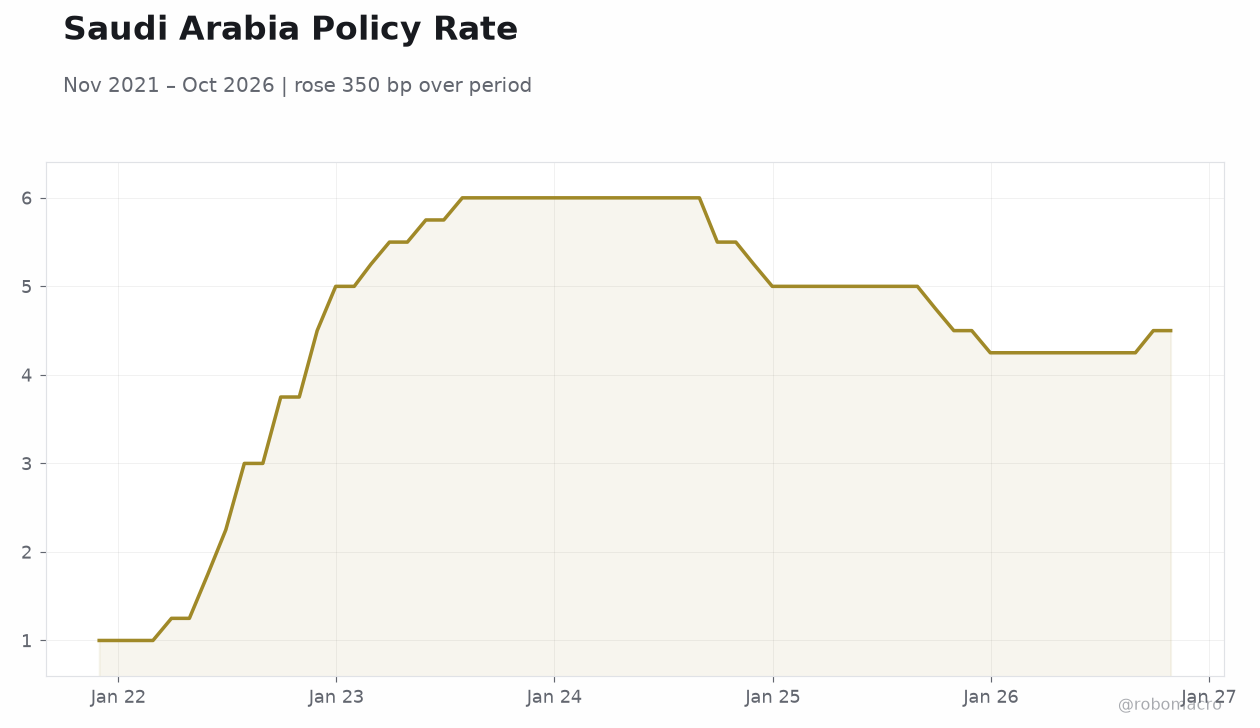 Saudi Arabia Policy Rate | Type: macro_line | Policy rate (%): 4.5 (2026-10-29) | Range: 1–6 | Trend(5pt): 1,5.25,6,5,4.5
Today's Economic Events
| Data | Prior | Cons | Time |
|---|---|---|---|
| No events available | |||
- Brent crude collapsed 6.81% to $86.27 and WTI fell 4.85% to $79.91 as Houthi forces escalated attacks on Saudi Aramco infrastructure, injecting fresh supply-risk uncertainty into GCC fiscal outlooks.
- GCC equities broadly retreated, led by Kuwait (-0.91%) and Saudi Arabia (-0.54%), while gold surged 4.09% to $3,659.10 as a safe-haven bid intensified.
- Geopolitical risk dominates the tape: Iran's attack on Bahrain drew coordinated GCC condemnation, Qatar is mediating US-Iran talks, and Houthis denied threats to Mecca even as Aramco remains under "constant attack."
Yesterday's Recap
GCC markets on Sunday were dominated by a sharp reversal in energy prices and escalating security risk. Brent crude plunged 6.81% to $86.27/bbl and WTI dropped 4.85% to $79.91/bbl, a move that cuts directly against the fiscal breakeven assumptions of every GCC sovereign, with Saudi Arabia's budget most exposed given its ~$96/bbl IMF-estimated breakeven. Saudi Aramco shares nonetheless edged up 0.15% to SAR 26.48, outperforming the broader MSCI Saudi index, which fell 0.54% to 34.96.
Kuwait was the weakest regional performer, with MSCI Kuwait down 0.91% to 35.27, while MSCI UAE slipped 0.38% to 20.81 and MSCI Qatar fell 0.48% to 17.57. The USD/SAR printed at 3.75 with a reported +3.26% change — a figure that warrants scrutiny given the peg's structural stability — while USD/AED held at 3.67 (+0.03%) and USD/KWD at 0.31 (-0.06%). Gold's 4.09% rally to $3,659.10 signals investors are pricing genuine tail risk from the Iran-Bahrain-Houthi nexus rather than a routine risk-off episode.
The Day Ahead
No scheduled GCC macro data releases appear on the calendar for Monday, November 23, leaving markets to trade on geopolitical headlines and oil price momentum. Traders will watch whether Brent stabilizes above the $85 handle or extends losses, with direct implications for Saudi Tadawul and Abu Dhabi Securities Exchange sentiment. Qatar's diplomatic track — the PM's push to revive US-Iran negotiations — is the key non-market variable, and any signal of de-escalation could reverse the gold bid and support regional risk assets.
South Korea's request for priority Qatari LNG supply once Hormuz transits normalize underscores how Gulf exporters are positioning for a post-conflict shipping environment. With no prints to anchor positioning, expect thin liquidity and headline-driven volatility across GCC bourses.
Other Economic Notes
Saudi Arabia's new 15% tax regime is drawing scrutiny over who bears the burden and who is exempt, a fiscal diversification lever as oil revenues wobble. ↓ p.2