Greater China Macro Daily(Beta Mode)
China GDP Misses as Exports Surge
Market Snapshot
| Asset | Level | Change |
|---|---|---|
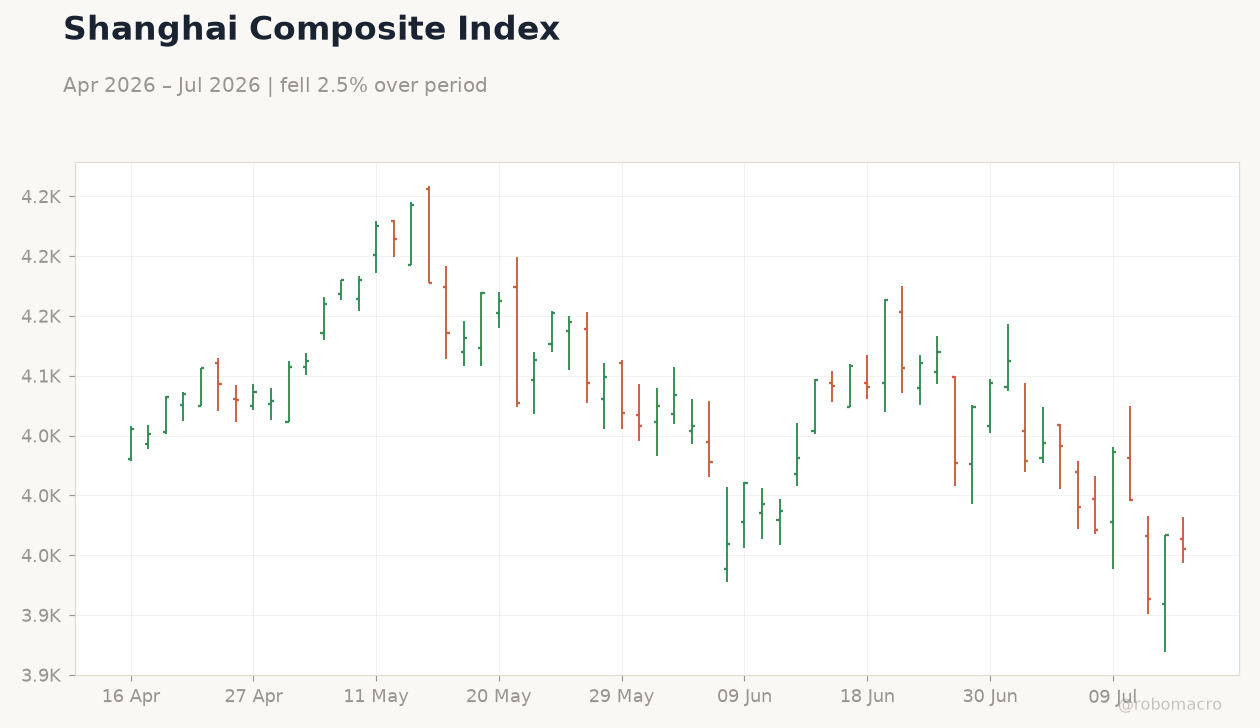
| Shanghai Composite | 3,882.41 | -1.85% |
| CSI 300 | 4,698.43 | -1.85% |
| Hang Seng | 24,681.10 | +1.40% |
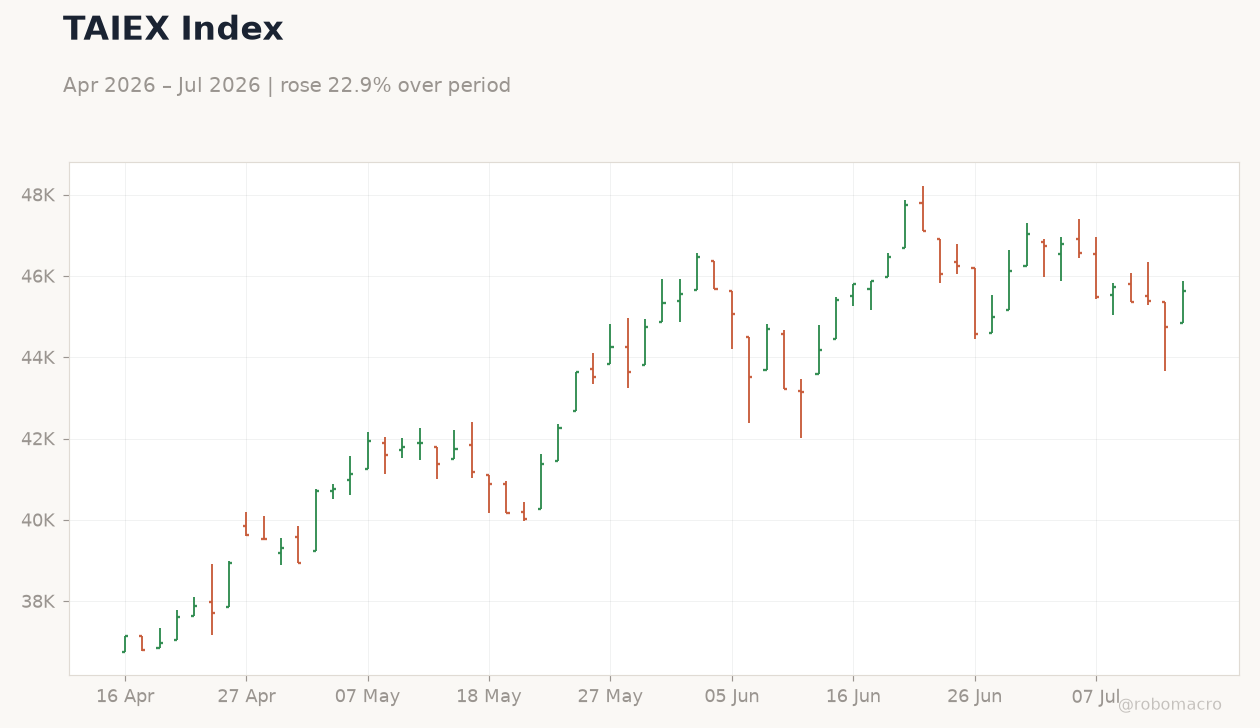
| TAIEX | 45,631.59 | +2.00% |
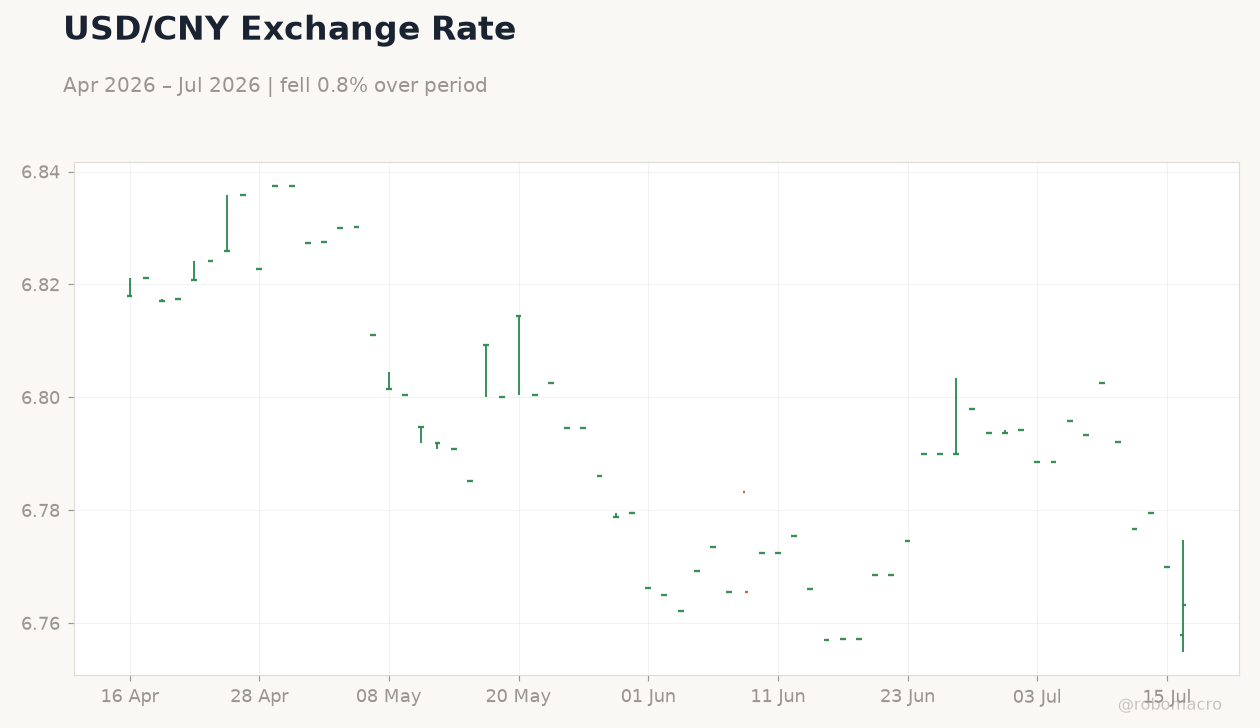
| USD/CNY | 6.76 | -0.10% |
| USD/HKD | 7.84 | +0.01% |
| Copper | 6.28 | -0.17% |
| Brent Crude | 84.86 | -0.11% |
| Gold | 3,979.90 | -1.59% |
| Bitcoin | 64,178.51 | -0.82% |
| China 2Y Govt Yield | - | - |
| China 10Y Govt Yield | - | - |
Prior Economic Events
| Data | Prior | Cons | Actual |
|---|---|---|---|
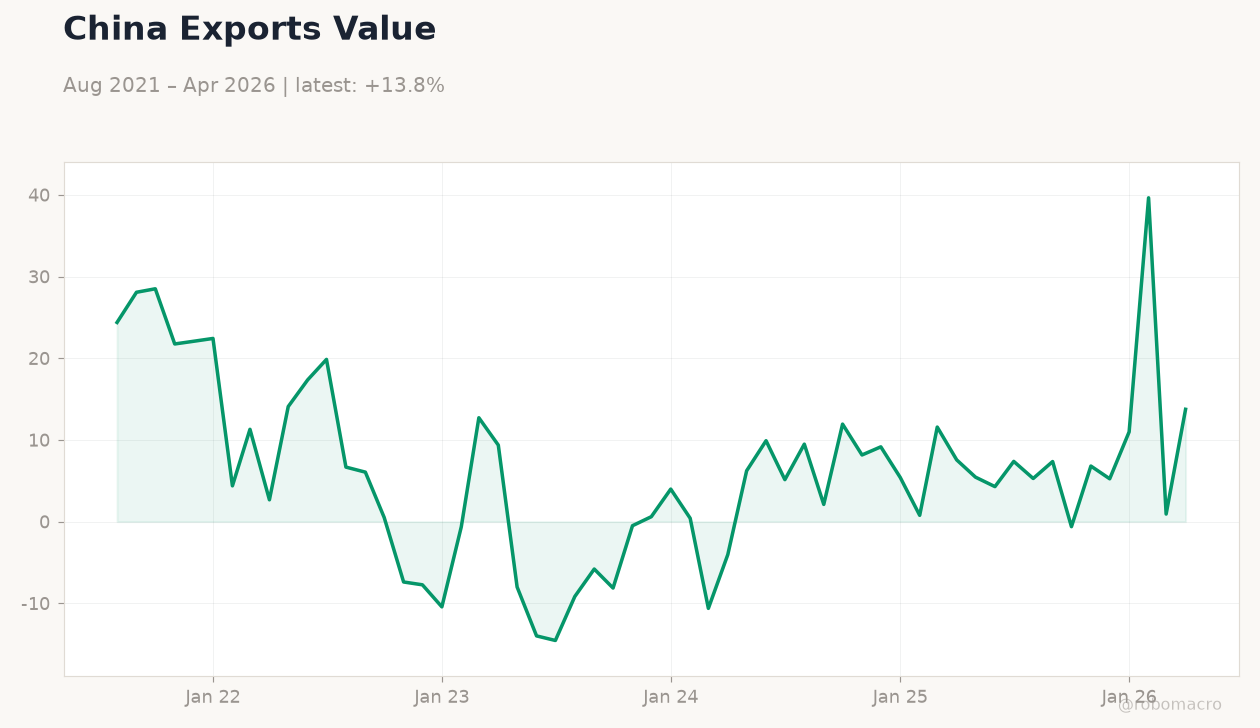
| Exports Year-over-Year | 19.40 | 18.20 | 27 |
| Imports Year-over-Year | 27.40 | 24 | 36 |
| Trade Balance | 105,430m | 121,000m | 125,800m |
| House Price Index Year-over-Year | -3.50 | - | -3.30 |
| GDP Growth Year-over-Year | 5 | 4.50 | 4.30 |
| Industrial Production Year-over-Year | 4.50 | 4.60 | 5.30 |
| Retail Sales Year-over-Year | -0.60 | -0.10 | 1 |
| Fixed Asset Investment (YTD) Year-over-Year | -4.10 | -4.90 | -5.70 |
| GDP Growth Quarter-over-Quarter | 1.30 | 0.90 | 0.90 |
| New Yuan Loans | 520,000m | 2,000,000m | 1,610,000m |
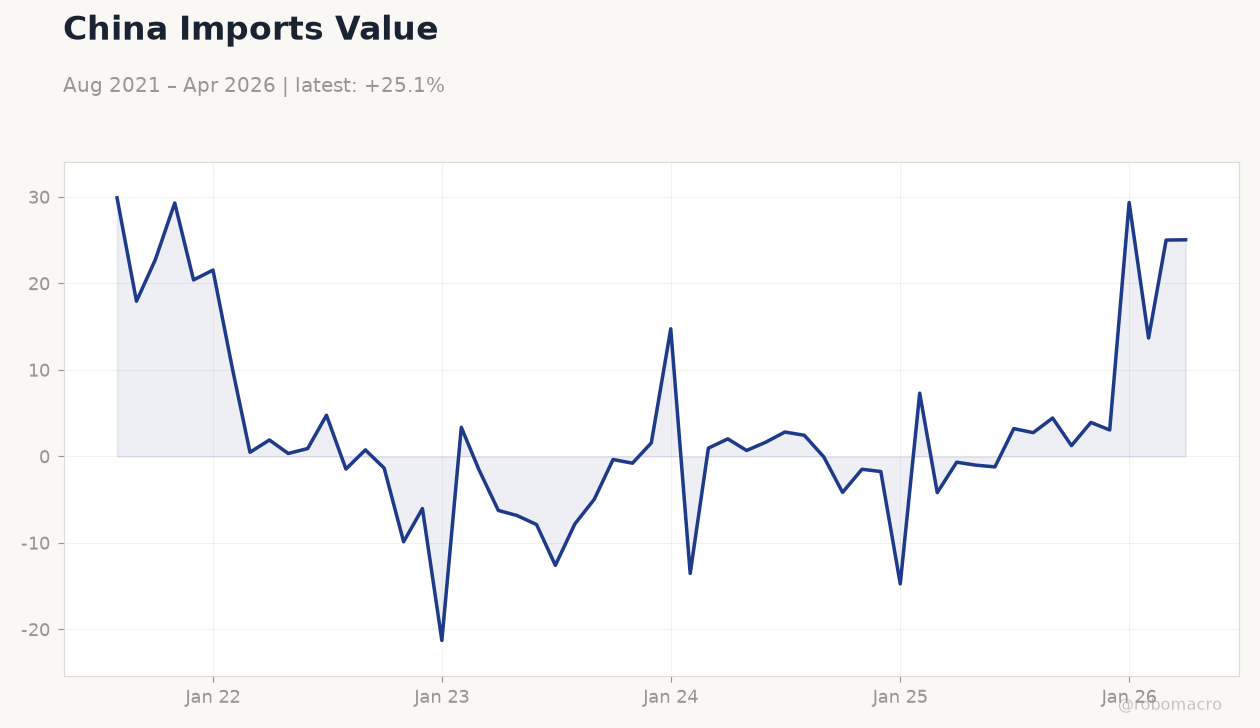 China Imports Value | Type: macro_line | USD mn: 25.05 (2026-04-01) | Range: -21.28–29.91 | Trend(5pt): 29.91,-1.354,1.57,7.315,25.05
Today's Economic Events
| Data | Prior | Cons | Time |
|---|---|---|---|
| No events available | |||
- China Q2 GDP grew 4.3% YoY, missing 4.5% consensus amid domestic weakness
- Exports jumped 27% YoY and imports rose 36%, lifting trade surplus to $125.8bn
- Mainland equities fell 1.85% while Hang Seng and TAIEX rose on policy hopes
Yesterday's Recap
China’s second-quarter GDP expanded 4.3% year-over-year, below the 4.5% consensus and prior 5.0% print, confirming the weakest pace since 2022. Industrial production accelerated to 5.3% YoY while retail sales turned positive at 1.0% YoY, yet fixed-asset investment contracted further to -5.7% YTD. Trade data surprised positively, with exports rising 27% YoY and imports climbing 36% YoY to produce a $125.8bn surplus.
House prices fell 3.3% YoY, extending the property-sector drag. New yuan loans reached 1.61 trillion, below expectations. The Shanghai Composite and CSI 300 each declined 1.85%, while the Hang Seng gained 1.40% and TAIEX rose 2.00%.
USD/CNY eased 0.10% to 6.76 as the PBoC signaled comfort with two-way yuan moves.
The Day Ahead
No major data releases are scheduled for mainland China, Hong Kong or Taiwan over the next two sessions. Markets will monitor PBoC liquidity operations and any State Council comments on growth support. Hong Kong’s bond tender calendar remains quiet until the July 22 offering.
Taiwan semiconductor export orders due next week will provide the next high-frequency read on the island’s key sector. Investors will also track global risk sentiment for spillover effects on regional equities and the yuan.
Other Economic Notes
The 4.3% GDP print fell below Beijing’s annual target range and highlighted persistent domestic demand shortfalls despite resilient external demand. Property prices continued their multi-year decline, keeping pressure on local-government finances and household balance sheets. Industrial production strength was concentrated in export-oriented manufacturing, underscoring the economy’s growing reliance on overseas sales.
Retail sales improved modestly but remain far below pre-pandemic trends, limiting the scope for a broad-based recovery without additional policy stimulus.
Global Macro News
Global commodity prices were little changed, with Brent crude slipping 0.11% and copper declining 0.17%, reflecting tempered China demand expectations. Gold fell 1.59% as risk appetite improved in Asia. <i>↓ p.2</i>