RoboMacro Research
China CPI Misses as PBoC Adds Liquidity
0.50 Inflation Rate-0.10 Inflation Rate3.50 Producer Price Index
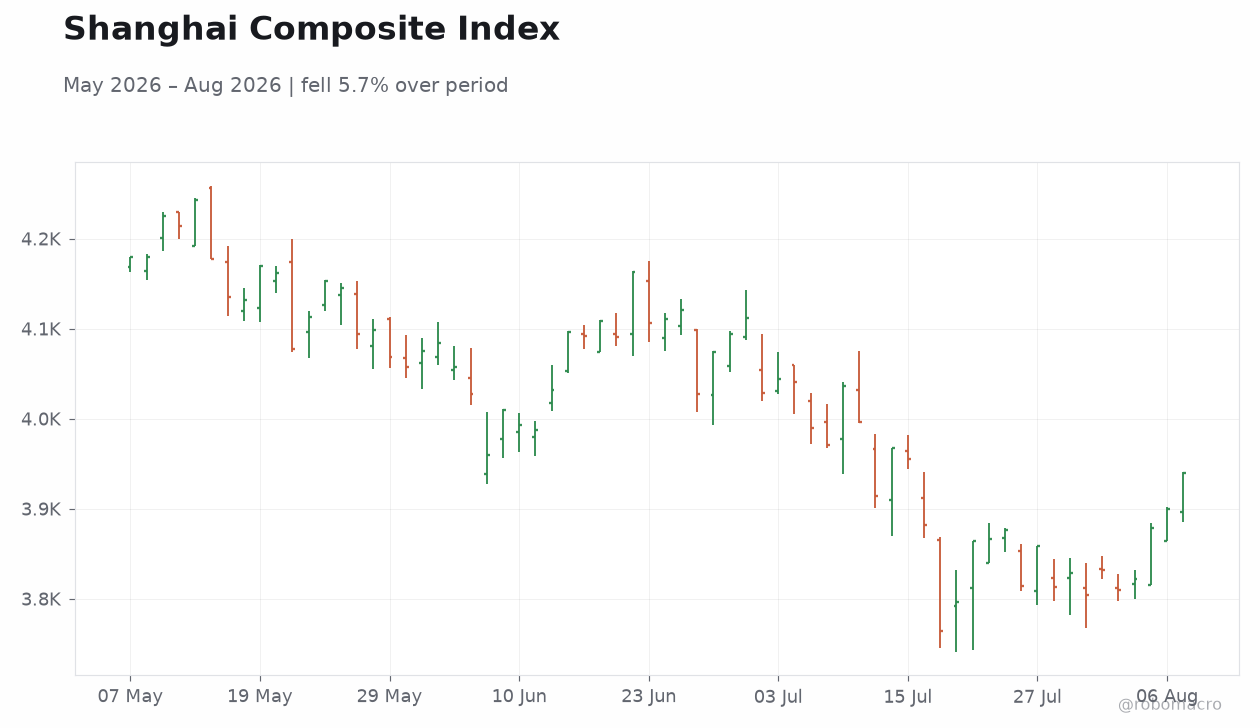
Shanghai Composite3,940.04+1.02%
CSI 3004,694.44+0.93%
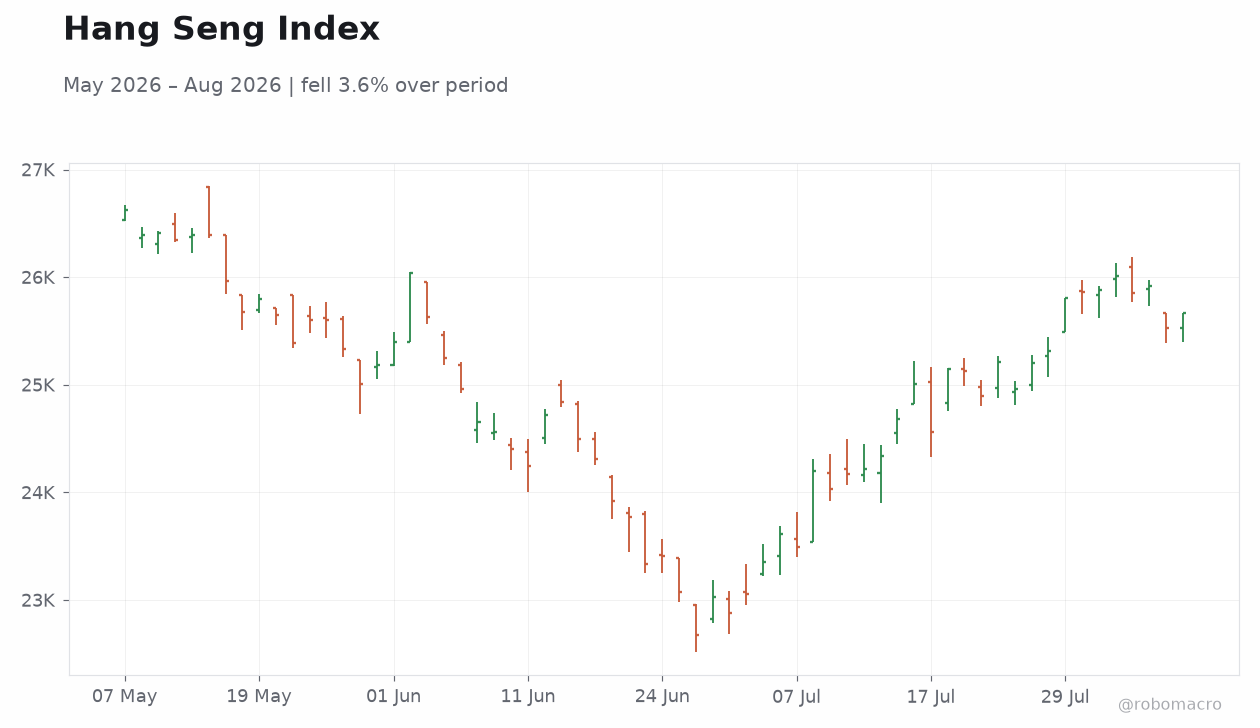
Hang Seng25,668.03+0.54%
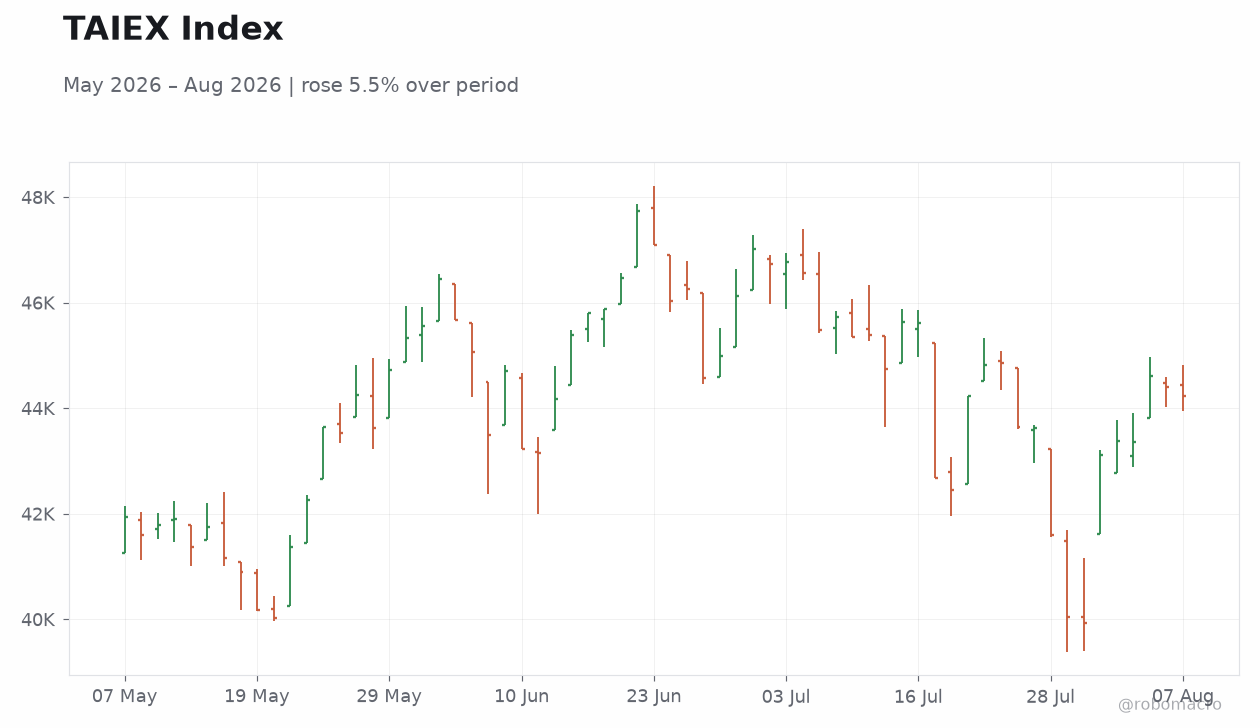
TAIEX44,225.91-0.38%
Market Snapshot
| Asset | Level | Change |
|---|
| Shanghai Composite | 3,940.04 | +1.02% |
| CSI 300 | 4,694.44 | +0.93% |
| Hang Seng | 25,668.03 | +0.54% |
| TAIEX | 44,225.91 | -0.38% |
| USD/CNY | 6.74 | -0.17% |
| USD/HKD | 7.84 | +0.00% |
| Copper | 6.59 | -1.44% |
| Brent Crude | 83.55 | +1.29% |
| Gold | 4,399.70 | +3.72% |
| Bitcoin | 65,203.92 | +0.46% |
| China 2Y Govt Yield | - | - |
| China 10Y Govt Yield | - | - |
Prior Economic Events
| Data |
Prior |
Cons |
Actual |
| Inflation Rate Year-over-Year | 1 | 0.80 | 0.50 |
| Inflation Rate Month-over-Month | -0.30 | 0.20 | -0.10 |
| Producer Price Index Year-over-Year | 4.10 | 3.80 | 3.50 |
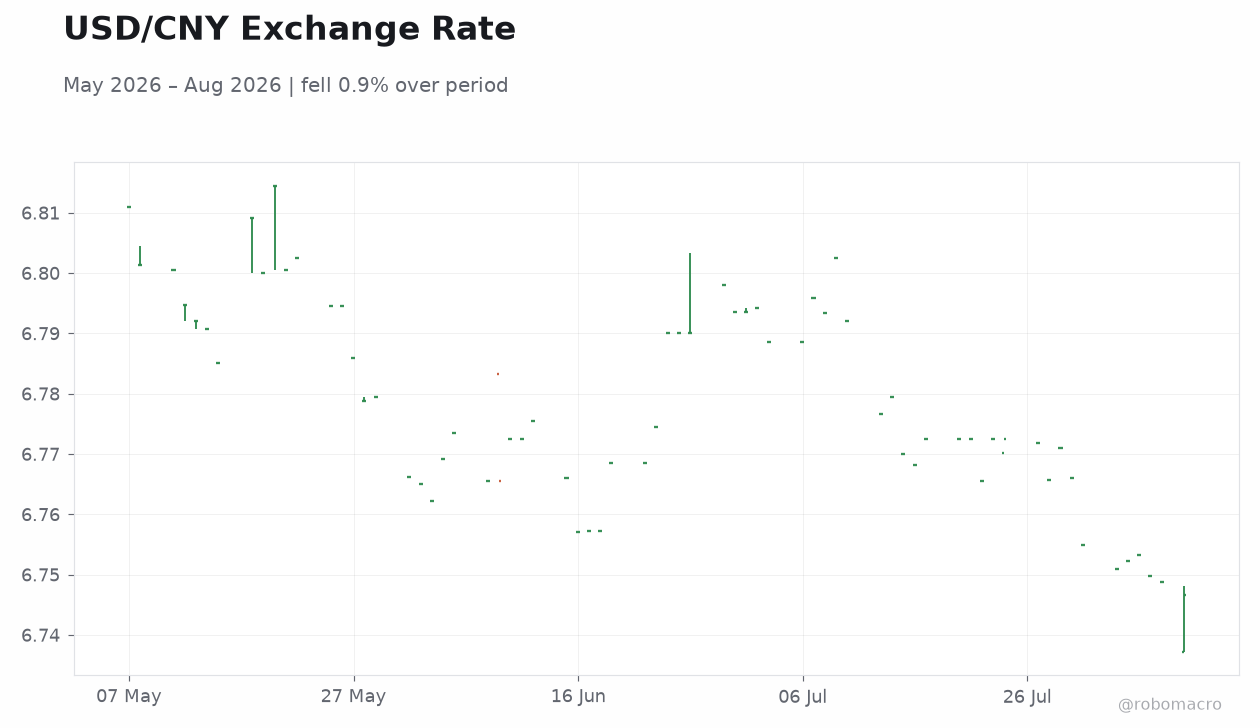 USD/CNY Exchange Rate | Type: market_hloc | Rate: 6.747 (2026-08-09) | Range: 6.747–6.814 | Trend(5pt): 6.811,6.766,6.79,6.773,6.747
Today's Economic Events
| Data |
Prior |
Cons |
Time |
| Current Account Preliminary | 184,300m | - | 05:00 |
- China July CPI YoY printed at 0.5%, below 0.8% consensus and prior 1%, with MoM at -0.1%.
- PBoC injected 398.5 billion yuan via 7-day reverse repos at 1.40%, extending liquidity support.
- Shanghai Composite rose 1.02% and CSI 300 gained 0.93%, while USD/CNY eased 0.17% to 6.74.
Yesterday's Recap
Mainland China inflation data for July came in softer than expected, with CPI YoY at 0.5% and PPI YoY at 3.5%, pointing to persistent price pressures fading faster than anticipated. The PBoC conducted a sizable 398.5 billion yuan reverse-repo operation, maintaining an accommodative liquidity stance amid signs of softening demand. Equity markets responded positively, with the Shanghai Composite advancing 1.02% to 3,940.04 and the CSI 300 rising 0.93% to 4,694.44 as investors priced in further policy support.
The Hang Seng Index edged up 0.54%, while the TAIEX slipped 0.38% on semiconductor supply-chain concerns. USD/CNY declined 0.17% to 6.74, reflecting modest yuan strength on the liquidity injection. Copper fell 1.44% to 6.59, consistent with weaker China growth signals, while Brent crude rose 1.29%.
Hong Kong and Taiwan data were quiet, with focus remaining on mainland price trends and PBoC operations. China’s central bank pledged timely policy adjustments while keeping an appropriately loose stance and backing the panda-bond market. Record consumer defaults are constraining bank lending despite Beijing’s push to revive household spending.
Reflation momentum appears to be peaking as war-related shocks fade, leaving domestic prices vulnerable to further downside. Property-sector weakness continues to weigh on credit demand, with banks reluctant to expand exposure amid elevated bad-loan ratios.
The Day Ahead
Markets await the August 14 release of China’s preliminary current account data, which will provide insight into external balances after the soft inflation print. No major mainland, Hong Kong or Taiwan data releases are scheduled for August 9-10. Traders will monitor PBoC liquidity operations and any State Council signals on consumption support.
HKMA aggregate balance and USD/HKD peg mechanics remain in focus given stable USD/HKD at 7.84. Taiwan’s CBC is expected to stay on hold, with attention on semiconductor export linkages amid global tech demand shifts. Hong Kong authorities face pressure to review heat-stress warning systems after record temperatures, while rail and housing incidents highlight ongoing operational challenges in the city.
Page 1
Never miss an issue
Subscribe to Greater China Macro Daily and get each new issue delivered to your inbox.
Already a member? Visit robomacro.com
to log in and manage subscriptions, or use Forgot Password to set a password.