Greater China Macro Daily(Beta Mode)
China Equities Rise on Easing Hopes
Market Snapshot
| Asset | Level | Change |
|---|---|---|
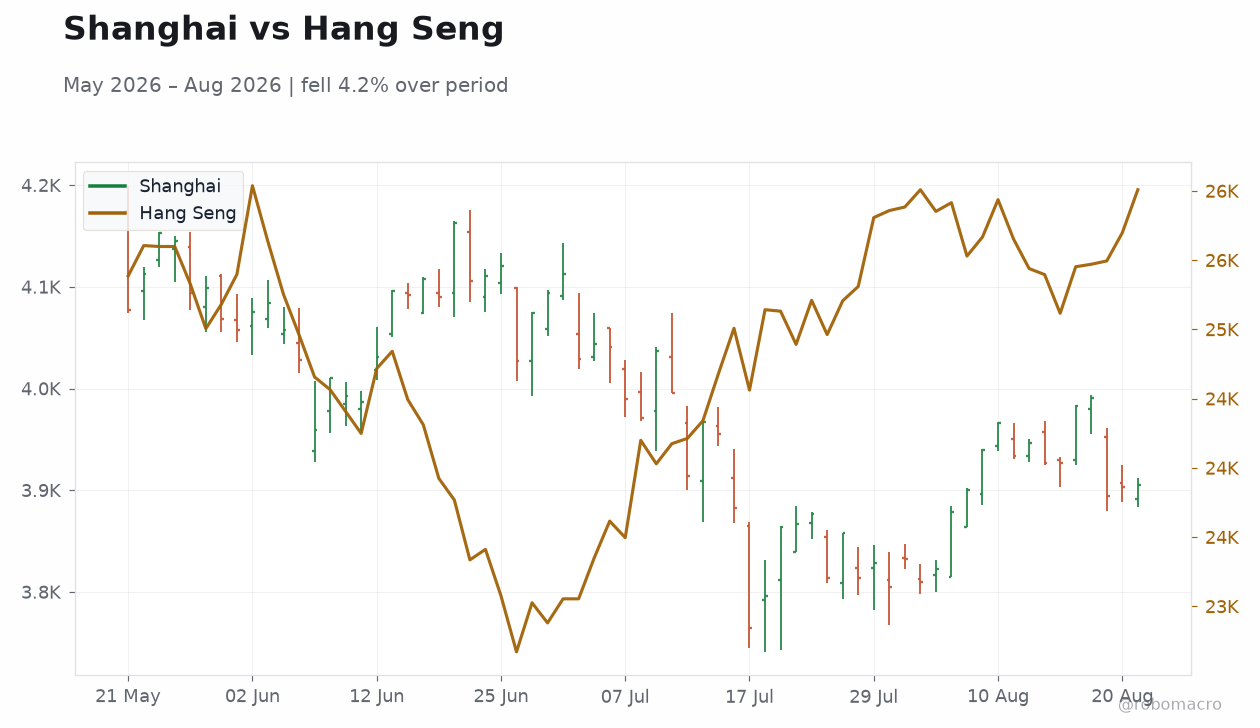
| Shanghai Composite | 3,905.20 | +0.04% |
| CSI 300 | 4,618.90 | +0.57% |
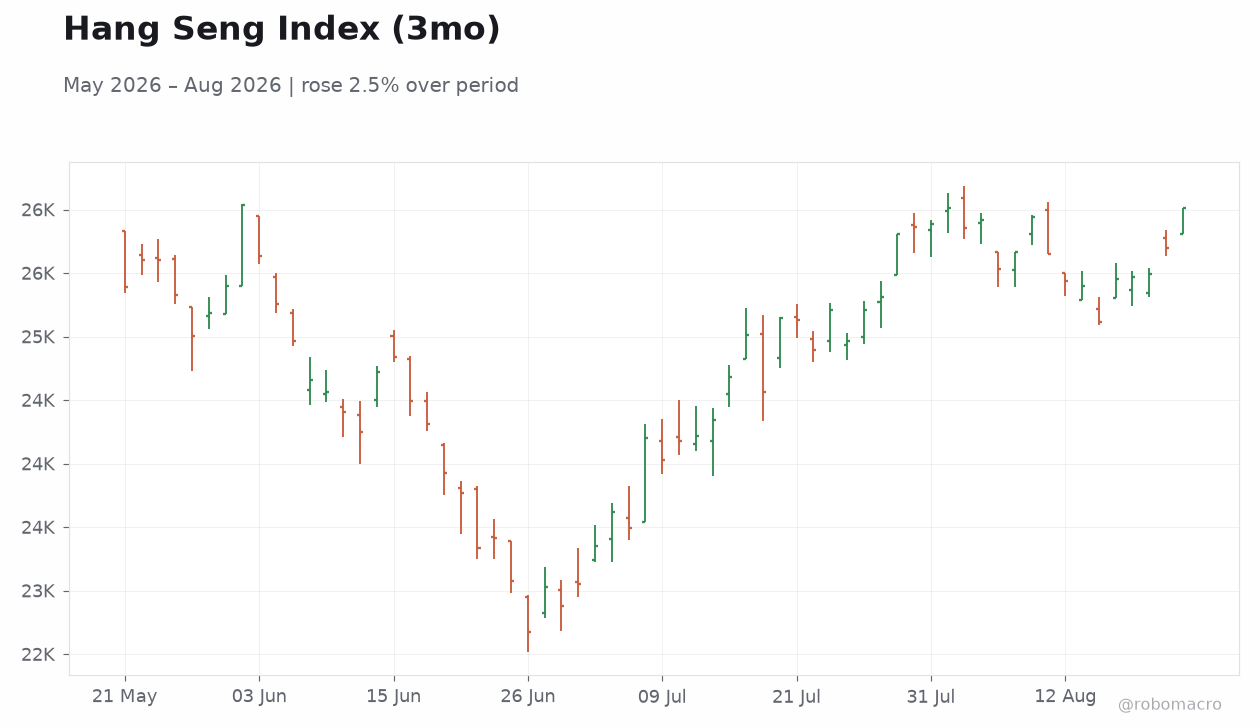
| Hang Seng | 26,009.46 | +1.21% |
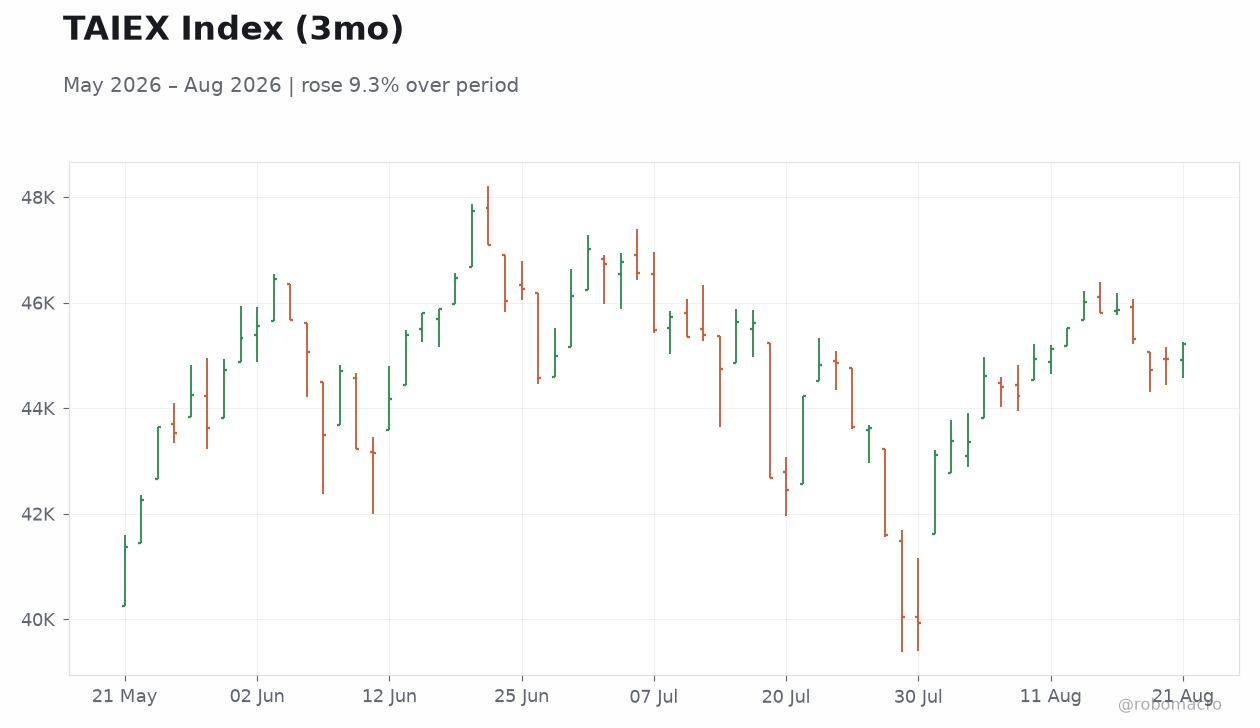
| TAIEX | 45,224.29 | +0.65% |
| USD/CNY | 6.71 | -0.16% |
| USD/HKD | 7.84 | -0.05% |
| Copper | 6.59 | +1.97% |
| Brent Crude | 94.39 | +0.65% |
| Gold | 4,680.60 | +3.64% |
| Bitcoin | 77,773.09 | +0.89% |
| China 2Y Govt Yield | - | - |
| China 10Y Govt Yield | - | - |
Prior Economic Events
| Data | Prior | Cons | Actual |
|---|---|---|---|
| No events available | |||
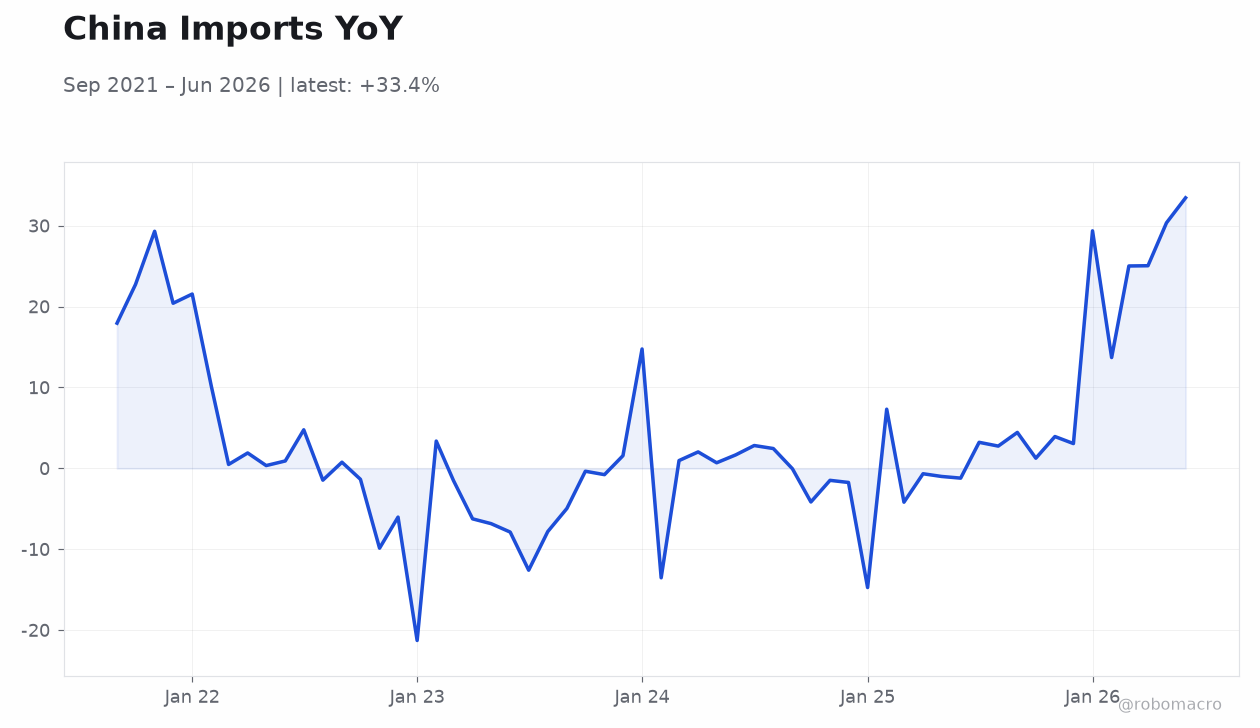
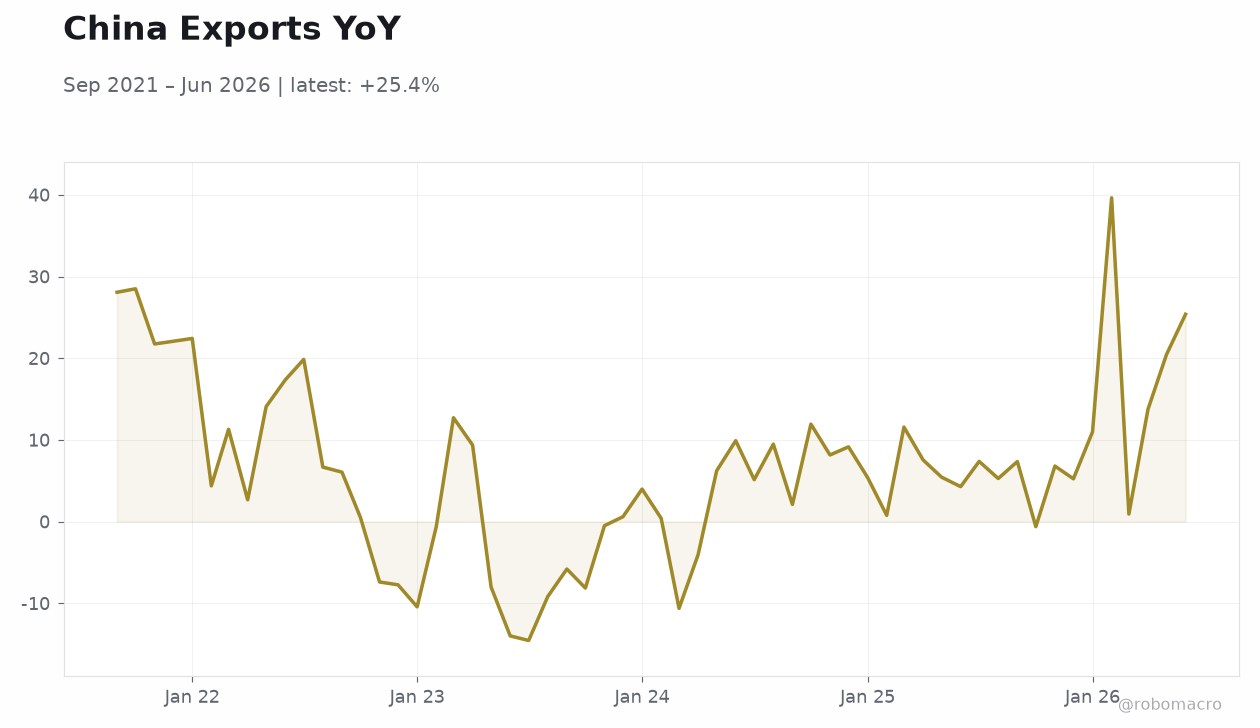 China Exports YoY | Type: macro_line | YoY %: 25.39 (2026-06-01) | Range: -14.55–39.64 | Trend(6pt): 28.08,-7.386,3.985,11.57,20.45,25.39
Today's Economic Events
| Data | Prior | Cons | Time |
|---|---|---|---|
| No events available | |||
- Mainland and Hong Kong equities advanced, with CSI 300 up 0.57% and Hang Seng gaining 1.21%
- USD/CNY eased to 6.71 while gold surged 3.64% to 4,680.60 on risk-on flows
- China government spending contraction slowed in July, reviving policy-easing expectations
Yesterday's Recap
Greater China equity markets posted gains on August 22 despite an empty economic calendar. The Shanghai Composite edged up 0.04% to 3,905.20 while the CSI 300 climbed 0.57% to 4,618.90, supported by news that China’s government spending contraction moderated sharply in July after a steep prior drop. Hong Kong’s Hang Seng index rose 1.21% to 26,009.46 as financials attracted inflows, and the TAIEX advanced 0.65% to 45,224.29 on continued semiconductor strength.
USD/CNY fell 0.16% to 6.71, reflecting modest yuan support, while USD/HKD held steady near 7.84 inside the peg band. Copper rose 1.97% to 6.59, tracking China stimulus hopes, and Brent crude added 0.65% to 94.39. Goldman Sachs noted China’s economy grew around 4% in early Q3, below the 4.5-5% target and increasing the likelihood of further PBoC liquidity support.
YMTC’s planned 33 billion yuan Shanghai IPO and Alibaba’s Hong Kong share issuance for AI funding added positive sentiment.
The Day Ahead
With no scheduled data releases across mainland China, Hong Kong or Taiwan on August 23-24, markets will focus on follow-through from July fiscal data and potential State Council policy signals. Investors await updates on Yangtze Memory Technologies’ planned 33 billion yuan Shanghai IPO and Alibaba’s Hong Kong share issuance aimed at AI funding. Hong Kong authorities may accelerate tax incentives to match Singapore’s fund-manager breaks, while Taiwan’s supply-chain resilience remains in view after strong July semiconductor exports.
Property-sector liquidity developments and any PBoC open-market operations will also draw attention. Cross-strait trade flows and U.S. entity-list scrutiny on advanced equipment could generate headline risk.
Other Economic Notes
China’s July fiscal easing signals a shift from earlier austerity, with spending contraction slowing markedly and supporting expectations for targeted stimulus. Property prices continued to weigh on sentiment after an extended decline, though mid-sized developers’ liquidity strains have prompted talk of accelerated asset sales to state-backed vehicles. Alibaba’s profit pressure from heavy AI outlays highlights the tension between tech investment and near-term earnings.
Broader export reliance remains a focal point as U.S. <i>↓ p.2</i>