Greater China Macro Daily(Beta Mode)
PBoC Accepts Slower Credit; LPR Looms
Market Snapshot
| Asset | Level | Change |
|---|---|---|
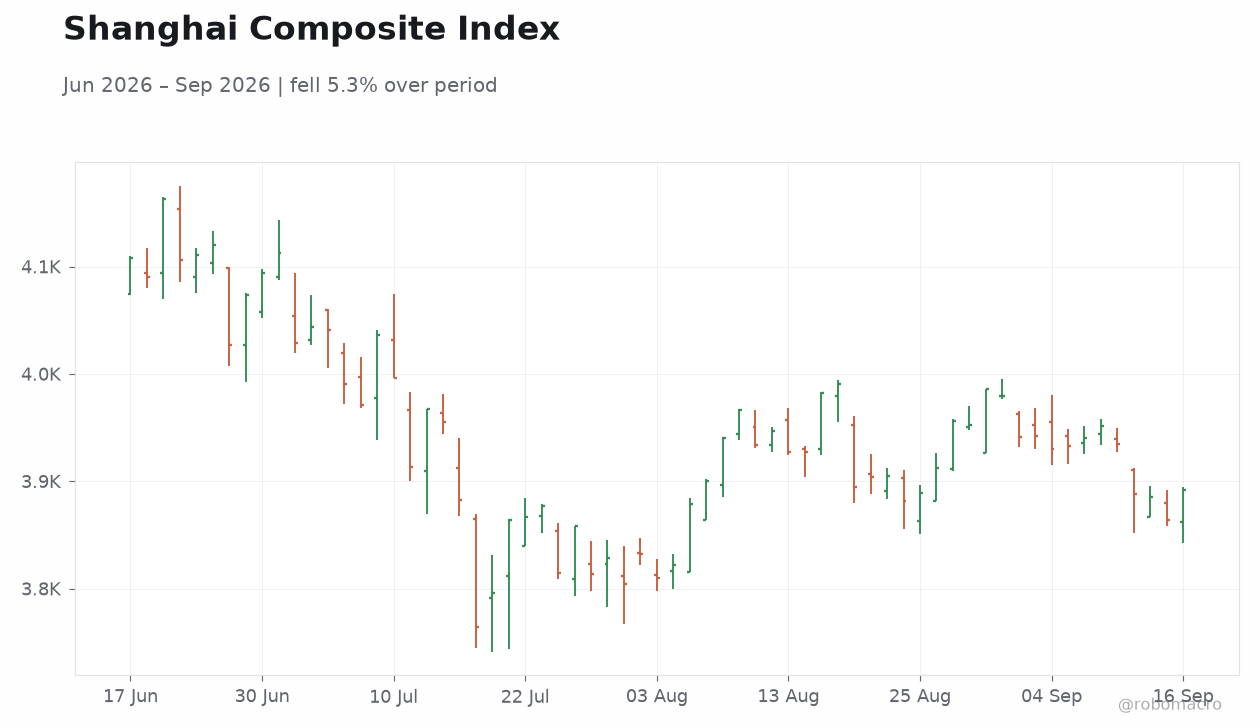
| Shanghai Composite | 3,875.60 | -0.41% |
| CSI 300 | 4,460.16 | -0.45% |
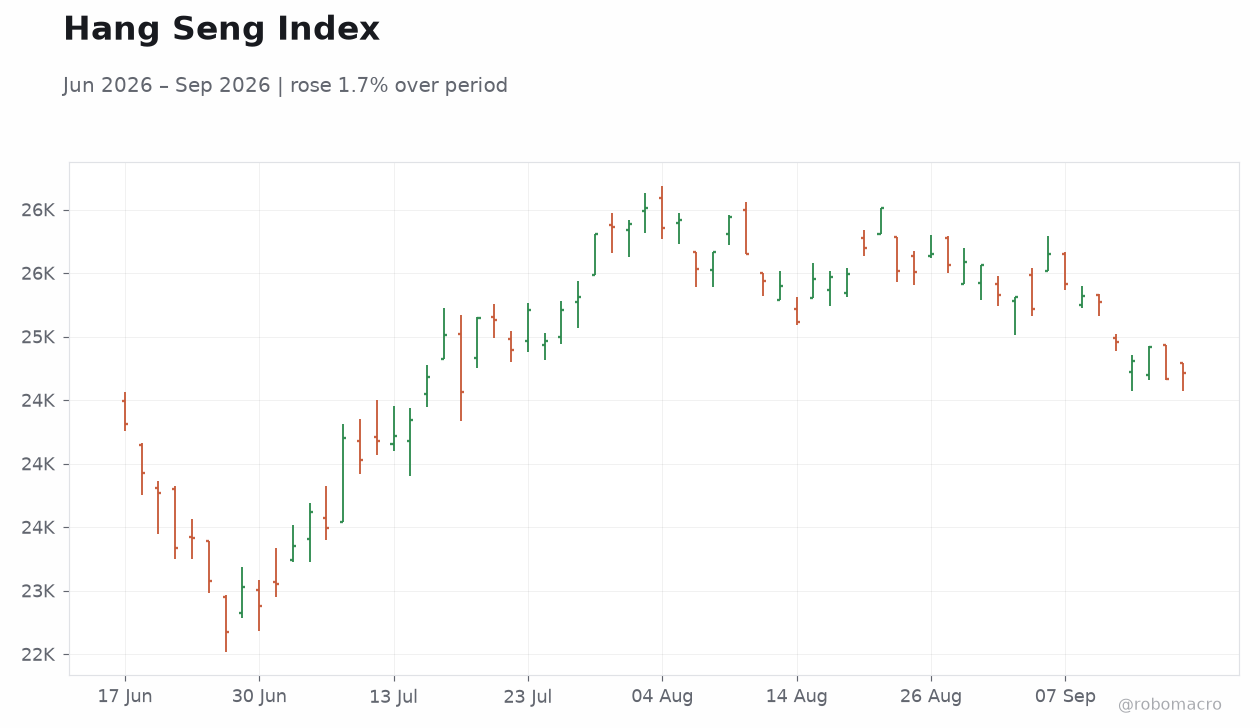
| Hang Seng | 24,713.78 | +0.19% |
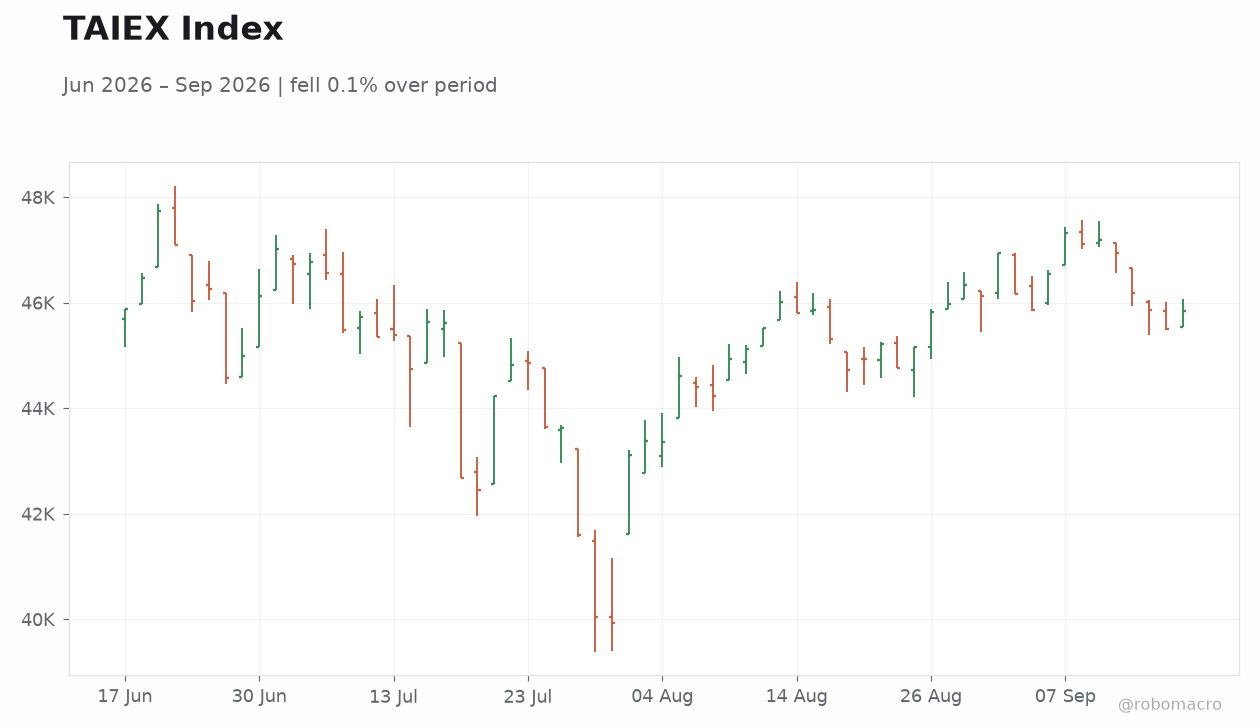
| TAIEX | 45,848.90 | +0.74% |
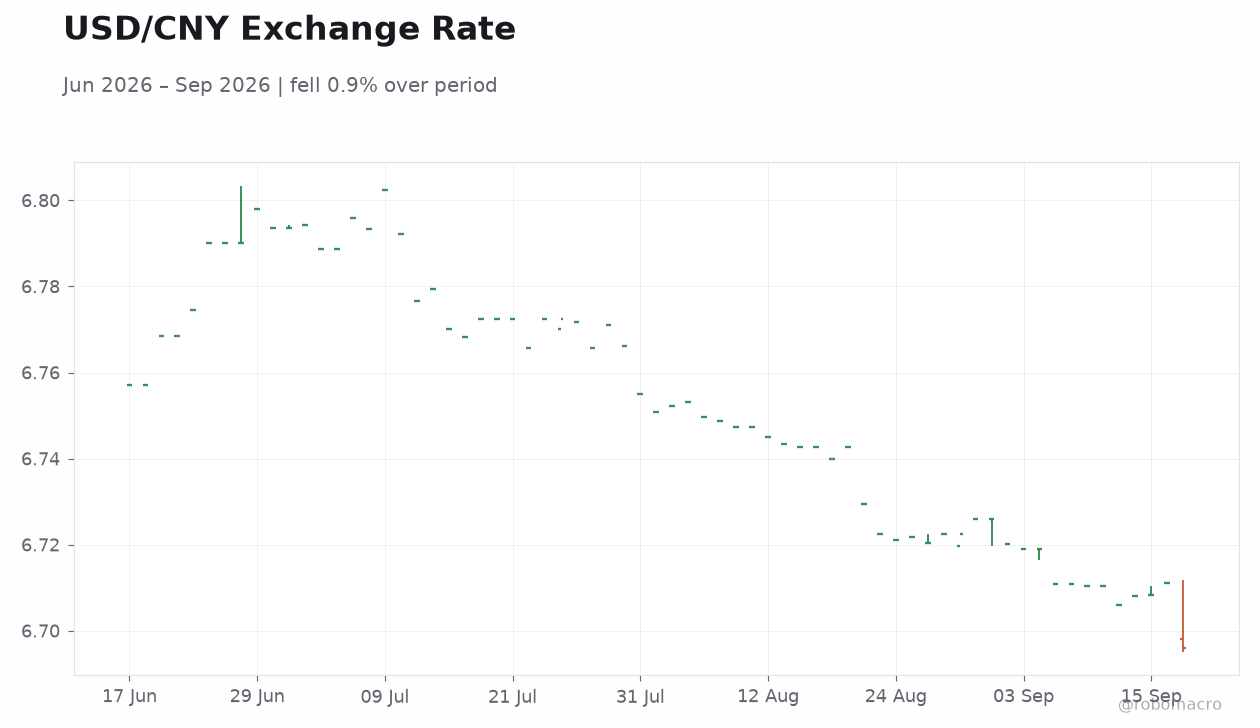
| USD/CNY | 6.70 | -0.22% |
| USD/HKD | 7.85 | +0.01% |
| Copper | 6.61 | +2.84% |
| Brent Crude | 104.09 | -1.64% |
| Gold | 4,380.60 | -0.16% |
| Bitcoin | 76,353.41 | +0.27% |
| China 2Y Govt Yield | - | - |
| China 10Y Govt Yield | - | - |
Prior Economic Events
| Data | Prior | Cons | Actual |
|---|---|---|---|
| No events available | |||
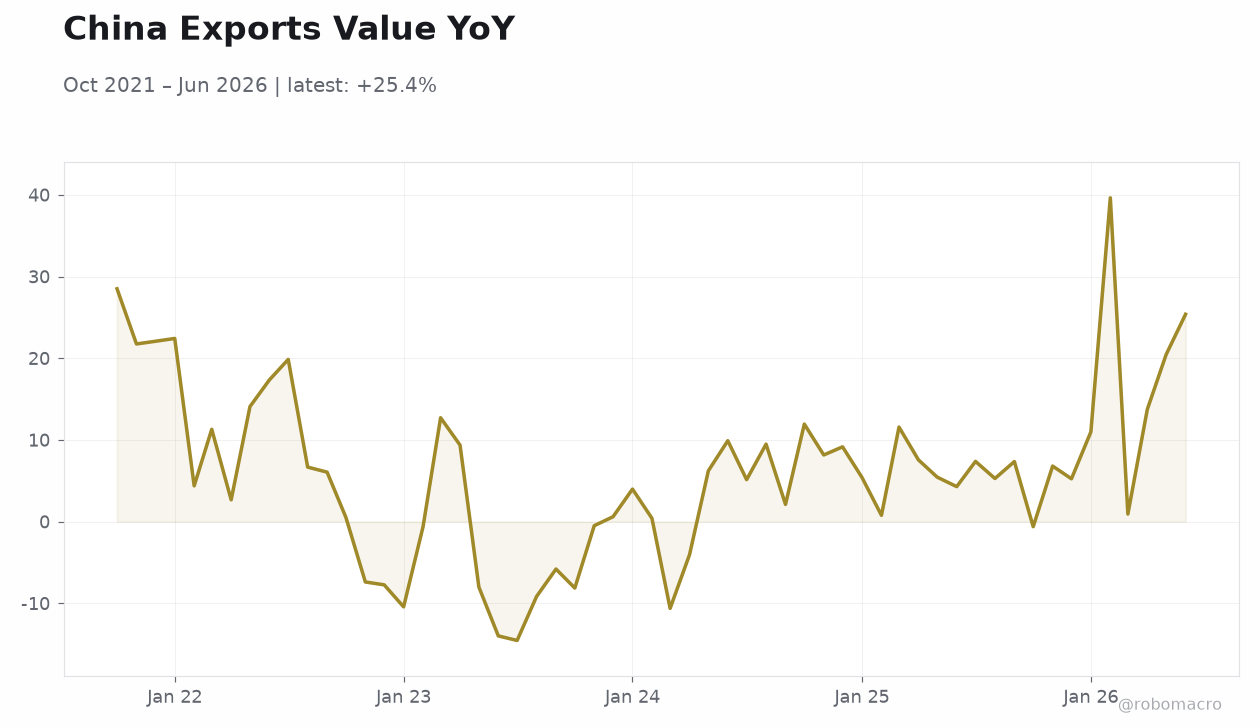 China Exports Value YoY | Type: macro_line | YoY %: 25.39 (2026-06-01) | Range: -14.55–39.64 | Trend(5pt): 28.5,-7.732,0.4113,7.56,25.39
Today's Economic Events
| Data | Prior | Cons | Time |
|---|---|---|---|
| Loan Prime Rate 1Y | 3 | - | 21:15 |
| Loan Prime Rate 5Y | 3.50 | - | 21:15 |
- Mainland equities slipped while Hong Kong and Taiwan indices advanced on divergent regional sentiment.
- USD/CNY strengthened 0.22% to 6.70 as PBoC signals tolerance for slower credit growth ahead of summit.
- HKMA raised base rate to track Fed move, reinforcing USD/HKD peg at 7.85 with no aggregate balance shift.
Yesterday's Recap
Mainland China markets closed lower with Shanghai Composite falling 0.41% to 3,875.60 and CSI 300 declining 0.45% to 4,460.16 amid limited data releases and cautious positioning. Hong Kong and Taiwan posted gains, with Hang Seng rising 0.19% to 24,713.78 and TAIEX climbing 0.74% to 45,848.90. No economic indicators were published for mainland China, Hong Kong or Taiwan on September 16.
PBoC signaled acceptance of slower credit expansion ahead of an upcoming summit, according to Commerzbank analysis. USD/CNY eased 0.22% to 6.70 while USD/HKD held steady at 7.85. Copper advanced 2.84% to 6.61 as a China growth proxy, offsetting Brent Crude’s 1.64% drop to 104.09.
China CPI stood at 0.80% YoY as of August 31, providing a stable inflation backdrop. Chinese AI firms continue to generate far lower revenue than US counterparts, highlighting persistent technology gaps.
The Day Ahead
No data releases or policy operations are scheduled for mainland China, Hong Kong or Taiwan on September 17 or 18. Attention centers on the September 20 Loan Prime Rate announcements for both 1-year and 5-year tenors. Markets will assess whether PBoC adjusts the 1-year LPR from its prior 3.0% level or the 5-year LPR from 3.5%.
Any signals on credit easing or property support will be scrutinized closely. Taiwan semiconductor export trends and cross-strait investment flows remain quiet until next week’s trade data. Hong Kong aggregate balance data will be monitored for any liquidity impact from the recent base-rate adjustment.
Broader Asia currency strength, including the Taiwan dollar, reflects AI-driven capital inflows that support TAIEX outperformance.
Other Economic Notes
PBoC tolerance for slower credit growth reflects a deliberate shift ahead of high-level diplomatic engagement, reducing near-term RRR or MLF easing expectations. Chinese AI firms continue to generate far lower revenue than US counterparts, highlighting persistent technology gaps that US-China talks on shared AI risks may address this weekend. EU requests for voluntary limits on Chinese hybrid-vehicle exports underscore rising trade friction in autos, a sector already pressuring European markets.
↓ p.2