PBoC Backs Yuan as China Stocks Decline
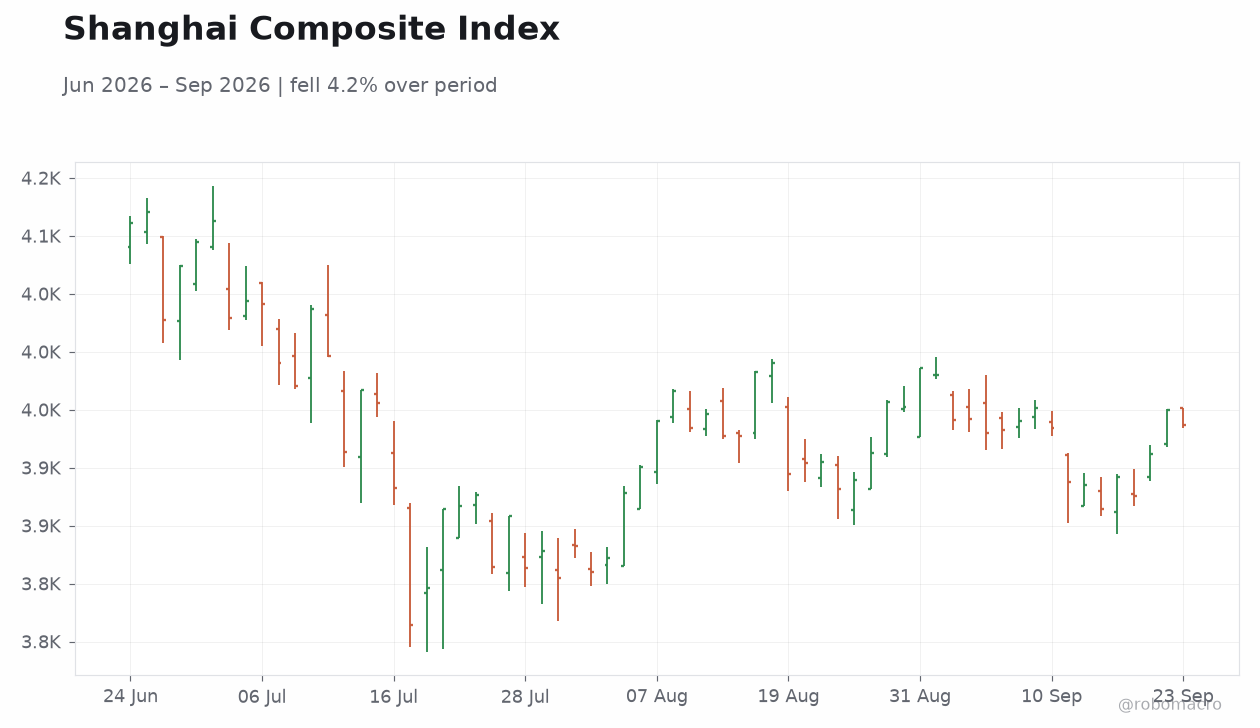
Shanghai Composite3,888.37-1.22%
CSI 3004,439.14-1.73%
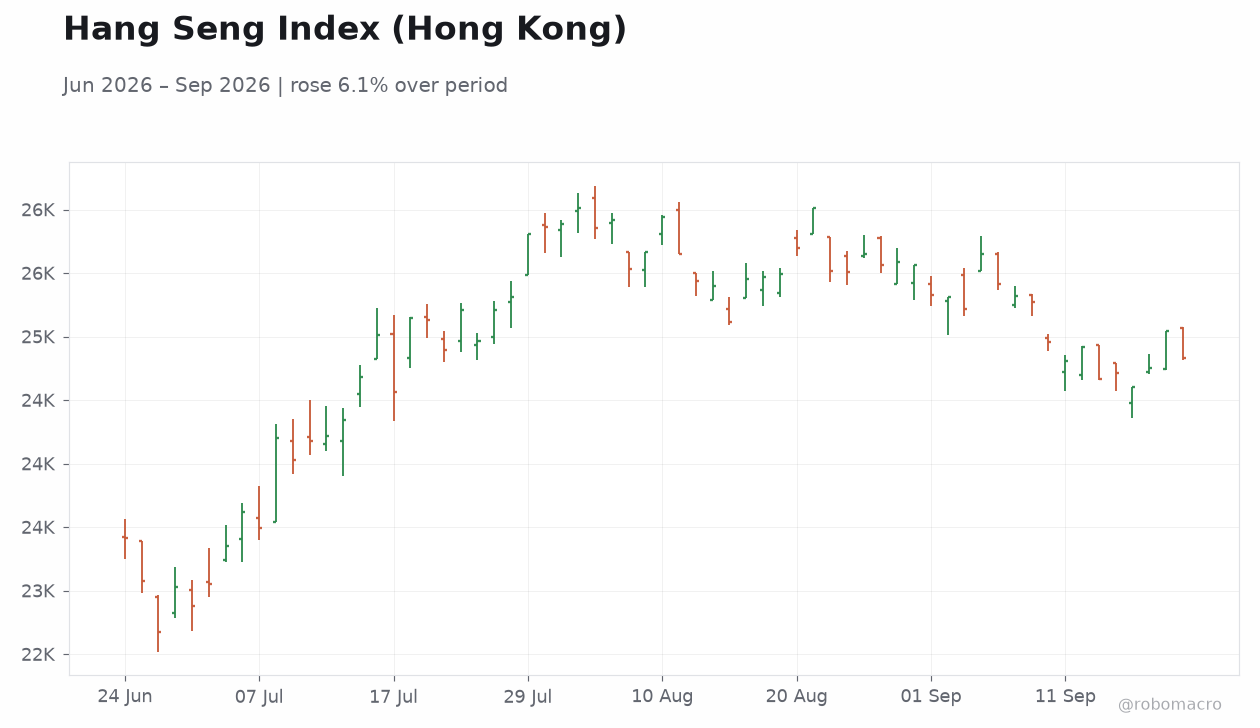
Hang Seng24,834.12-0.83%
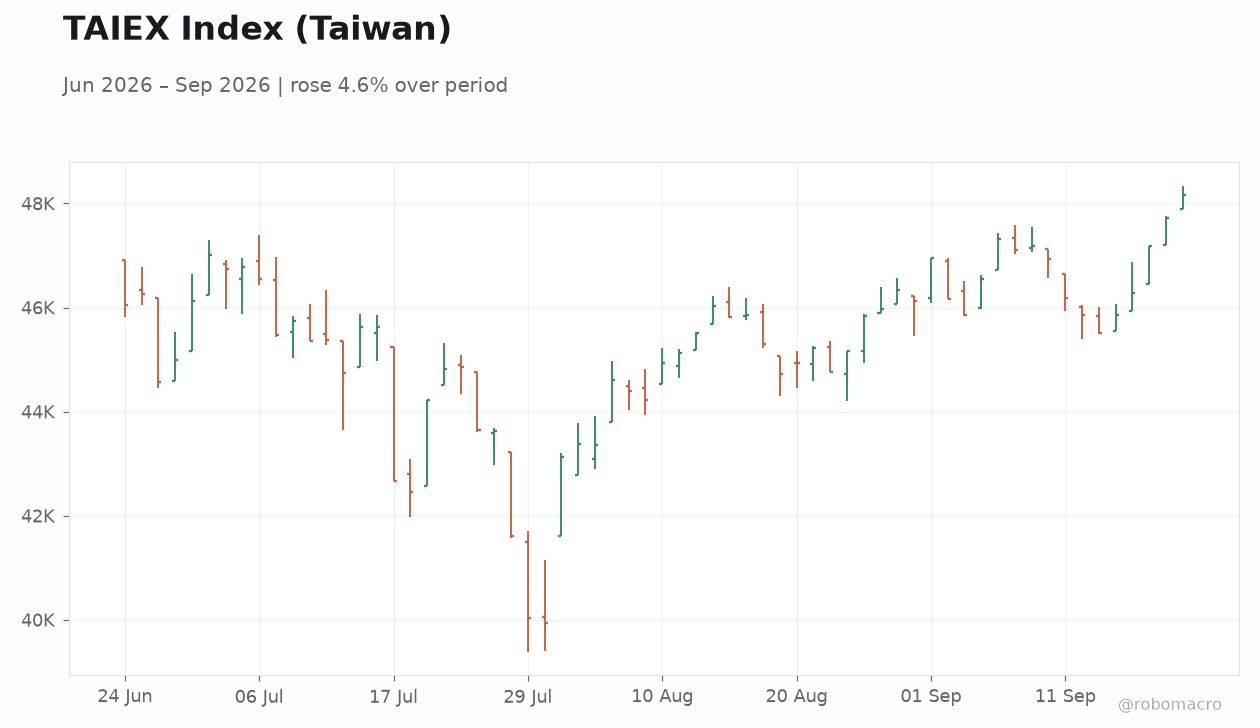
TAIEX48,157.29+0.92%
Market Snapshot
| Asset | Level | Change |
|---|
| Shanghai Composite | 3,888.37 | -1.22% |
| CSI 300 | 4,439.14 | -1.73% |
| Hang Seng | 24,834.12 | -0.83% |
| TAIEX | 48,157.29 | +0.92% |
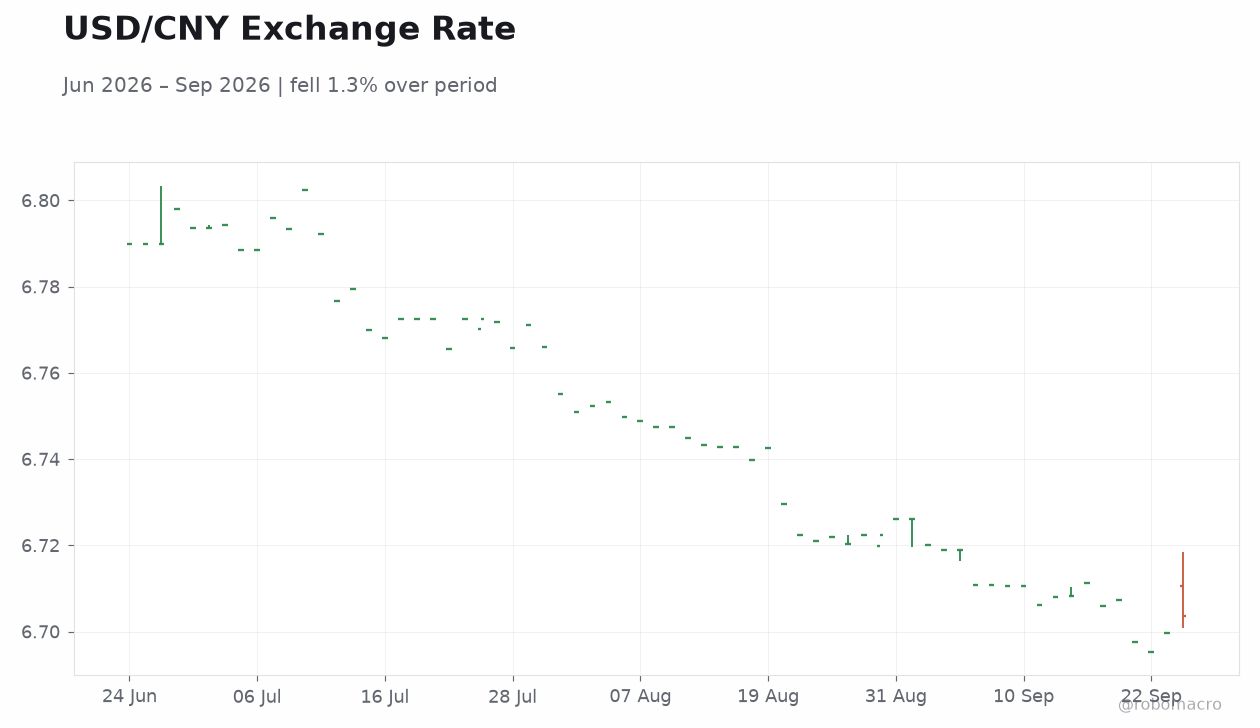
| USD/CNY | 6.70 | +0.06% |
| USD/HKD | 7.84 | -0.00% |
| Copper | 6.77 | +1.43% |
| Brent Crude | 107.03 | +3.83% |
| Gold | 4,310.10 | -0.19% |
| Bitcoin | 84,248.72 | -0.16% |
| China 2Y Govt Yield | - | - |
| China 10Y Govt Yield | - | - |
Prior Economic Events
| Data |
Prior |
Cons |
Actual |
| No events available |
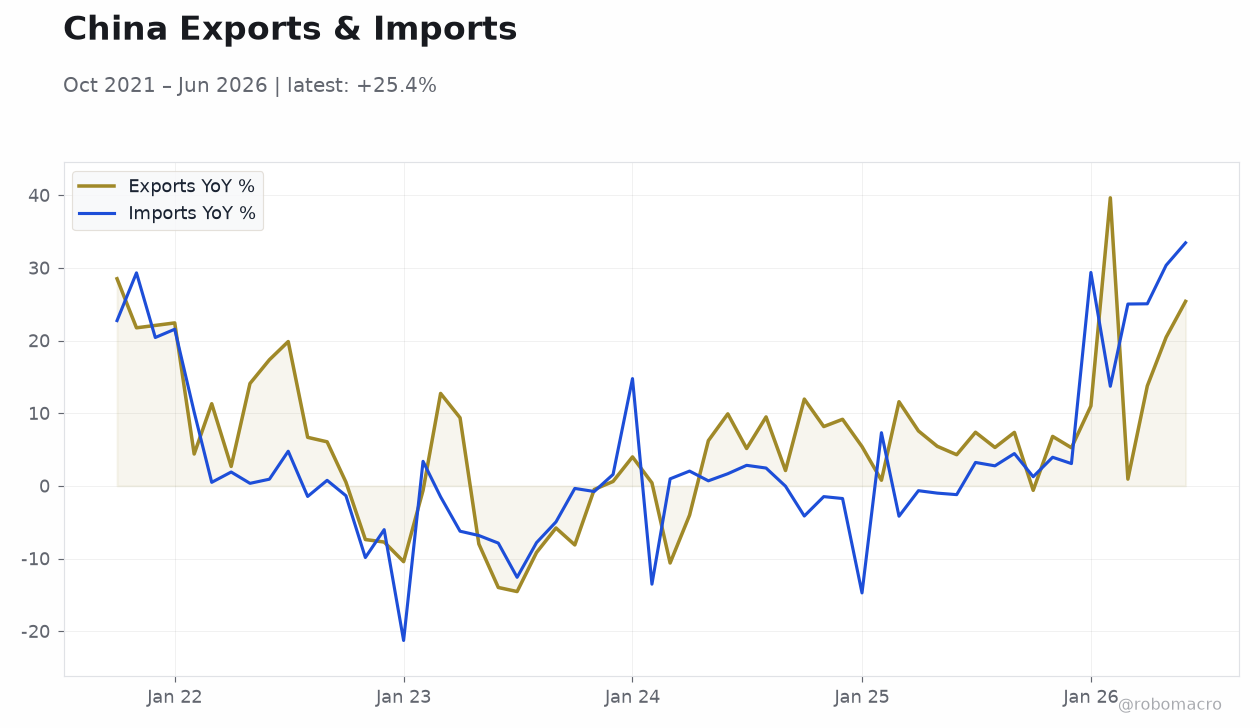 China Exports & Imports | Type: macro_line | Exports YoY %: 25.39 (2026-06-01) | Range: -14.55–39.64 | Trend(5pt): 28.5,-7.732,0.4113,7.56,25.39 | Imports YoY %: 33.45 (2026-06-01) | Range: -21.28–33.45 | Trend(5pt): 22.74,-6.027,-13.53,-0.665,33.45
Today's Economic Events
| Data |
Prior |
Cons |
Time |
| No events available |
- Mainland China equities fell sharply while Taiwan’s TAIEX rose, amid PBoC pledges of counter-cyclical support and a two-month US-China trade truce extension.
- USD/CNY edged higher to 6.70 with the official fixing at 6.7468; PBoC plans RMB bill issuance via HKMA to bolster offshore yuan liquidity.
- No macro data releases occurred across Greater China on 23 September, leaving the policy backdrop unchanged amid steady USD/HKD at 7.84.
Yesterday's Recap
Mainland China equities declined sharply on 23 September. The Shanghai Composite closed at 3,888.37, down 1.22 percent, while the CSI 300 fell 1.73 percent to 4,439.14. The moves coincided with PBoC statements on stepped-up counter-cyclical support and efforts to keep the yuan stable.
USD/CNY rose 0.06 percent to 6.70, with the central bank fixing the currency at 6.7468 against the dollar. Hong Kong’s Hang Seng Index declined 0.83 percent to 24,834.12, with USD/HKD holding steady at 7.84. In contrast, Taiwan’s TAIEX advanced 0.92 percent to 48,157.29.
No economic data releases were reported for mainland China, Hong Kong or Taiwan, leaving the August CPI reading of 0.80 percent year-on-year as the latest inflation benchmark. Copper rose 1.43 percent to 6.77, while Brent crude gained 3.83 percent to 107.03. Gold eased 0.19 percent to 4,310.10 and Bitcoin slipped 0.16 percent to 84,248.72.
The PBoC also announced plans to issue RMB bills through the HKMA to support the offshore yuan market. US-China trade tensions eased with a two-month extension of the existing trade truce announced as Xi Jinping arrived in Washington. The US-China Business Council described the extension as absolutely necessary.
CanSemi Technology filed for a $919 million IPO on Shenzhen’s exchange, reflecting continued capital-raising momentum in the chip sector.
The Day Ahead
No data releases or central bank operations are scheduled for 24-25 September across mainland China, Hong Kong or Taiwan. Market focus will remain on PBoC liquidity operations and any follow-through from the announced RMB bill issuance via HKMA. Investors will monitor US-China trade developments following the two-month truce extension announced during Xi Jinping’s visit to Washington.
Semiconductor-related flows may influence Taiwan equities given ongoing IPO activity by firms such as CanSemi Technology. HKMA’s aggregate balance and any cross-border payment initiatives with Bank Indonesia could also draw attention. Broader sentiment will hinge on commodity price moves, with copper serving as a key proxy for China growth expectations.
↓ p.2
Page 1
Never miss an issue
Subscribe to Greater China Macro Daily and get each new issue delivered to your inbox.
Already a member? Visit robomacro.com
to log in and manage subscriptions, or use Forgot Password to set a password.