Greater China Macro Daily(Beta Mode)
China Fuel Curbs Pressure Hong Kong Stocks
Market Snapshot
| Asset | Level | Change |
|---|---|---|
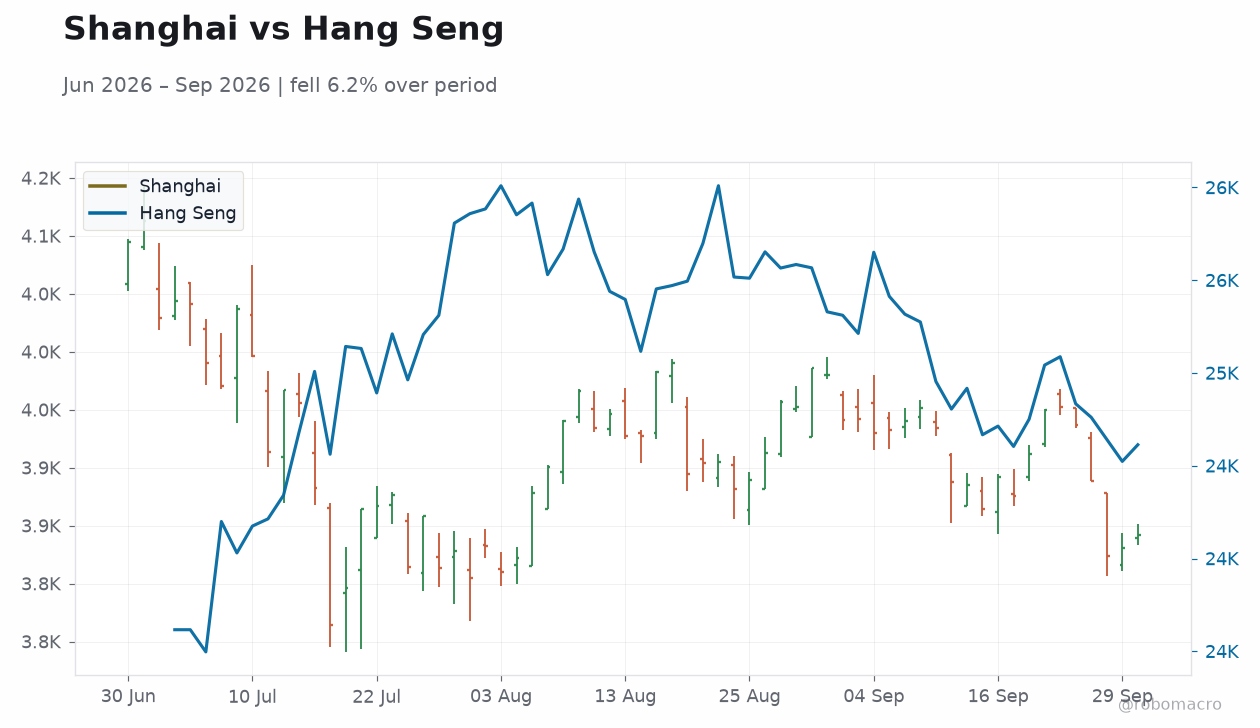
| Shanghai Composite | 3,842.19 | +0.31% |
| CSI 300 | 4,357.62 | +0.29% |
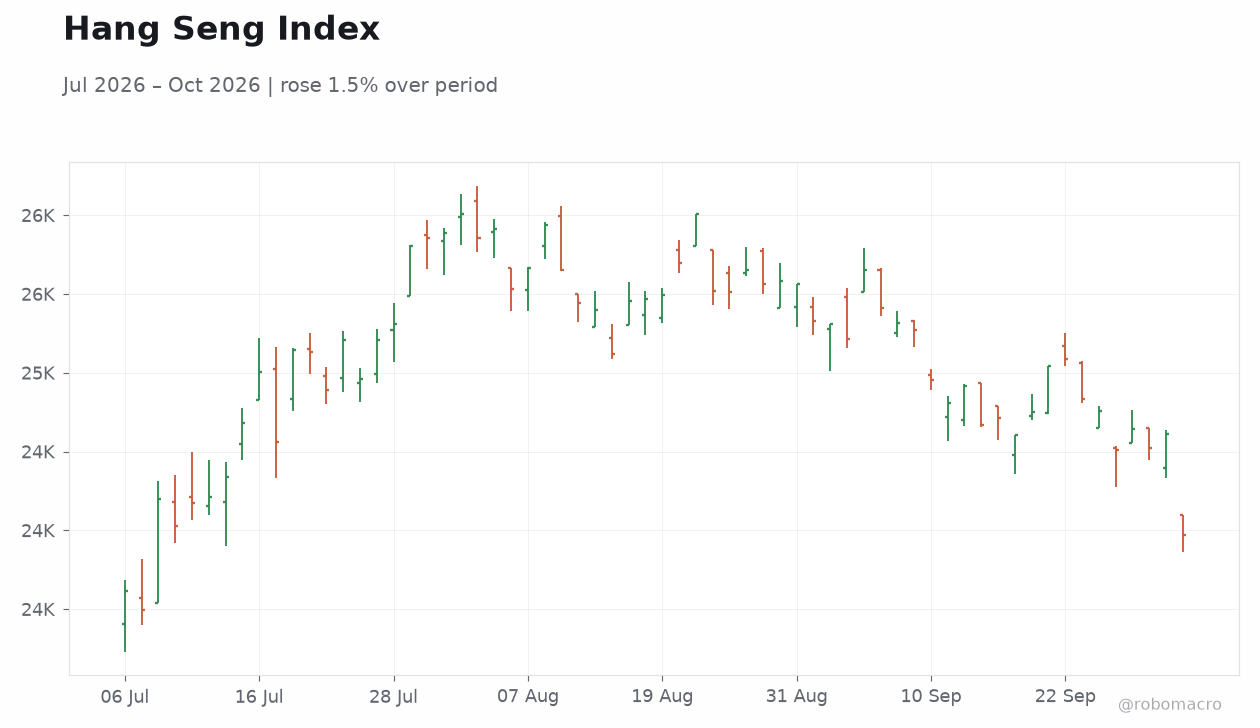
| Hang Seng | 23,972.29 | -2.60% |
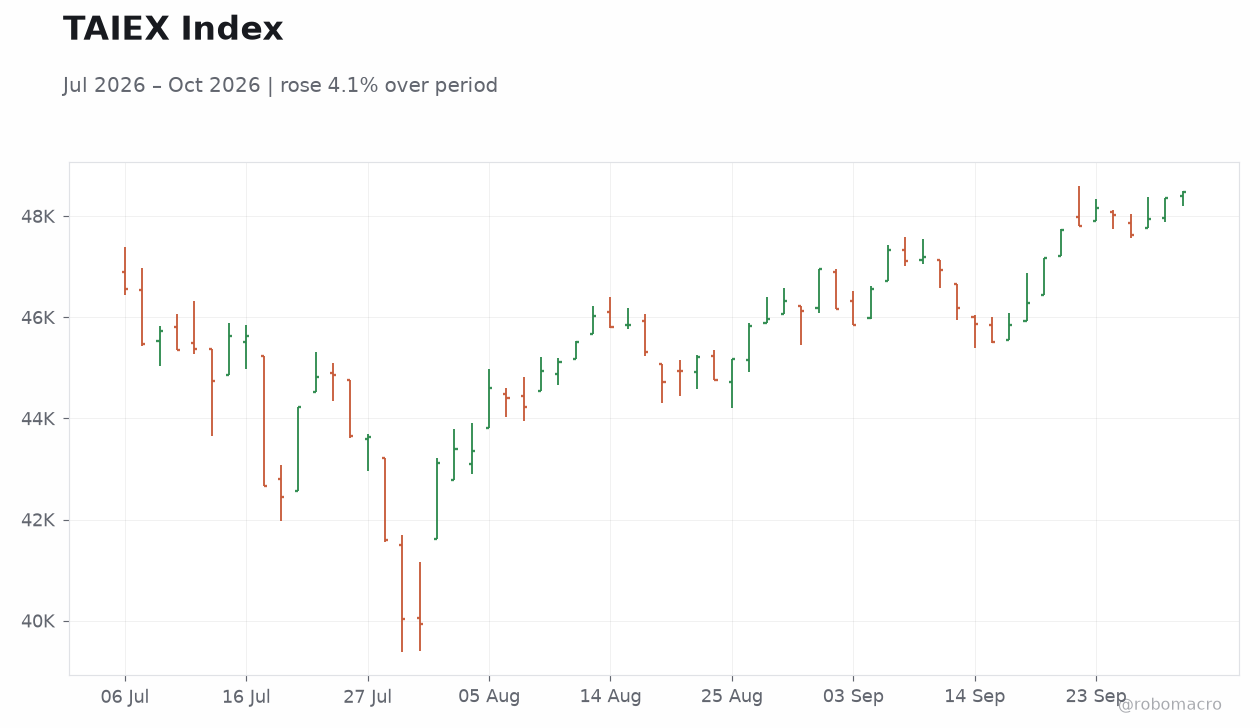
| TAIEX | 48,475.74 | +0.25% |
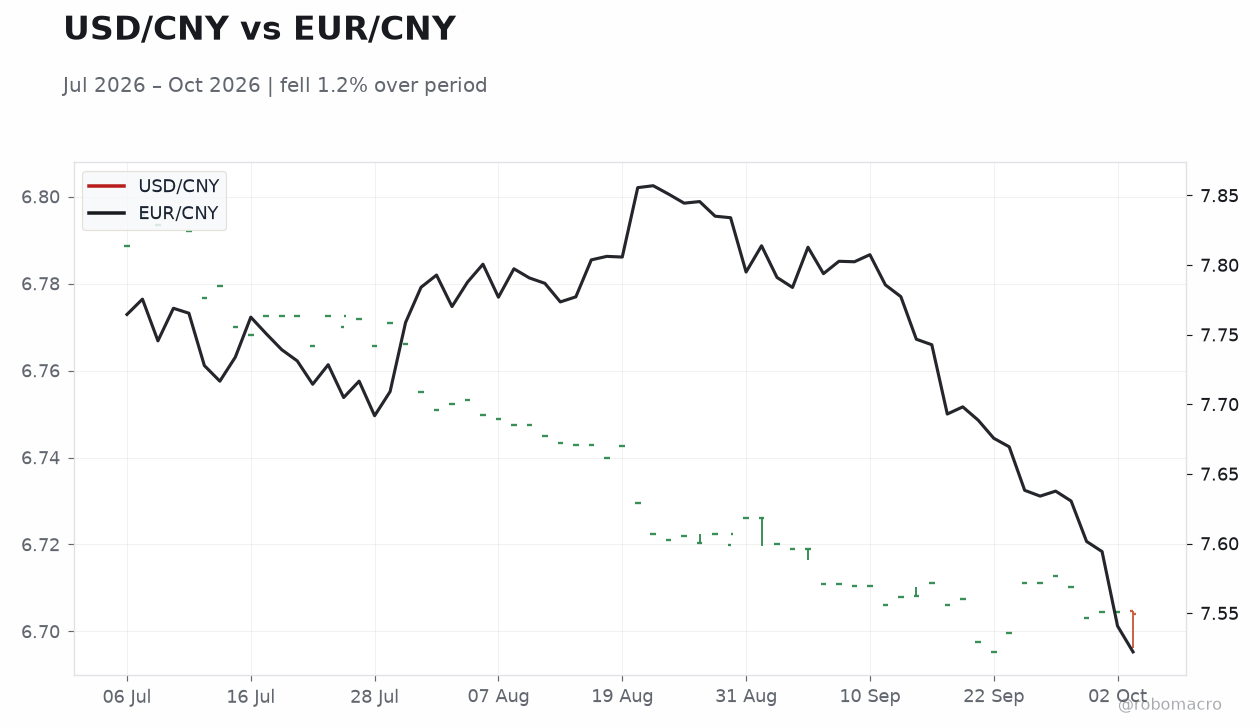
| USD/CNY | 6.70 | -0.01% |
| USD/HKD | 7.85 | +0.00% |
| Copper | 6.63 | +2.16% |
| Brent Crude | 100.32 | -1.89% |
| Gold | 4,167.60 | +0.13% |
| Bitcoin | 86,007.29 | -0.55% |
| China 2Y Govt Yield | - | - |
| China 10Y Govt Yield | - | - |
Prior Economic Events
| Data | Prior | Cons | Actual |
|---|---|---|---|
| No events available | |||
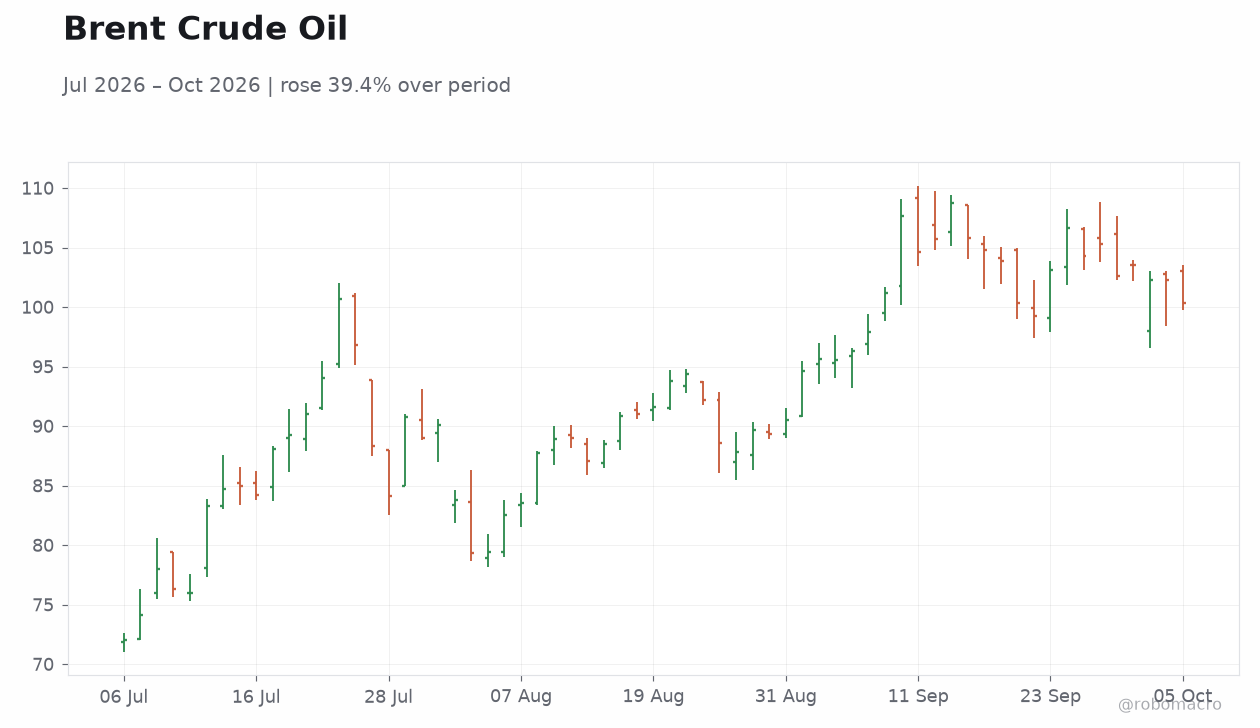 Brent Crude Oil | Type: market_hloc | USD/bbl: 100.3 (2026-10-05) | Range: 71.99–108.8 | Trend(5pt): 71.99,84.09,91.62,104.6,100.3
Today's Economic Events
| Data | Prior | Cons | Time |
|---|---|---|---|
| No events available | |||
- Mainland equities edge higher while Hong Kong shares drop sharply amid fuel export curbs.
- Copper rises on growth hopes as Brent crude falls.
- No major data releases across Greater China economies.
Yesterday's Recap
Mainland China equities rose modestly on October 4. The Shanghai Composite closed at 3,842.19, up 0.31 percent, while the CSI 300 finished at 4,357.62, gaining 0.29 percent. Hong Kong equities declined sharply, with the Hang Seng Index falling 2.60 percent to 23,972.29 as property-sector concerns resurfaced and China resumed curbs on refined-product fuel exports.
Taiwan equities advanced modestly, with the TAIEX closing at 48,475.74, up 0.25 percent. USD/CNY settled at 6.70 after a 0.01 percent decline, while USD/HKD held steady at 7.85. Copper climbed 2.16 percent to 6.63, reflecting improved sentiment toward China demand, whereas Brent Crude dropped 1.89 percent to 100.32.
Gold edged up 0.13 percent to 4,167.60 while Bitcoin fell 0.55 percent to 86,007.29. No macroeconomic data releases occurred for mainland China, Hong Kong, or Taiwan.
The Day Ahead
Markets face a quiet October 5 with no scheduled data releases, PBoC liquidity operations, or central-bank meetings across the three economies. Attention will likely center on any follow-through from China’s refined-fuel export limits and their effect on global energy balances. HKMA aggregate-balance updates could provide signals on peg stability amid steady USD/HKD prints.
Taiwan investors may watch semiconductor supply-chain flows and any early indications of manufacturing momentum after recent cooling in the sector. Property-sector developments in mainland China remain a latent focus given limited headline flow. Regional attention may also turn to any spillover from Japan’s slowing economy and shifting China trade patterns.
Other Economic Notes
China’s resumption of refined-product export curbs tightens domestic inventories of crude and fuels, adding upward pressure on global energy prices and import costs for the region. Hong Kong reinforced its role as a financial gateway by licensing Bakai Bank, the first Central Asian institution to receive approval, and by advancing trade-data connectivity through CargoX and MoUs with regional alliances. Cross-strait trade and investment flows continue to face structural tests, with China’s 16.3 percent share of global merchandise exports far exceeding India’s 1.7 percent.
India appears positioned to capture some market share in fuel exports as China’s curbs tighten global supply, potentially altering trade balances that affect Greater China energy importers.