Greater China Macro Daily(Beta Mode)
Equities Grind Higher; Yuan Firms on Export Momentum
Market Snapshot
| Asset | Level | Change |
|---|---|---|
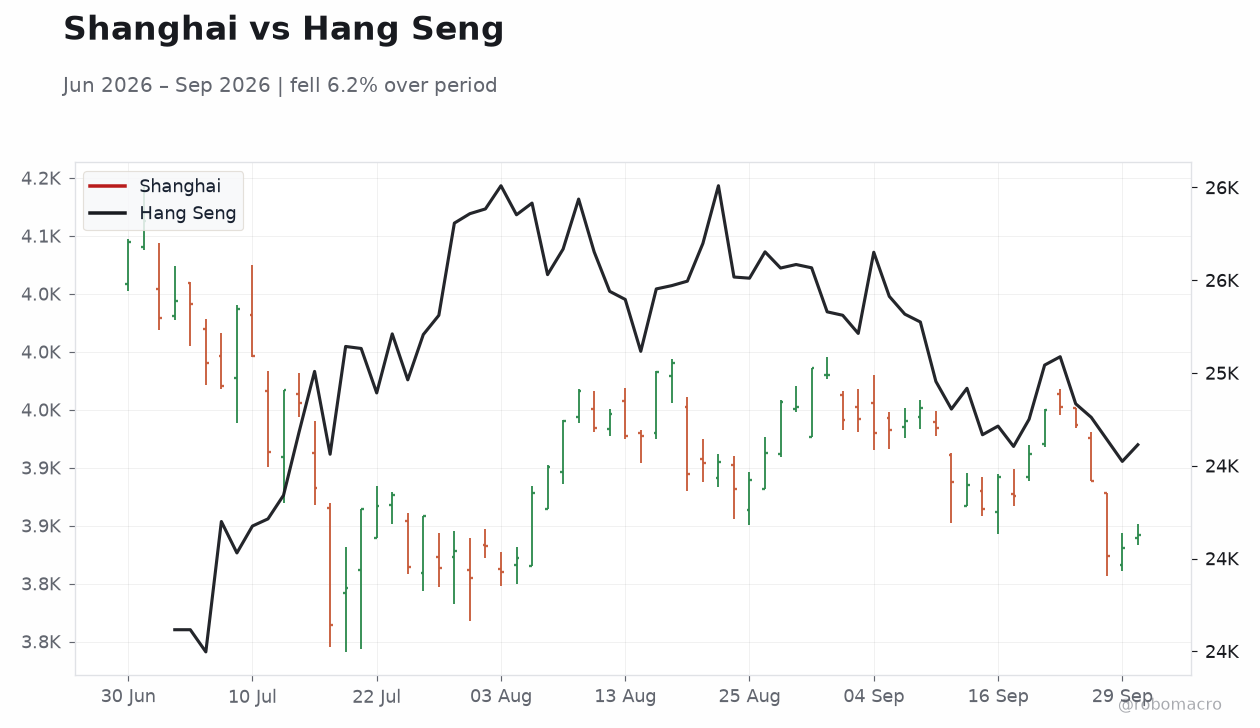
| Shanghai Composite | 3,842.19 | +0.31% |
| CSI 300 | 4,357.62 | +0.29% |
| Hang Seng | 24,040.34 | +0.28% |
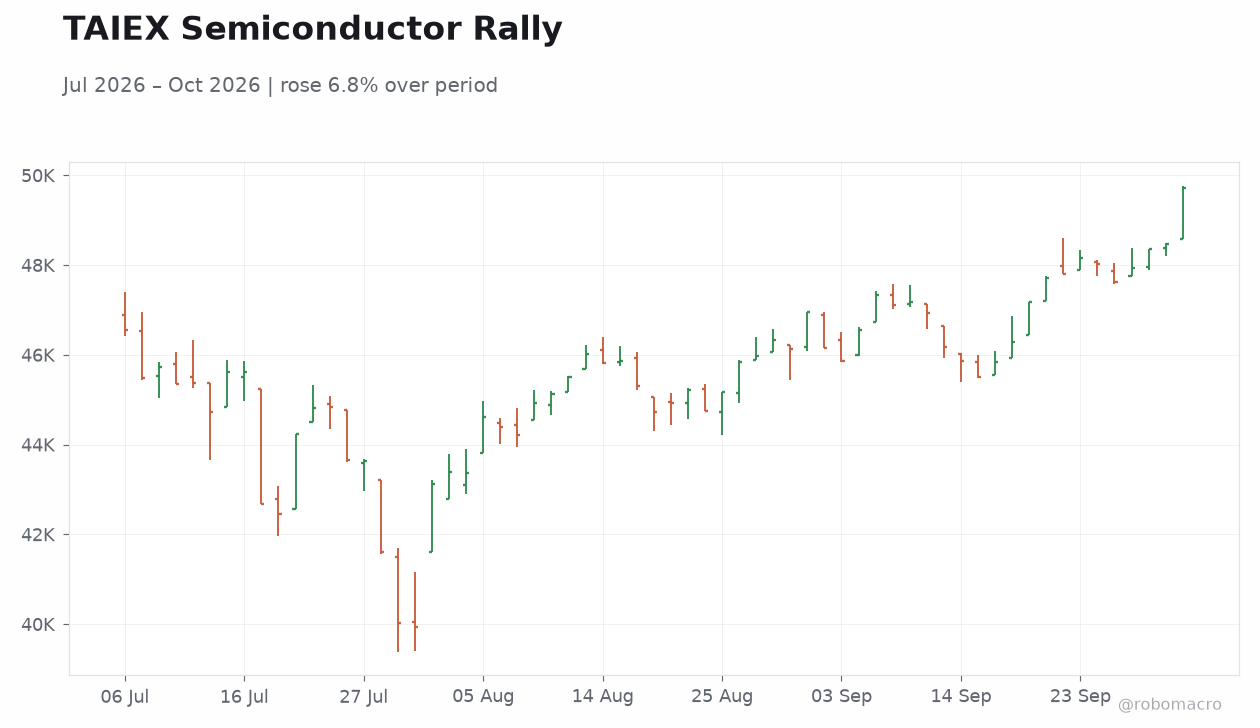
| TAIEX | 49,712.04 | +2.55% |
| USD/CNY | 6.69 | -0.19% |
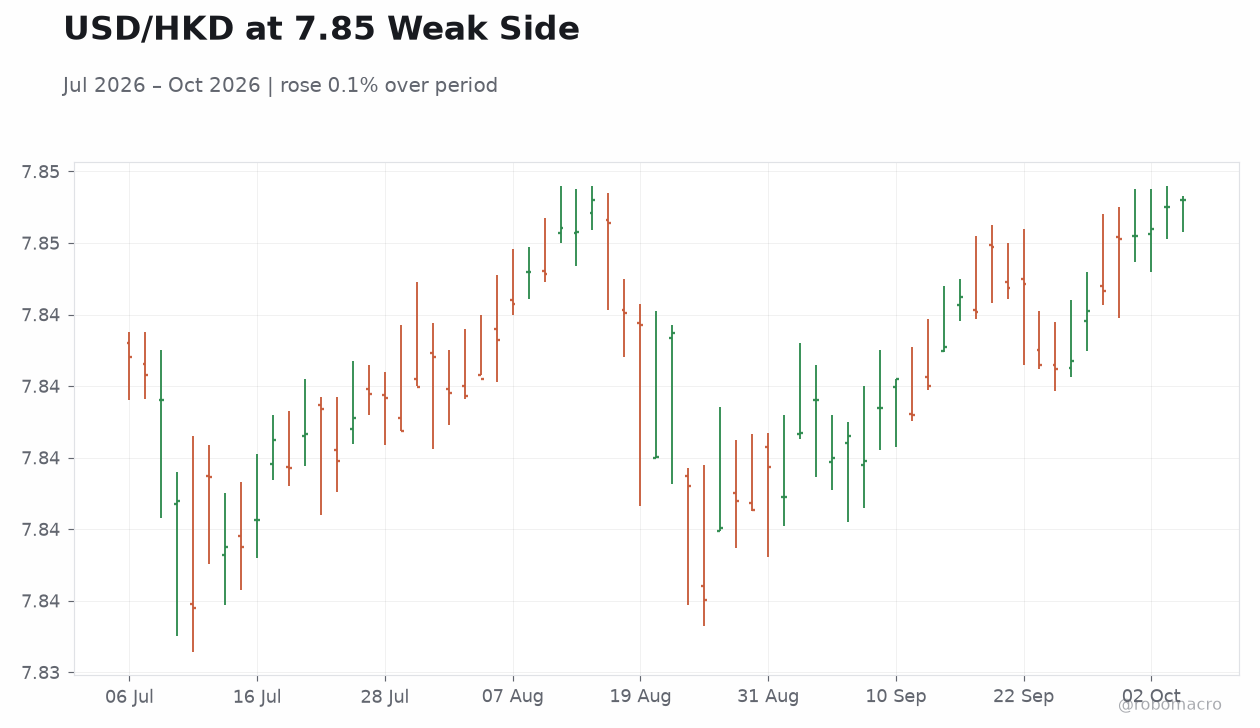
| USD/HKD | 7.85 | -0.00% |
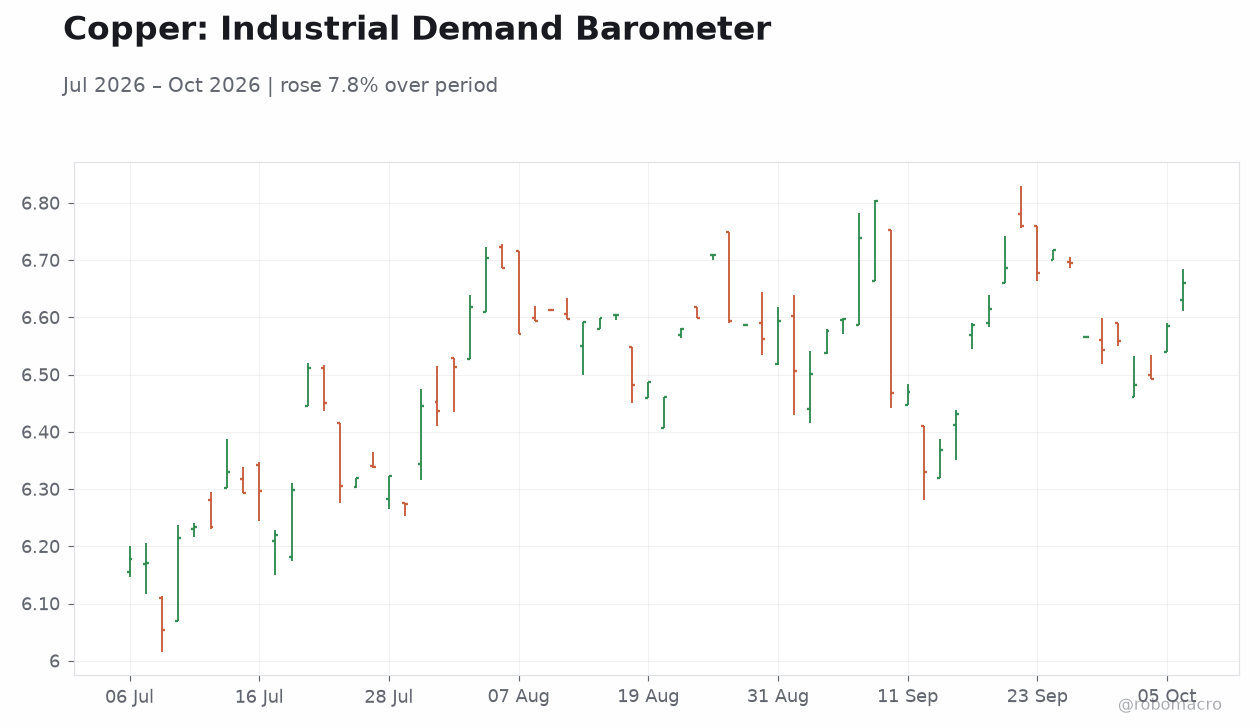
| Copper | 6.66 | +1.12% |
| Brent Crude | 101.15 | +0.83% |
| Gold | 4,192.70 | +0.86% |
| Bitcoin | 85,613.00 | -0.20% |
| China 2Y Govt Yield | - | - |
| China 10Y Govt Yield | - | - |
Prior Economic Events
| Data | Prior | Cons | Actual |
|---|---|---|---|
| No events available | |||
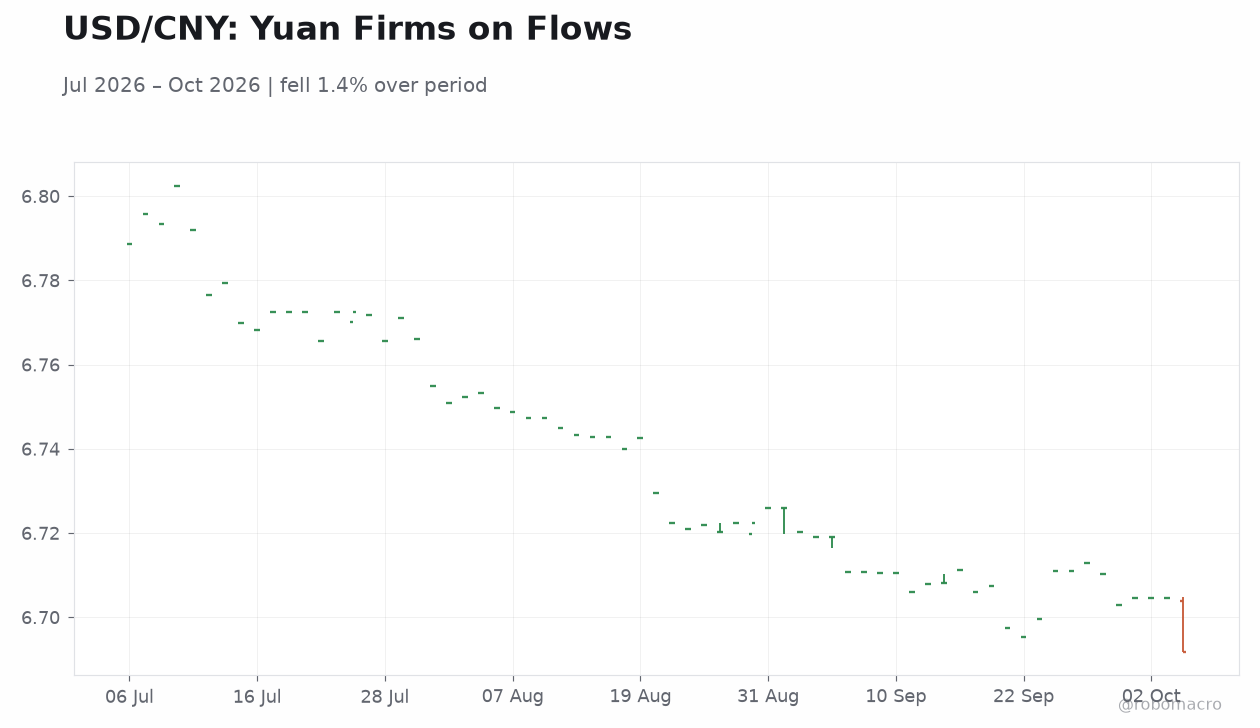 USD/CNY: Yuan Firms on Flows | Type: market_hloc | USD/CNY: 6.692 (2026-10-06) | Range: 6.692–6.802 | Trend(6pt): 6.789,6.766,6.743,6.71,6.705,6.692
Today's Economic Events
| Data | Prior | Cons | Time |
|---|---|---|---|
| No events available | |||
- Regional equities closed mixed-to-higher, with TAIEX up 2.55% on semiconductor strength while Shanghai and Hong Kong posted modest gains
- USD/CNY slipped 0.19% to 6.69 as the yuan benefits from export-led inflows and a soft-dollar environment
- HKD pinned near the 7.85 weak-side convertibility undertaking, keeping HKMA liquidity mechanics in focus
Yesterday's Recap
Greater China equities delivered a constructive session. Taiwan's TAIEX surged 2.55% to 49,712.04, the region's standout, as semiconductor names rallied on AI-driven demand. Mainland benchmarks were more measured: the Shanghai Composite added 0.31% to 3,842.19 and the CSI 300 gained 0.29% to 4,357.62.
Hong Kong's Hang Seng rose 0.28% to 24,040.34, lagging regional peers. Currency markets told a supportive story: USD/CNY fell 0.19% to 6.69, extending the yuan's firming trend on trade-surplus dynamics. USD/HKD was essentially flat at 7.85, pinned near the weak-side Convertibility Undertaking, a level that mechanically triggers HKMA aggregate-balance drainage when tested.
Commodity proxies for Chinese demand firmed, with copper up 1.12% to 6.66. Brent crude climbed 0.83% to 101.15 and gold advanced 0.86% to 4,192.70. Bitcoin eased 0.20% to 85,613, unwinding part of last week's crypto rally.
The Day Ahead
The calendar is light on tier-one prints today, shifting attention to policy commentary. Markets will parse any PBoC open-market operations for signals on liquidity stance heading into the fourth quarter, particularly given the yuan's strength and its implications for the fixings regime. Hong Kong's session will focus on the HKMA's handling of the 7.85 boundary and whether aggregate-balance levels prompt intervention commentary.
Taiwan's tape remains hostage to global semiconductor order momentum, with TSMC monthly revenue and supply-chain checks the key near-term catalysts. Cross-strait trade flows and any State Council commentary on property support measures could move mainland developers. Regionally, eyes stay on China's export pipeline after reports that Beijing suspended certain fuel exports for October, a move with implications for regional refined-product balances.
Other Economic Notes
Mainland China's export machine remains the dominant macro narrative, with the NYT detailing how tax rebates and a competitive currency underpin shipments that reached 16.3% of global merchandise exports in 2025 — a share that complicates rebalancing toward domestic consumption. The fiscal cost of that model, including a widening budget deficit, is drawing scrutiny as Beijing weighs stimulus calibration. ↓ p.2