China Bonds Rally, Equities Firm on Trade Tensions
Shanghai Composite3,842.19+0.31%
CSI 3004,357.62+0.29%
Hang Seng24,280.56+1.00%
TAIEX49,822.55+0.22%
Market Snapshot
| Asset | Level | Change |
|---|
| Shanghai Composite | 3,842.19 | +0.31% |
| CSI 300 | 4,357.62 | +0.29% |
| Hang Seng | 24,280.56 | +1.00% |
| TAIEX | 49,822.55 | +0.22% |
| USD/CNY | 6.69 | -0.17% |
| USD/HKD | 7.85 | +0.01% |
| Copper | 6.64 | +0.71% |
| Brent Crude | 100.95 | +0.37% |
| Gold | 4,136.70 | -1.20% |
| Bitcoin | 83,141.00 | -2.82% |
| China 2Y Govt Yield | - | - |
| China 10Y Govt Yield | - | - |
Prior Economic Events
| Data |
Prior |
Cons |
Actual |
| No events available |
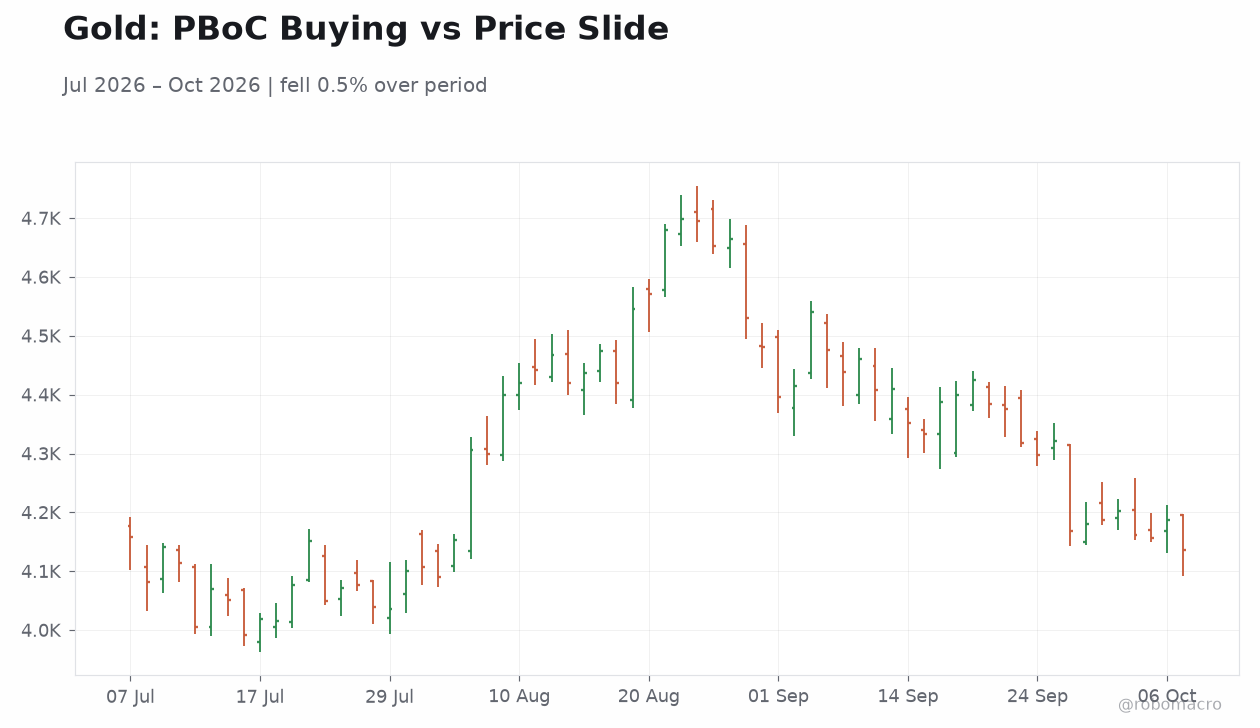 Gold: PBoC Buying vs Price Slide | Type: market_hloc | Gold Futures (USD/oz): 4137 (2026-10-07) | Range: 3992–4698 | Trend(6pt): 4157,4036,4571,4352,4187,4137
Today's Economic Events
| Data |
Prior |
Cons |
Time |
| No events available |
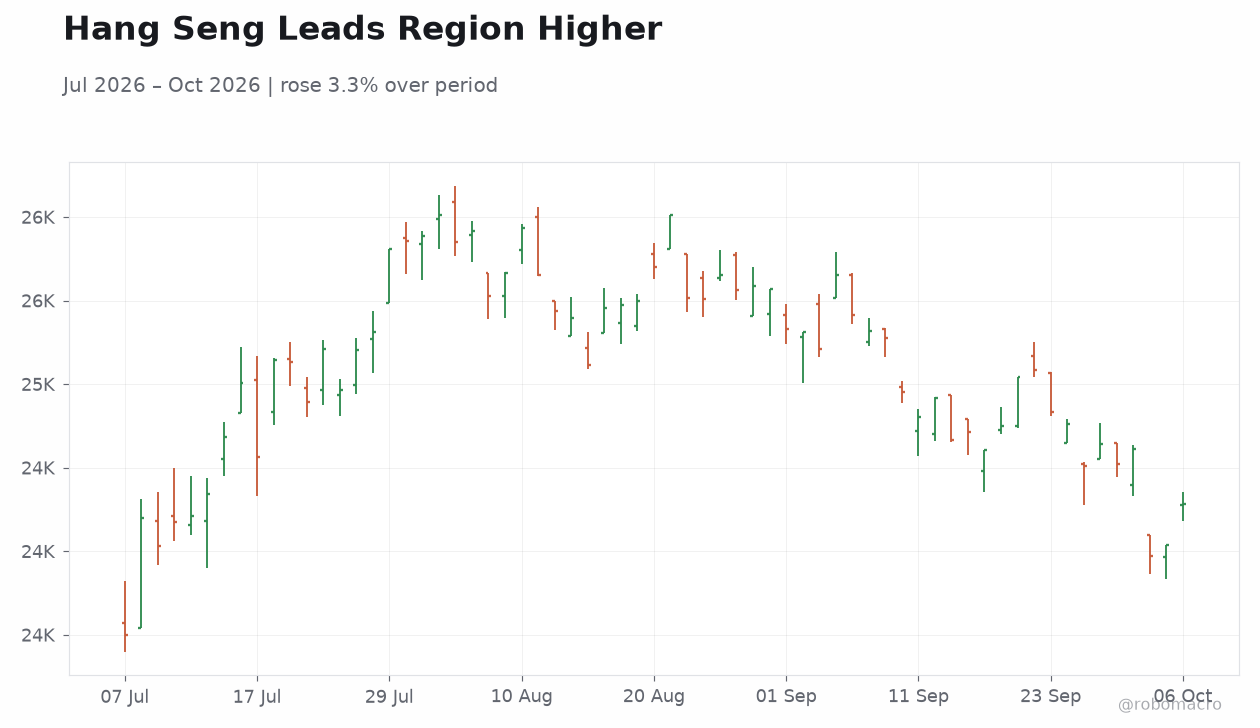
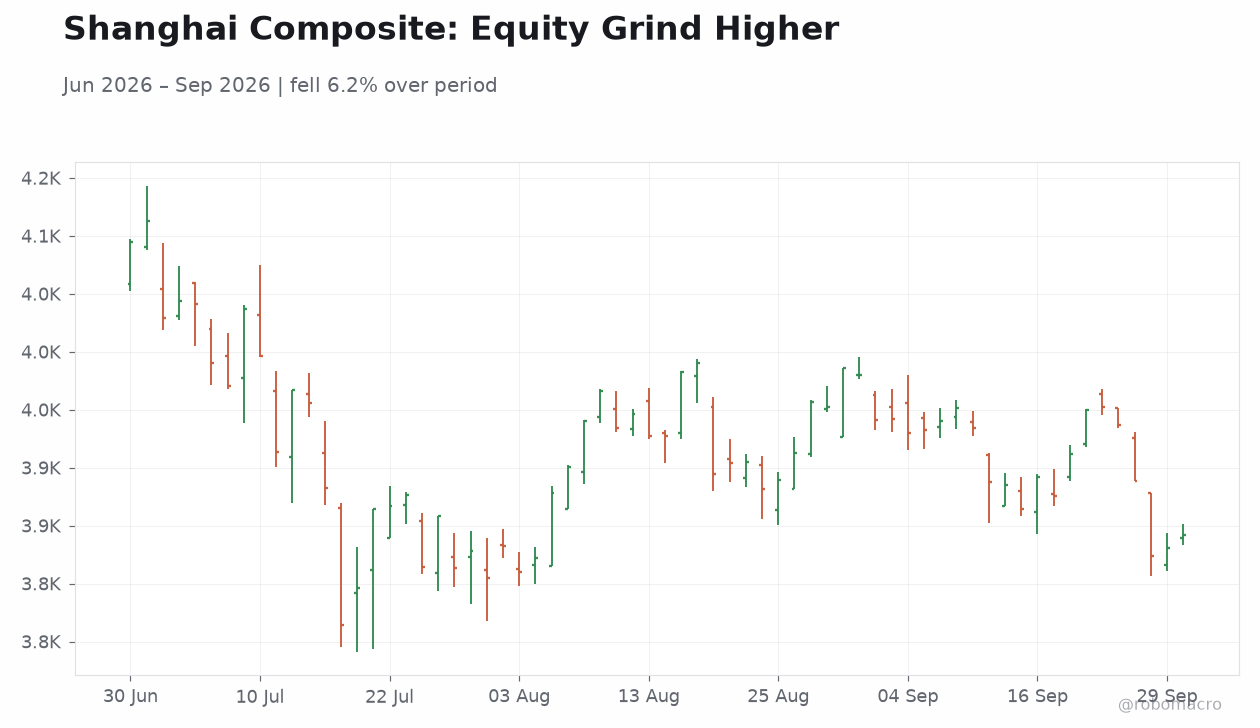
- Mainland Chinese equities closed higher, with the Shanghai Composite up 0.31% to 3,842.19 and the CSI 300 gaining 0.29% to 4,357.62, while Hong Kong's Hang Seng outperformed with a 1.00% rally to 24,280.56.
- Mainland China's bond market remains a global outlier, with the benchmark 10-year yield near 1.7% as disinflation persists—August CPI printed at just 0.8% year-over-year—supporting expectations for continued PBoC accommodation.
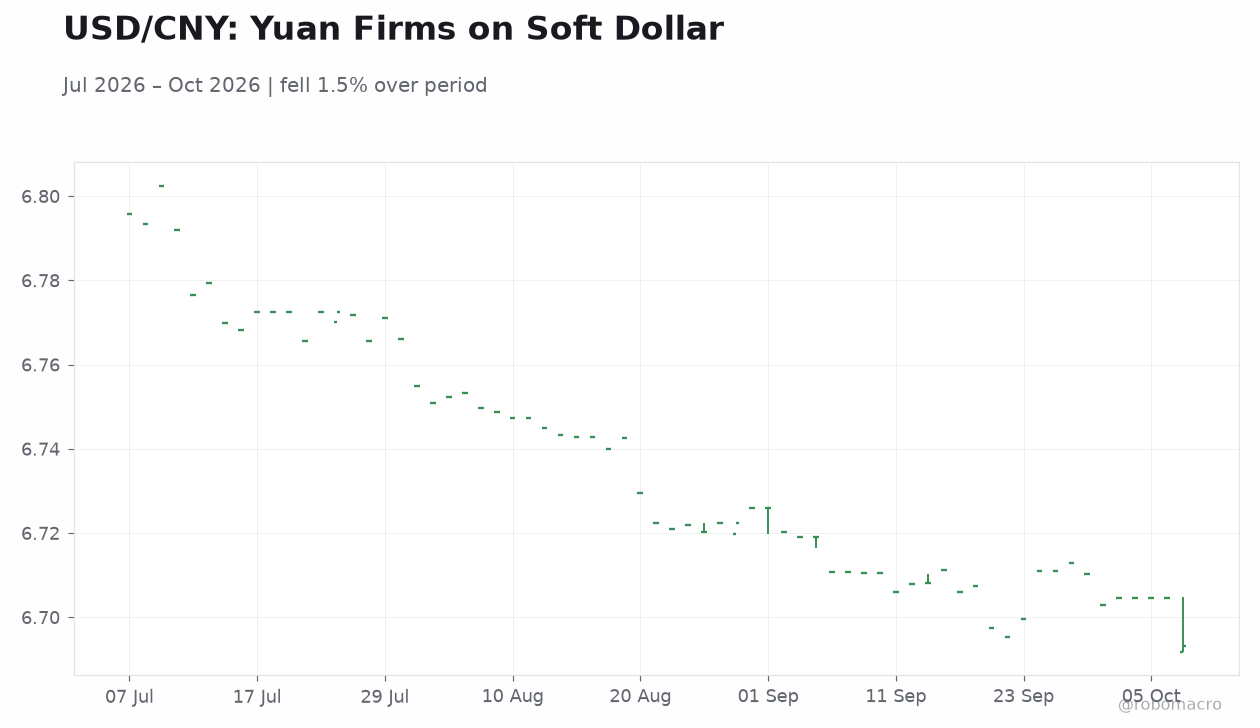
- The PBoC extended its gold-buying streak toward the two-year mark in September even as bullion slid toward $4,000/oz, while the yuan firmed 0.17% to 6.69 against a broadly softer dollar.
Yesterday's Recap
Mainland Chinese equities ground higher, with the Shanghai Composite adding 0.31% to 3,842.19 and the CSI 300 up 0.29% at 4,357.62, while Hong Kong's Hang Seng led the region with a 1.00% rally to 24,280.56. Taiwan's TAIEX edged up 0.22% to 49,822.55, with semiconductor heavyweights underpinning the index. The yuan strengthened 0.17% to 6.69 per dollar, reflecting dollar softness and continued portfolio inflows into onshore assets.
Mainland China's government bond market remained a standout: the 10-year yield has fallen to as low as 1.7% this week, an extreme outlier against surging global yields, as investors price in prolonged disinflation—August CPI was just 0.8% year-over-year—and a patient PBoC. Copper, a key mainland growth proxy, climbed 0.71%, offering a modest positive signal for industrial demand. Brent crude rose 0.37% to $100.95, keeping input-cost pressures elevated for North Asian importers.
Gold slipped 1.20% to $4,136.70 despite the PBoC's continued accumulation, and Bitcoin fell sharply, down 2.82% to $83,141, as risk appetite cooled in crypto markets.
The Day Ahead
The calendar is light today, keeping attention on policy signals and the escalating EU-China trade file. European negotiators are preparing to meet Chinese officials in Beijing, with the EU weighing tougher measures—reportedly including a European version of Section 301-style tariffs—against surging Chinese exports. Any readout from those talks could move the yuan and mainland industrial names.
Watch for further PBoC open-market operations for signals on liquidity stance heading into the fourth quarter, and continued tracking of the HKD's drift toward the 7.85 weak-side convertibility undertaking. Hong Kong's aggregate balance dynamics will be key if the weak side is tested. Semiconductors remain the dominant theme for Taiwan, where the World Bank's upgraded Asia-Pacific growth outlook underscores the sector's weight in regional indices.
Page 1
Never miss an issue
Subscribe to Greater China Macro Daily and get each new issue delivered to your inbox.
Already a member? Visit robomacro.com
to log in and manage subscriptions, or use Forgot Password to set a password.