Greater China Macro Daily(Beta Mode)
"China CPI, Trade Data Loom; HKD Tests Band"
Market Snapshot
| Asset | Level | Change |
|---|---|---|
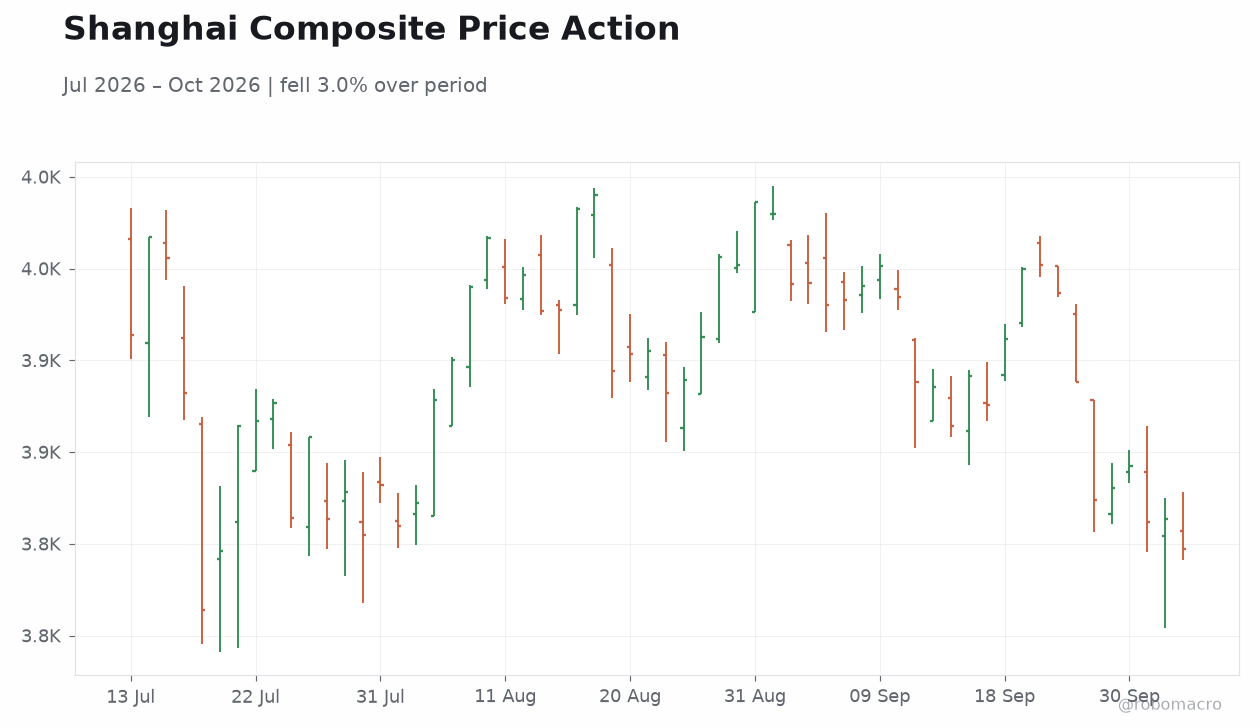
| Shanghai Composite | 3,793.16 | -0.11% |
| CSI 300 | 4,275.68 | -0.96% |
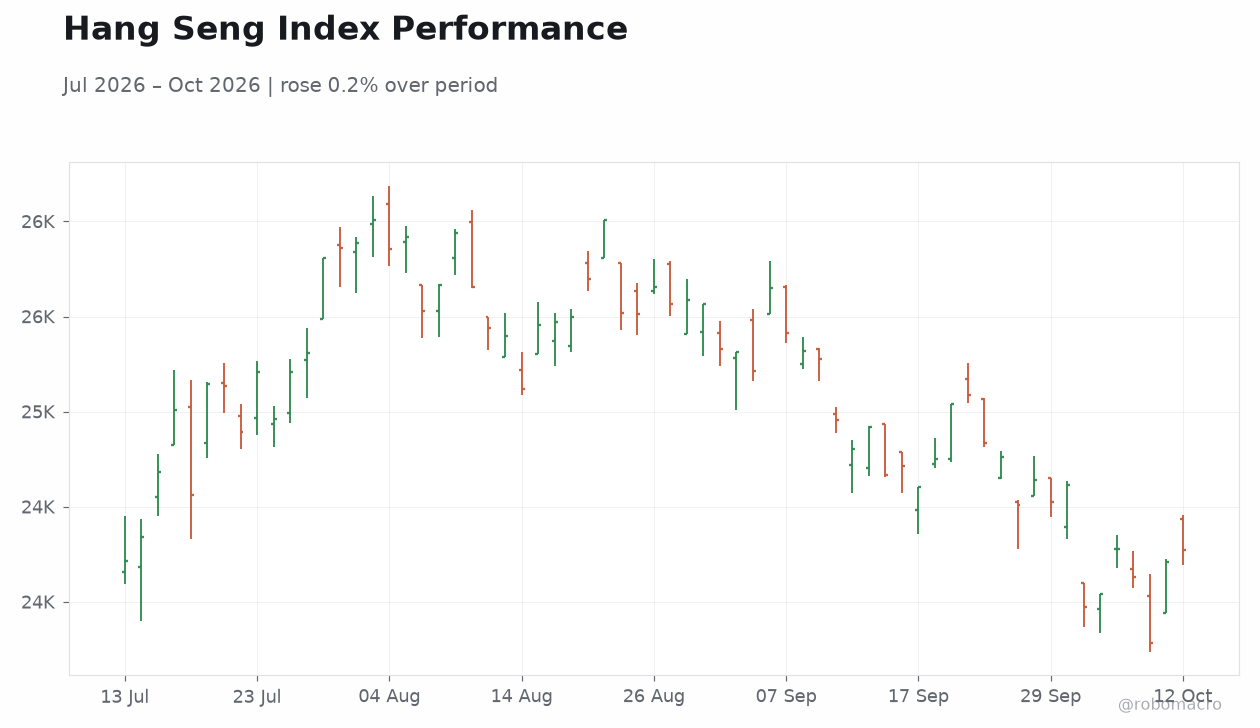
| Hang Seng | 24,271.20 | +0.25% |
| TAIEX | 49,301.96 | -0.02% |
| USD/CNY | 6.68 | -0.15% |
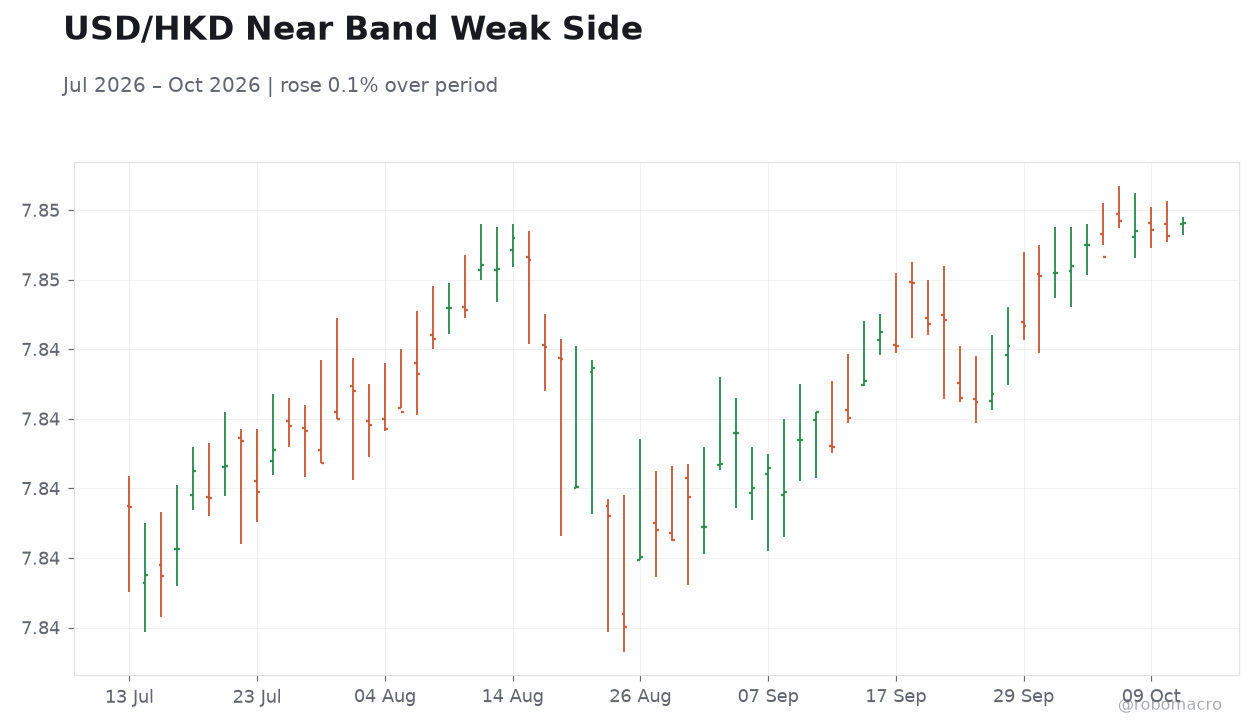
| USD/HKD | 7.85 | +0.00% |
| Copper | 6.73 | +0.43% |
| Brent Crude | 106.36 | -0.27% |
| Gold | 4,184.20 | -0.15% |
| Bitcoin | 83,354.90 | +1.95% |
| China 2Y Govt Yield | - | - |
| China 10Y Govt Yield | - | - |
Prior Economic Events
| Data | Prior | Cons | Actual |
|---|---|---|---|
| No events available | |||
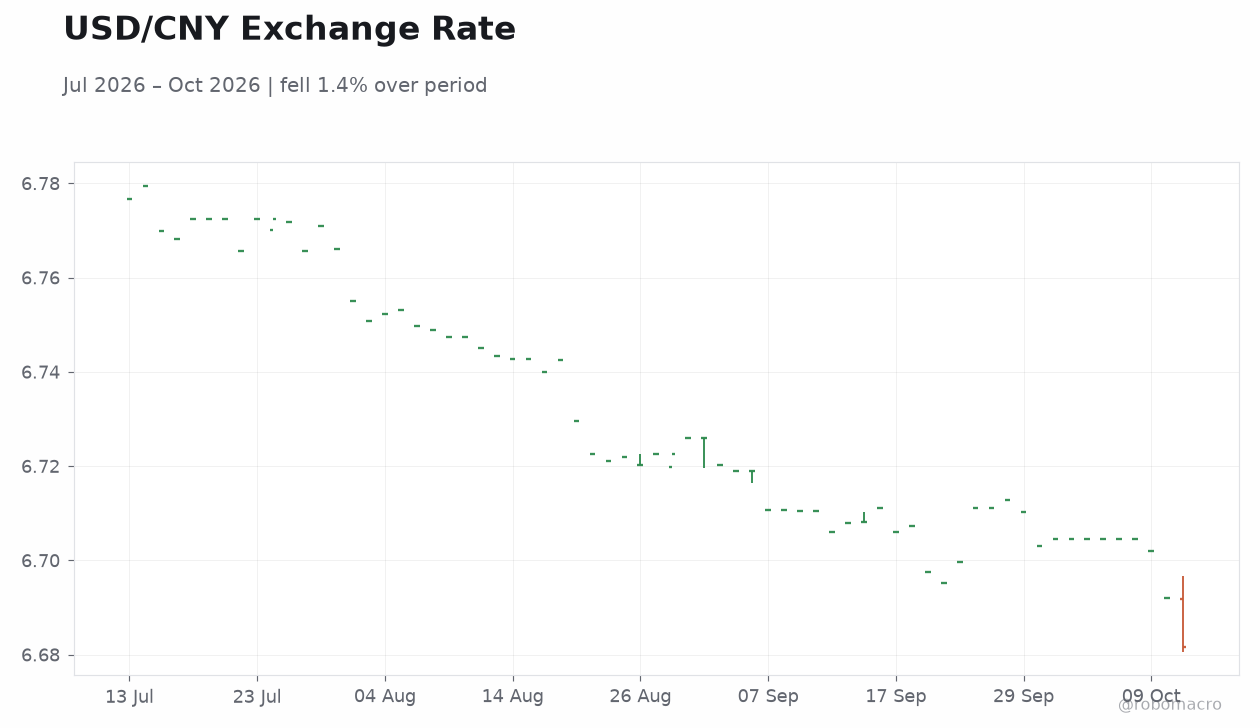 USD/CNY Exchange Rate | Type: market_hloc | USD/CNY: 6.682 (2026-10-13) | Range: 6.682–6.78 | Trend(6pt): 6.777,6.752,6.72,6.706,6.702,6.682
Today's Economic Events
| Data | Prior | Cons | Time |
|---|---|---|---|
| Inflation Rate Year-over-Year | 0.80 | 1 | 21:30 |
| Inflation Rate Month-over-Month | 0.40 | 0.30 | 21:30 |
| Producer Price Index Year-over-Year | 3.80 | 4.50 | 21:30 |
| Exports Year-over-Year | 25 | 25.50 | 23:00 |
| Imports Year-over-Year | 28.20 | 24.50 | 23:00 |
| Trade Balance | 119,100m | 118,100m | 23:00 |
- Mainland China September CPI, PPI and trade balance all release today, with consensus looking for CPI at 1.0% YoY and PPI at 4.5%.
- Hong Kong dollar sits near the weak side of its trading band, putting an HKMA intervention squarely in focus.
- Equities diverged: Hang Seng added 0.25% while CSI 300 fell 0.96% and the Shanghai Composite slipped 0.11%.
Yesterday's Recap
Mainland Chinese equities closed lower, with the CSI 300 down 0.96% to 4,275.68 and the Shanghai Composite easing 0.11% to 3,793.16, as investors positioned ahead of today's inflation and trade data. Hong Kong bucked the trend, with the Hang Seng advancing 0.25% to 24,271.20, supported by financial heavyweights ahead of the HKMA's Global Financial Leaders' Summit next month. Taiwan's TAIEX was essentially flat, slipping 0.02% to 49,301.96, as semiconductor names digested a sharp regional sell-off that saw Korea's Kospi tumble more than 7% on AI-boom valuation worries.
In FX, USD/CNY firmed 0.15% to 6.68, with the PBoC expected to set today's reference rate at 6.6981 per a Reuters estimate, while USD/HKD held at 7.85, pinned near the weak convertibility undertaking. Copper, a key China growth proxy, gained 0.43% to 6.73, offering a modest positive signal for industrial demand. Brent crude slipped 0.27% to 106.36 and gold eased 0.15% to 4,184.20, while Bitcoin rallied 1.95% to 83,354.90.
No scheduled macro prints landed in Greater China yesterday, leaving today's mainland data as the week's first major catalyst.
The Day Ahead
Mainland China dominates today's calendar with a dense cluster of high-impact releases. At 21:30 ET, September inflation data arrives: CPI YoY is expected at 1.0% versus 0.8% previously, with MoM CPI seen at 0.3% after 0.4%, and PPI YoY forecast to accelerate to 4.5% from 3.8% — a print that will shape the reflation narrative and PBoC policy expectations. Later, at 23:00 ET, September trade data lands: exports are seen slowing to 25.5% YoY from 25.0%, imports decelerating sharply to 24.5% from 28.2%, and the trade balance narrowing slightly to $118.1bn from $119.1bn.
The import trajectory will be scrutinized for signs of domestic demand softness, while the export print tests the resilience of the shipment boom. Hong Kong and Taiwan have no scheduled releases, leaving the HKD's band dynamics and equity flows as the main watch items.
Other Economic Notes
Structural concerns over mainland China's labor market resurfaced, with WSJ reporting that youth job losses are creating a "lost generation" as milestones of adulthood slip away — a demographic overhang that also risks distorting Beijing's longer-term growth ambitions. ↓ p.2