Greater China Macro Daily(Beta Mode)
China Exports Surge 36% as Equities Slip, Gold Rallies
Market Snapshot
| Asset | Level | Change |
|---|---|---|
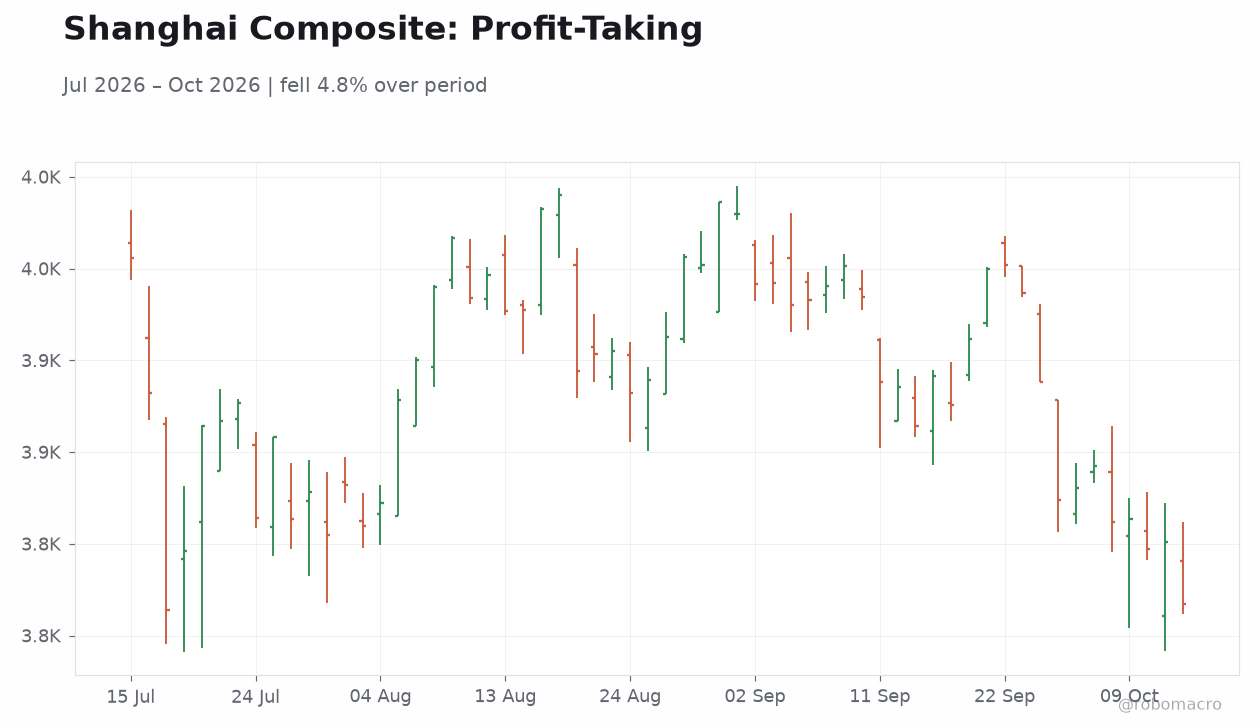
| Shanghai Composite | 3,677.35 | -2.39% |
| CSI 300 | 4,166.01 | -1.23% |
| Hang Seng | 24,314.17 | -0.13% |
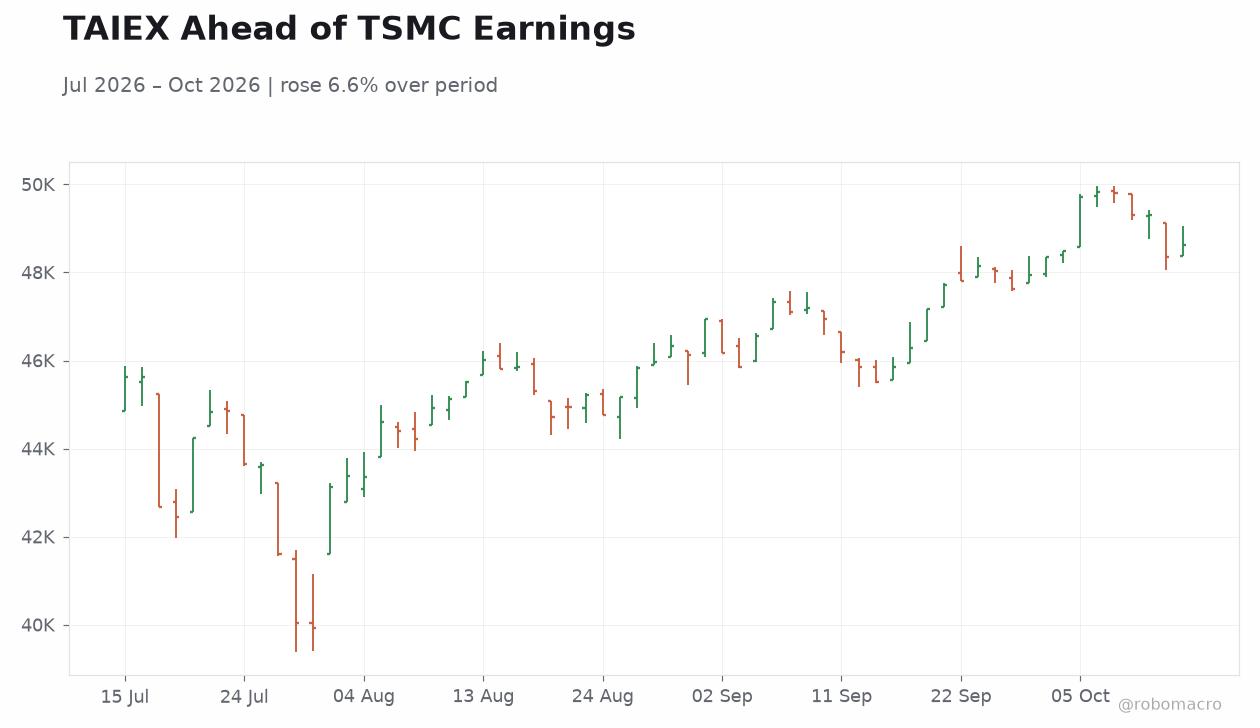
| TAIEX | 48,625.83 | +0.59% |
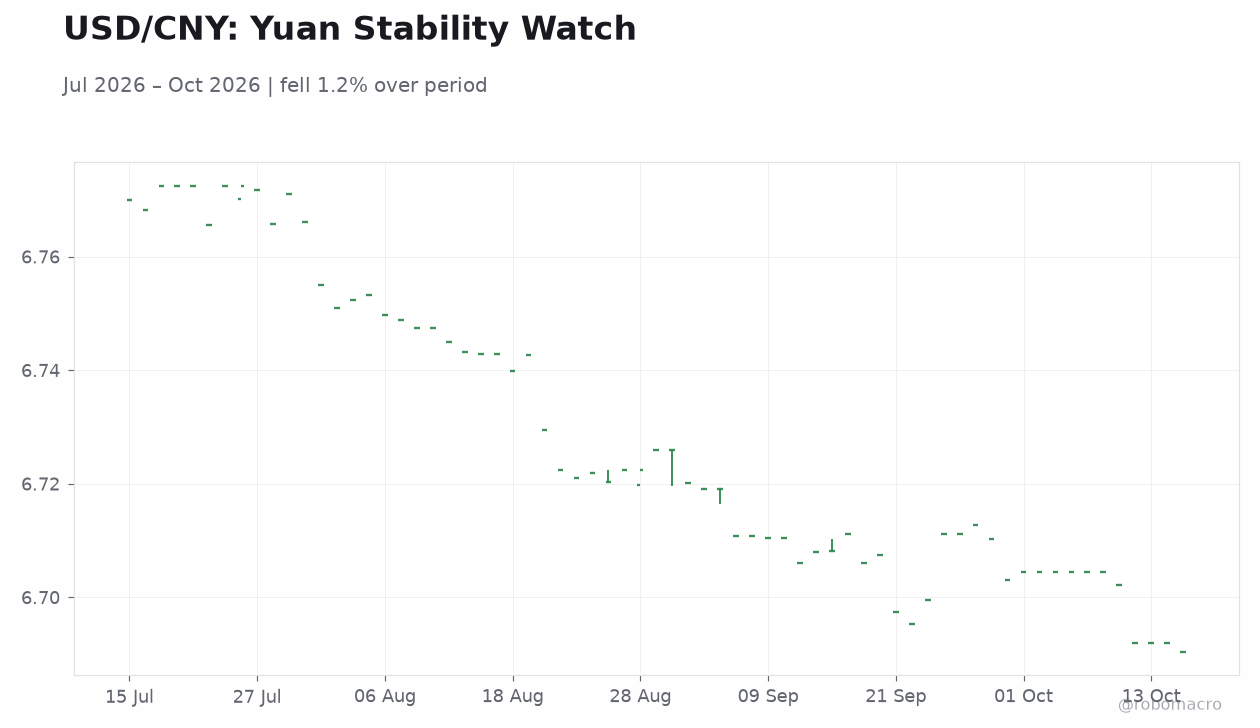
| USD/CNY | 6.69 | -0.02% |
| USD/HKD | 7.85 | -0.02% |
| Copper | 6.56 | -0.74% |
| Brent Crude | 105.73 | -0.31% |
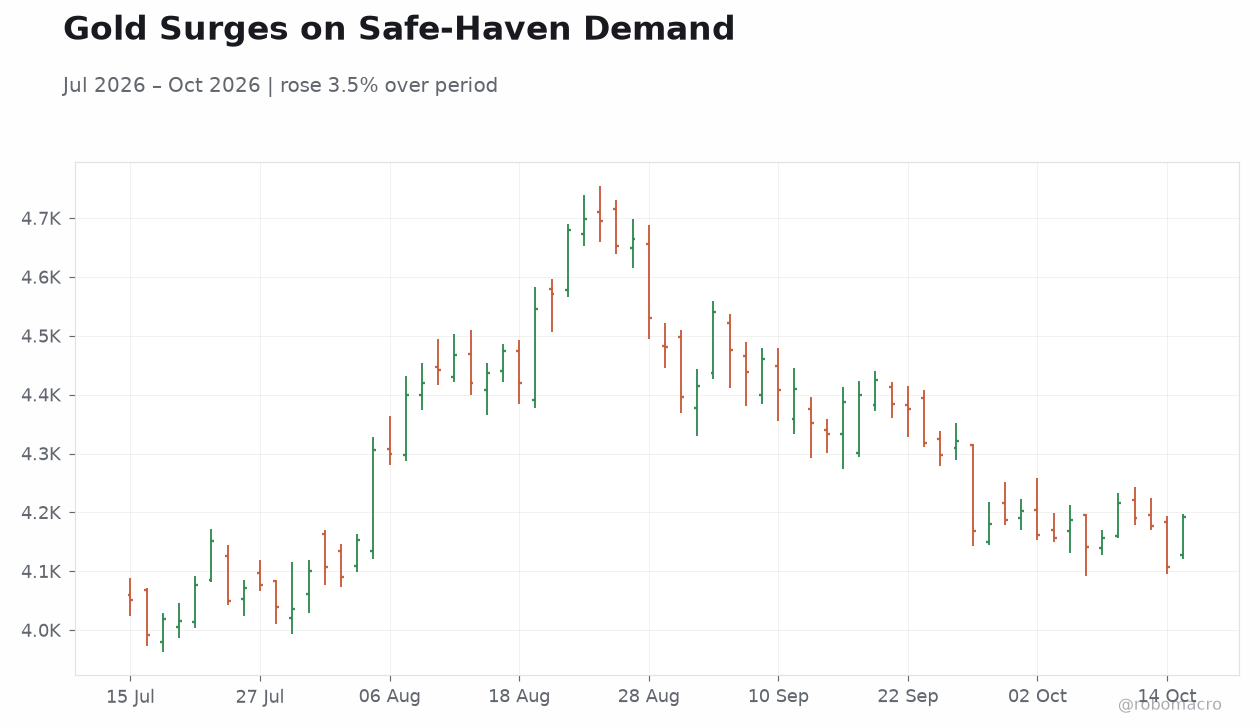
| Gold | 4,192.50 | +2.06% |
| Bitcoin | 82,422.51 | +1.05% |
| China 2Y Govt Yield | - | - |
| China 10Y Govt Yield | - | - |
Prior Economic Events
| Data | Prior | Cons | Actual |
|---|---|---|---|
| Inflation Rate Year-over-Year | 0.80 | 1 | 0.90 |
| Inflation Rate Month-over-Month | 0.40 | 0.30 | 0.20 |
| Producer Price Index Year-over-Year | 3.80 | 4.50 | 5 |
| Exports Year-over-Year | 25 | 25.50 | 36.30 |
| Imports Year-over-Year | 28.20 | 24.50 | 31 |
| Trade Balance | 119,090m | 118,100m | 133,530m |
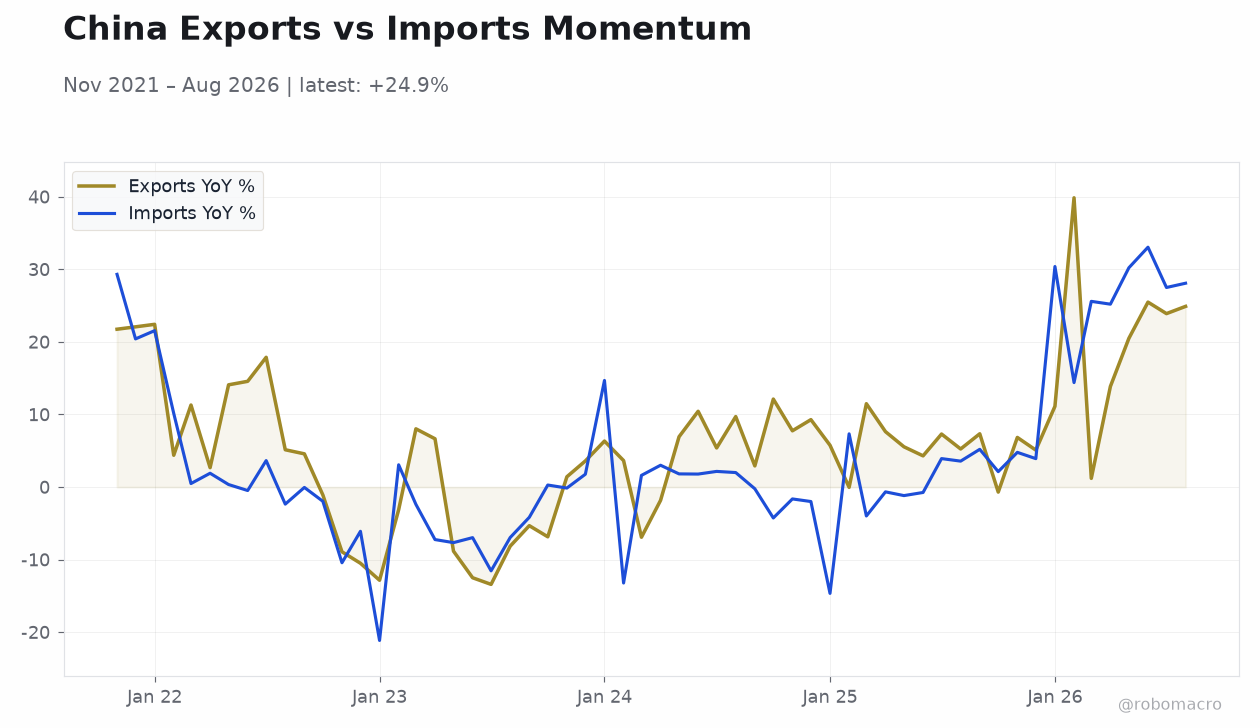 China Exports vs Imports Momentum | Type: macro_line | Exports YoY %: 24.9 (2026-08-01) | Range: -13.41–39.85 | Trend(6pt): 21.75,-12.84,-6.912,5.548,23.9,24.9 | Imports YoY %: 28.09 (2026-08-01) | Range: -21.14–33.05 | Trend(6pt): 29.31,-21.14,1.608,-1.177,27.5,28.09
Today's Economic Events
| Data | Prior | Cons | Time |
|---|---|---|---|
| No events available | |||
- Mainland China's September exports jumped 36.3% YoY, far above the 25.5% consensus, pushing the trade surplus to $133.5bn and keeping the full-year surplus on track toward a record near $1tn.
- Inflation remained mixed: CPI rose just 0.9% YoY while PPI accelerated to 5.0%, squeezing margins even as external demand booms.
- Shanghai Composite fell 2.39% and CSI 300 lost 1.23% on profit-taking; TAIEX gained 0.59% ahead of TSMC results while gold surged 2.06%.
Yesterday's Recap
Mainland China delivered a blockbuster trade print on Tuesday. Exports surged 36.3% year-over-year, crushing the 25.5% consensus and marking one of the strongest monthly readings since the global financial crisis, while imports rose 31% against a 24.5% forecast. The trade balance swelled to $133.53bn, exceeding expectations and leaving the cumulative surplus on a record pace.
AI-related shipments — semiconductors, servers, and components — were key drivers, alongside elevated energy imports as high oil prices inflated the import bill. The inflation picture was more mixed: CPI rose 0.9% YoY, slightly below the 1.0% consensus, and just 0.2% MoM, underscoring persistent domestic demand softness. PPI inflation accelerated to 5.0% YoY, well above the 4.5% consensus, reflecting input-cost pressures that producers are struggling to pass through.
Equities diverged: the Shanghai Composite dropped 2.39% to 3,677.35 and the CSI 300 fell 1.23% to 4,166.01, while Hong Kong's Hang Seng was nearly flat at 24,314.17 (-0.13%). Taiwan's TAIEX bucked the trend, adding 0.59% to 48,625.83. The yuan was steady at 6.69 per dollar, and copper — a key China growth proxy — slipped 0.74% to 6.56.
The Day Ahead
The calendar is quiet on Wednesday with no scheduled mainland China, Hong Kong, or Taiwan data releases. Attention shifts to the US, where September CPI is expected to show pressures from gas and semiconductor prices — a print with direct implications for Fed policy and thus the HKMA's peg mechanics via the Fed-HKMA rate linkage. Markets will also watch TSMC's earnings report, due Thursday, for confirmation of the AI semiconductor demand that powered China's export surge.
Chinese Q3 GDP and September activity data loom later in the month. Liquidity conditions and any PBoC open-market operations will be monitored for signals on funding costs.
Other Economic Notes
The composition of China's trade surplus is drawing scrutiny: with the full-year surplus tracking toward $1tn, talk of "backdoor bond-buying" — China's steady culling of its Treasury holdings since 2016 — is resurfacing among strategists weighing a $600bn buildup in alternative reserves. Hong Kong's regulator is investigating IPO allocation irregularities and suspended trading in ChaPanda shares, a reminder of listing-quality risks in the HK market. ↓ p.2