Greater China Macro Daily(Beta Mode)
Yuan Hits Four-Year High as GDP Beat Eases Stimulus Case
Market Snapshot
| Asset | Level | Change |
|---|---|---|
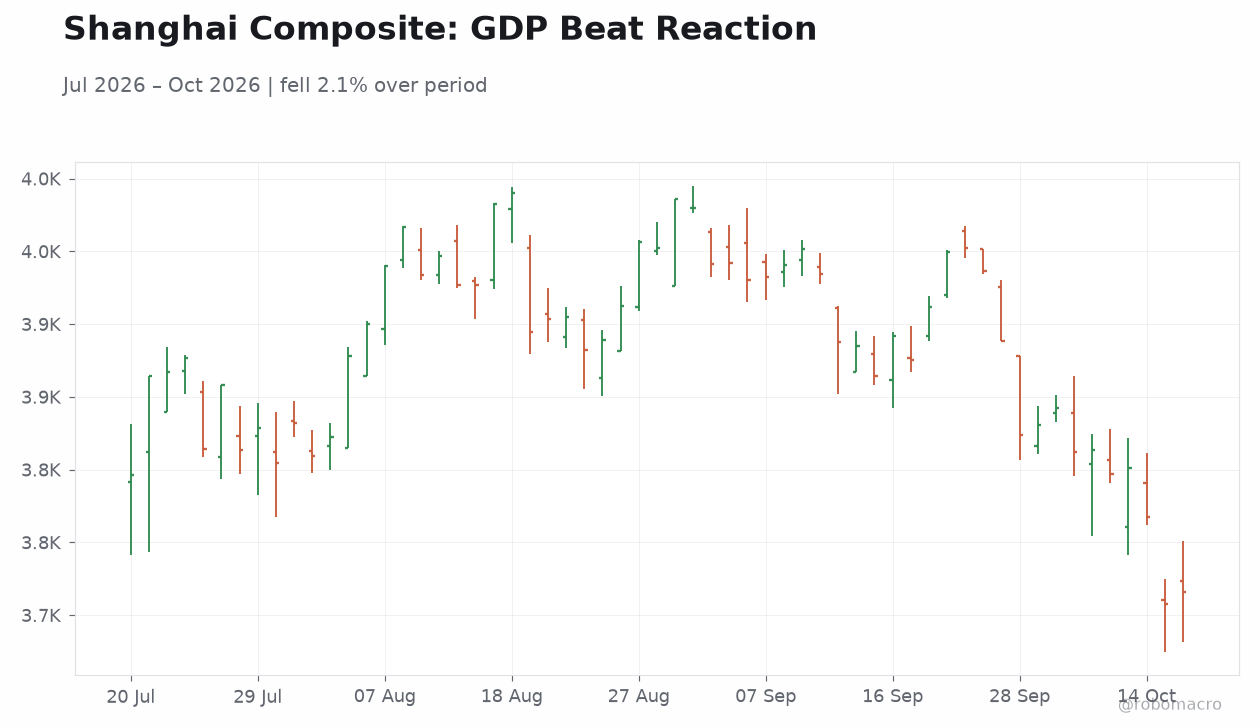
| Shanghai Composite | 3,716.28 | +0.24% |
| CSI 300 | 4,170.61 | +0.11% |
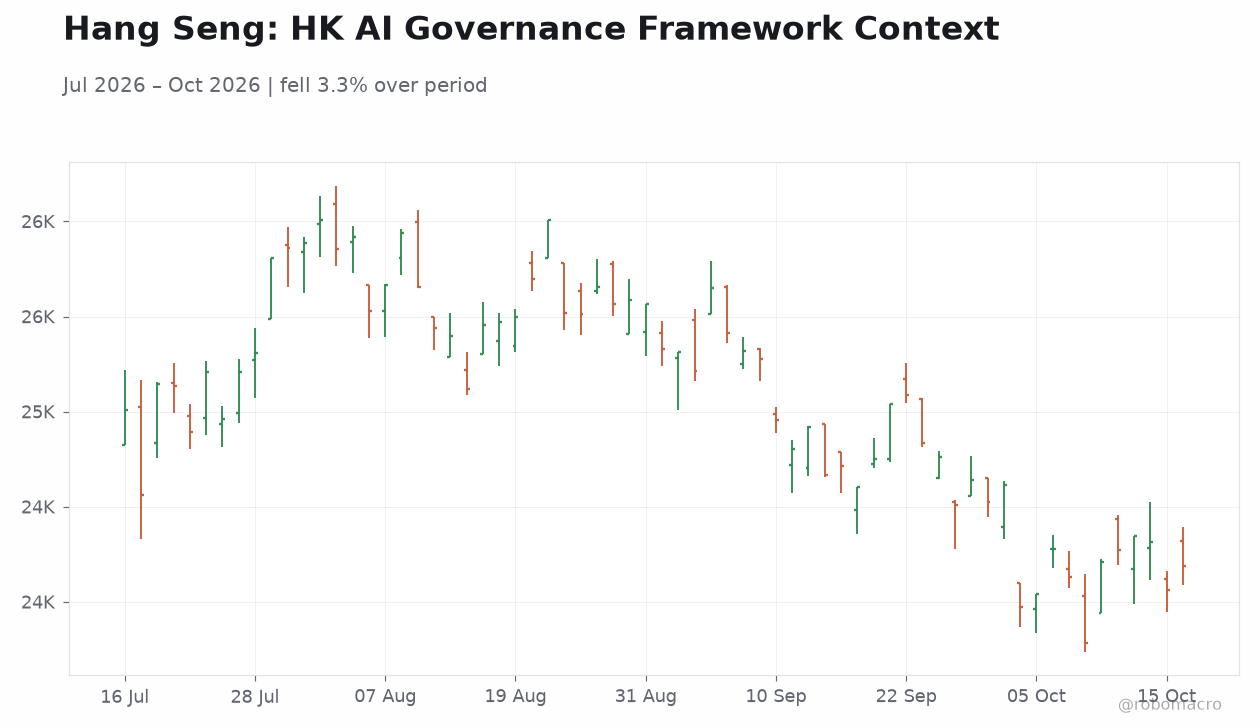
| Hang Seng | 24,186.83 | +0.52% |
| TAIEX | 47,111.26 | +0.30% |
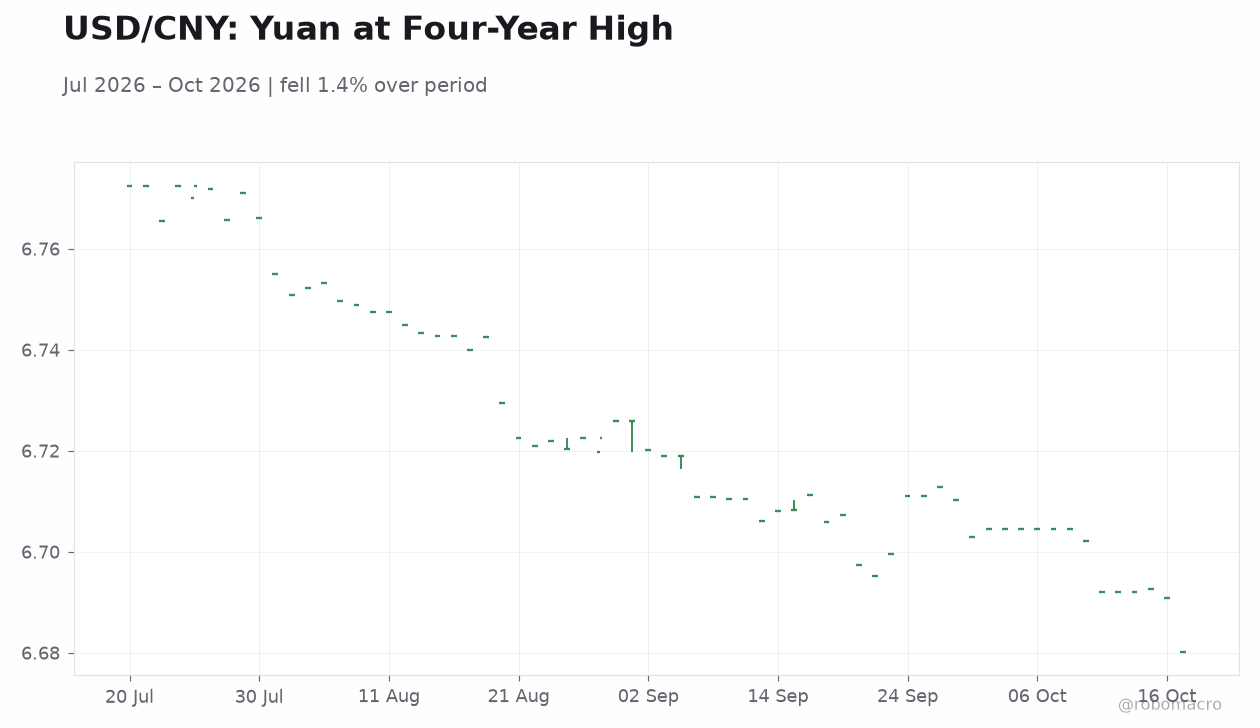
| USD/CNY | 6.67 | -0.30% |
| USD/HKD | 7.85 | -0.00% |
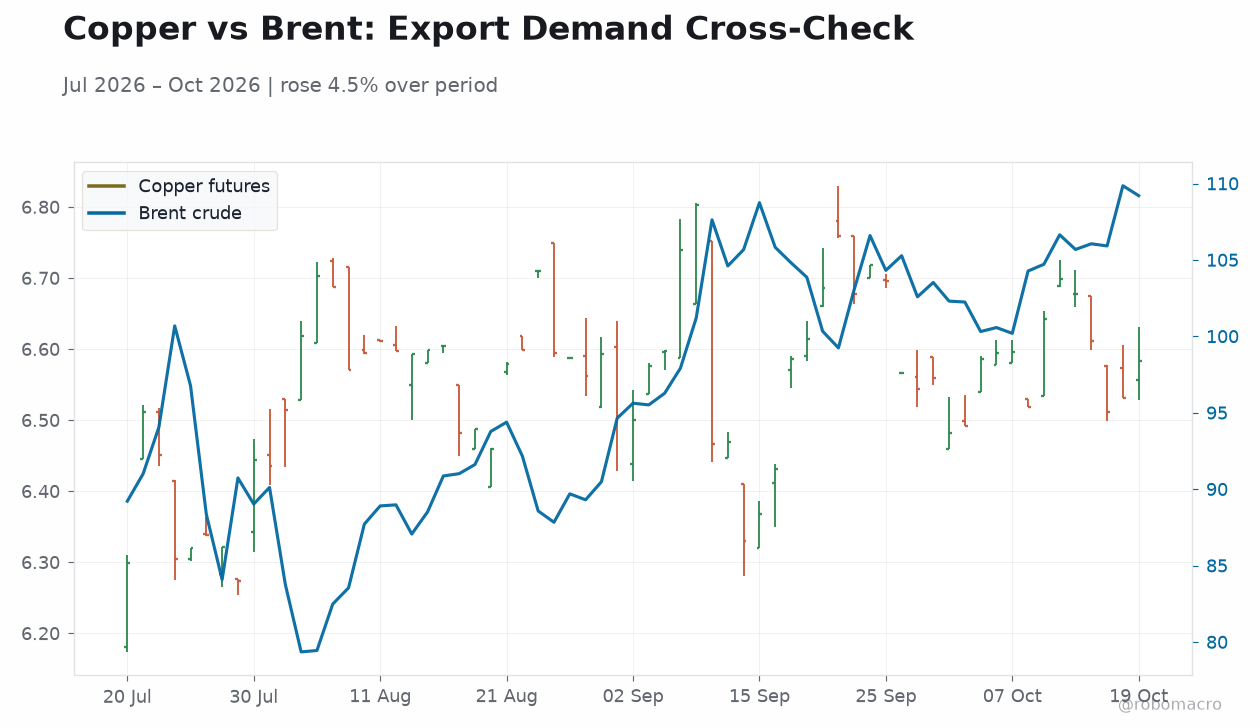
| Copper | 6.58 | +0.81% |
| Brent Crude | 109.21 | -0.59% |
| Gold | 4,160.30 | -0.50% |
| Bitcoin | 82,004.10 | -0.02% |
| China 2Y Govt Yield | - | - |
| China 10Y Govt Yield | - | - |
Prior Economic Events
| Data | Prior | Cons | Actual |
|---|---|---|---|
| No events available | |||
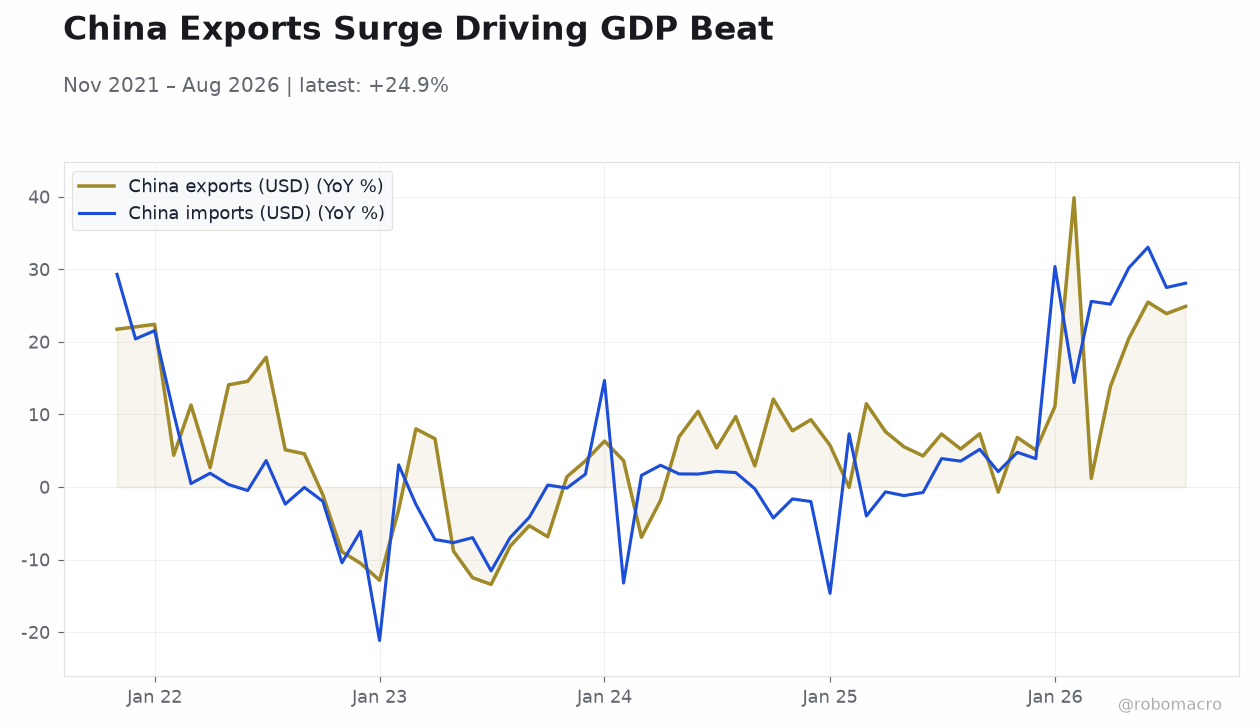 China Exports Surge Driving GDP Beat | Type: macro_line | China exports (USD): 24.9 (2026-08-01) | Range: -13.41–39.85 | Trend(6pt): 21.75,-12.84,-6.912,5.548,23.9,24.9 | China imports (USD): 28.09 (2026-08-01) | Range: -21.14–33.05 | Trend(6pt): 29.31,-21.14,1.608,-1.177,27.5,28.09
Today's Economic Events
| Data | Prior | Cons | Time |
|---|---|---|---|
| No events available | |||
- China Q3 GDP grew 4.5% y/y on export strength; yuan hit a four-year high as stimulus urgency faded
- Beijing signals looser rules to attract foreign portfolio investment into mainland markets
- HKMA rolls out "ART" framework for responsible AI governance in banking; TAIEX resilient despite regional semiconductor selloff
Yesterday's Recap
Mainland China's Q3 GDP printed 4.5% y/y, accelerating from prior quarters and putting Beijing on track for its full-year target, per official statistics. The expansion was powered almost entirely by exports and factory activity, with consumer confidence and the property market still dragging. Markets responded decisively: the yuan strengthened past 6.67 USD/CNY, a four-year high, as traders priced a reduced need for near-term stimulus.
Onshore equities were firm but unenthusiastic — the Shanghai Composite added 0.24% to 3,716.28 and the CSI 300 rose 0.11% to 4,170.61, suggesting investors see the export-led model as fragile. Hong Kong's Hang Seng gained 0.52% to 24,186.83, with USD/HKD holding at 7.85. Taiwan's TAIEX advanced 0.30% to 47,111.26, outperforming regional peers despite a sharp AI-semiconductor selloff in South Korea that dragged the KOSPI down 7.57%.
Copper, a key China growth proxy, rose 0.81% to 6.58, corroborating the industrial-side strength in the GDP print.
The Day Ahead
The Greater China calendar is empty for today, leaving markets to digest the GDP beat and its policy implications. Attention turns to whether the PBoC signals any adjustment to its liquidity stance following the stronger growth read, with the yuan's four-year high complicating the export outlook. Hong Kong traders will watch for follow-through in southbound flows after the Hang Seng's modest gain.
Taiwan's market faces a test from the regional semiconductor rout — the TAIEX held up yesterday, but continued weakness in Korean AI names could pressure TSMC and the broader supply chain. With no scheduled data releases, positioning flows and official commentary will dominate the session.
Other Economic Notes
The GDP composition is the story: exports carried growth while domestic demand remained soft, a pattern that leaves China vulnerable to external demand shocks and trade friction. Beijing's reported plan to loosen rules for foreign investors signals a push to deepen capital-market access, though a stronger yuan cuts both ways — it boosts purchasing power but squeezes exporter margins. The property slump and gloomy consumer sentiment remain unresolved, and analysts caution the headline beat may reduce urgency for fresh fiscal support.
↓ p.2