Greater China Macro Daily(Beta Mode)
China Q3 GDP Beats, Yuan at Four-Year High
Market Snapshot
| Asset | Level | Change |
|---|---|---|
| Shanghai Composite | 3,722.00 | -0.24% |
| CSI 300 | 4,152.11 | -0.44% |
| Hang Seng | 24,186.83 | +0.52% |
| TAIEX | 46,822.08 | -0.61% |
| USD/CNY | 6.68 | -0.20% |
| USD/HKD | 7.85 | +0.00% |
| Copper | 6.62 | +1.19% |
| Brent Crude | 109.12 | -0.39% |
| Gold | 4,142.50 | -0.42% |
| Bitcoin | 82,909.43 | +1.29% |
| China 2Y Govt Yield | - | - |
| China 10Y Govt Yield | - | - |
Prior Economic Events
| Data | Prior | Cons | Actual |
|---|---|---|---|
| No events available | |||
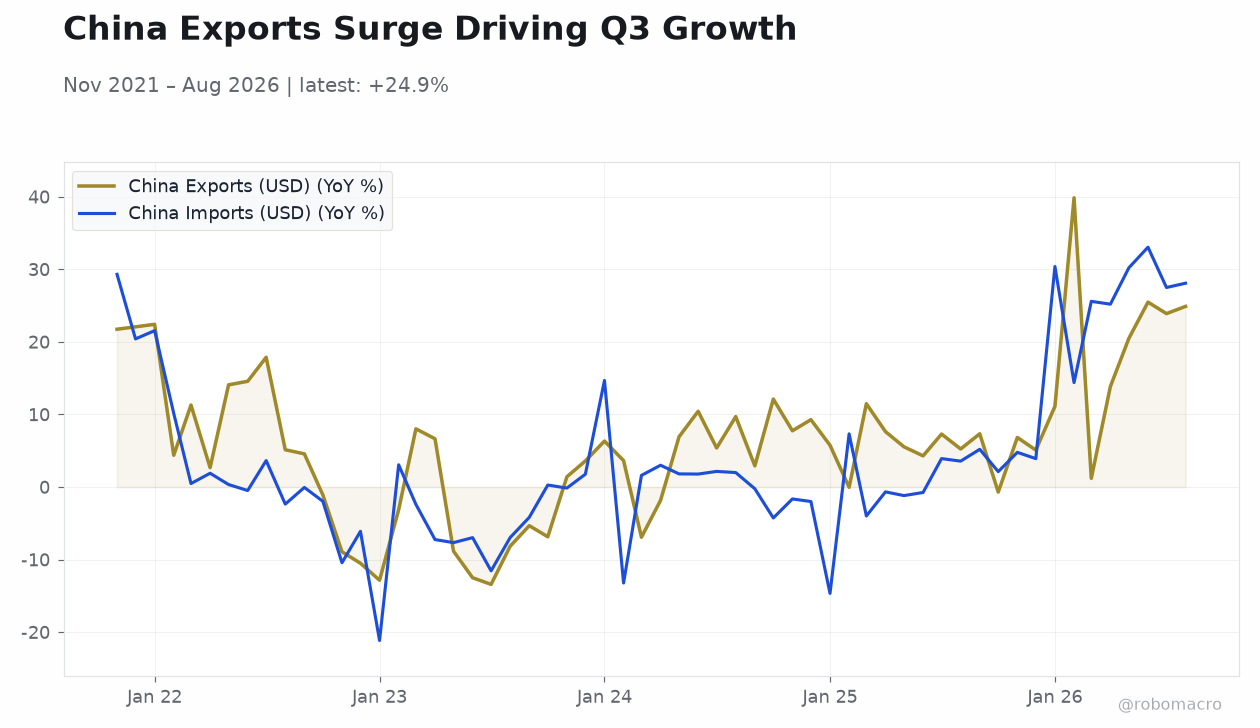 China Exports Surge Driving Q3 Growth | Type: macro_line | China Exports (USD): 24.9 (2026-08-01) | Range: -13.41–39.85 | Trend(6pt): 21.75,-12.84,-6.912,5.548,23.9,24.9 | China Imports (USD): 28.09 (2026-08-01) | Range: -21.14–33.05 | Trend(6pt): 29.31,-21.14,1.608,-1.177,27.5,28.09
Today's Economic Events
| Data | Prior | Cons | Time |
|---|---|---|---|
| No events available | |||
- China's Q3 GDP grew 4.5% y/y, beating expectations on export strength, keeping the full-year target in reach
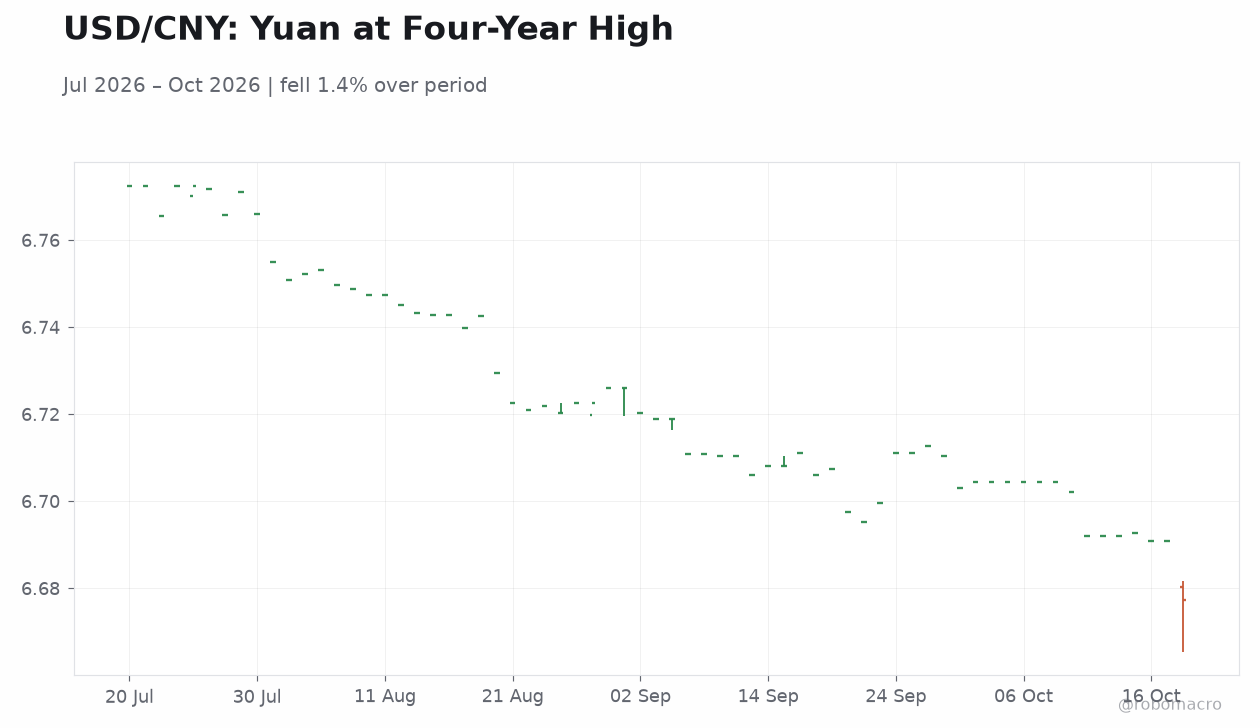
- Yuan strengthened to a four-year high against the dollar as strong data reduced stimulus urgency
- HKMA announced an executive reshuffle, swapping deputy chief roles as part of succession planning
Yesterday's Recap
Mainland China dominated Monday's news flow, with third-quarter GDP printing at 4.5% y/y — an acceleration that beat analyst expectations and put Beijing on track for its full-year growth target. The expansion was powered by a surge in exports and strong factory activity, even as consumer confidence and the property market slump continued to drag on domestic demand. Cumulative GDP topped 107 trillion yuan in the first three quarters, with the 5.7 trillion yuan increment marking a five-year high.
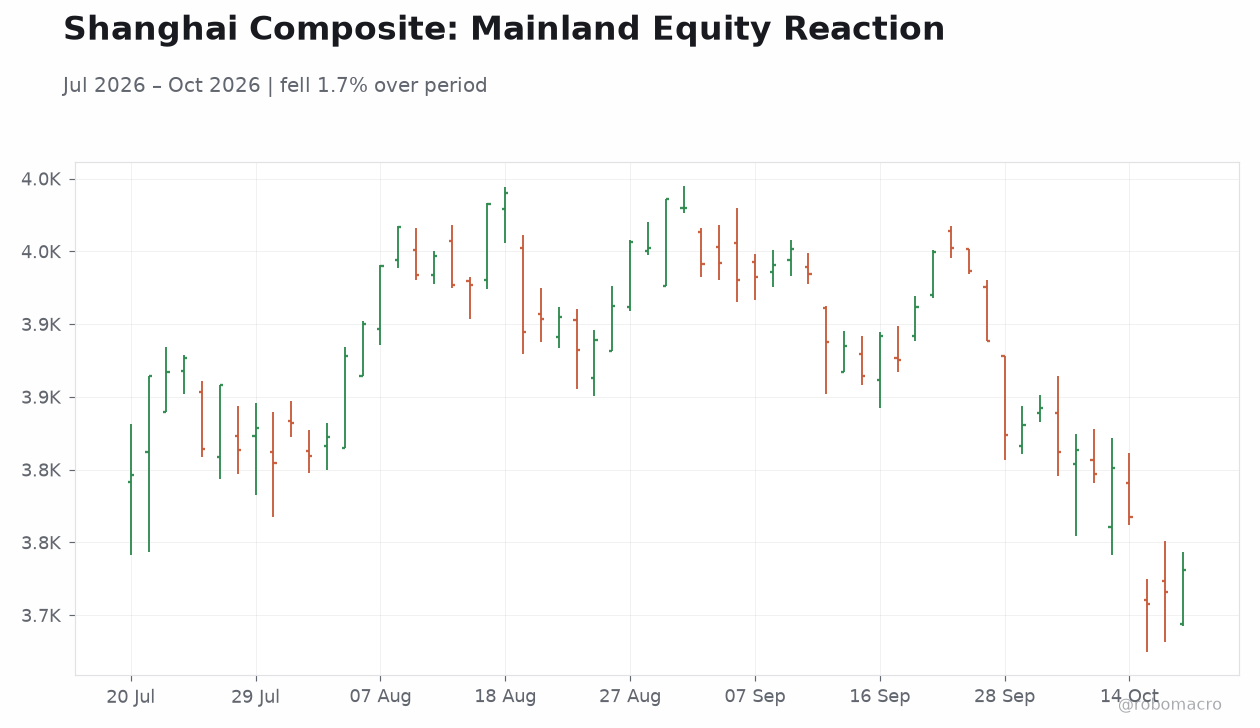
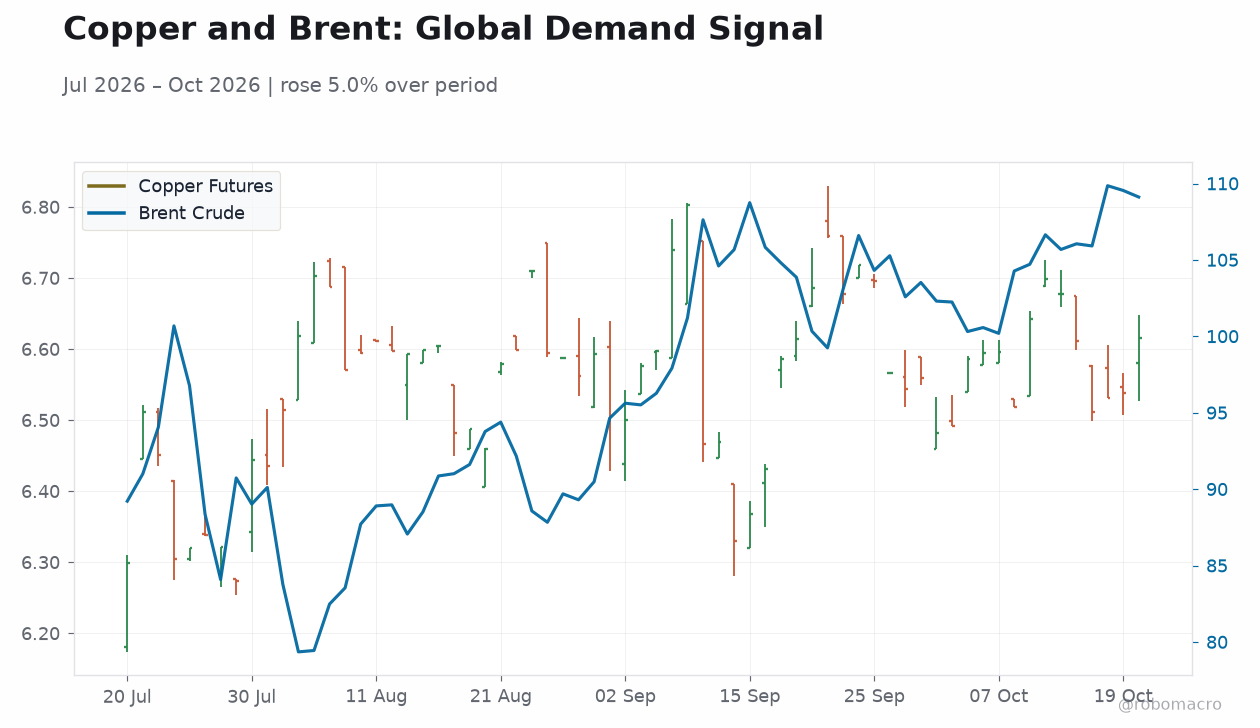
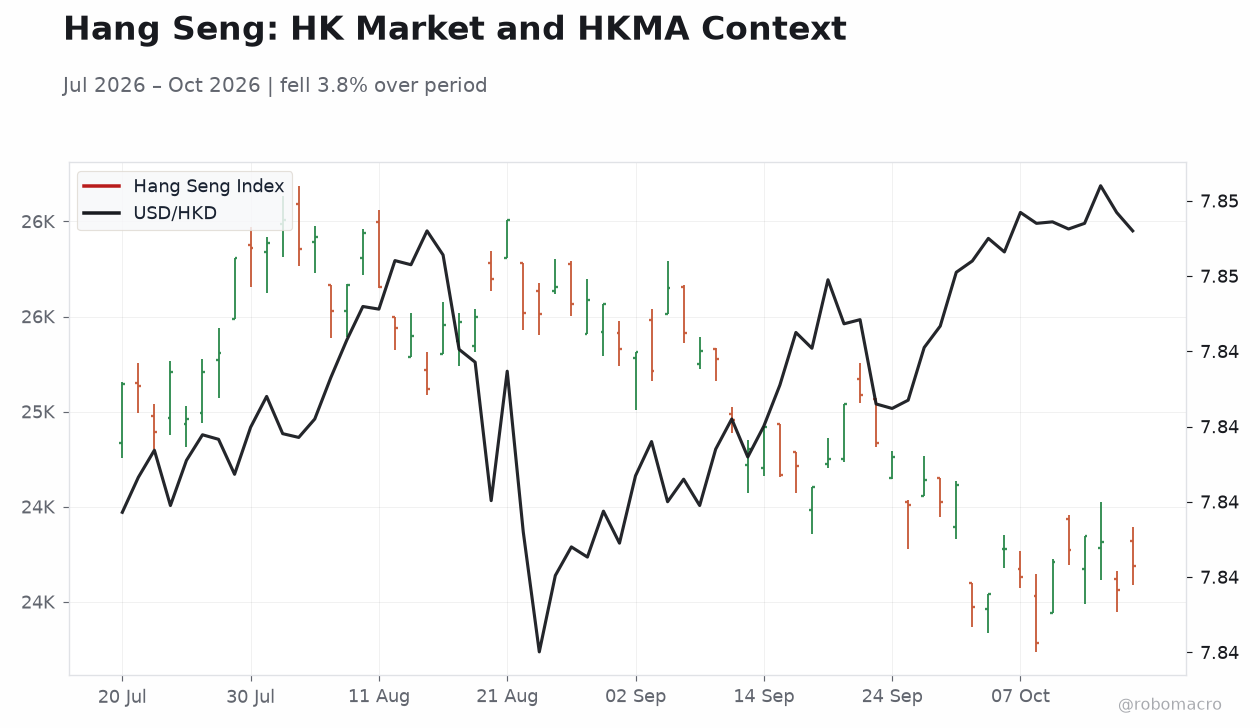
Markets reacted with restraint: the Shanghai Composite slipped 0.24% to 3,722.00 and the CSI 300 fell 0.44% to 4,152.11, suggesting the print was largely priced in, while the yuan strengthened to a four-year high of 6.68 per dollar, down 0.20% on the day. In Hong Kong, the Hang Seng bucked the mainland trend, gaining 0.52% to 24,186.83, while Taiwan's TAIEX fell 0.61% to 46,822.08. Copper, a key China growth proxy, jumped 1.19% to 6.62, corroborating the stronger industrial narrative.
The Day Ahead
The Greater China calendar is light on Tuesday, with no major scheduled data releases across the mainland, Hong Kong, or Taiwan. Attention will instead center on follow-through from the Q3 GDP print, with analysts parsing export and industrial production detail for signs of whether the external engine can sustain momentum into Q4. Hong Kong markets will digest the HKMA's executive reshuffle, which places Darryl Chan in new roles as the de facto central bank prepares succession planning.
Taiwan investors will watch semiconductor supply-chain headlines. Mainland fixed-income desks will monitor liquidity conditions after Monday's growth surprise tempered expectations for near-term easing.
Other Economic Notes
The Q3 growth composition underscores a deepening reliance on exports to offset a prolonged housing crash, sluggish consumer spending, and plunging investment — a structural imbalance that leaves the mainland economy exposed to external demand shocks. Consumer prices remain subdued, with CPI at 0.90% y/y as of September, well below the comfort zone and consistent with weak domestic demand. The 5.7 trillion yuan five-year-high increment in GDP reflects scale but masks uneven sectoral performance, with property still a drag.
Analysts caution that the export boom may be masking deeper domestic weaknesses, particularly in consumer sentiment. ↓ p.2