Greater China Macro Daily(Beta Mode)
China Equities Slide on Tech Regulation Fears
Market Snapshot
| Asset | Level | Change |
|---|---|---|
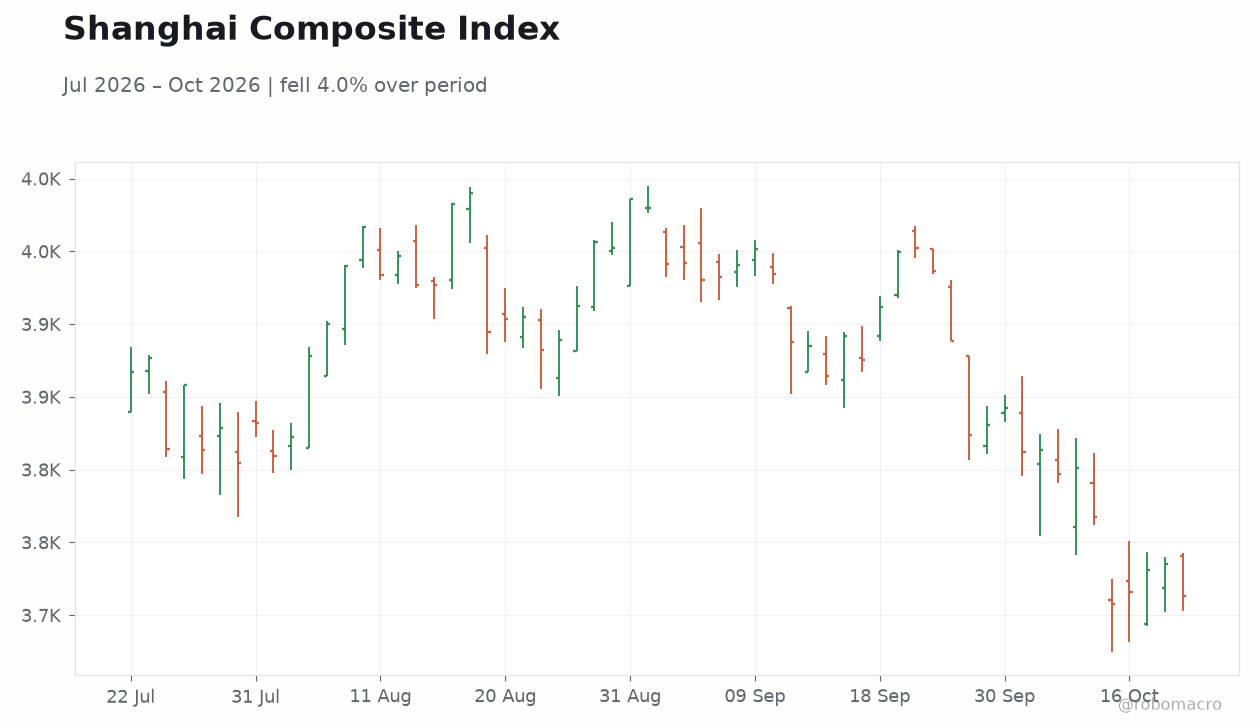
| Shanghai Composite | 3,681.25 | -0.86% |
| CSI 300 | 4,036.30 | -1.84% |
| China 2Y Govt Yield | - | - |
| China 10Y Govt Yield | - | - |
Prior Economic Events
| Data | Prior | Cons | Actual |
|---|---|---|---|
| No events available | |||
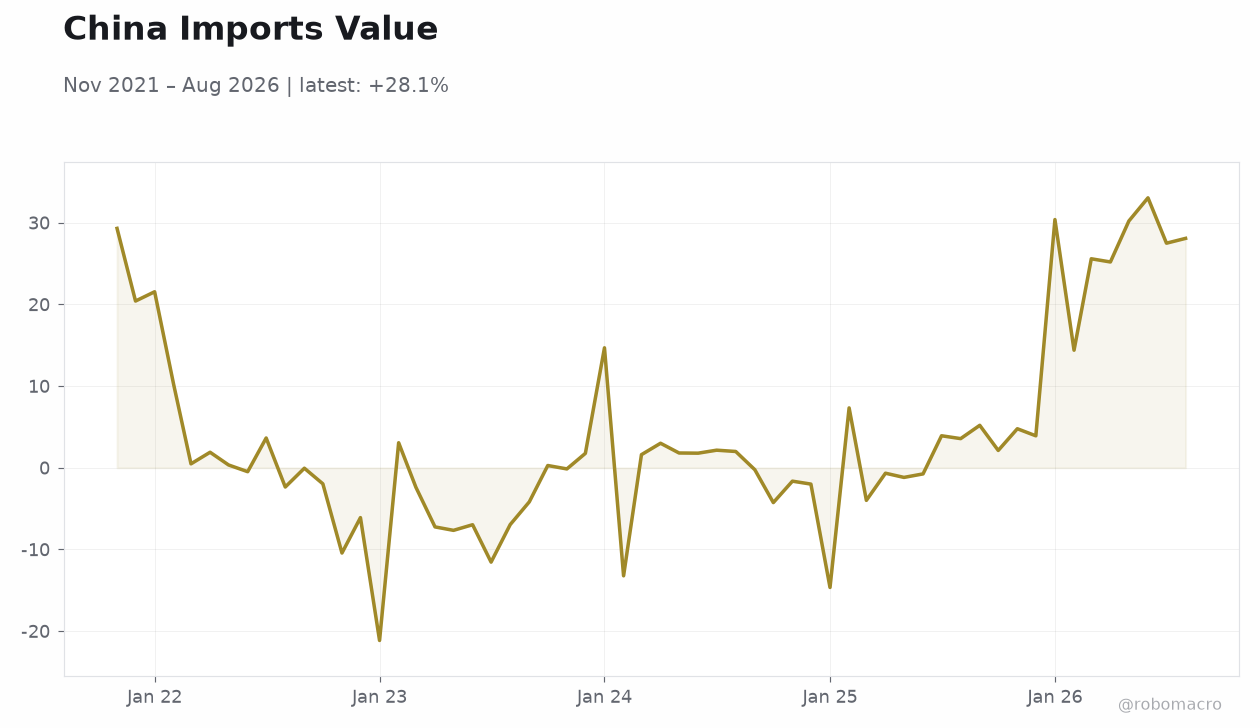 China Imports Value | Type: macro_line | USD bn: 28.09 (2026-08-01) | Range: -21.14–33.05 | Trend(6pt): 29.31,-21.14,1.608,-1.177,27.5,28.09
Today's Economic Events
| Data | Prior | Cons | Time |
|---|---|---|---|
| No events available | |||
- Shanghai Composite falls 0.86% and CSI 300 drops 1.84% as regulatory scrutiny hits e-commerce
- HKMA stresses deeper innovation ties with mainland China and Asia-Pacific partners
- Property sector risks draw fresh comparisons to Japan’s prolonged slump
Yesterday's Recap
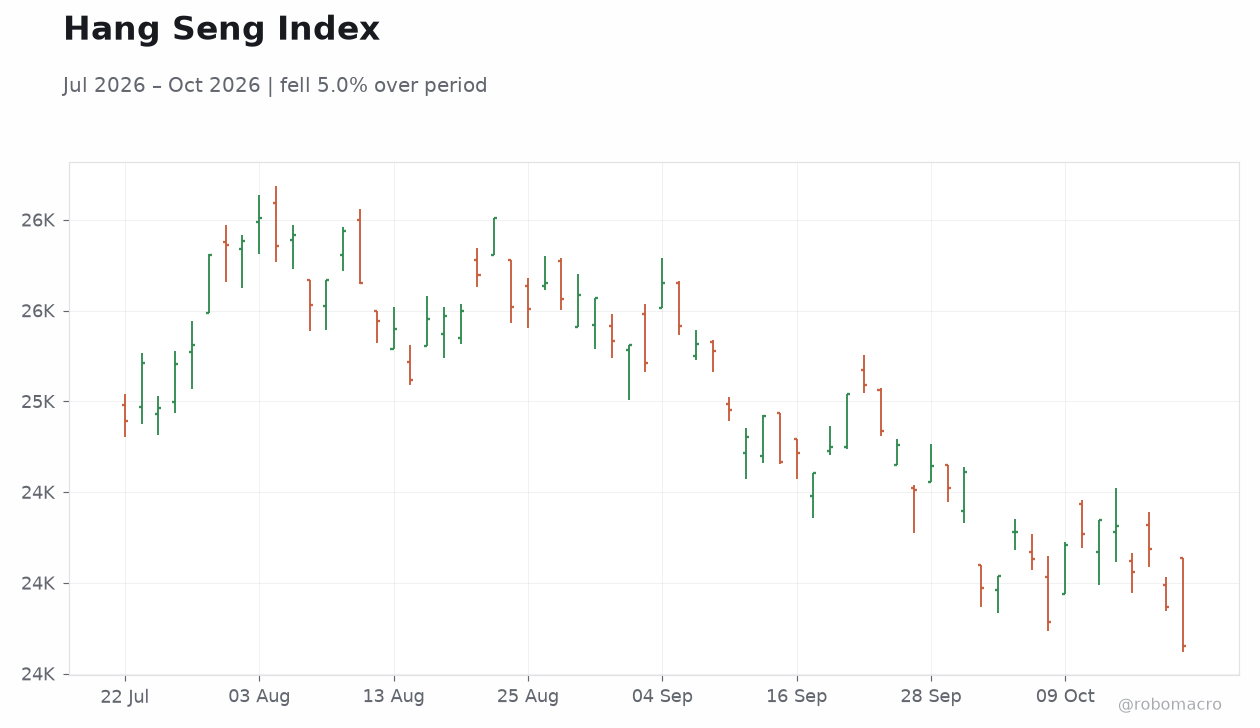
Mainland Chinese equities declined sharply, with the Shanghai Composite closing at 3,681.25 and the CSI 300 at 4,036.30. Alibaba shares led Hong Kong tech losses after authorities summoned e-commerce firms over pricing practices. News flow highlighted resilient China-Russia energy and strategic links despite U.S.
diplomatic activity. HKMA Deputy Chief Eddie Yue called for closer Hong Kong-mainland collaboration on innovation projects. Separate HKMA statements warned banks and the public about rising fraud and phishing schemes targeting accounts.
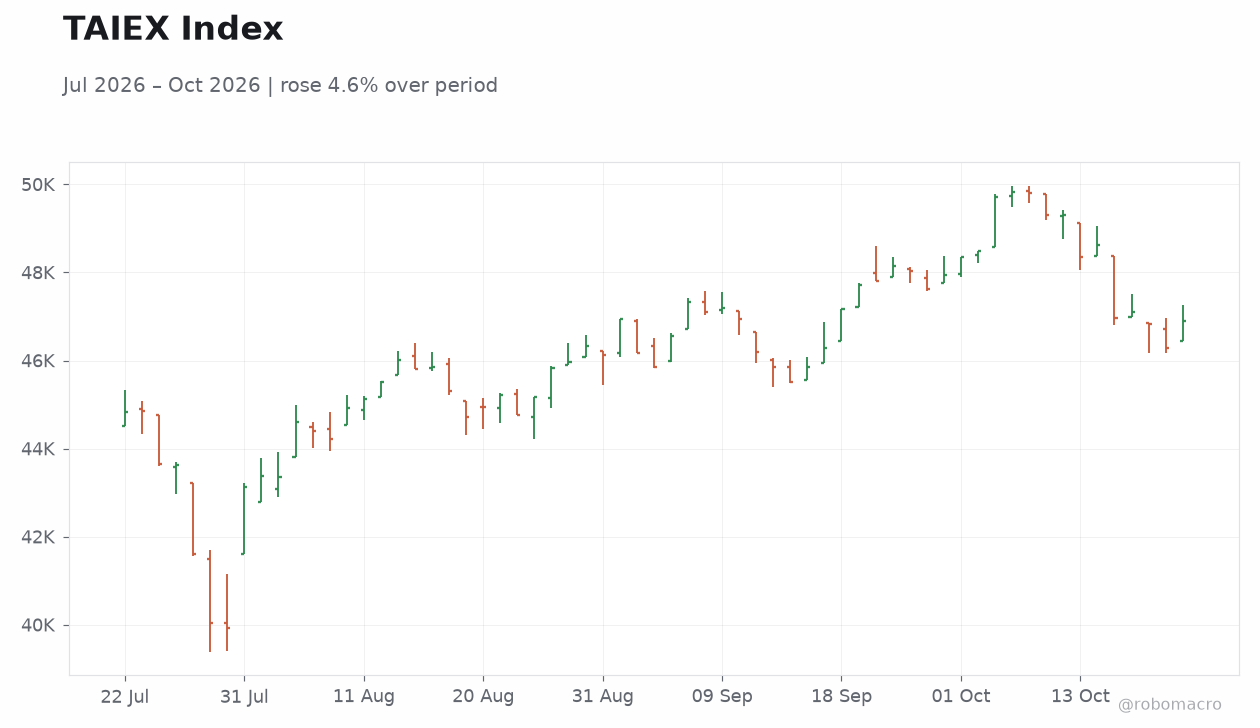
Taiwan equities remained closed due to Typhoon Champi, while export orders continued to benefit from AI-related semiconductor demand. Broader commentary noted South Africa’s trade surge with China following zero-tariff measures. Kazakh borrowers issued billions in yuan debt, underscoring tightening financial links with Beijing.
Canadian data cast doubt on narratives of coordinated China-U.S. bond sales, with analysts pointing instead to domestic portfolio shifts.
The Day Ahead
Market participants will monitor any follow-up statements from Chinese regulators on e-commerce compliance after yesterday’s summons. HKMA is expected to release further details on its recent successful tender for 2-year RMB government bonds. Analysts will watch for updates on Taiwan’s offshore wind projects and semiconductor export licensing amid ongoing U.S.
controls. Property-sector data and local government financing trends in mainland China remain in focus given persistent deflationary pressures. Cross-strait trade flows and any new policy signals from Beijing on consumption support will also draw attention.
Peru’s move to raise fiscal deficit ceilings offers a reference point for commodity-linked economies facing external shocks.
Other Economic Notes
Persistent property-sector weakness continues to weigh on household confidence and local government revenues in mainland China. Comparisons to Japan’s post-bubble stagnation have resurfaced, with analysts noting similar leverage and demographic challenges. Trade data show China expanding ties with Global South partners through tariff reductions, partially offsetting softer demand from developed markets.
↓ p.2