Greater China Macro Daily(Beta Mode)
Yuan Yields Hit Record Lows as HKMA Adds Liquidity
Market Snapshot
| Asset | Level | Change |
|---|---|---|
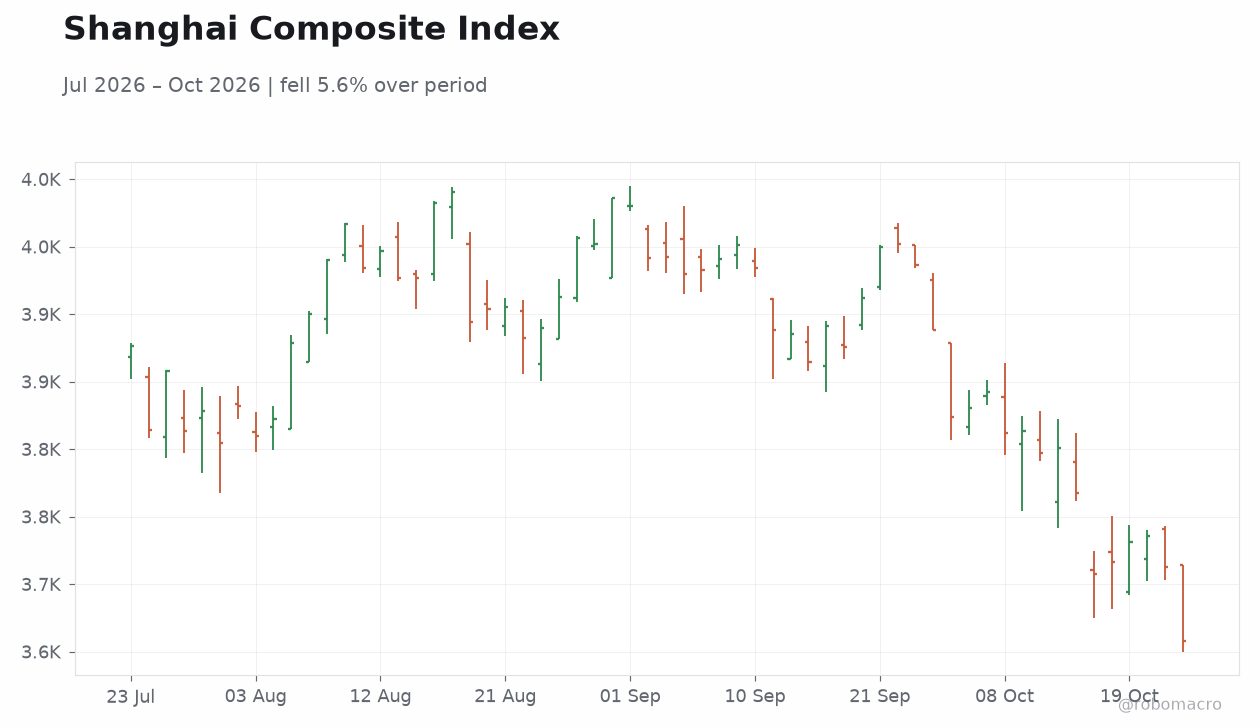
| Shanghai Composite | 3,674.12 | +0.44% |
| CSI 300 | 4,087.81 | +1.28% |
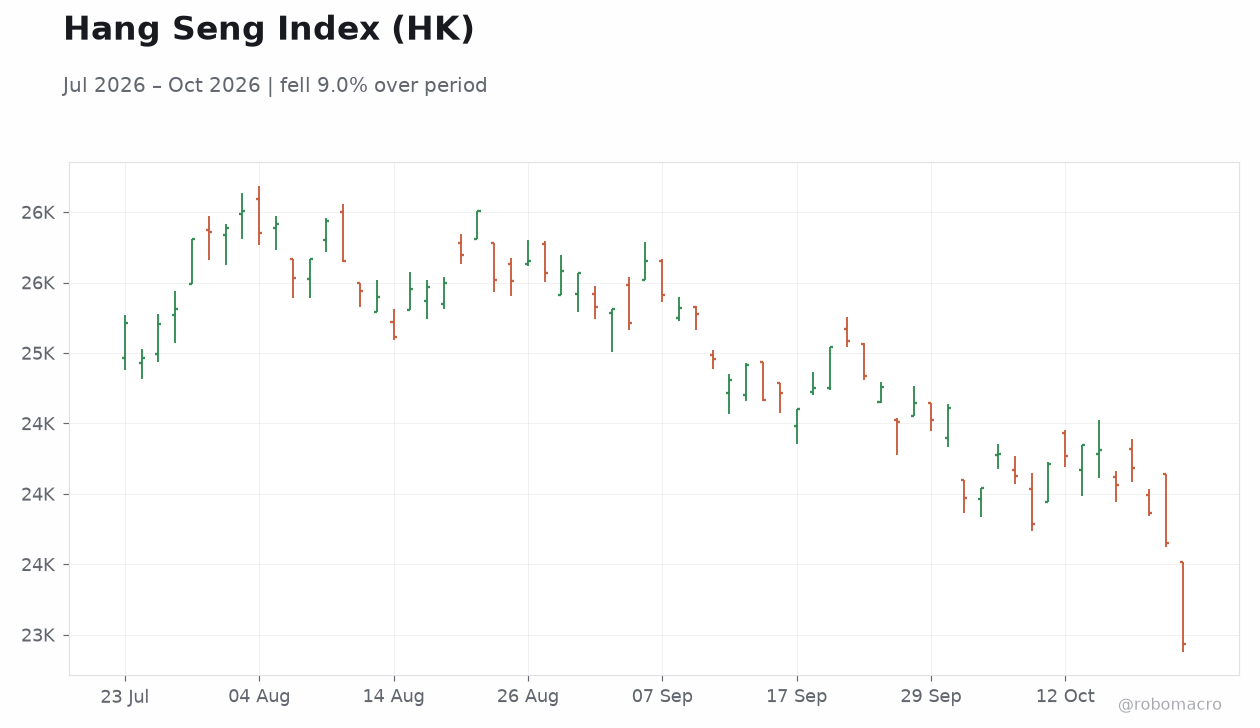
| Hang Seng | 22,934.68 | -3.03% |
| TAIEX | 46,041.43 | -1.81% |
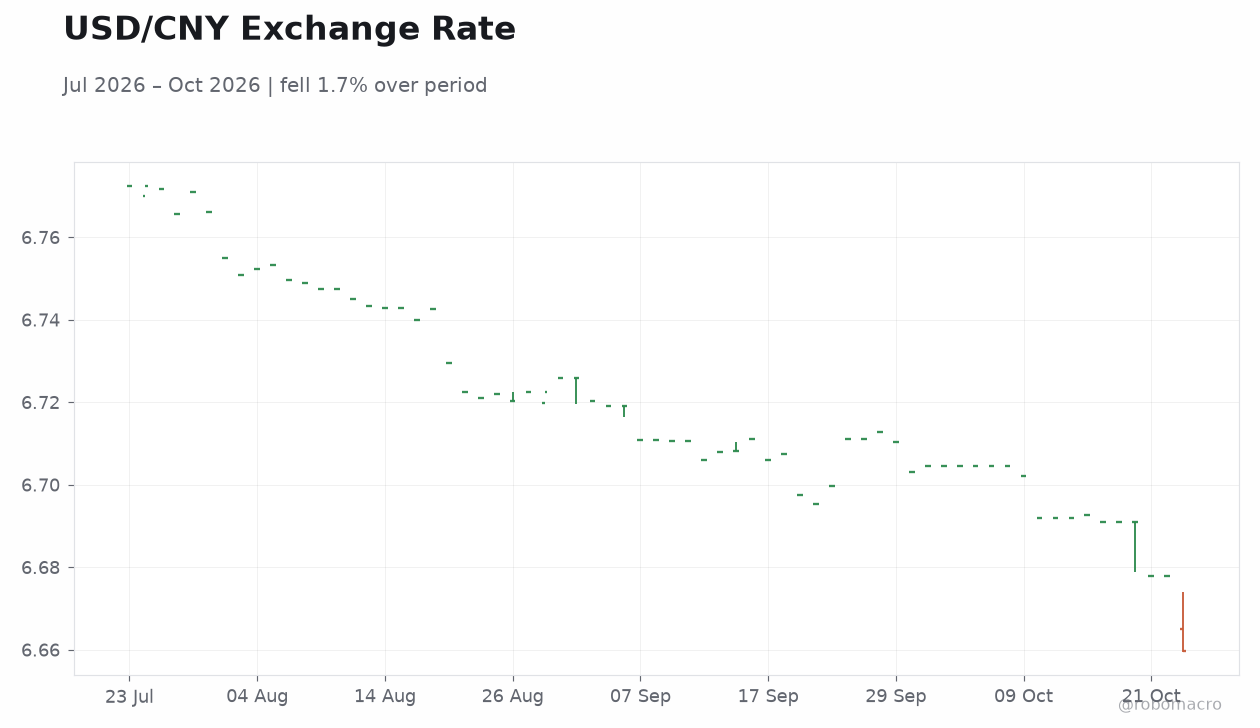
| USD/CNY | 6.67 | -0.12% |
| USD/HKD | 7.84 | -0.04% |
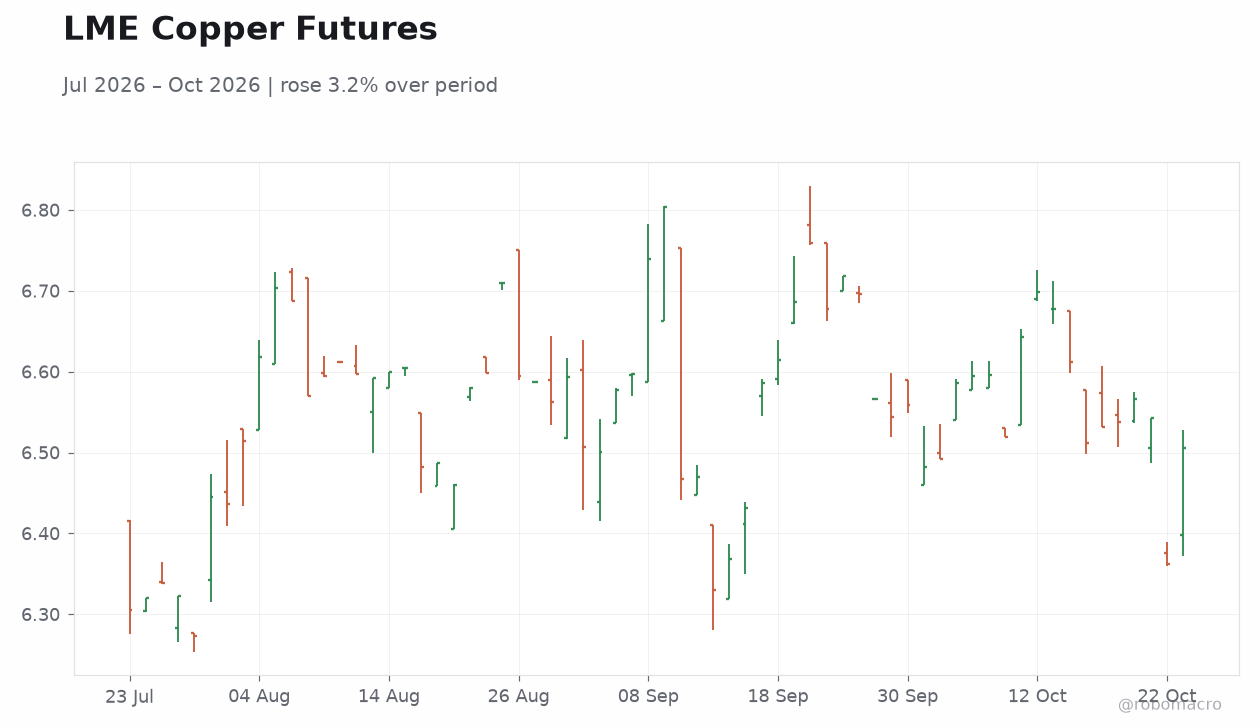
| Copper | 6.51 | +2.26% |
| Brent Crude | 111.48 | -1.49% |
| Gold | 4,011.70 | -1.20% |
| Bitcoin | 81,429.98 | +0.15% |
| China 2Y Govt Yield | - | - |
| China 10Y Govt Yield | - | - |
Prior Economic Events
| Data | Prior | Cons | Actual |
|---|---|---|---|
| No events available | |||
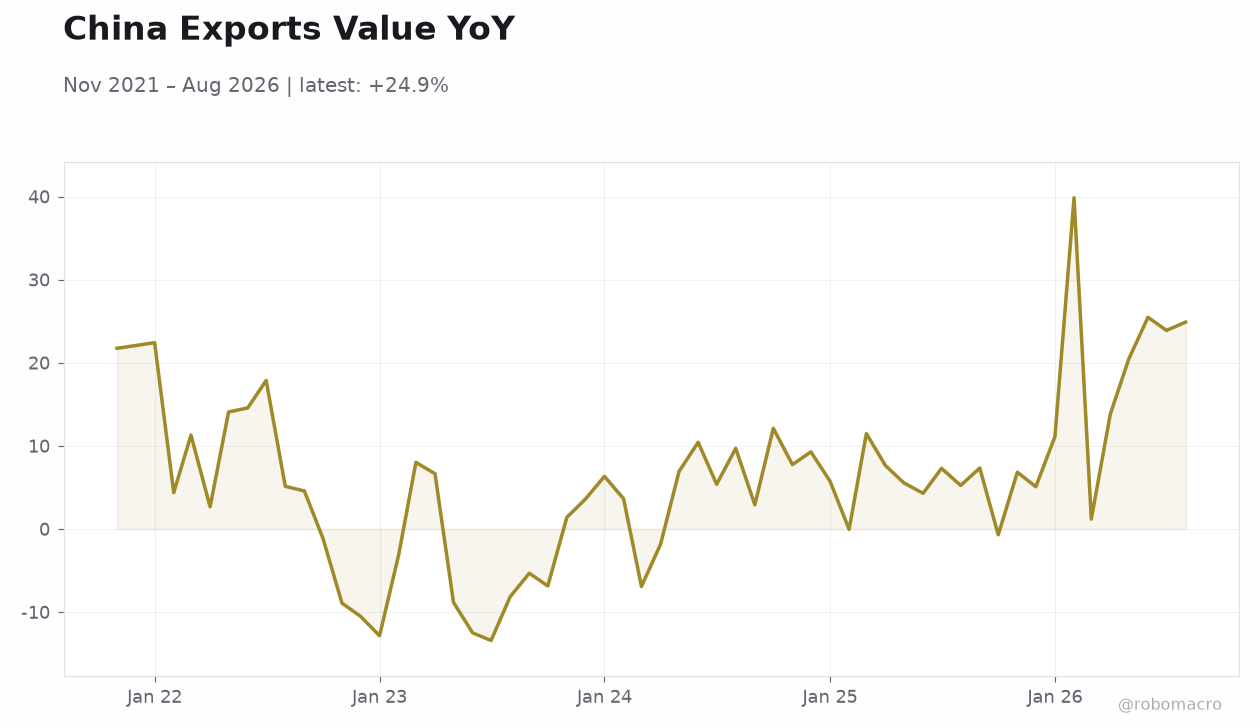 China Exports Value YoY | Type: macro_line | YoY %: 24.9 (2026-08-01) | Range: -13.41–39.85 | Trend(6pt): 21.75,-12.84,-6.912,5.548,23.9,24.9
Today's Economic Events
| Data | Prior | Cons | Time |
|---|---|---|---|
| No events available | |||
- Mainland equities advance while Hong Kong and Taiwan indices decline on regulatory and tech pressure
- HKMA designates 12 banks as primary liquidity providers and completes RMB sovereign bond tender at record-low yields
- Copper rises sharply as China growth proxy while Brent crude and gold ease amid global risk rotation
Yesterday's Recap
Mainland China equities posted gains with the Shanghai Composite rising 0.44 percent to 3,674.12 and the CSI 300 climbing 1.28 percent to 4,087.81, supported by steady onshore bond market performance. Hong Kong’s Hang Seng Index fell 3.03 percent to 22,934.68 after authorities summoned e-commerce firms, triggering a sharp drop in Alibaba shares. Taiwan’s TAIEX declined 1.81 percent to 46,041.43 as semiconductor-related stocks faced selling pressure.
The offshore yuan strengthened modestly with USD/CNY easing 0.12 percent to 6.67. Copper advanced 2.26 percent to 6.51, reflecting improved sentiment toward Chinese industrial demand, while Brent crude slipped 1.49 percent to 111.48 and gold declined 1.20 percent to 4,011.70. China sold government bonds in Hong Kong at record-low yields across most maturities as offshore yields tracked the onshore rally.
The HKMA named Deutsche Bank an offshore yuan primary liquidity provider and announced results of the October 23 RMB sovereign bond tender, confirming strong demand. Kazakh borrowers also issued billions in yuan debt, underscoring tightening China ties.
The Day Ahead
No major data releases are scheduled for mainland China, Hong Kong or Taiwan over the next session. Market participants will monitor any signals from Beijing ahead of the Fifth Plenum, which is expected to outline medium-term policy priorities. The HKMA may provide further updates on offshore yuan liquidity operations following yesterday’s tender.
Taiwan will be watched for any semiconductor export commentary that could influence CBC policy signals. Regional investors also await global central bank commentary that could affect cross-border capital flows into Greater China assets. Copper price movements will continue to serve as a real-time gauge of China demand expectations.
Other Economic Notes
The successful offshore RMB bond issuance underscores sustained international appetite for Chinese sovereign credit despite domestic regulatory tightening. Property sector dynamics remain a latent risk for mainland growth, with any renewed policy support likely to focus on targeted liquidity rather than broad stimulus. Cross-strait trade and investment flows show resilience, though Taiwan’s semiconductor supply chain faces ongoing geopolitical scrutiny that could affect export volumes.
↓ p.2