Greater China Macro Daily(Beta Mode)
China Trade Surplus Narrows as Imports Surge; PBoC Vows Support
Market Snapshot
| Asset | Level | Change |
|---|---|---|
| Shanghai Composite | 3,683.81 | +0.55% |
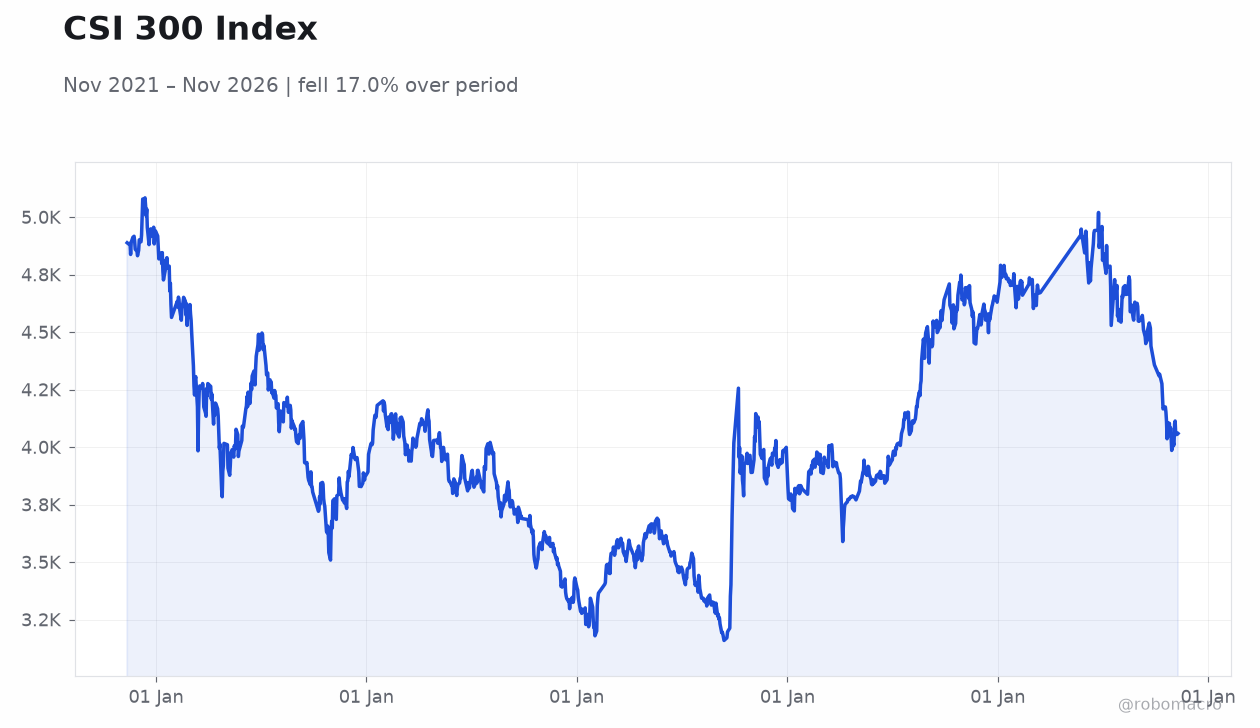
| CSI 300 | 4,075.71 | +0.41% |
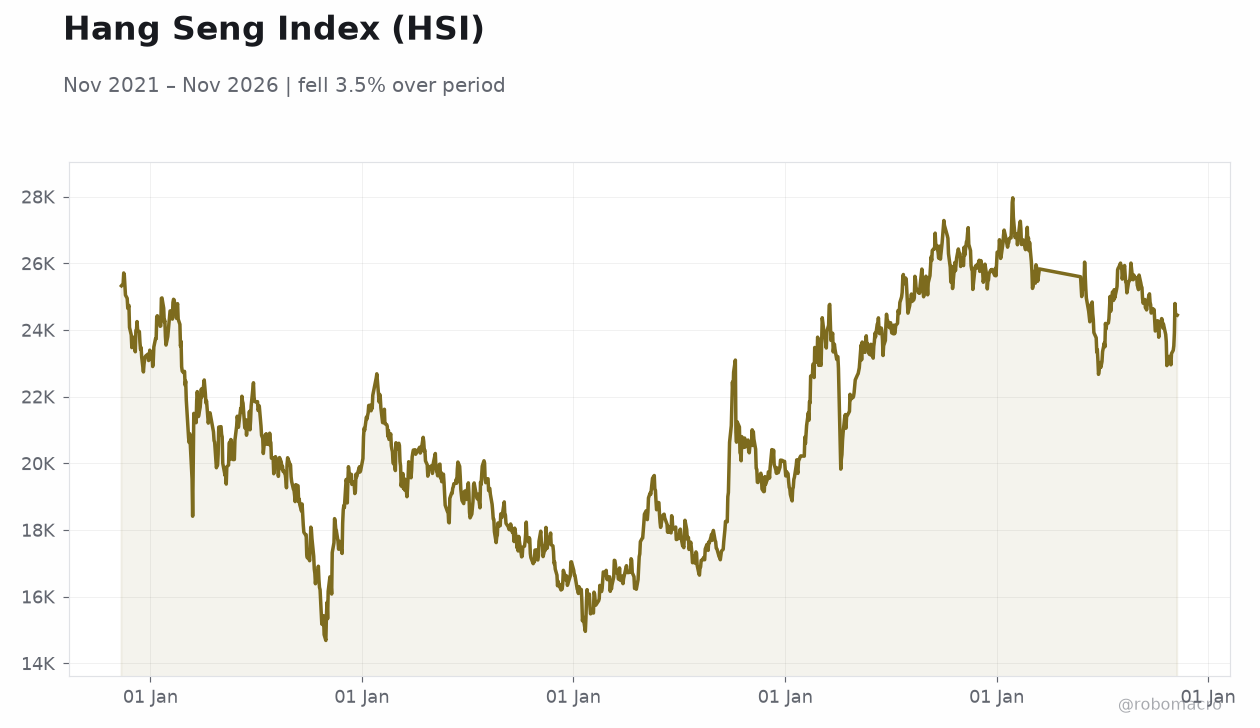
| Hang Seng | 24,557.04 | +0.44% |
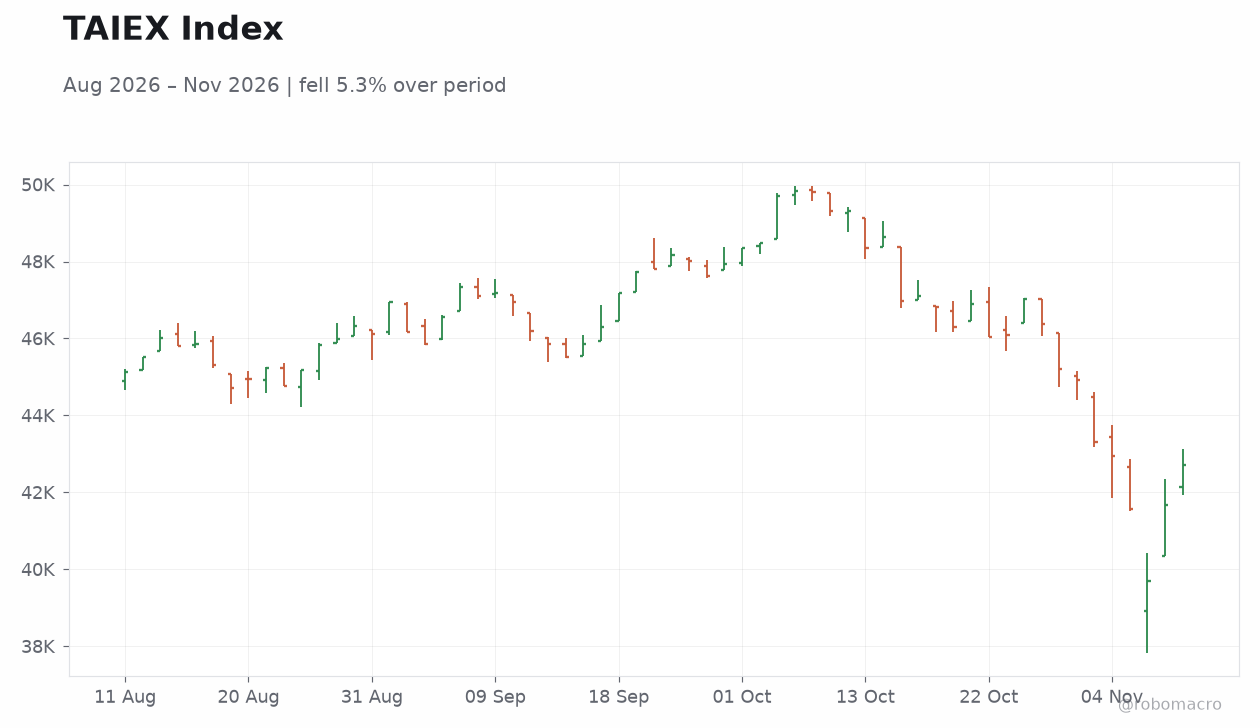
| TAIEX | 42,711.92 | +2.52% |
| USD/CNY | 6.66 | -0.14% |
| USD/HKD | 7.84 | +0.02% |
| Copper | 6.26 | +0.73% |
| Brent Crude | 92.56 | +1.17% |
| Gold | 3,992.50 | -0.94% |
| Bitcoin | 74,305.81 | +0.79% |
| China 2Y Govt Yield | - | - |
| China 10Y Govt Yield | - | - |
Prior Economic Events
| Data | Prior | Cons | Actual |
|---|---|---|---|
| Exports Year-over-Year | 36.30 | 33.50 | 35.20 |
| Imports Year-over-Year | 31 | 32 | 41.60 |
| Trade Balance | 133,530m | 125,800m | 105,280m |
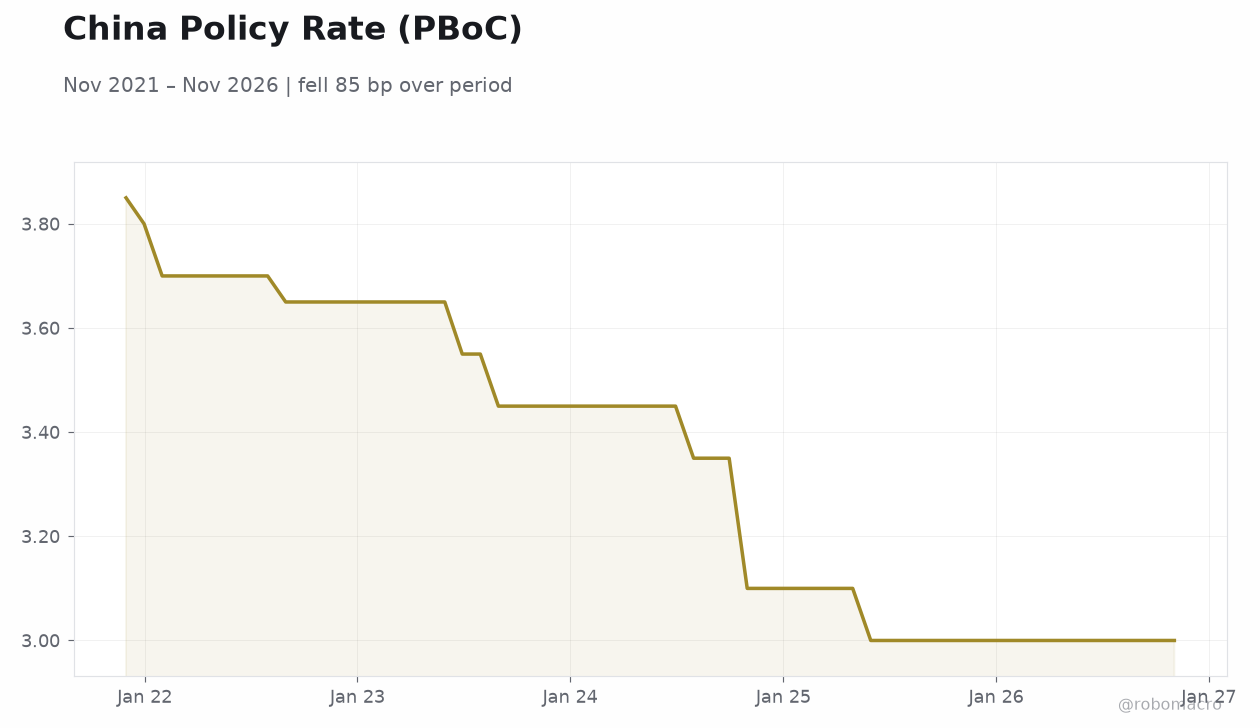 China Policy Rate (PBoC) | Type: macro_line | Policy rate (%): 3 (2026-11-03) | Range: 3–3.85 | Trend(5pt): 3.85,3.65,3.45,3,3
Today's Economic Events
| Data | Prior | Cons | Time |
|---|---|---|---|
| No events available | |||
- China's October trade data showed exports up 35.2% YoY (above the 33.5% consensus) while imports surged 41.6% YoY (well above the 32% consensus), narrowing the trade surplus to $105.28bn from $133.53bn prior.
- The PBoC pledged to step up policy support for the economy, reinforcing expectations of further easing amid external trade tensions.
- Taiwan's TAIEX surged 2.52% to 42,711.92, outperforming regional peers, while mainland and Hong Kong equities posted modest gains; USD/CNY eased 0.14% to 6.66.
Yesterday's Recap
China's October trade data, released Monday evening ET, showed exports rising 35.2% YoY — above the 33.5% consensus and still robust — while imports jumped 41.6% YoY, far exceeding the 32% consensus and accelerating from 31% prior. The trade surplus narrowed sharply to $105.28bn from $133.53bn in the prior month, reflecting stronger domestic demand and higher commodity import volumes. Mainland equities posted modest gains, with the Shanghai Composite up 0.55% to 3,683.81 and CSI 300 up 0.41% to 4,075.71.
Hong Kong's Hang Seng rose 0.44% to 24,557.04. Taiwan's TAIEX was the standout performer, surging 2.52% to 42,711.92, likely driven by continued strength in semiconductor-related names. In FX, USD/CNY eased 0.14% to 6.66, reflecting yuan strength alongside the trade data.
USD/HKD was essentially flat at 7.84, holding near the weak side of the HKMA's convertibility band. Commodities were mixed: copper rose 0.73% to 6.26, Brent crude gained 1.17% to 92.56, and gold fell 0.94% to 3,992.50.
The Day Ahead
The Greater China calendar is empty for Wednesday, November 11, with no scheduled data releases across mainland China, Hong Kong, or Taiwan. Market focus will remain on follow-through from Monday's trade data and the PBoC's policy support pledge. Investors will watch for any PBoC open-market operations and liquidity management signals, particularly after the central bank's vow to step up support.
Hong Kong markets will continue to monitor HKD peg dynamics and any HKMA intervention activity. Taiwan's semiconductor supply chain remains in focus amid ongoing US-China tech tensions and chip export restriction debates in Washington.
Other Economic Notes
The narrowing trade surplus, while partly a function of strong import demand, may ease some external pressure on Beijing regarding unbalanced trade. US Treasury Secretary Scott Bessent called for a "more balanced" trading relationship with China ahead of Trump-Xi talks, a theme that will likely persist. ↓ p.2