Greater China Macro Daily(Beta Mode)
China Trade Surges, HK Upgrades Growth
Market Snapshot
| Asset | Level | Change |
|---|---|---|
| Shanghai Composite | 3,634.35 | -0.59% |
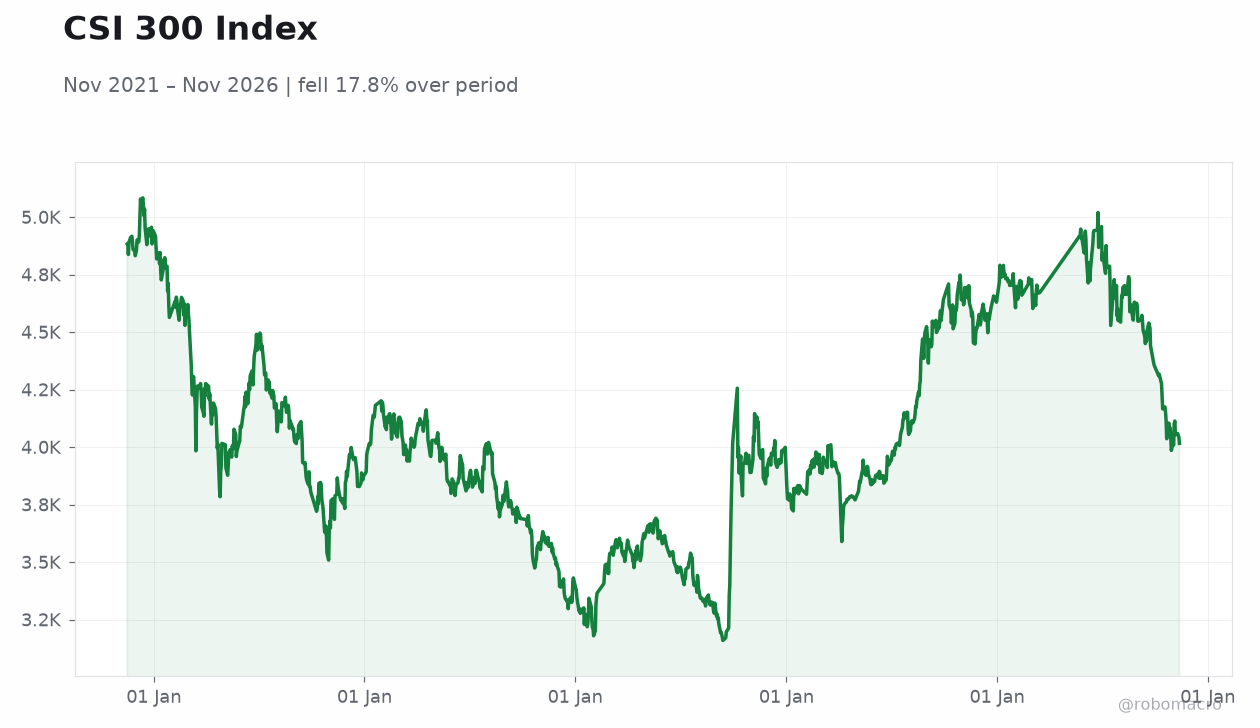
| CSI 300 | 4,016.29 | -0.68% |
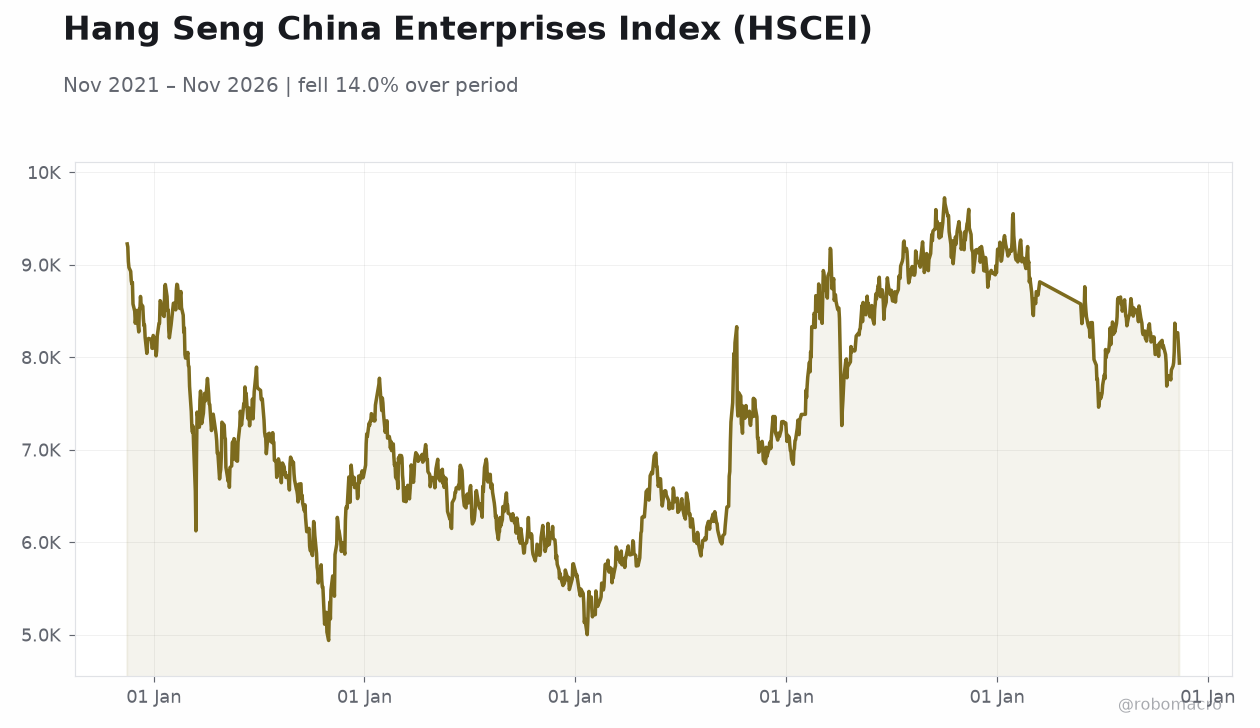
| Hang Seng | 23,637.60 | -1.55% |
| TAIEX | 43,675.12 | +1.35% |
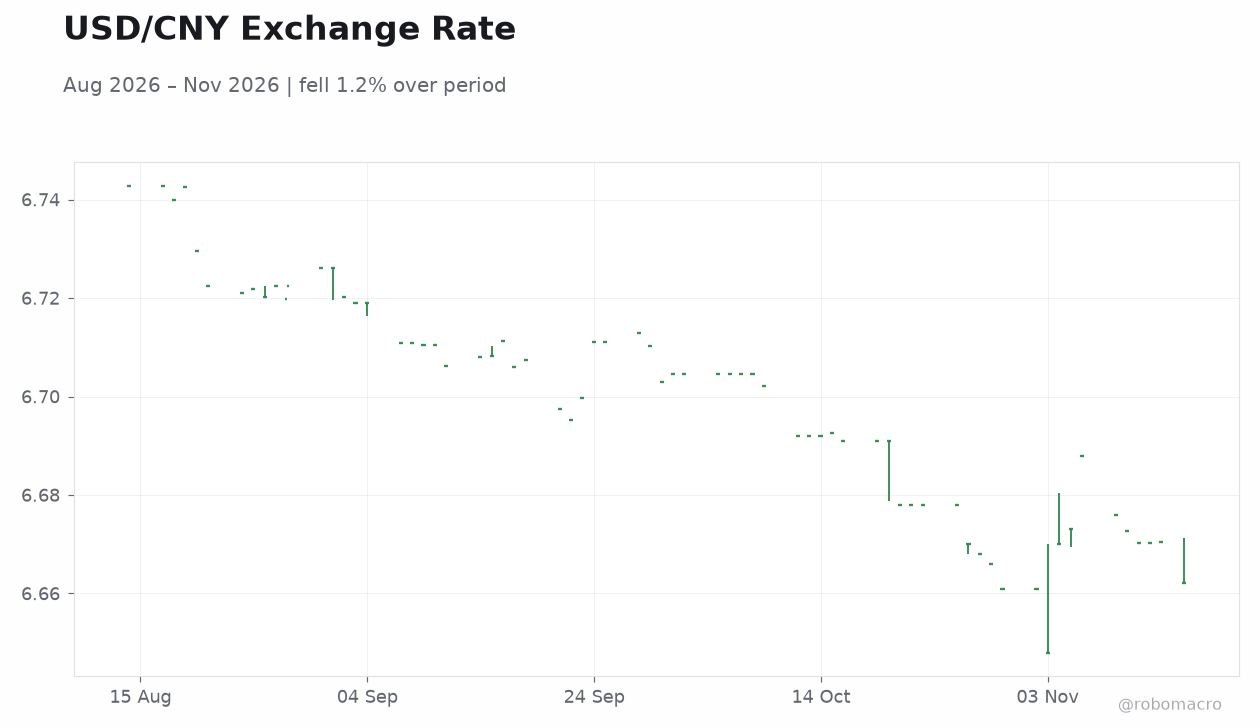
| USD/CNY | 6.66 | -0.12% |
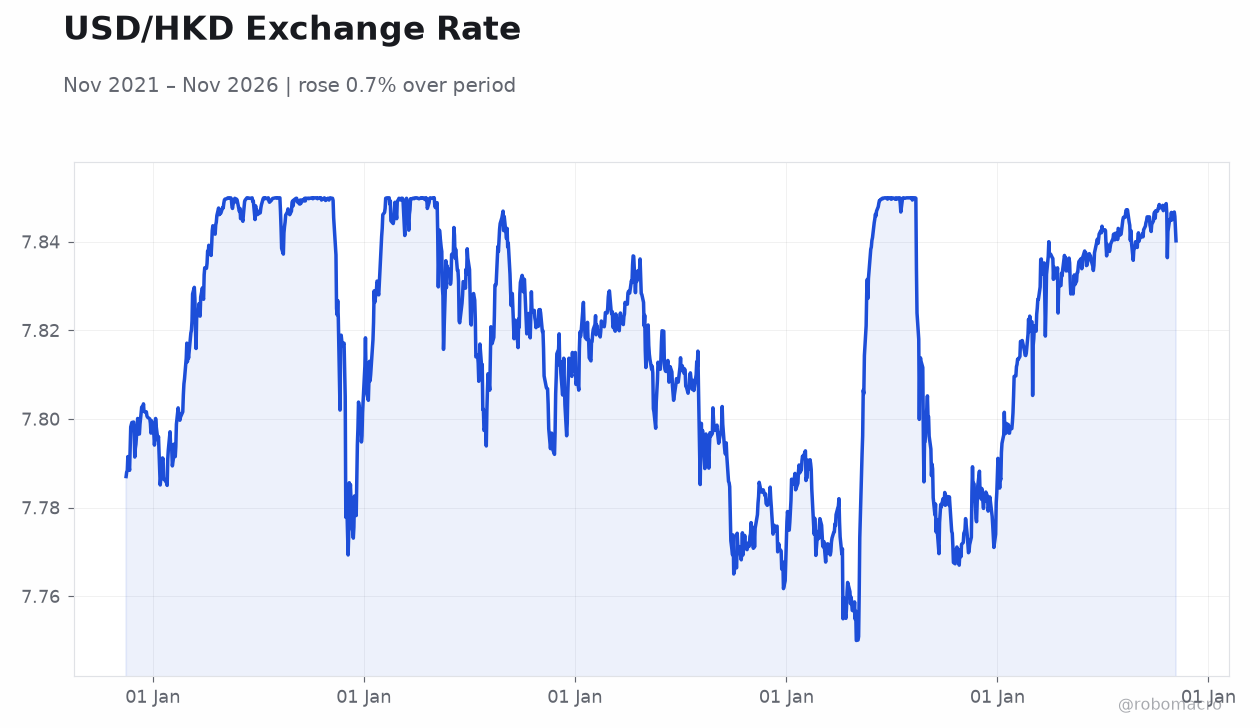
| USD/HKD | 7.85 | +0.01% |
| Copper | 6.09 | -1.49% |
| Brent Crude | 95.84 | +0.02% |
| Gold | 3,886.30 | +0.03% |
| Bitcoin | 64,951.52 | +1.28% |
| China 2Y Govt Yield | - | - |
| China 10Y Govt Yield | - | - |
Prior Economic Events
| Data | Prior | Cons | Actual |
|---|---|---|---|
| Exports Year-over-Year | 36.30 | 33.50 | 35.20 |
| Imports Year-over-Year | 31 | 32 | 41.60 |
| Trade Balance | 133,530m | 125,800m | 105,280m |
| Current Account Prel | 193,700m | - | 276,100m |
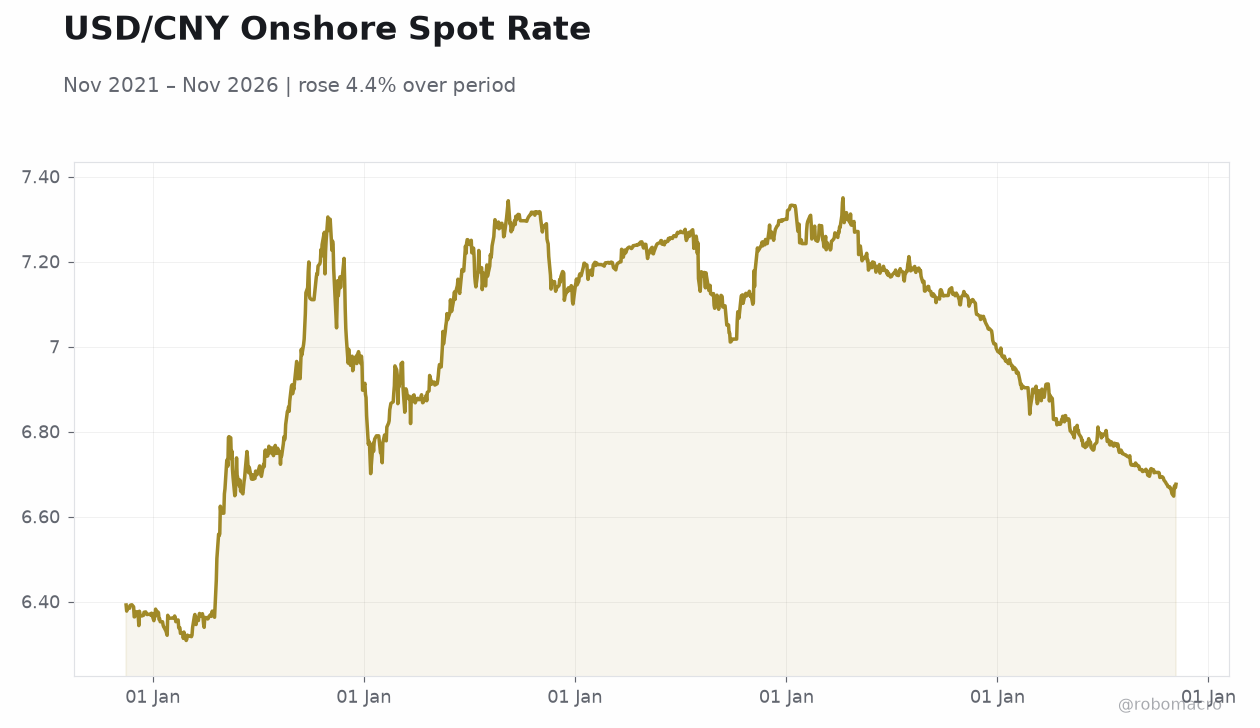 USD/CNY Onshore Spot Rate | Type: macro_line | USD/CNY Onshore Spot Rate: 6.676 (2026-11-06) | Range: 6.308–7.35 | Trend(5pt): 6.392,6.851,7.232,7.188,6.676
Today's Economic Events
| Data | Prior | Cons | Time |
|---|---|---|---|
| No events available | |||
- China October exports rose 35.2% YoY and imports jumped 41.6% YoY, but the trade surplus narrowed to $105.28bn as import growth outpaced exports.
- Hong Kong raised its full-year growth forecast for a second time, citing AI-driven trade momentum, while the Hang Seng fell 1.55%.
- Taiwan's TAIEX gained 1.35% as chip suppliers shrugged off Nvidia leadership changes; China's preliminary current account surplus hit $276.1bn.
Yesterday's Recap
Mainland China's October trade data dominated the regional calendar. Exports expanded 35.2% YoY, below the 36.3% prior reading but above the 33.5% consensus, while imports surged 41.6% YoY, well above the 32% consensus and the 31% prior. The resulting trade balance of $105.28bn fell short of the $125.8bn consensus as import strength outpaced export growth.
China's preliminary current account surplus came in at $276.1bn, a substantial external buffer. Equity markets diverged sharply: the Shanghai Composite fell 0.59% and the CSI 300 dropped 0.68%, while Hong Kong's Hang Seng slid 1.55% amid broad risk-off sentiment. Taiwan's TAIEX bucked the trend, rallying 1.35% as semiconductor suppliers signaled limited disruption from Nvidia's CEO departure.
The yuan strengthened modestly, with USD/CNY easing 0.12% to 6.66, while USD/HKD held near the peg at 7.85. Copper, a key China growth proxy, fell 1.49% to $6.09, suggesting caution on industrial demand despite the strong import print.
The Day Ahead
The Greater China calendar is empty for today and tomorrow, leaving markets to digest Friday's trade and current account data. With no scheduled mainland releases, attention shifts to the implications of the import surge for domestic demand and inventory rebuilding. Hong Kong's growth upgrade will be scrutinized for follow-through in local equities and property names.
Taiwan traders will watch semiconductor supply-chain headlines after Nvidia's leadership transition. Absent fresh data, positioning ahead of next week's flows will likely dominate, with the yuan fix and HKMA aggregate balance dynamics in focus.
Other Economic Notes
China's credit expansion remained robust, with yuan loans growing 11.42trn yuan in the first ten months, while social financing rose 28.61trn yuan, with bond and equity financing outpacing loans by nearly 14 percentage points. The shift toward capital-market financing signals a broadening of the credit mix beyond traditional bank lending. Hong Kong's growth upgrade reflects the AI boom's spillover into trade and financial services, though New World's proposed $3.2bn rights issue highlights lingering property-sector capital stress.
↓ p.2