Greater China Macro Daily(Beta Mode)
HKEX Launches Yuan Bond Index as Equities Slip
Market Snapshot
| Asset | Level | Change |
|---|---|---|
| Shanghai Composite | 3,634.35 | -0.59% |
| CSI 300 | 4,016.29 | -0.68% |
| Hang Seng | 23,637.60 | -1.55% |
| TAIEX | 43,675.12 | +1.35% |
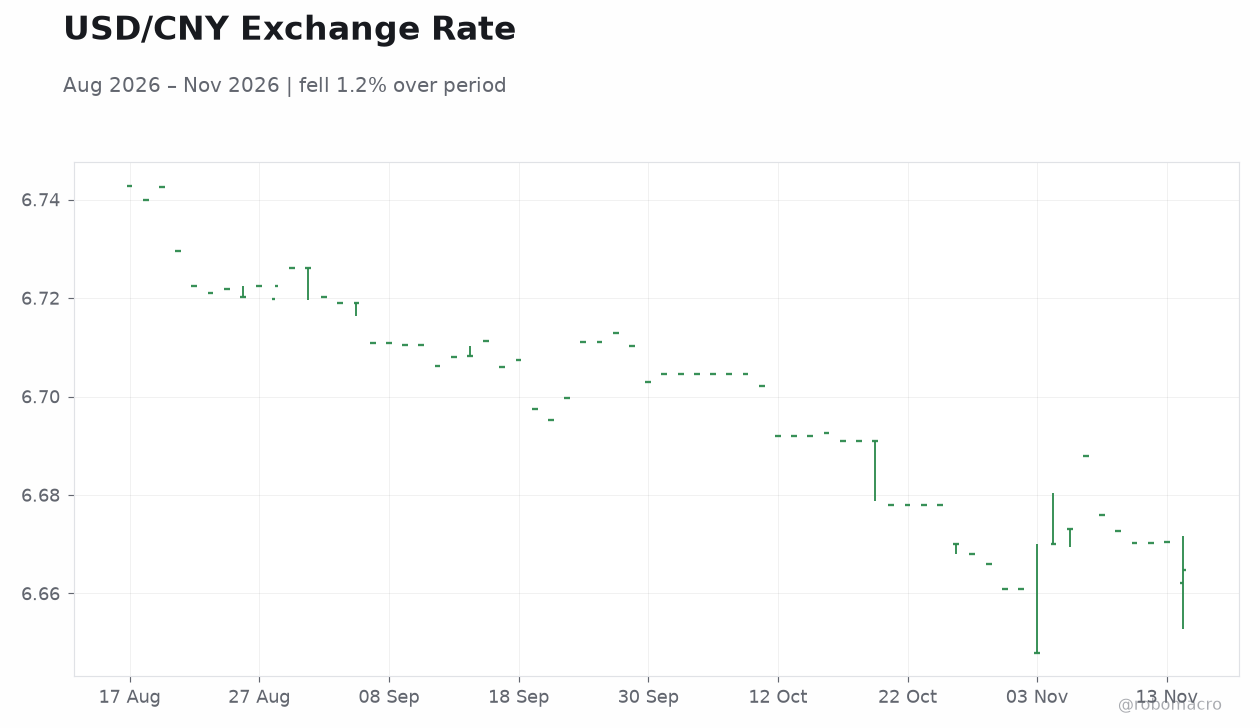
| USD/CNY | 6.65 | -0.25% |
| USD/HKD | 7.85 | +0.02% |
| Copper | 5.99 | -1.51% |
| Brent Crude | 91.89 | -4.12% |
| Gold | 3,859.00 | -0.70% |
| Bitcoin | 65,291.03 | -0.02% |
| China 2Y Govt Yield | - | - |
| China 10Y Govt Yield | - | - |
Prior Economic Events
| Data | Prior | Cons | Actual |
|---|---|---|---|
| No events available | |||
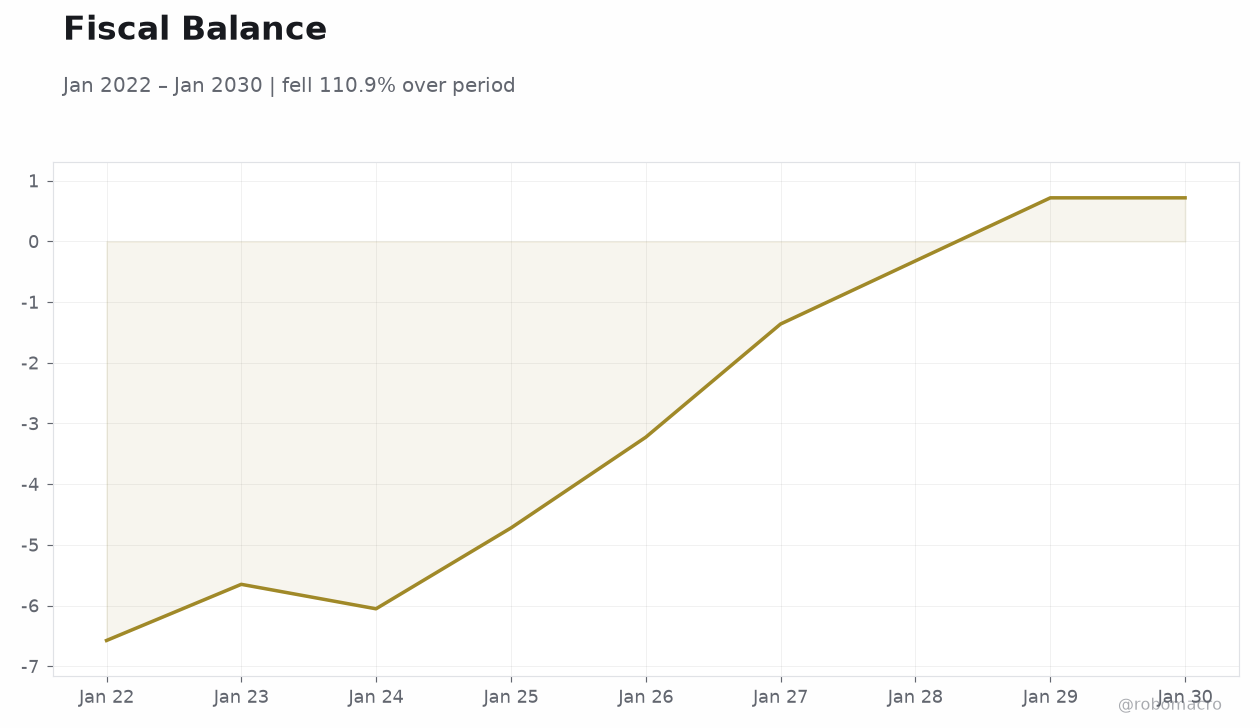 Fiscal Balance | Type: macro_line | Fiscal Balance: 0.717 (2030-01-01) | Range: -6.575–0.717 | Trend(5pt): -6.575,-6.053,-3.226,-0.323,0.717
Today's Economic Events
| Data | Prior | Cons | Time |
|---|---|---|---|
| No events available | |||
- Mainland China credit data shows yuan loans up 11.42 trln in Jan-Oct, with aggregate social financing at 28.61 trln as bond and equity financing outpace loans
- Hong Kong equities fall 1.55% as HKEX launches first Dim Sum bond index to boost offshore yuan liquidity; HK raises full-year growth forecast on AI trade boom
- Taiwan TAIEX outperforms, up 1.35%, as chip suppliers shrug off Nvidia leadership change; Bank of Korea warns semiconductor dominance delays consumption
Yesterday's Recap
Mainland China equities weakened Monday, with the Shanghai Composite down 0.59% to 3,634.35 and the CSI 300 falling 0.68% to 4,016.29, as investors digested mixed credit data showing yuan loans grew 11.42 trln yuan in the first ten months while aggregate social financing reached 28.61 trln. Hong Kong's Hang Seng underperformed, dropping 1.55% to 23,637.60, even as the HKEX launched its first-ever Dim Sum bond index aimed at boosting liquidity in the offshore yuan debt market. The HKMA reported Q3 2026 credit card lending growth, while Hong Kong's government raised its full-year growth forecast for a second time in months, citing an AI-driven trade boom.
Taiwan's TAIEX bucked the regional trend, gaining 1.35% to 43,675.12, with semiconductor suppliers showing resilience after Nvidia CEO Jensen Huang's departure. The yuan strengthened, with USD/CNY falling 0.25% to 6.65, while the HKMA's USD/HKD peg held near 7.85. Commodities signaled caution on Chinese demand, with copper down 1.51% to 5.99 and Brent crude plunging 4.12% to 91.89.
The Day Ahead
The Greater China calendar is light Tuesday, with no major scheduled data releases across mainland China, Hong Kong, or Taiwan. Market attention will center on follow-through from Monday's credit data and the implications for PBoC liquidity operations ahead of month-end. Hong Kong's growth upgrade and the new Dim Sum bond index will be watched for signs of improved offshore yuan demand.
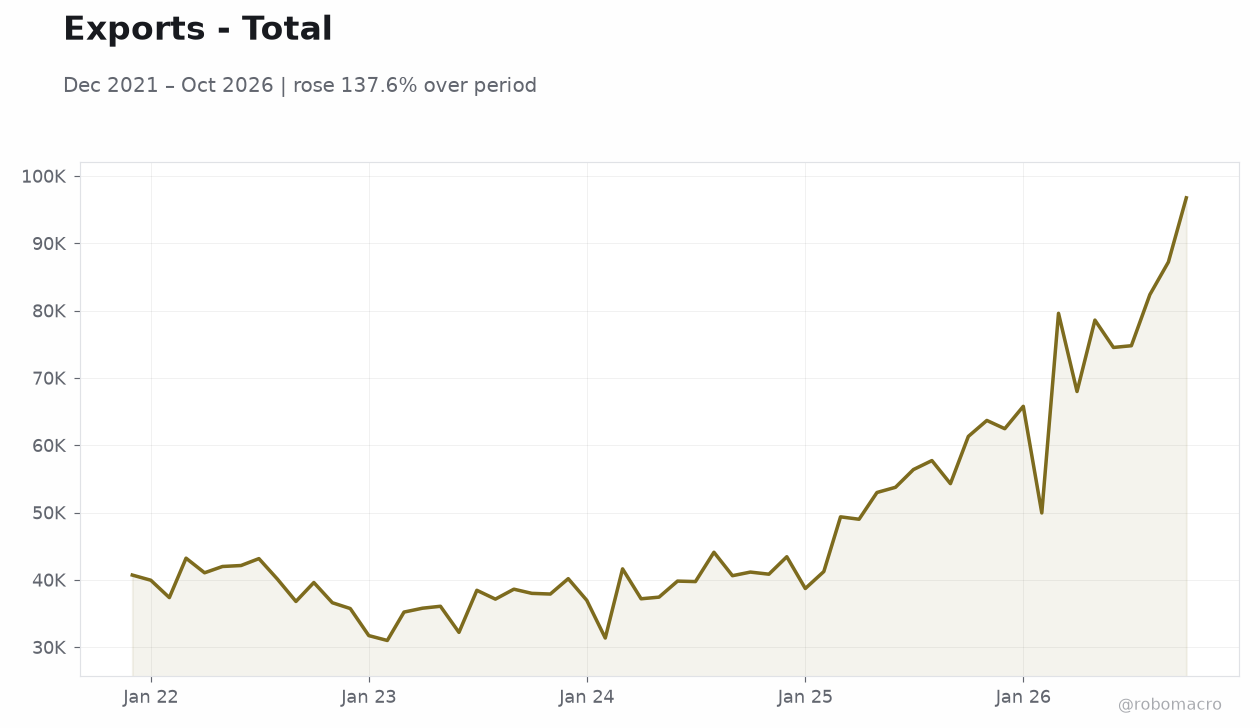
Taiwan's semiconductor complex remains in focus as investors assess the durability of the AI-driven export cycle. Traders will also monitor USD/CNY dynamics after Monday's yuan appreciation and any signal from the PBoC's daily fixing.
Other Economic Notes
Mainland China's credit expansion continues to be driven by bond and equity financing, which outpaced loans by nearly 14 percentage points in the first ten months, suggesting a structural shift in corporate funding away from traditional bank lending. BofA's Greater China economist Helen Qiao flagged a potential further deterioration in domestic demand, reinforcing expectations for additional easing. China raised its foreign-currency reserve requirement to curb yuan appreciation, a move that complicates export competitiveness calculations.
↓ p.2