Greater China Macro Daily(Beta Mode)
PBoC Yuan Fixing Tweak, Taiwan Tech Selloff
Market Snapshot
| Asset | Level | Change |
|---|---|---|
| Shanghai Composite | 3,576.36 | -0.73% |
| CSI 300 | 3,976.46 | -0.99% |
| Hang Seng | 23,753.84 | +0.49% |
| TAIEX | 41,040.08 | -6.03% |
| USD/CNY | 6.66 | -0.24% |
| USD/HKD | 7.85 | +0.00% |
| Copper | 6.00 | -0.01% |
| Brent Crude | 93.08 | +0.69% |
| Gold | 3,852.20 | -0.02% |
| Bitcoin | 64,223.43 | -0.98% |
| China 2Y Govt Yield | - | - |
| China 10Y Govt Yield | - | - |
Prior Economic Events
| Data | Prior | Cons | Actual |
|---|---|---|---|
| No events available | |||
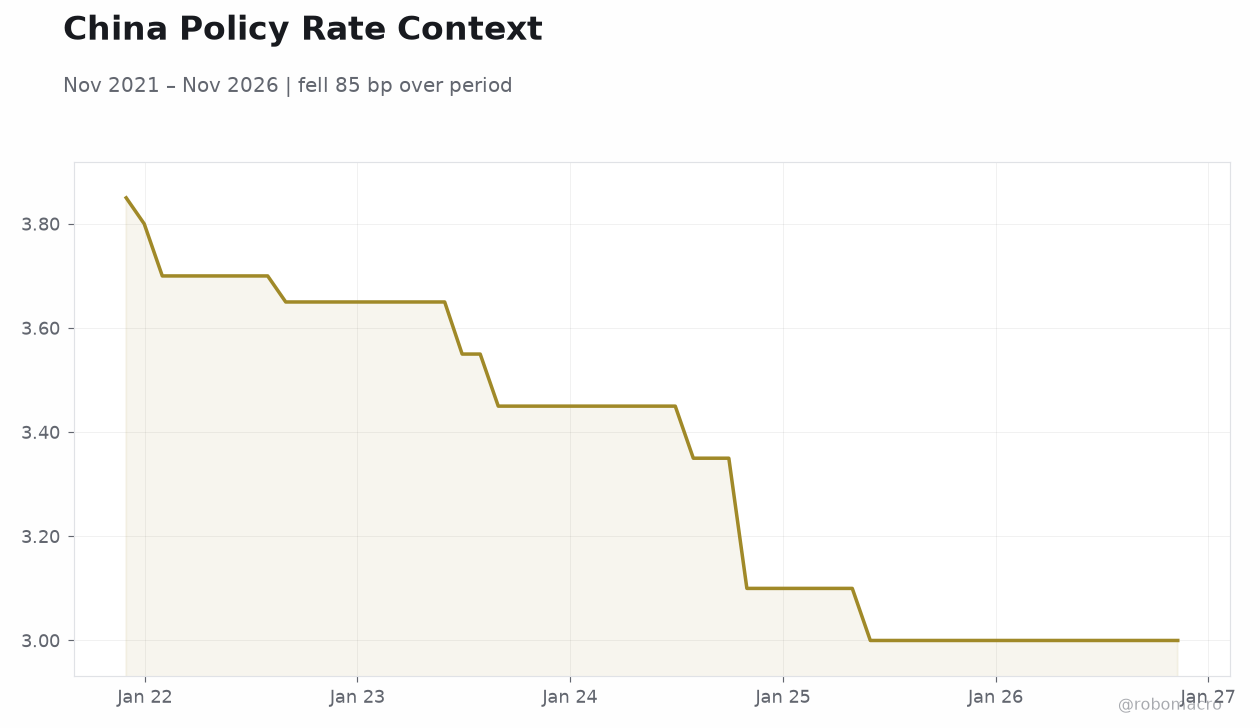 China Policy Rate Context | Type: macro_line | China policy rate (%): 3 (2026-11-10) | Range: 3–3.85 | Trend(5pt): 3.85,3.65,3.45,3,3
Today's Economic Events
| Data | Prior | Cons | Time |
|---|---|---|---|
| No events available | |||
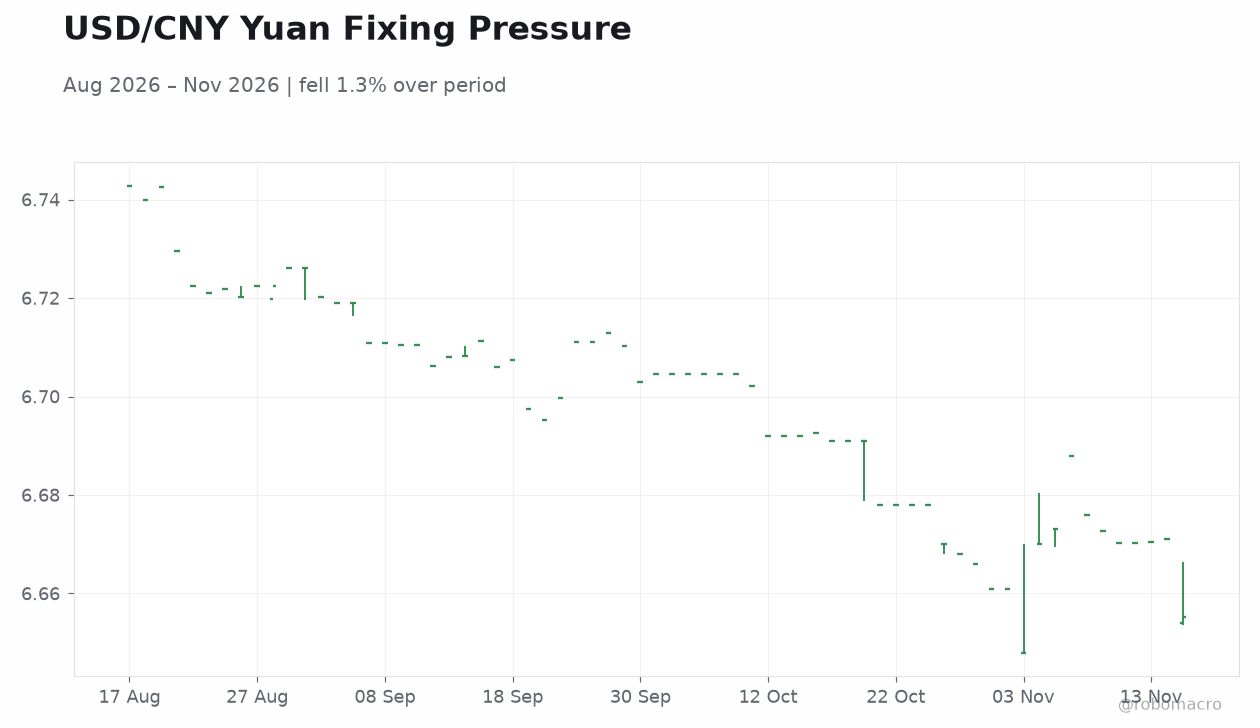
- PBoC raised the FX forward reserve requirement to temper yuan appreciation, a rare two-way signal as USD/CNY slipped to 6.66.
- Taiwan equities cratered, with TAIEX down 6.03% in a sharp tech-led de-risking move.
- HKEX launched its first Dim Sum bond index, deepening Hong Kong's offshore yuan infrastructure.
Yesterday's Recap
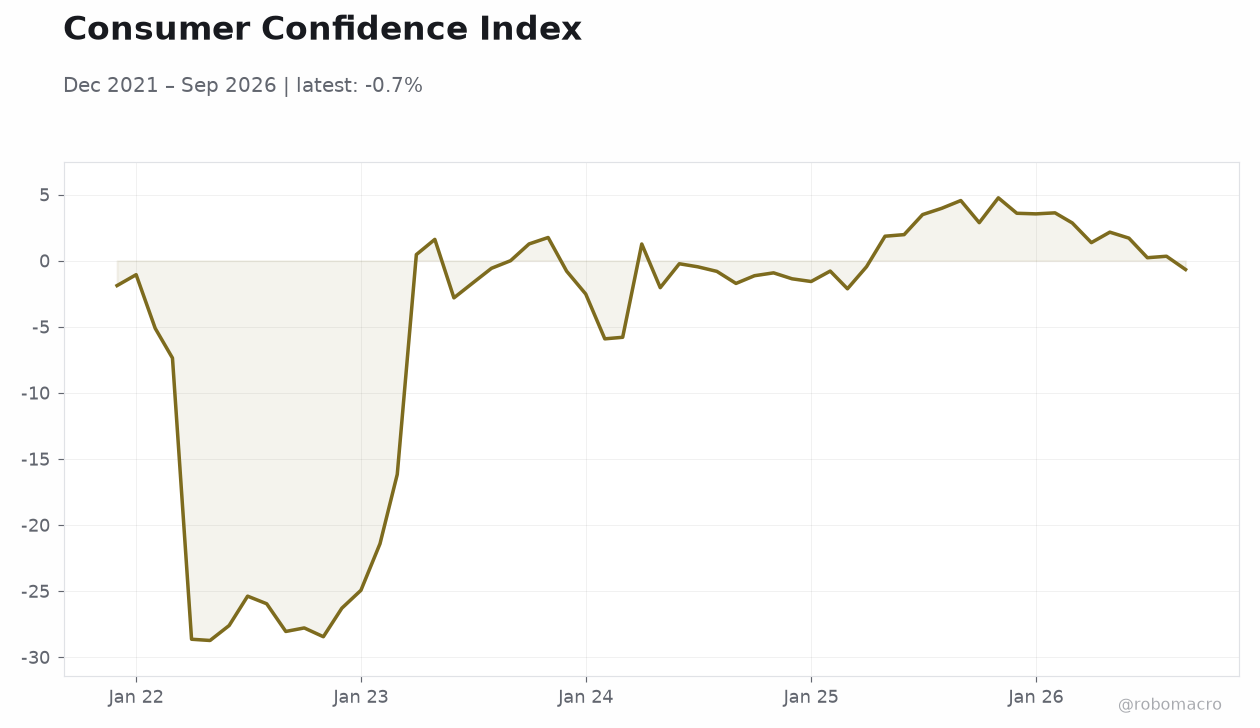
Mainland China equities softened, with the Shanghai Composite down 0.73% and CSI 300 off 0.99%, as domestic demand concerns weighed on sentiment. The yuan strengthened, with USD/CNY falling 0.24% to 6.66, prompting the PBoC to raise the foreign-currency forward reserve requirement to curb appreciation pressure — a notable twist given persistent undervaluation criticism. Hong Kong bucked the trend, with the Hang Seng up 0.49%, supported by HKEX's launch of its first Dim Sum bond index aimed at boosting offshore yuan debt liquidity.
Taiwan was the day's outlier, with TAIEX plunging 6.03% in a violent tech-sector selloff, underscoring the island's sensitivity to global semiconductor sentiment. On the macro side, BofA's Helen Qiao flagged further deterioration in China's domestic demand, while October car output slowed to a four-year low. Foreign investors bought onshore Chinese government bonds at the fastest pace since May, reflecting haven demand amid global uncertainty.
The Day Ahead
The calendar is light, with no scheduled Greater China data releases for today or tomorrow, leaving markets to trade on positioning and external cues. Attention will center on follow-through from the PBoC's FX reserve requirement adjustment and whether the yuan fixing signals a shift toward tolerating strength. Hong Kong's Dim Sum bond index launch will be watched for early liquidity signals in the offshore yuan market.
Taiwan's rebound potential after the 6% TAIEX drop will hinge on semiconductor sentiment and any stabilization in global tech. Traders will also monitor Brent crude above $93 and copper near $6.00 as growth proxies for the mainland.
Other Economic Notes
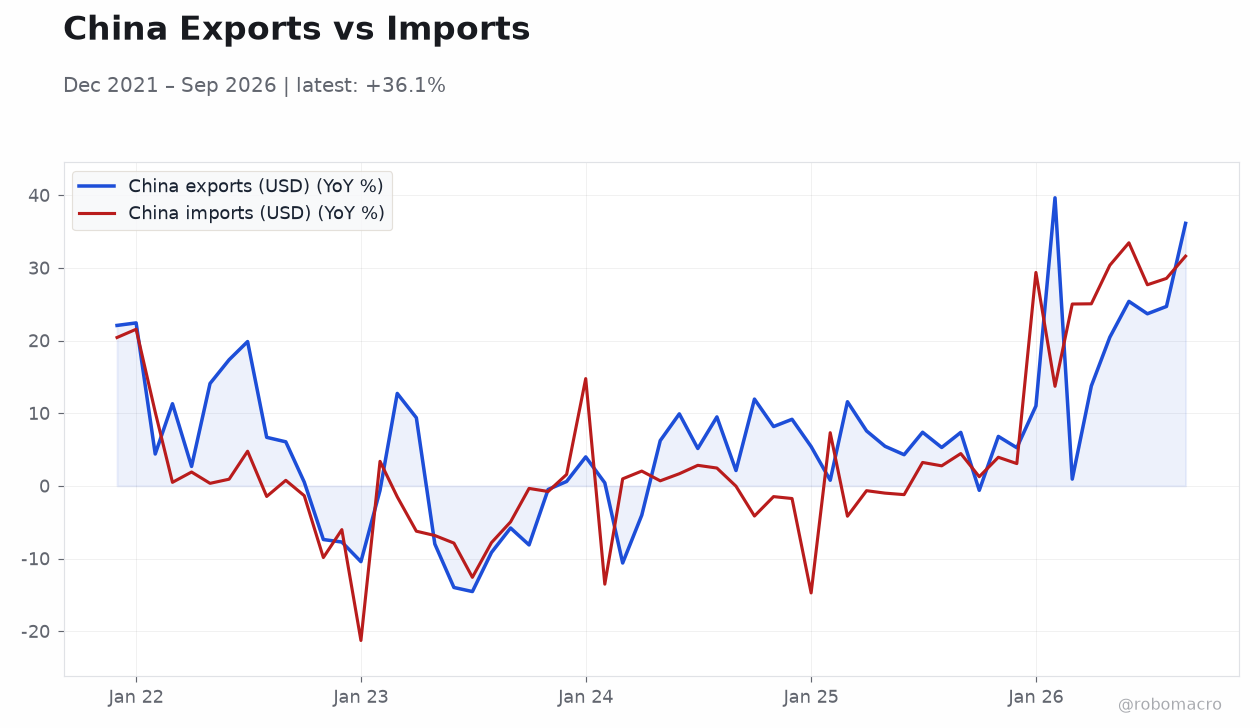
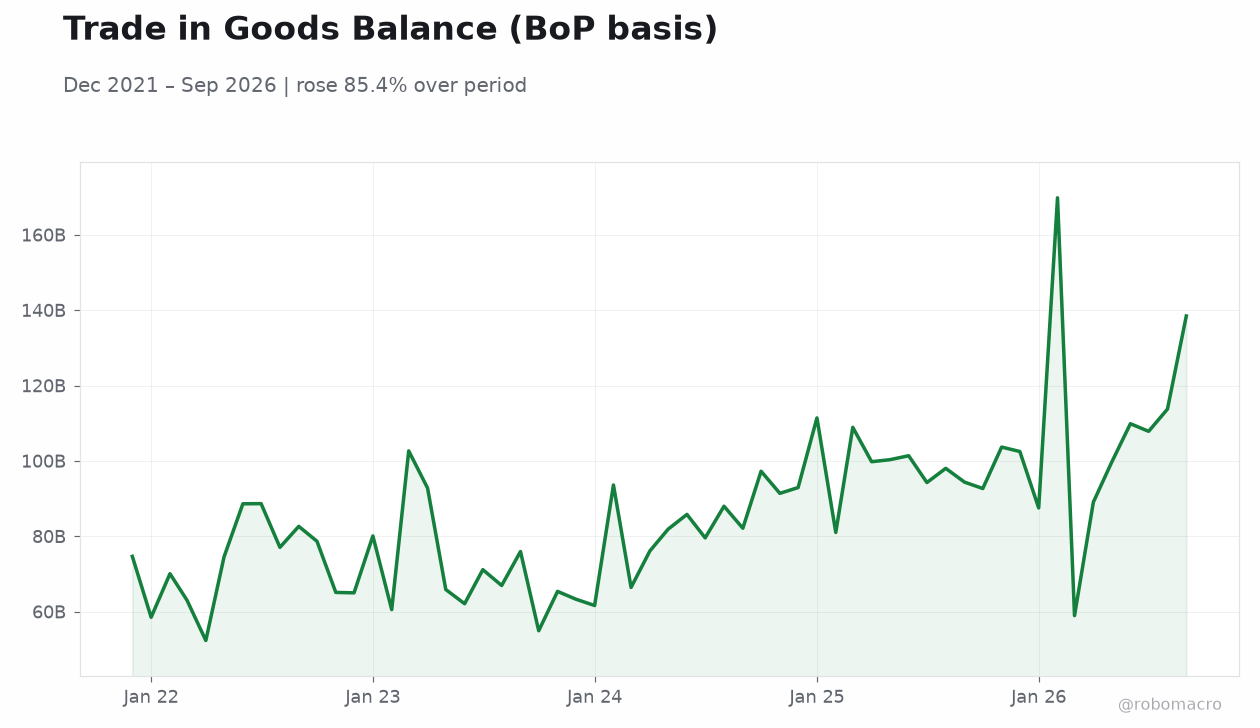
China's property-sector drag and weak domestic demand remain the core macro vulnerabilities, with car production at a four-year low reinforcing overcapacity concerns. The PBoC's FX reserve requirement hike complicates the export outlook, as a stronger yuan could erode competitiveness just as external demand softens. Foreign inflows into onshore government bonds suggest investors are treating Chinese duration as a haven, even as growth momentum falters.
Russia-China trade is tracking toward a record year in 2026, with yuan-denominated settlement dominating bilateral payments. Canada and China agreed further tariff cuts on seafood and steel, a modest but symbolic easing of trade frictions.