Greater China Macro Daily(Beta Mode)
Taiwan Tumbles, Tariff Truce Frays
Market Snapshot
| Asset | Level | Change |
|---|---|---|
| Shanghai Composite | 3,463.87 | -0.36% |
| CSI 300 | 3,900.55 | +0.06% |
| Hang Seng | 21,966.01 | -1.14% |
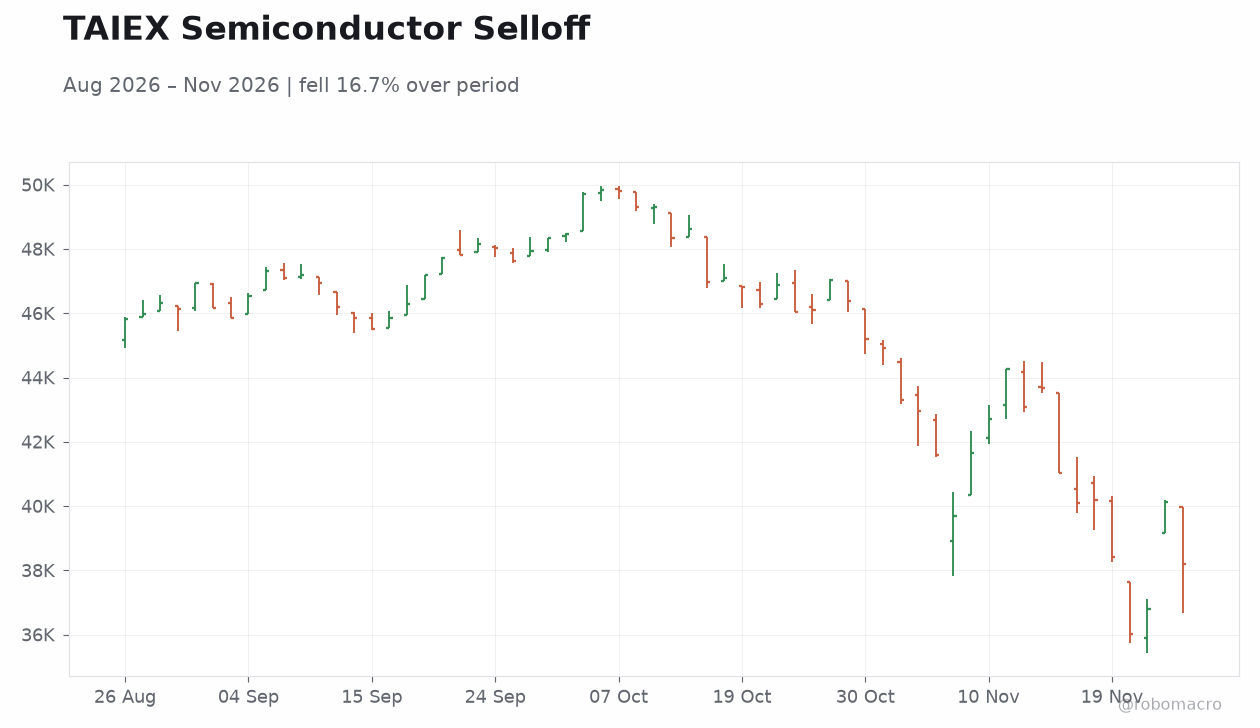
| TAIEX | 38,195.43 | -4.80% |
| USD/CNY | 6.65 | -0.19% |
| USD/HKD | 7.84 | -0.06% |
| Copper | 5.43 | +1.89% |
| Brent Crude | 91.73 | -3.04% |
| Gold | 3,593.40 | +1.63% |
| Bitcoin | 60,666.98 | +0.48% |
| China 2Y Govt Yield | - | - |
| China 10Y Govt Yield | - | - |
Prior Economic Events
| Data | Prior | Cons | Actual |
|---|---|---|---|
| No events available | |||
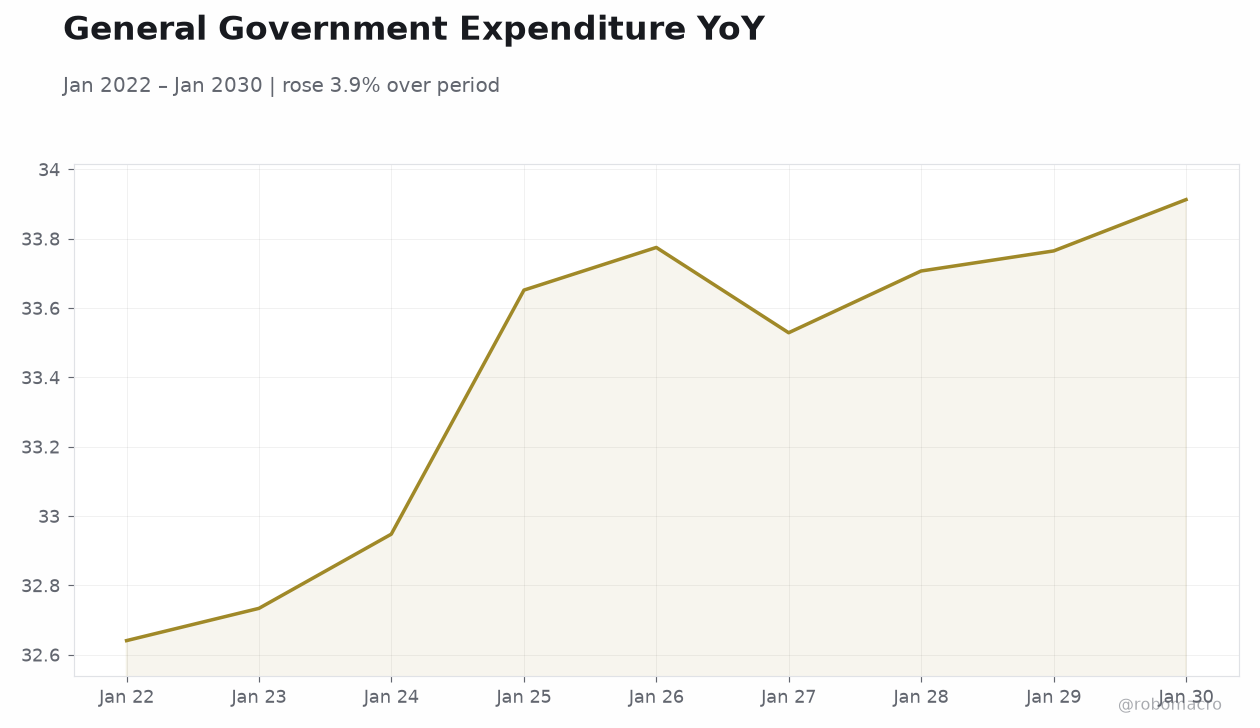 General Government Expenditure YoY | Type: macro_line | General Government Expenditure YoY: 33.91 (2030-01-01) | Range: 32.64–33.91 | Trend(5pt): 32.64,32.95,33.77,33.71,33.91
Today's Economic Events
| Data | Prior | Cons | Time |
|---|---|---|---|
| No events available | |||
- TAIEX plunged 4.80% to 38,195.43, the sharpest move across Greater China, as semiconductor-linked selling collided with fresh US tariff proposals targeting China.
- Washington proposed new tariffs on China and the EU; Beijing dismissed the move as "political maneuvering" and warned of retaliation, putting the trade truce at risk.
- HKMA launched its CMU Digital Asset Platform for tokenized debt securities, with 10 banks as first direct participants and custody assets topping HK$6 trillion.
Yesterday's Recap
Greater China markets diverged sharply on Wednesday, with Taiwan bearing the brunt of the risk-off tone. The TAIEX collapsed 4.80% to 38,195.43, a move consistent with heavy semiconductor-linked liquidation as investors reassessed chip-cycle exposure and US-China tech friction. Hong Kong's Hang Seng fell 1.14% to 21,966.01, while mainland benchmarks were steadier — the CSI 300 edged up 0.06% to 3,900.55 and the Shanghai Composite slipped 0.36% to 3,463.87.
The yuan firmed, with USD/CNY at 6.65, down 0.19%, suggesting dollar weakness rather than a domestic catalyst. The offshore risk backdrop was mixed: Brent crude fell 3.04% to $91.73, gold rose 1.63% to $3,593.40, and copper gained 1.89% to $5.43, a constructive signal for China's industrial demand. On the policy front, the HKMA rolled out its CMU Digital Asset Platform for bond tokenization, with 10 banks as first direct participants and custody assets exceeding HK$6 trillion — a meaningful step in Hong Kong's financial-market infrastructure build-out.
No Greater China macro prints appeared in the calendar for the session.
The Day Ahead
The Greater China calendar is empty for Thursday, November 26, with no scheduled releases across mainland China, Hong Kong, or Taiwan. Attention therefore shifts to the US tariff timeline and any Chinese official response, with the Ministry of Commerce and State Council likely to shape the tone. Taiwan's market will be watched for follow-through after the 4.80% TAIEX drop, particularly in semiconductor names, given the sector's outsized index weight.
Hong Kong flows and the HKD side of the peg will be monitored as the CMU platform launch beds in. Mainland investors will look to copper and crude as growth proxies, with the copper rally offering a modest counterweight to equity weakness. Any PBoC liquidity operation would be the main domestic policy signal in the absence of data.
Other Economic Notes
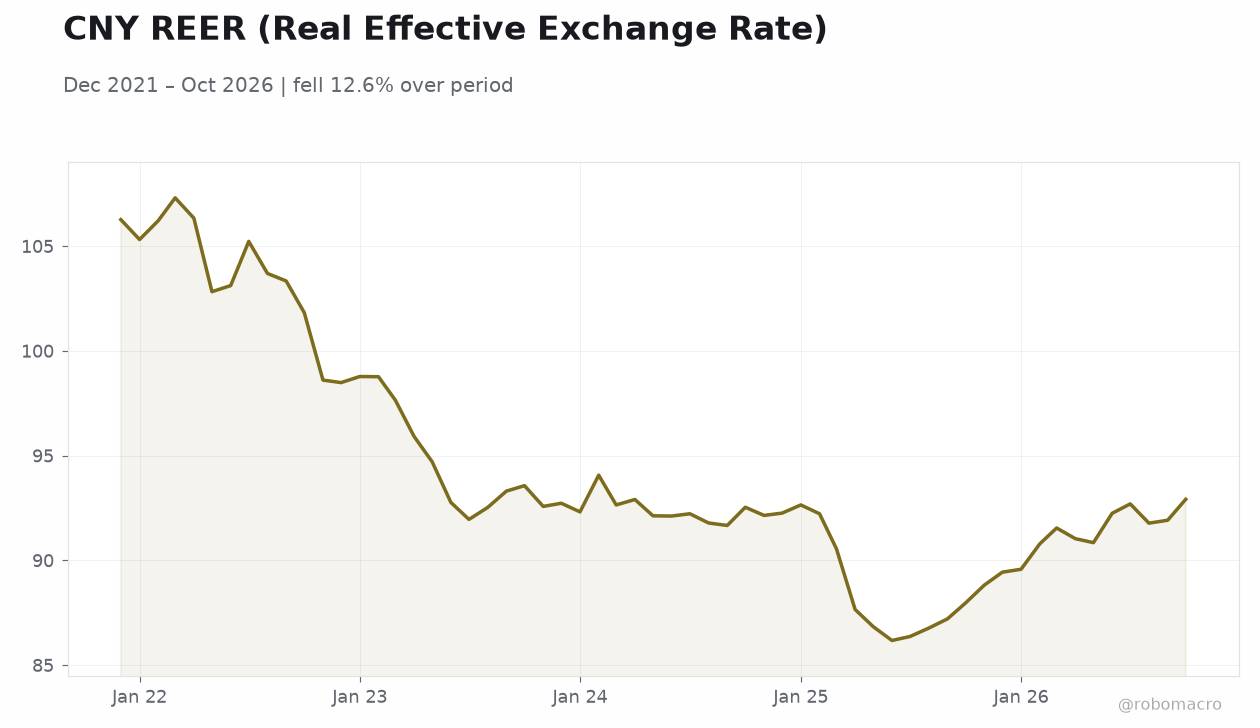
China's disinflation backdrop remains the dominant macro constraint, with CPI at 0.70% year-on-year as of October, leaving real rates elevated and reinforcing the case for continued monetary accommodation. ↓ p.2