India Macro Daily(Beta Mode)
Rupee Steadies Near 97 as Crude Spikes
Market Snapshot
| Asset | Level | Change |
|---|---|---|
| Nifty 50 | 23,996.25 | -0.79% |
| Sensex | 76,755.05 | -0.92% |
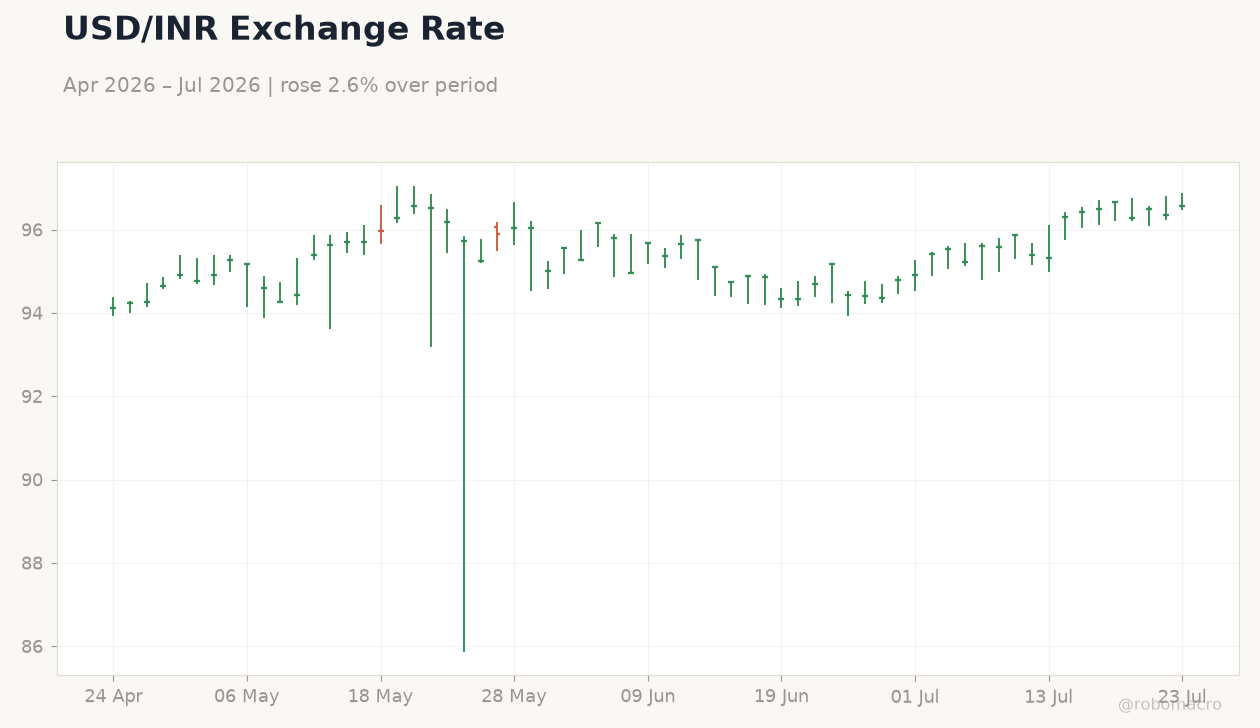
| USD/INR | 96.56 | +0.22% |
| EUR/INR | 110.12 | +0.44% |
| Reliance | 1,272.20 | -1.27% |
| HDFC Bank | 747.25 | -0.78% |
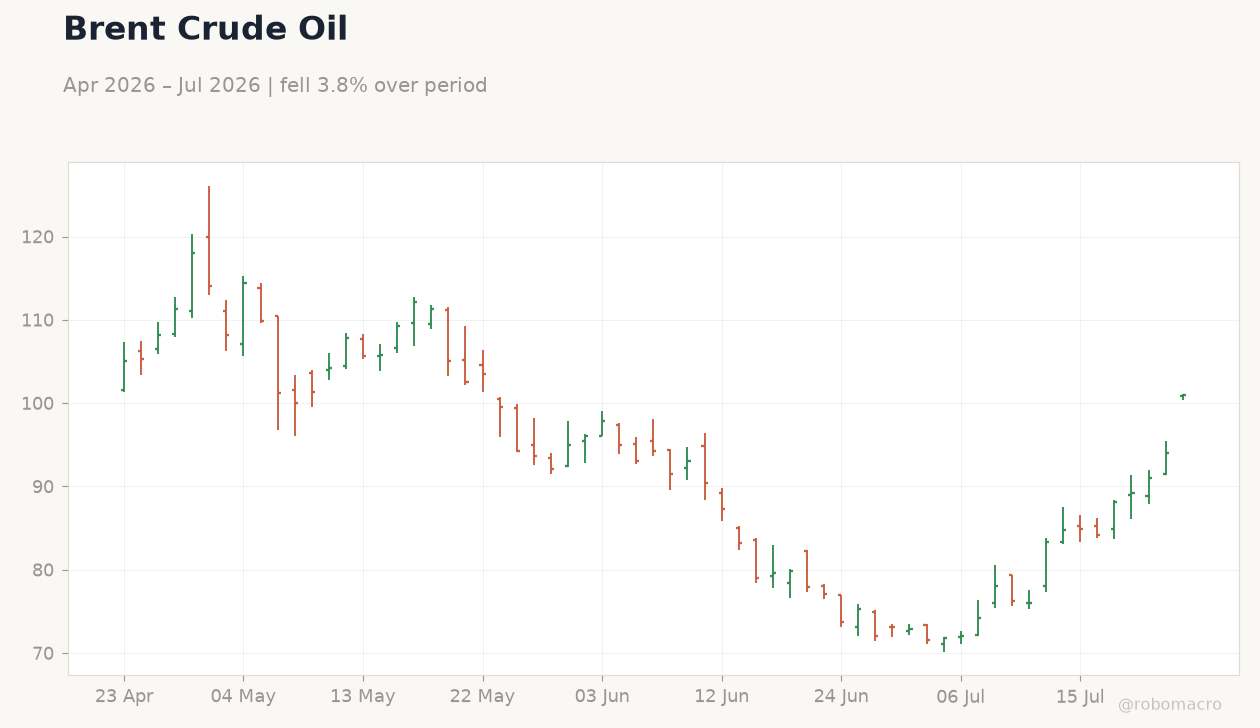
| Brent Crude | 101.00 | +7.37% |
| Gold | 4,045.30 | -2.45% |
| Bitcoin | 64,856.83 | -1.88% |
| India Short-term Rate | 5.50% | +0.00% |
| India Long-term Rate | - | - |
Prior Economic Events
| Data | Prior | Cons | Actual |
|---|---|---|---|
| No events available | |||
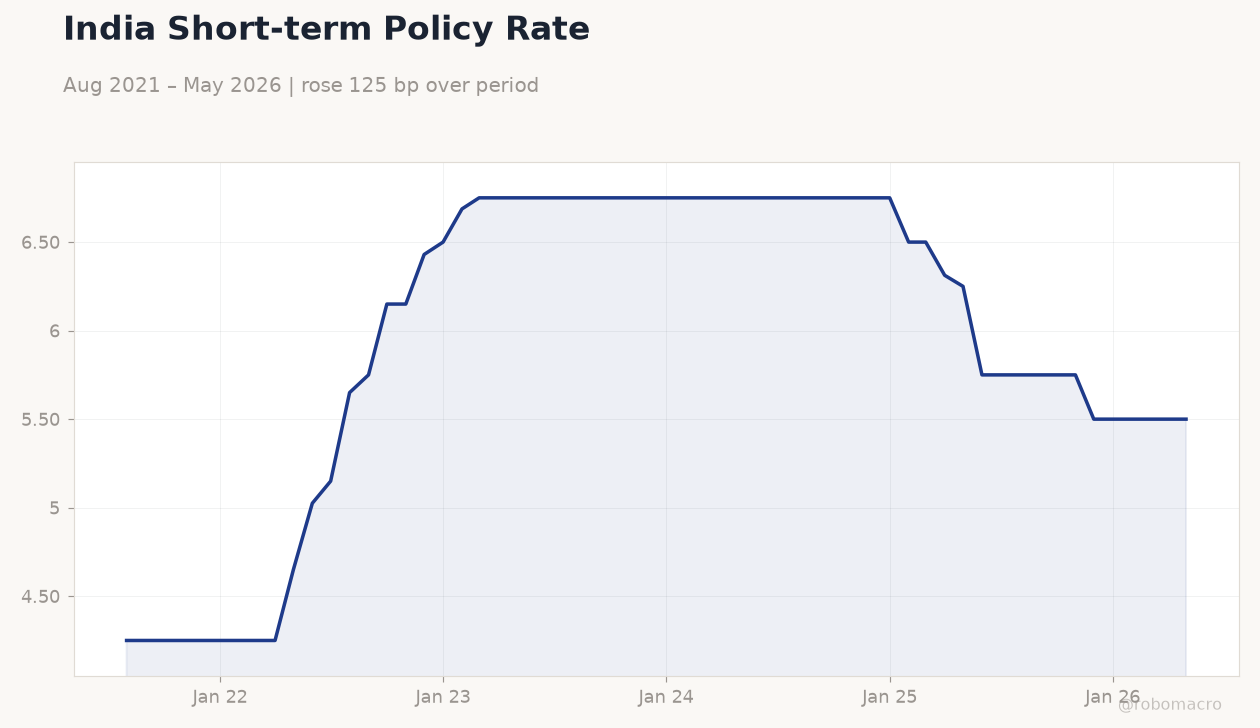 India Short-term Policy Rate | Type: macro_line | Policy Rate %: 5.5 (2026-05-01) | Range: 4.25–6.75 | Trend(5pt): 4.25,6.15,6.75,6.5,5.5
Today's Economic Events
| Data | Prior | Cons | Time |
|---|---|---|---|
| Friday (2026-07-24) | |||
| HSBC Composite PMI Flash | - | - | 21:00 |
| HSBC Manufacturing PMI Flash | - | - | 21:00 |
| HSBC Services PMI Flash | - | - | 21:00 |
- Nifty 50 fell 0.79% to 23,996.25 and Sensex dropped 0.92% as Brent crude jumped 7.37% to $101.
- USD/INR rose 0.22% to 96.56 with RBI likely intervening after selling $6 billion in May to support the currency.
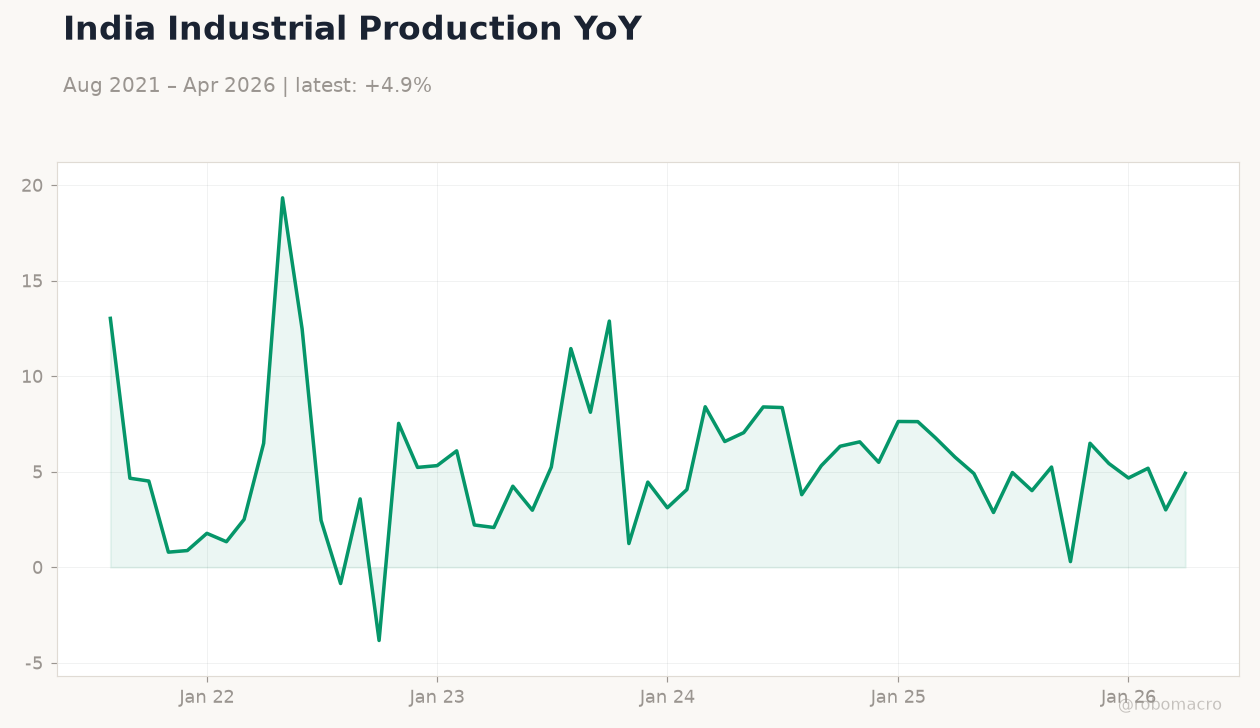
- RBI Bulletin highlighted sustained economic momentum through June despite global uncertainty, alongside FDI and FPI recovery.
Yesterday's Recap
Indian equity markets closed lower after Brent crude surged sharply, weighing on energy importers and broader sentiment. Nifty 50 ended at 23,996.25 while Sensex finished at 76,755.05, both posting their steepest single-day declines in recent sessions. The rupee traded near the 97 handle before closing at 96.56 against the dollar, supported by reported RBI intervention that limited further depreciation.
News flow centered on the RBI Bulletin, which noted that domestic activity maintained momentum through June even as external risks intensified. Traders also focused on the central bank’s $6 billion FX sales in May to cushion the oil-driven current-account pressure. Reliance and HDFC Bank shares declined 1.27% and 0.78% respectively, amplifying the index losses.
Overall, the session reflected the tension between resilient domestic data and external commodity shocks.
The Day Ahead
Markets will monitor the HSBC Flash PMI prints scheduled for release at 21:00 ET, covering composite, manufacturing and services activity. These indicators will provide the first high-frequency read on July momentum after the RBI’s positive June assessment. Traders expect the data to confirm whether services-led expansion continues to offset any manufacturing softness.
Any material downside surprise could reinforce expectations for further RBI liquidity support. Equity and currency desks will also track oil-price volatility and potential RBI spot interventions if USD/INR tests 97 again. The combination of PMI outcomes and crude moves will set the tone for next week’s flows.
Other Economic Notes
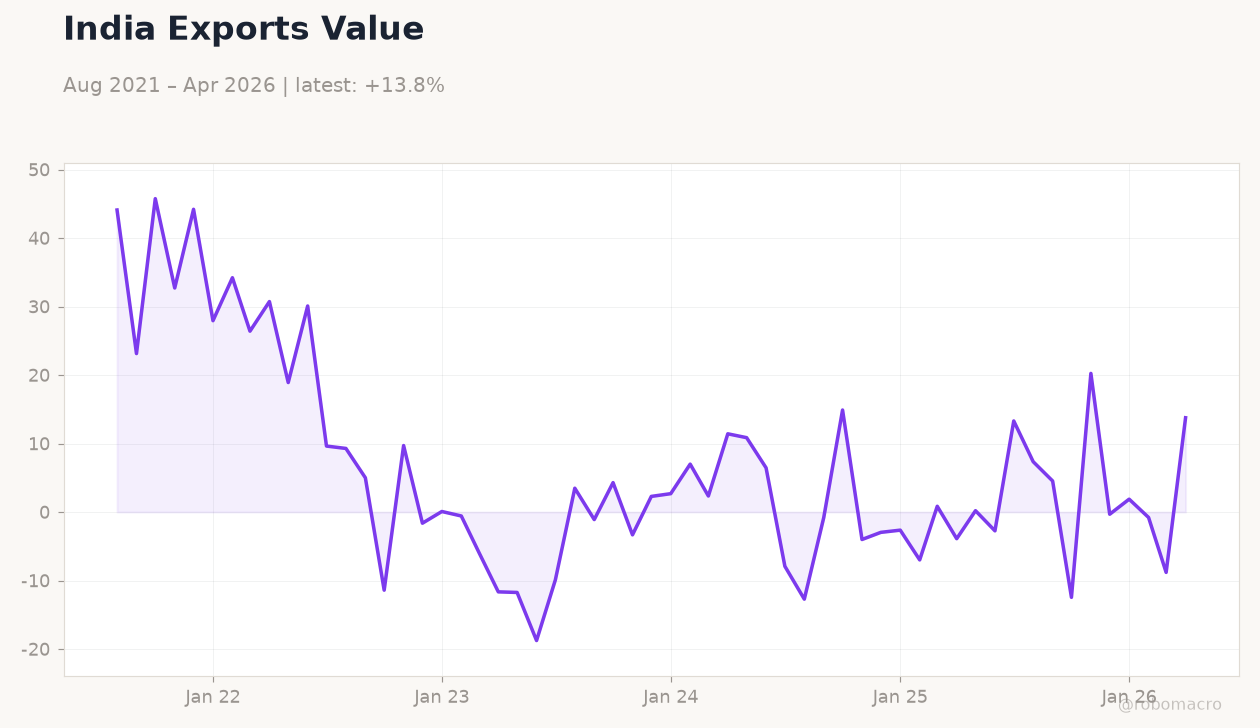
The RBI Bulletin underscored that India’s growth trajectory remains intact amid global uncertainty, with domestic demand and services continuing to anchor expansion. FDI and FPI inflows have recovered, signaling renewed investor confidence in the medium-term outlook. At the same time, elevated crude prices pose a clear risk to the current-account balance and inflation trajectory, given India’s structural import dependence.
The 4.38% June CPI reading leaves limited headroom if oil stays above $100. Policymakers therefore face a narrow path of supporting growth while guarding against imported price pressures.