India Macro Daily(Beta Mode)
RBI Lifts FY27 Growth Forecast to 6.7%
Market Snapshot
| Asset | Level | Change |
|---|---|---|
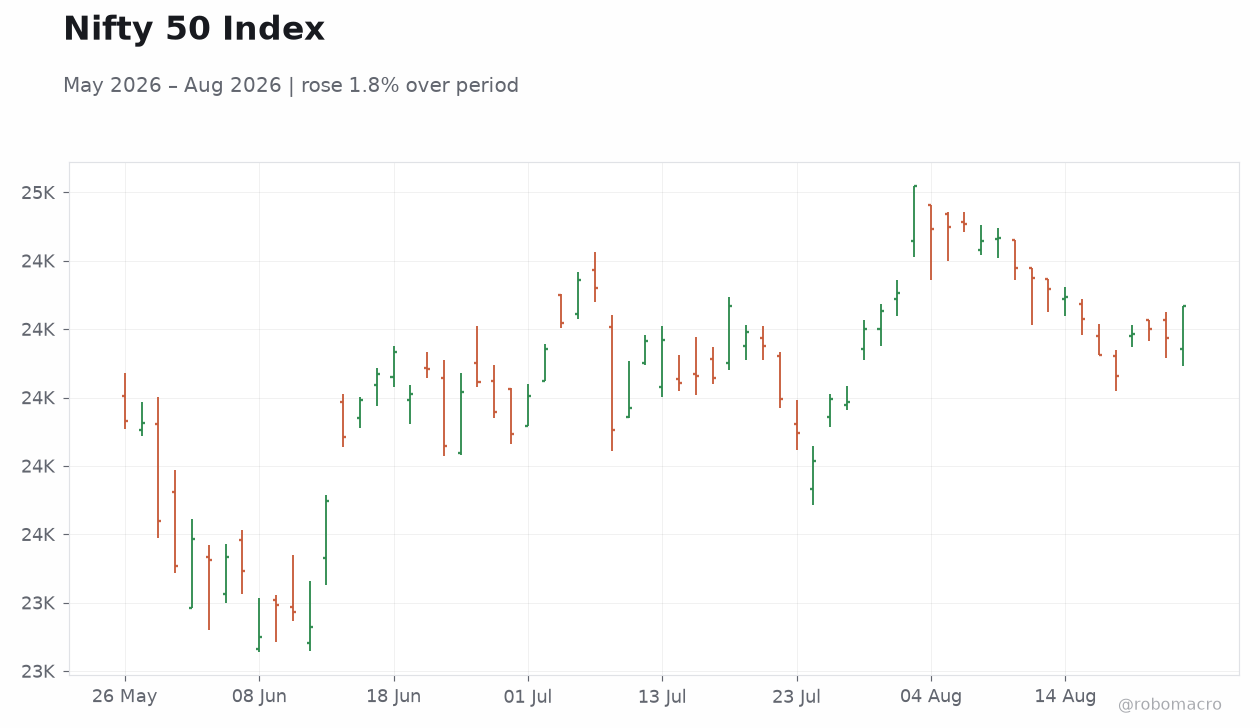
| Nifty 50 | 24,334.55 | +0.48% |
| Sensex | 77,656.09 | +0.37% |
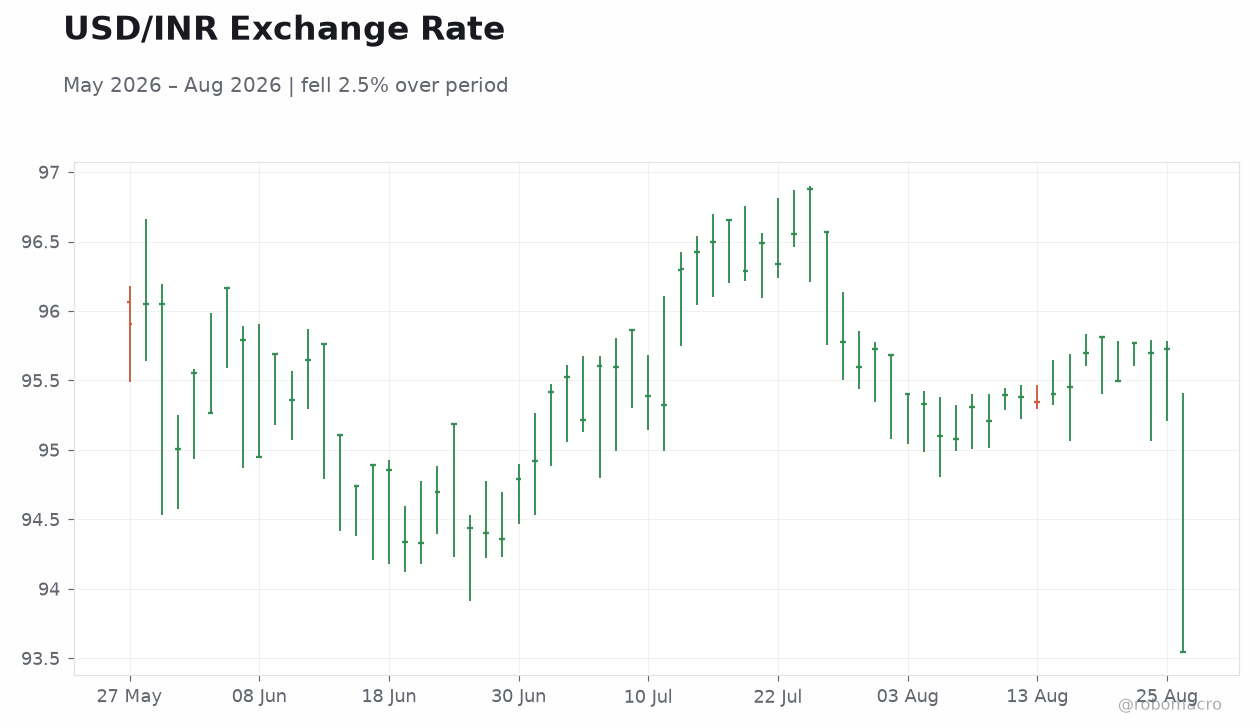
| USD/INR | 93.55 | -2.27% |
| EUR/INR | 111.31 | -0.29% |
| Reliance | 1,298.00 | -1.44% |
| HDFC Bank | 727.20 | -0.04% |
| Brent Crude | 86.37 | -2.49% |
| Gold | 4,674.70 | +0.79% |
| Bitcoin | 78,903.53 | +0.43% |
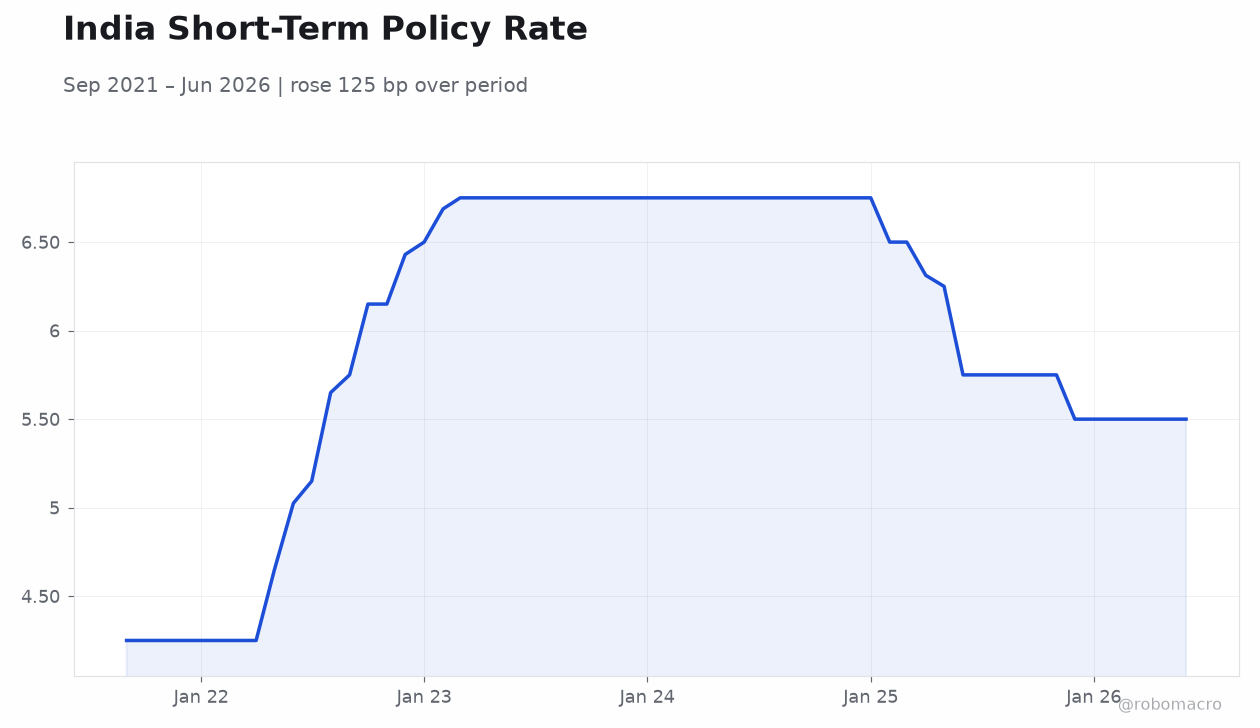
| India Short-term Rate | 5.50% | +0.00% |
| India Long-term Rate | - | - |
Prior Economic Events
| Data | Prior | Cons | Actual |
|---|---|---|---|
| No events available | |||
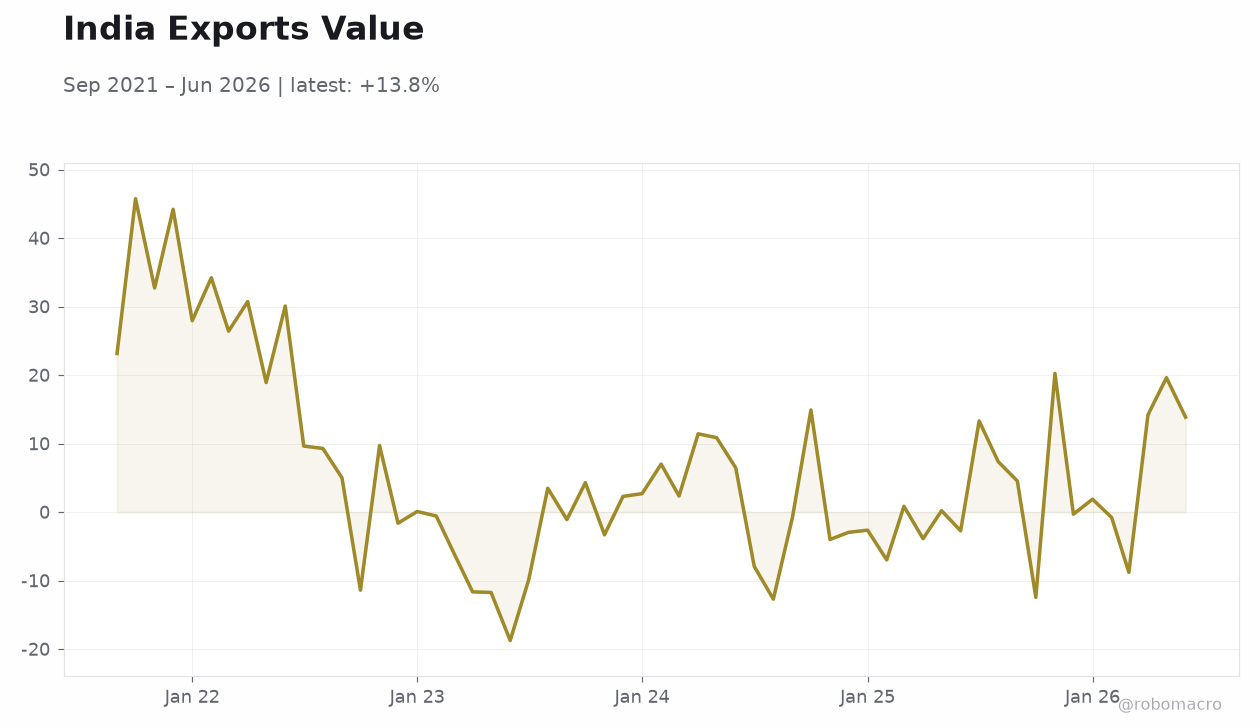 India Exports Value | Type: macro_line | USD mn: 13.85 (2026-06-01) | Range: -18.76–45.75 | Trend(6pt): 23.13,9.708,2.683,0.8389,19.61,13.85
Today's Economic Events
| Data | Prior | Cons | Time |
|---|---|---|---|
| Friday (2026-08-28) | |||
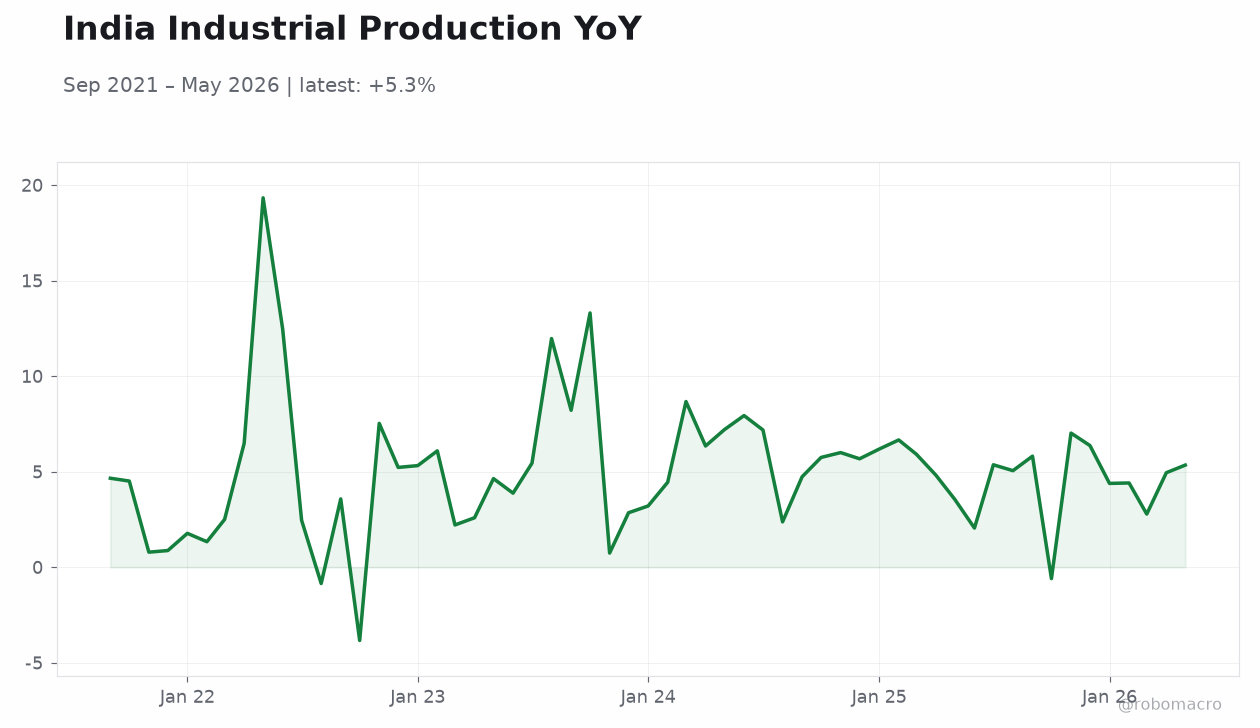
| Industrial Production Year-over-Year | 7.30 | 6 | 02:30 |
| Manufacturing Production Year-over-Year | 7.80 | - | 02:30 |
- Equity benchmarks advance while rupee strengthens sharply on swap inflows
- RBI August bulletin underscores domestic demand resilience amid global risks
- Industrial production release Friday carries softer consensus expectations
Yesterday's Recap
Indian equity markets closed higher with Nifty 50 rising 0.48 percent to 24,334.55 and Sensex gaining 0.37 percent to 77,656.09. The rupee appreciated sharply, with USD/INR falling 2.27 percent to 93.55 as banks drew record inflows through the RBI’s USD-INR swap facility. Credit card spending crossed the Rs 2 trillion mark, reflecting sustained household consumption momentum.
The RBI’s latest bulletin highlighted that high-frequency indicators point to continued strength in manufacturing and services despite external headwinds. Non-petroleum imports continued to widen the trade deficit, underscoring rising dependence on electronics components and industrial inputs. Brent crude declined 2.49 percent to 86.37 while gold advanced 0.79 percent to 4,674.70.
Financial resource flows to the commercial sector more than doubled to Rs 10.65 lakh crore in April-July, supporting credit expansion.
The Day Ahead
Markets will focus on Friday’s Industrial Production and Manufacturing Production releases, both scheduled for 02:30 ET. Industrial Production is expected to moderate to 6.0 percent year-over-year from 7.3 percent previously, while manufacturing output data carry no consensus. Traders will also monitor any follow-through from the RBI’s swap operations and potential comments on liquidity management.
Equity sentiment may draw cues from global risk appetite and any updates on US-India trade discussions. Bond markets will track movements in the India-US 10-year yield spread, which has narrowed to multi-decade lows.
Other Economic Notes
NITI Aayog has proposed unifying education and training into an integrated, outcome-driven skilling framework to better align workers with emerging sectors. India’s non-oil import dependence continues to expand, with electronics and capital goods driving the trade gap beyond energy. The World Bank notes that India remains South Asia’s primary growth engine, yet the China+1 relocation opportunity has yet to deliver measurable gains.
Credit expansion and rising household leverage via cards signal firm domestic demand but warrant monitoring for potential overheating risks.