India Macro Daily(Beta Mode)
Rupee Defence, Reserves in Focus as RBI Holds
Market Snapshot
| Asset | Level | Change |
|---|---|---|
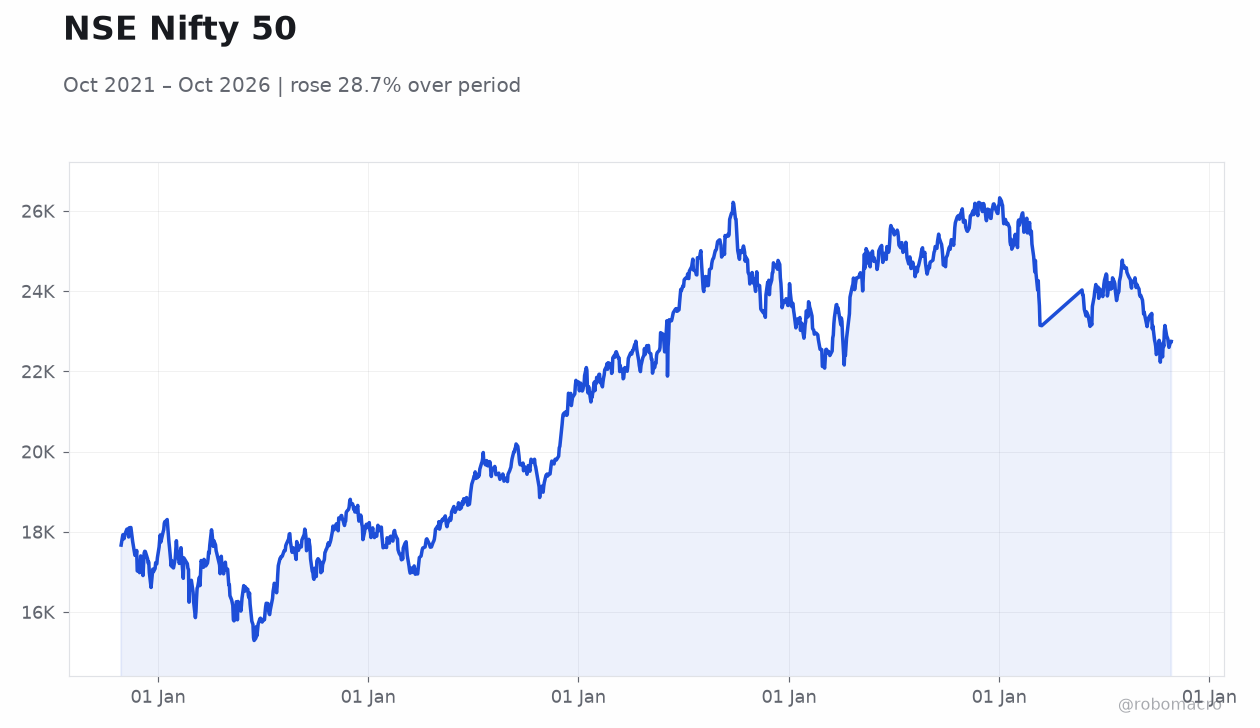
| Nifty 50 | 22,753.20 | +0.68% |
| Sensex | 73,606.75 | +0.66% |
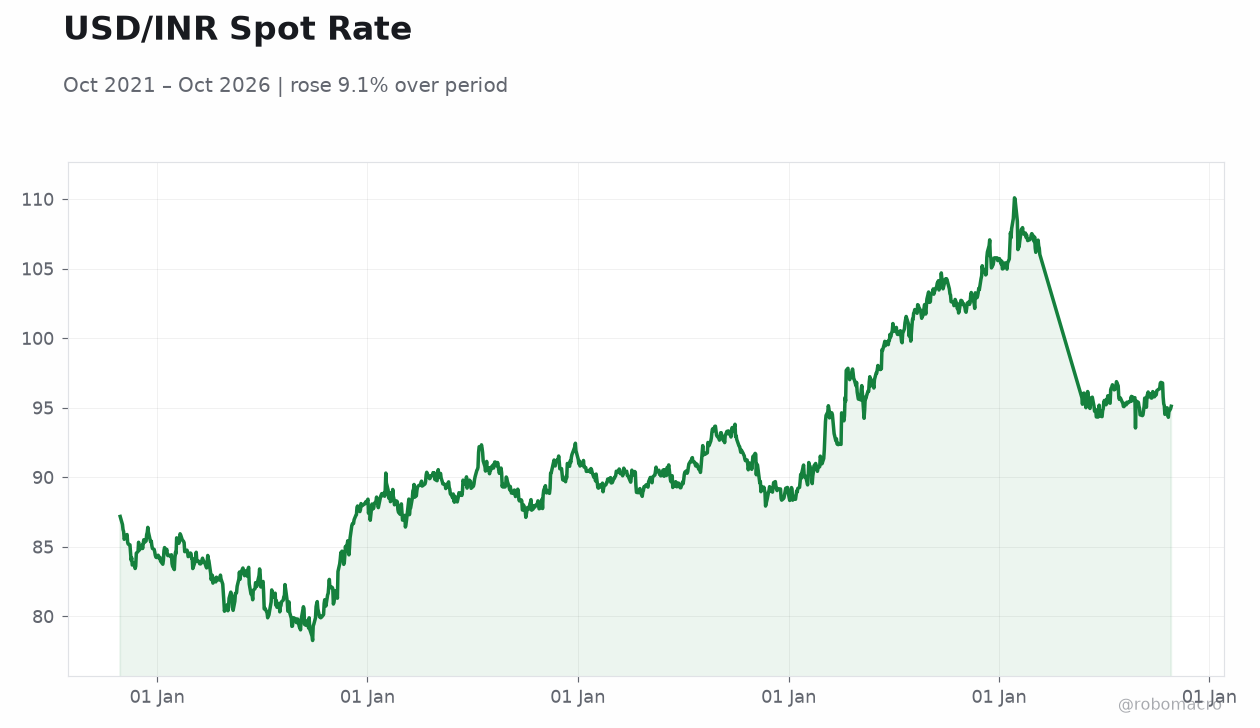
| USD/INR | 95.11 | -0.09% |
| EUR/INR | 105.83 | -0.41% |
| Reliance | 1,196.20 | -0.47% |
| HDFC Bank | 680.20 | -1.14% |
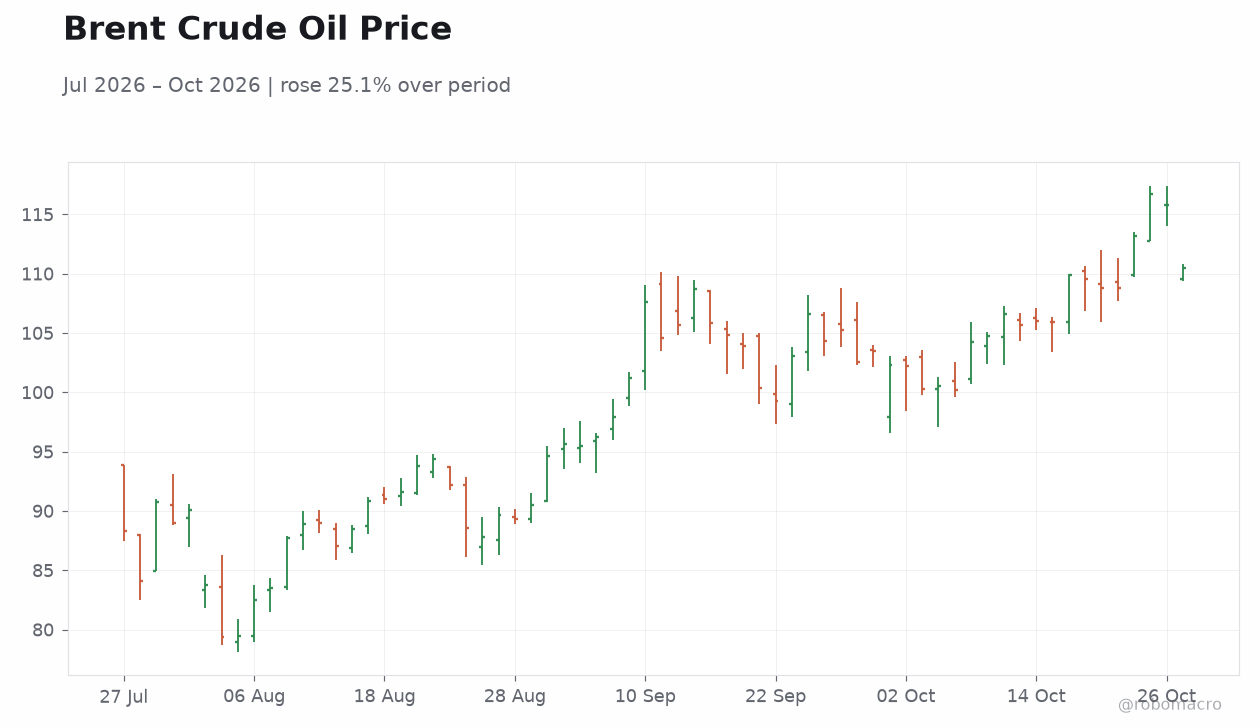
| Brent Crude | 110.54 | -4.55% |
| Gold | 4,072.40 | +0.84% |
| Bitcoin | 80,643.29 | +0.80% |
| India 2Y Govt Yield | - | - |
| India 10Y Govt Yield | - | - |
Prior Economic Events
| Data | Prior | Cons | Actual |
|---|---|---|---|
| No events available | |||
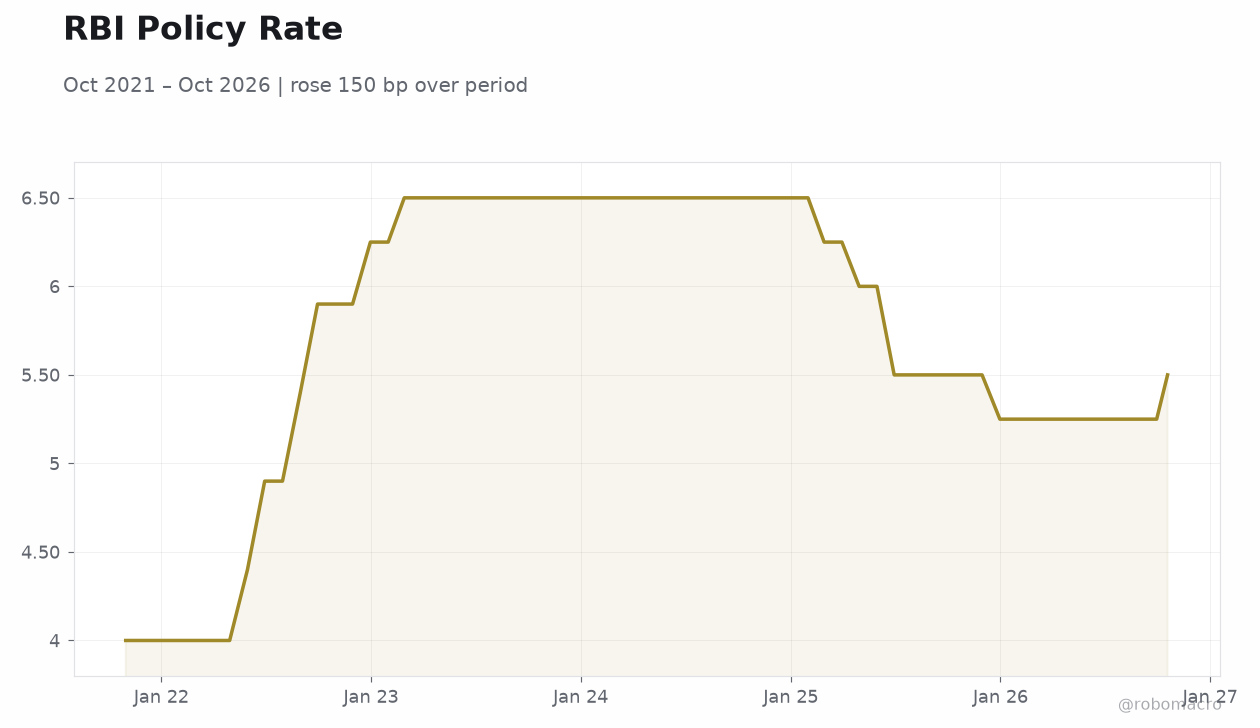 RBI Policy Rate | Type: macro_line | Policy Rate (%): 5.5 (2026-10-19) | Range: 4–6.5 | Trend(5pt): 4,6.25,6.5,5.5,5.5
Today's Economic Events
| Data | Prior | Cons | Time |
|---|---|---|---|
| Wednesday (2026-10-28) | |||
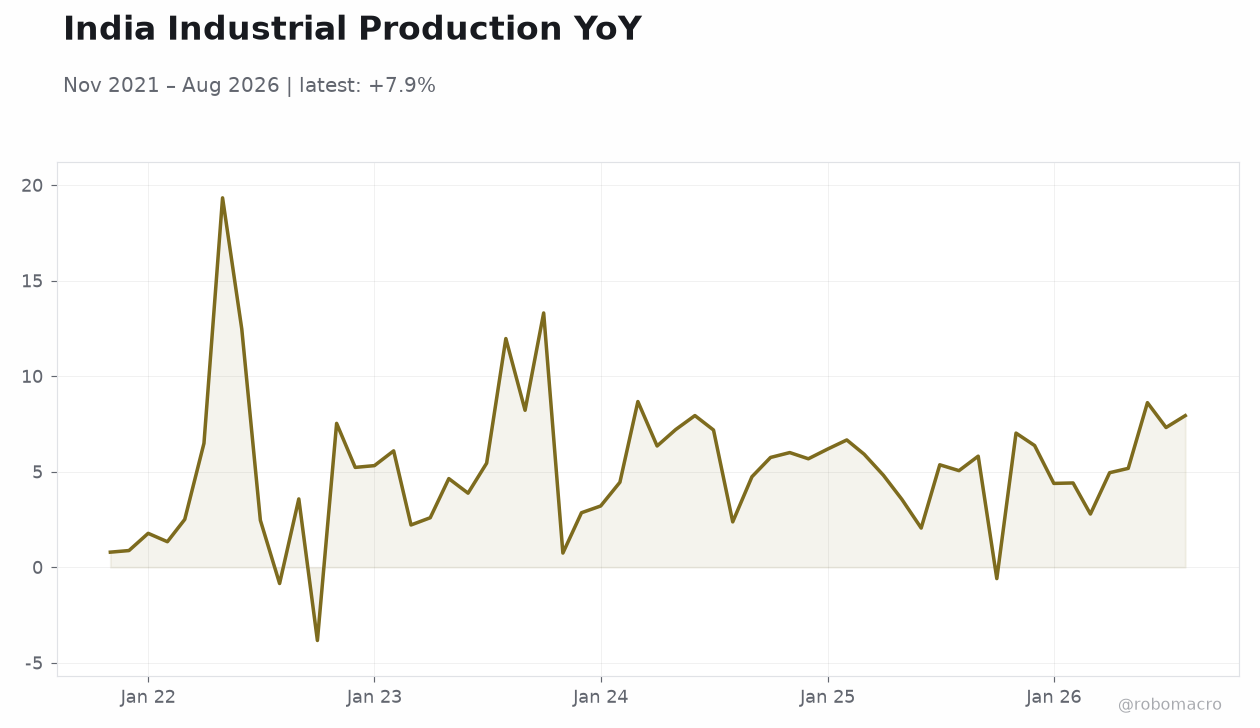
| Industrial Production Year-over-Year | 8 | - | 06:30 |
| Manufacturing Production Year-over-Year | 9 | - | 06:30 |
- Nifty and Sensex staged a sharp intraday reversal, closing up roughly 0.7% despite early weakness, while Brent crude slumped 4.55% to $110.54.
- USD/INR held near 95.11, with the rupee still under pressure from elevated oil prices and soft capital inflows; RBI intervention remains the market's key backstop.
- Industrial and manufacturing production are due Wednesday, with consensus not yet published against prior prints of 8% and 9% respectively.
Yesterday's Recap
Indian equities reversed sharply from session lows, with the Sensex climbing roughly 800 points off its intraday trough to close at 73,606.75 (+0.66%), while the Nifty 50 settled at 22,753.20 (+0.68%). The rebound came despite heavyweight drags: HDFC Bank fell 1.14% and Reliance slipped 0.47%, suggesting the rally was broad-based rather than index-driven. The standout macro move was in crude, with Brent collapsing 4.55% to $110.54, a meaningful relief valve for India's import bill and inflation trajectory.
The rupee firmed marginally, with USD/INR at 95.11 (-0.09%) and EUR/INR at 105.83 (-0.41%), though the currency remains historically weak. Gold rose 0.84% to $4,072.40, reflecting persistent hedging demand. G-Sec yields were not populated in the feed, so no bond-market read is available for the session.
The Day Ahead
The calendar is light, with India's Industrial Production and Manufacturing Production year-over-year figures scheduled for Wednesday at 06:30 ET. Prior prints stood at 8% and 9% respectively, with no consensus yet published. These are the first hard activity data points since the RBI's October 7 policy decision, and will be scrutinised for evidence that domestic demand is holding up amid elevated energy costs and a weak rupee.
With no other scheduled India releases, market direction will likely be driven by crude price follow-through and rupee dynamics.
Other Economic Notes
India's external position is under the microscope, with former RBI Governor Raghuram Rajan warning against depleting forex reserves purely to defend the rupee, arguing reserves should be preserved for genuine stress rather than day-to-day smoothing. Finance Minister Nirmala Sitharaman clarified that the RBI acts to prevent sudden rupee fluctuations but does not set the currency's value — a subtle but important distinction for markets interpreting intervention. Separately, India's diesel exports are set to surge from 2027 as state-run refiners expand capacity, positioning the country for a larger share of global product markets.
↓ p.2