India Macro Daily(Beta Mode)
Rupee Rally Masks Earnings Drag
Market Snapshot
| Asset | Level | Change |
|---|---|---|
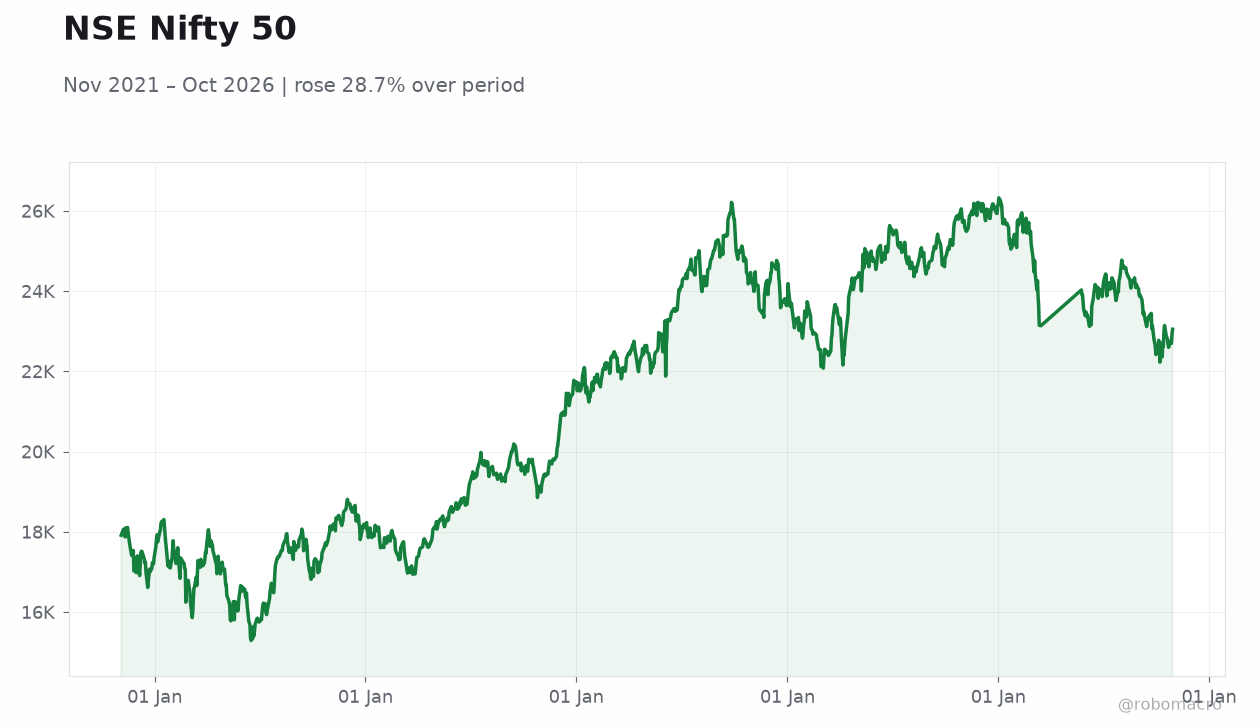
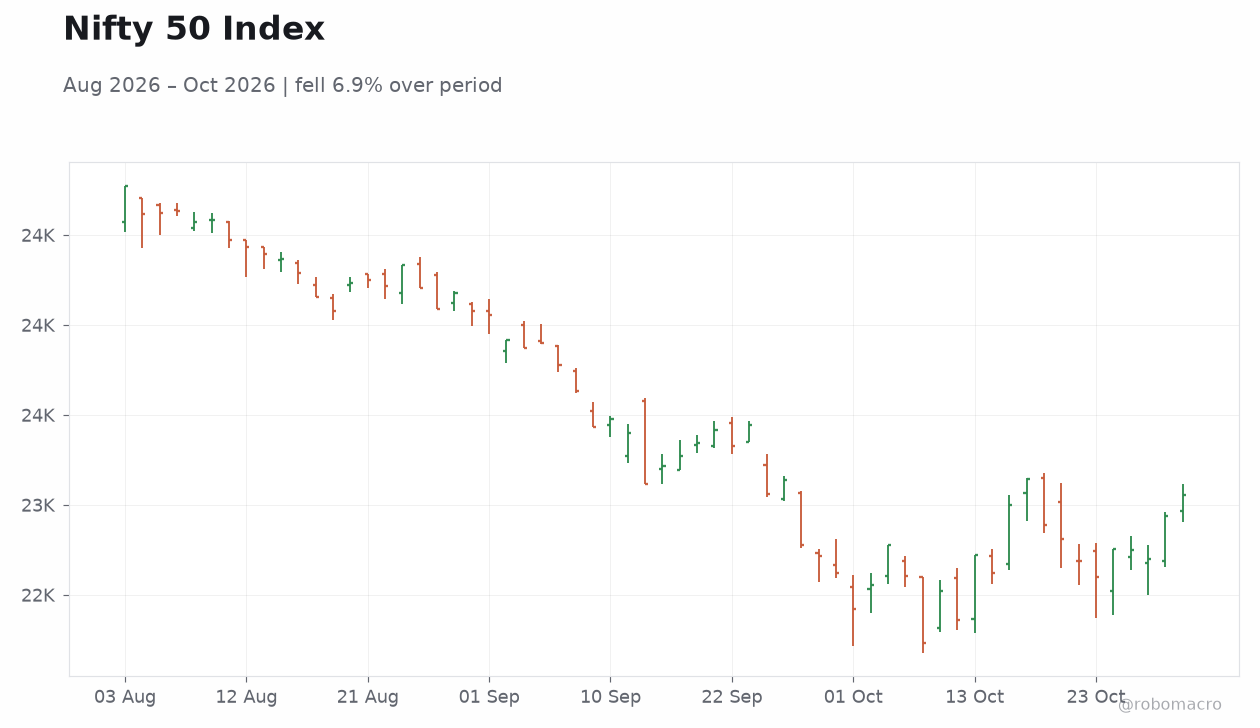
| Nifty 50 | 23,053.10 | +0.51% |
| Sensex | 74,459.53 | +0.42% |
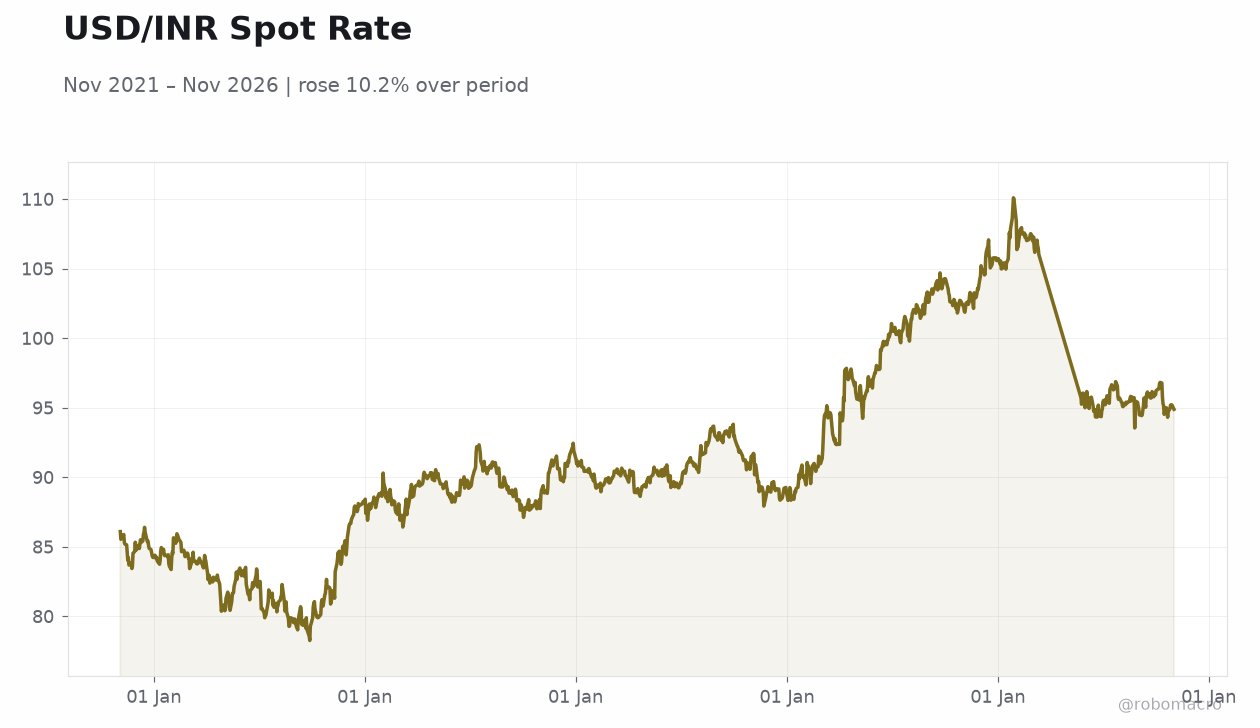
| USD/INR | 94.90 | -0.26% |
| EUR/INR | 105.88 | -0.48% |
| Reliance | 1,164.90 | -0.21% |
| HDFC Bank | 692.80 | +1.39% |
| Brent Crude | 104.33 | -11.31% |
| Gold | 3,964.00 | +1.67% |
| Bitcoin | 76,918.24 | -1.70% |
| India 2Y Govt Yield | - | - |
| India 10Y Govt Yield | - | - |
Prior Economic Events
| Data | Prior | Cons | Actual |
|---|---|---|---|
| No events available | |||
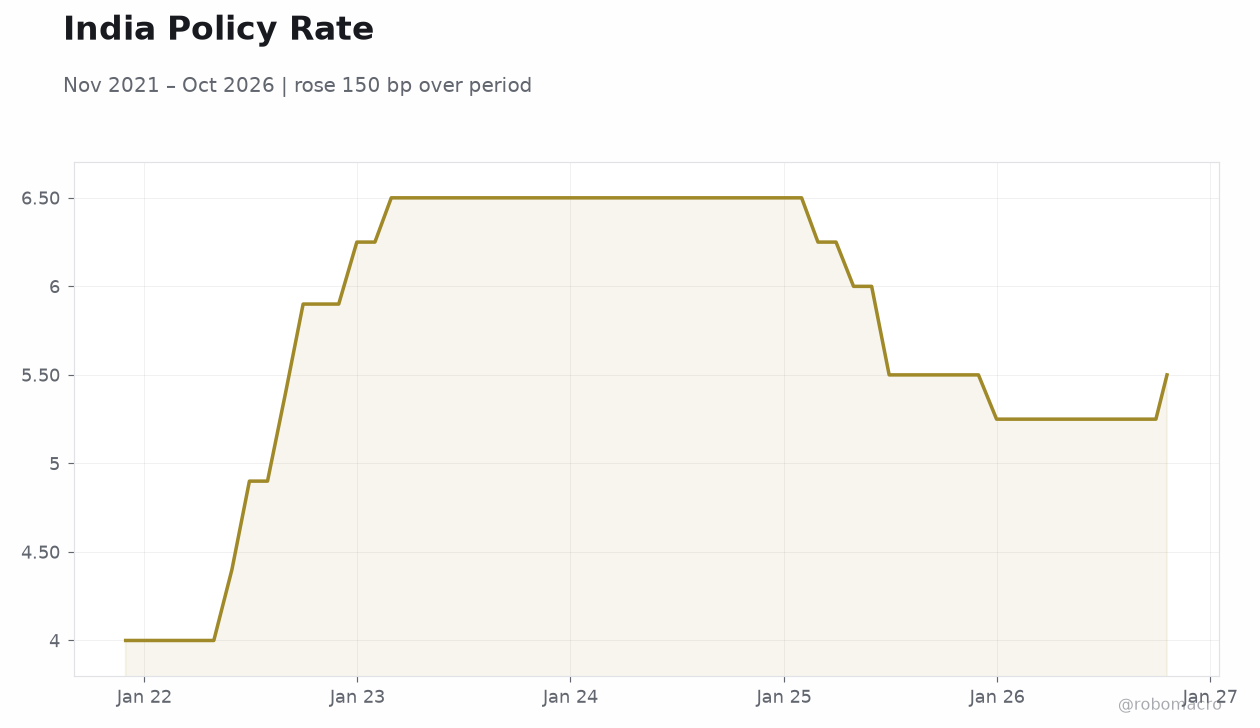 India Policy Rate | Type: macro_line | Policy rate (%): 5.5 (2026-10-19) | Range: 4–6.5 | Trend(4pt): 4,6.5,6.5,5.5
Today's Economic Events
| Data | Prior | Cons | Time |
|---|---|---|---|
| No events available | |||
- Rupee posts best month in eight as RBI measures curb dollar demand; USD/INR at 94.90, down 0.26% on the day
- Nifty 50 gains 0.51% to 23,053.10, Sensex up 0.42% to 74,459.53, with HDFC Bank leading at +1.39%
- Forex reserves fall for seventh straight week to $719.75 billion, down $1.27 billion in week ended October 23
Yesterday's Recap
Indian equities closed modestly higher, with the Nifty 50 adding 0.51% to 23,053.10 and the Sensex rising 0.42% to 74,459.53, though Reliance lagged at -0.21% while HDFC Bank outperformed at +1.39%. The rupee strengthened 0.26% against the dollar to 94.90, extending its best monthly performance in eight months, supported by sharply lower crude prices—Brent collapsed 11.31% to $104.33—and RBI measures to curb dollar demand. Gold surged 1.67% to $3,964.00, reflecting safe-haven demand amid Middle East risk.
India's forex reserves fell for a seventh consecutive week, slipping $1.27 billion to $719.75 billion in the week ended October 23, per RBI data. Press coverage highlighted a disconnect between India's strong GDP growth and weak corporate earnings, with Indian stocks nonetheless drawing interest as a haven from global tech/AI exposure. Lending rates on fresh bank loans declined to 8.51% in September, with deposit rates also easing, per RBI data.
The Day Ahead
No scheduled Indian data releases are on the calendar for today, leaving markets to digest the prior session's crude-driven rupee rally and the seventh straight weekly decline in forex reserves. Traders will watch crude price action closely, given Brent's outsized 11.31% drop and its direct transmission to India's import bill and rupee trajectory. Equity participants will assess whether the Nifty can extend last week's gains of up to 2%, with four factors flagged by press—crude, rupee stability, global risk appetite, and earnings momentum—likely to dominate sentiment.
The RBI central board's review of India's economic outlook and discussion of potential risks and challenges will draw scrutiny for any signals on growth or financial stability priorities. With no domestic prints, global cues and dollar direction will be the primary intraday drivers for the rupee and equities.
Other Economic Notes
The seventh consecutive weekly decline in forex reserves to $719.75 billion underscores persistent balance-of-payments pressure, even as the rupee stages a recovery on softer crude. The earnings-drag narrative remains a structural concern: India may be the world's fastest-growing major economy, yet its equity market has lagged emerging-market peers because corporate profits have not kept pace with headline GDP. ↓ p.2