India Macro Daily(Beta Mode)
Rupee Surges, Equities Decouple as RBI Tightens
Market Snapshot
| Asset | Level | Change |
|---|---|---|
| Nifty 50 | 25,800.60 | +1.12% |
| Sensex | 83,919.71 | +1.08% |
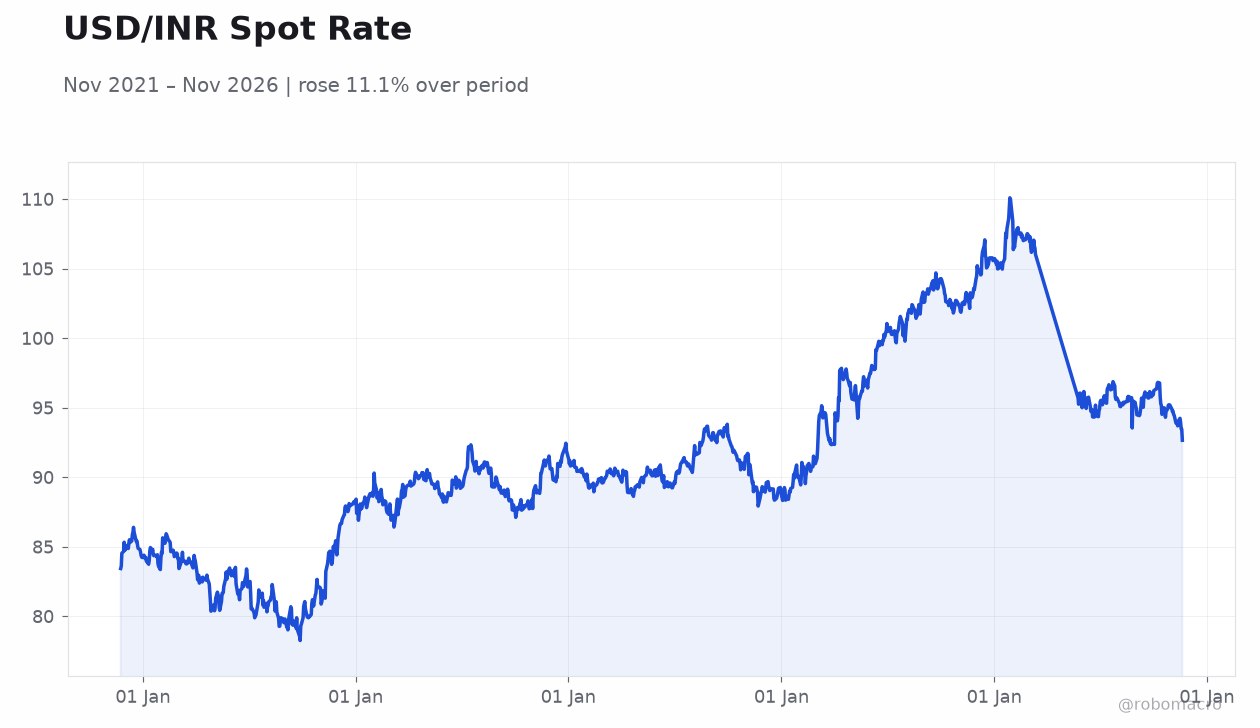
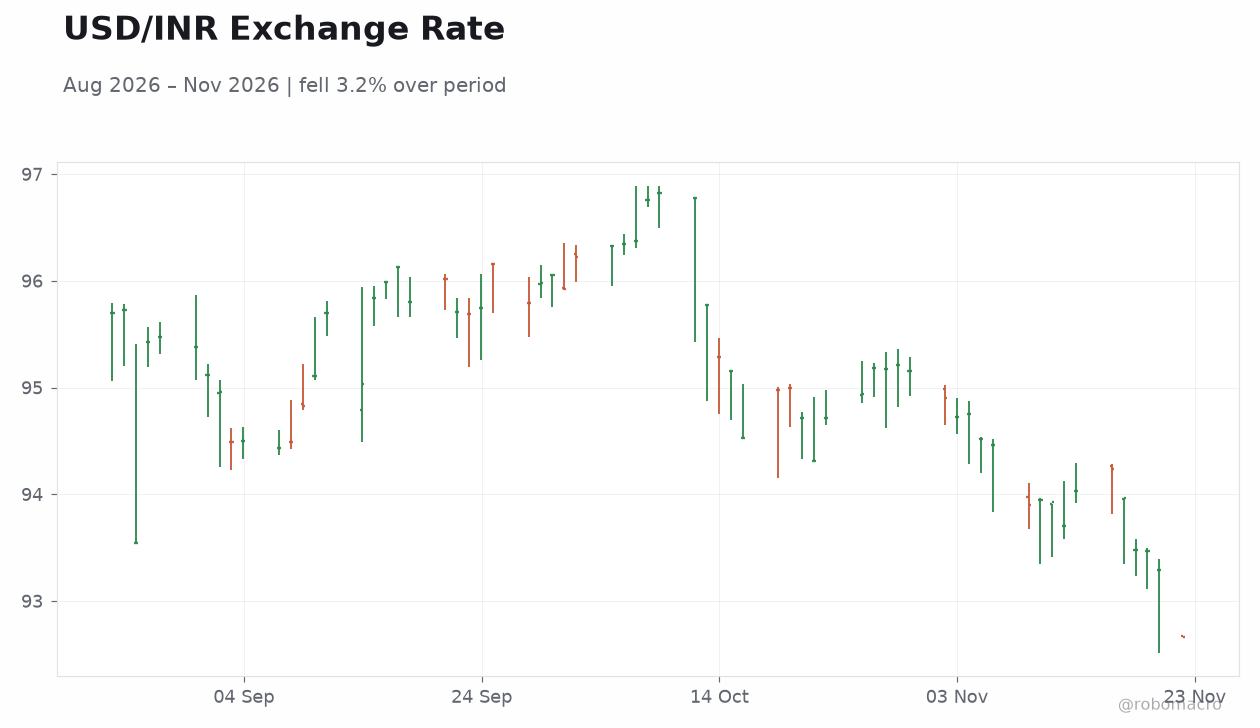
| USD/INR | 92.66 | -0.68% |
| EUR/INR | 101.61 | -0.64% |
| Reliance | 1,377.50 | +0.14% |
| HDFC Bank | 846.00 | +2.94% |
| Brent Crude | 89.28 | -3.55% |
| Gold | 3,573.40 | +1.65% |
| Bitcoin | 61,120.19 | +1.71% |
| India 2Y Govt Yield | - | - |
| India 10Y Govt Yield | - | - |
Prior Economic Events
| Data | Prior | Cons | Actual |
|---|---|---|---|
| No events available | |||
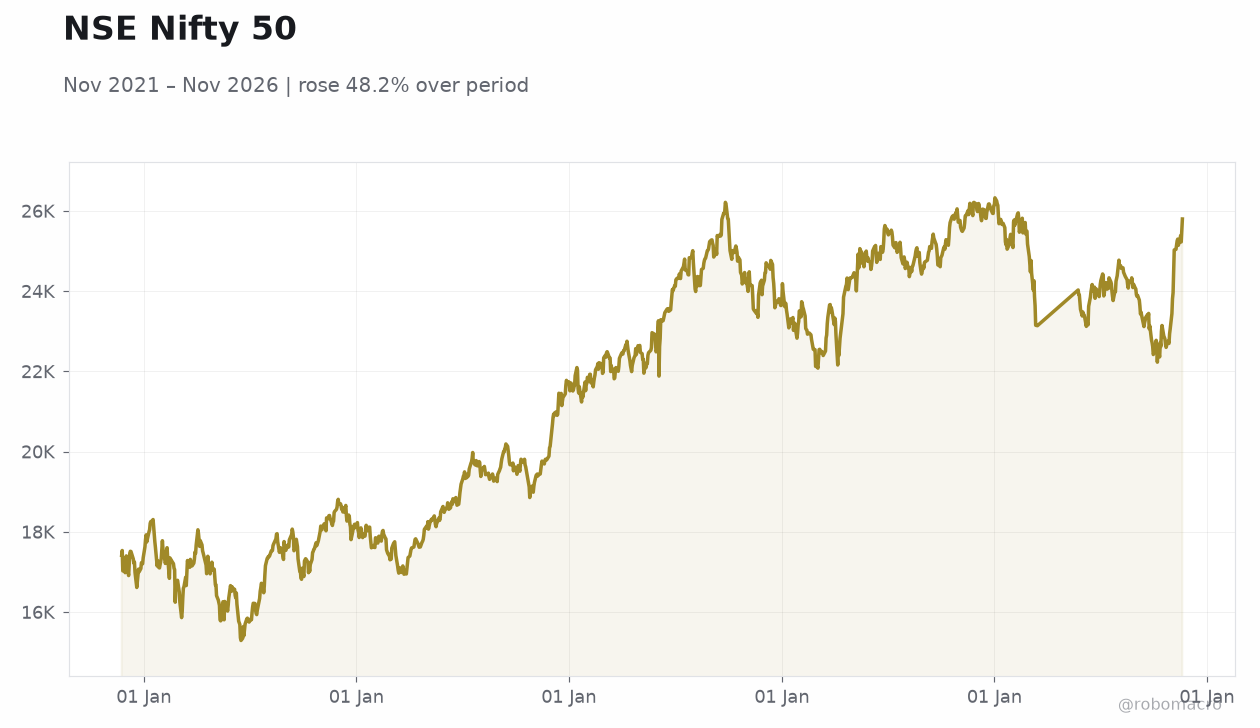 NSE Nifty 50 | Type: macro_line | NSE Nifty 50: 2.58e+04 (2026-11-20) | Range: 1.529e+04–2.633e+04 | Trend(6pt): 1.742e+04,1.762e+04,2.234e+04,2.545e+04,2.551e+04,2.58e+04
Today's Economic Events
| Data | Prior | Cons | Time |
|---|---|---|---|
| No events available | |||
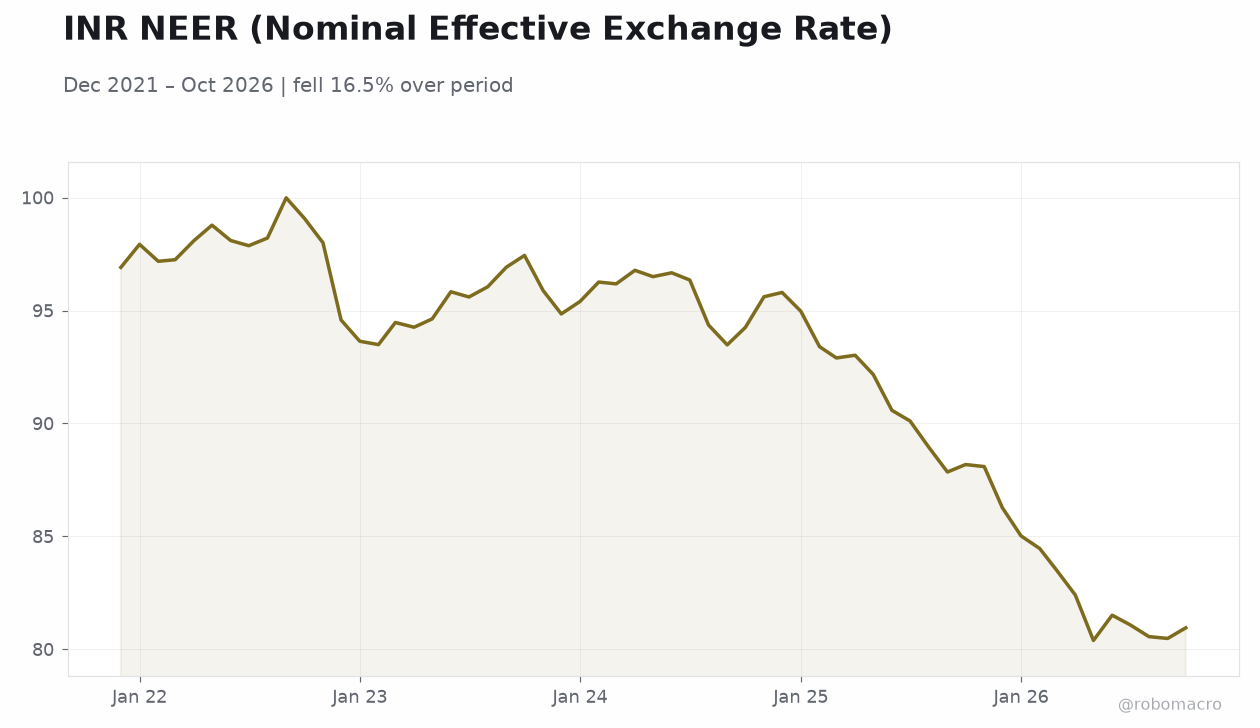
- Rupee breaks past 93/USD to a seven-month high as RBI liquidity tightening and equity inflows support the currency
- Nifty and Sensex rally sharply, with India decoupling from the global selloff; HDFC Bank leads gains
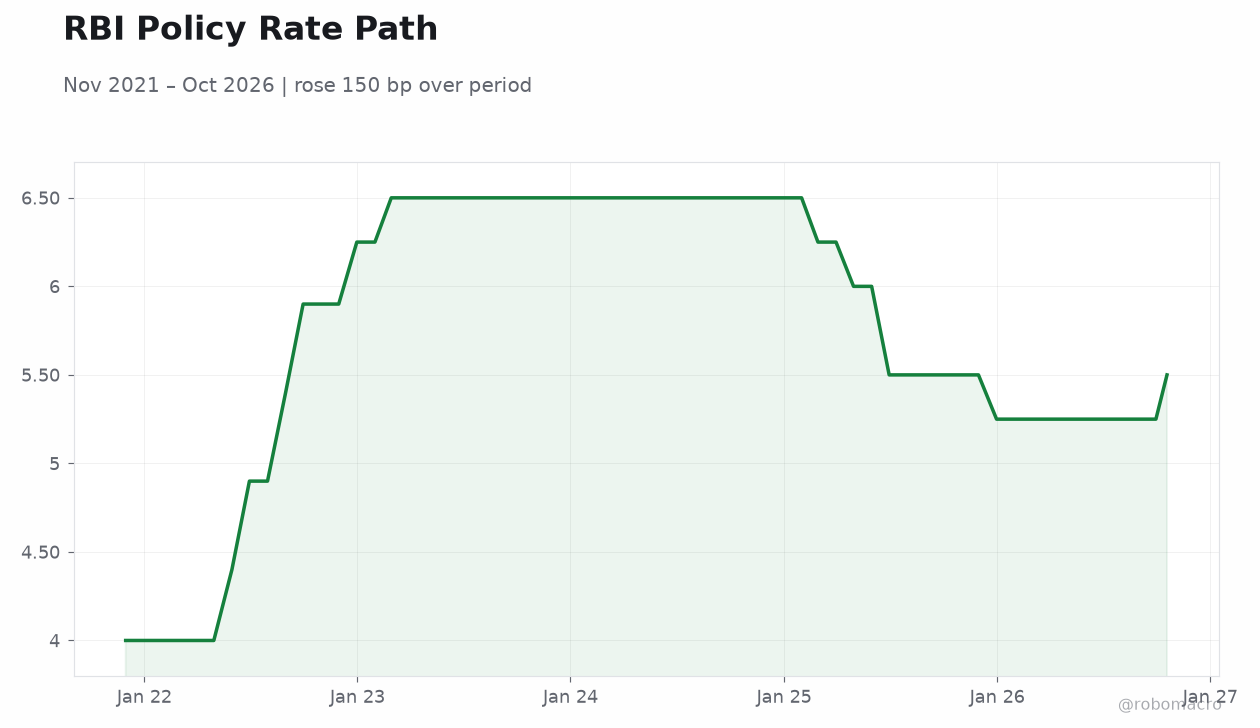
- Markets price a December RBI hike after the October 25bp move to 5.50%; forex reserves fell $14.2B to $705.34B
Yesterday's Recap
Indian equities staged a powerful rebound, with the Nifty closing at 25,800.60, up 1.12%, while the Sensex gained 1.08% to 83,919.71. HDFC Bank surged 2.94%, leading index heavyweights, though Reliance lagged at just +0.14%. The rupee strengthened past the psychologically important 93/USD mark for the first time since April, with USD/INR ending at 92.66, down 0.68% on the day.
Brent crude slumped 3.55% to $89.28, a tailwind for India's import bill, while gold rose 1.65% to $3,573.40. The rally was notable for its decoupling from a broader global rout, with domestic flows and currency strength cited as key drivers. G-Sec yield levels were not populated in the feed.
The Day Ahead
The calendar is light, with no scheduled Indian data releases for the session. Market attention shifts to positioning ahead of the RBI's December 4 policy meeting, where consensus points to another 25bp hike. Traders will watch rupee momentum after the break below 93/USD and monitor whether equity inflows sustain the decoupling theme.
Crude's sharp decline bears watching for its pass-through to the import bill and inflation trajectory. With no domestic prints, global risk sentiment and Fed commentary will likely drive intraday direction.
Other Economic Notes
India's growth story faces a breadth challenge, with aggregate momentum masking uneven sectoral performance. October macro indicators showed mixed traction, and the weakest monsoon in over a decade has wheat acreage poised for its steepest decline in 26 years, a risk to food inflation and rural demand. Rising debt and monsoon risks feature prominently in assessments of financial resilience.
Meanwhile, India and Canada concluded a sixth round of trade talks, a modest positive for export diversification. Forex reserves dropped $14.2B to $705.34B, reflecting valuation effects and intervention.
Global Macro News
President Trump again invoked India's roughly 7% growth as a foil to the Fed, arguing US rates are too high and pressuring policymakers toward easing. ↓ p.2