Japan Macro Daily(Beta Mode)
Yen Slides as Shunto Wage Gains Lift Hike Odds
Market Snapshot
| Asset | Level | Change |
|---|---|---|
| Nikkei 225 | 69,744.07 | +1.47% |
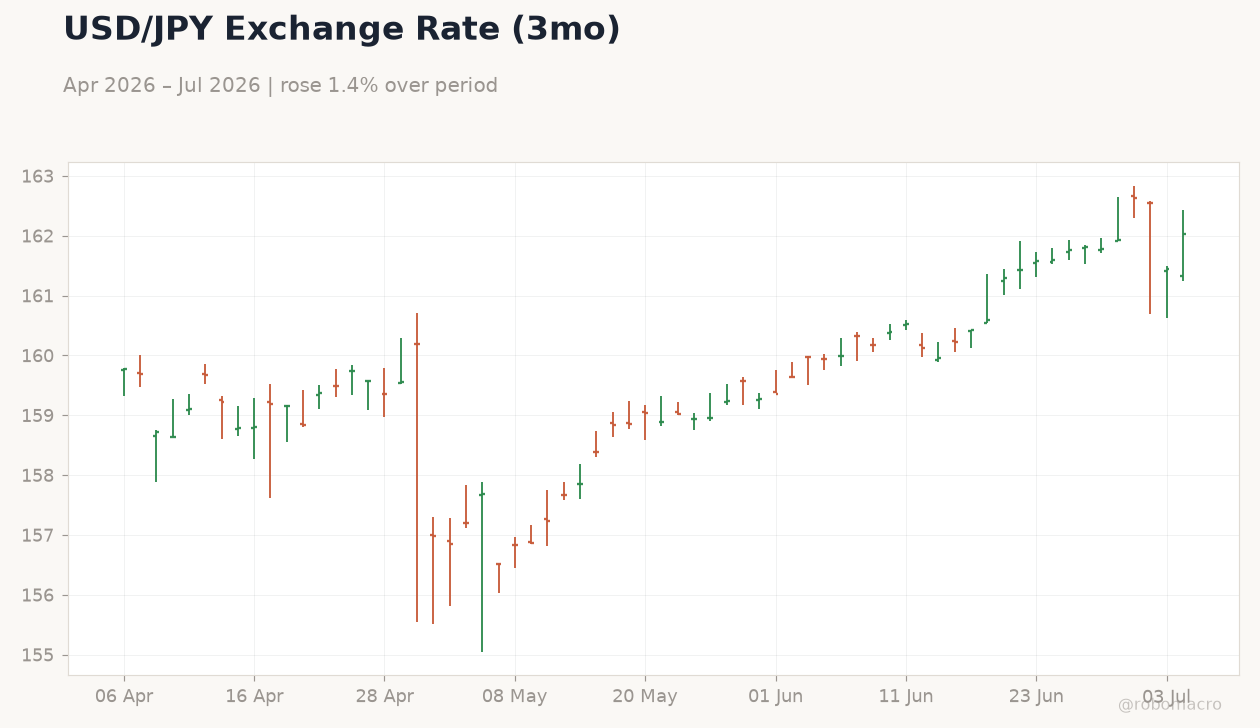
| USD/JPY | 162.09 | +0.40% |
| EUR/JPY | 185.45 | +0.43% |
| GBP/JPY | 217.03 | +0.67% |
| Gold | 4,175.00 | +1.51% |
| Brent Crude | 72.08 | +0.39% |
| Bitcoin | 63,804.34 | +0.40% |
| Japan 2Y Govt Yield | 0.73% | +0.00% |
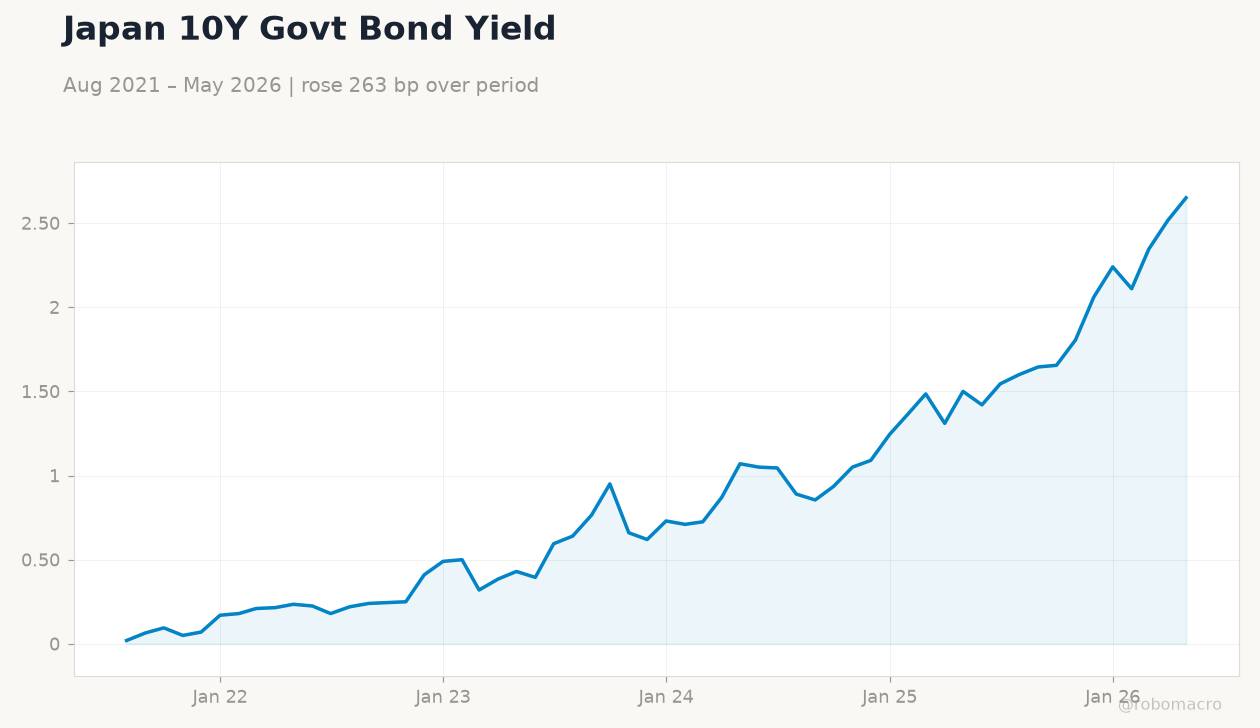
| Japan 10Y Govt Yield | 2.65% | +5.37% |
Prior Economic Events
| Data | Prior | Cons | Actual |
|---|---|---|---|
| No events available | |||
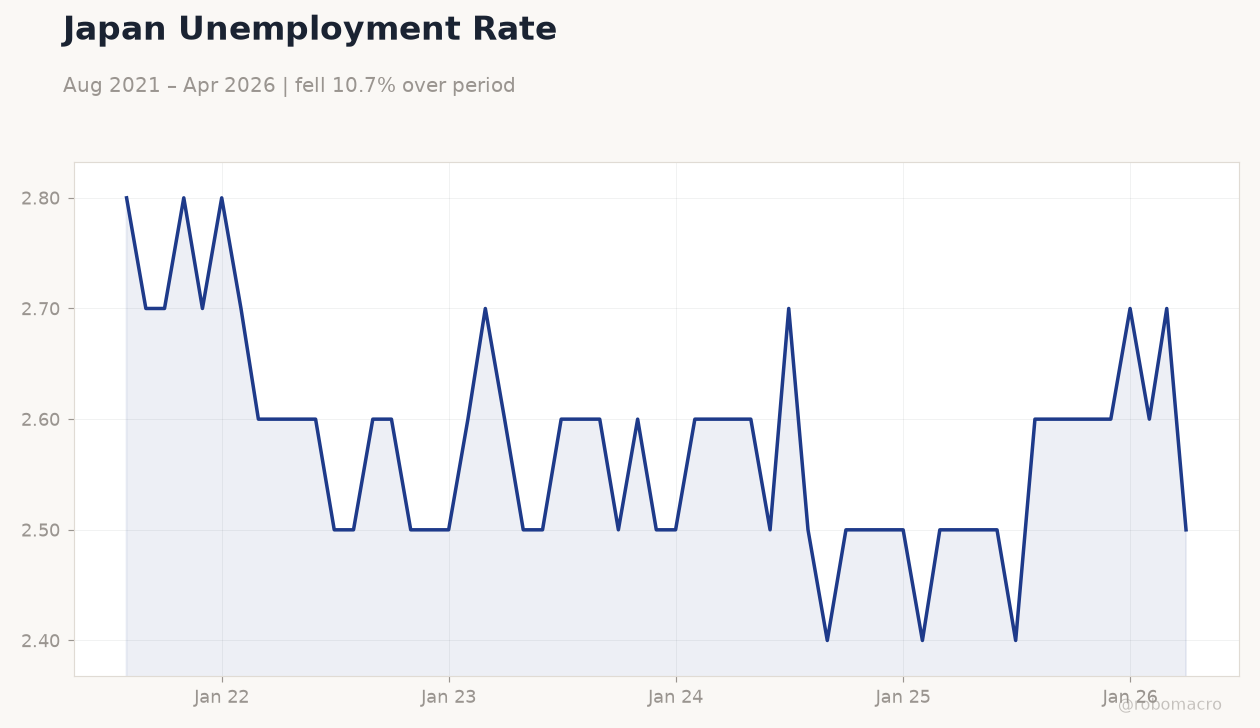 Japan Unemployment Rate | Type: macro_line | Unemployment Rate (%): 2.5 (2026-04-01) | Range: 2.4–2.8 | Trend(5pt): 2.8,2.6,2.5,2.4,2.5
Today's Economic Events
| Data | Prior | Cons | Time |
|---|---|---|---|
| Household Spending Month-over-Month | 1.60 | 1.40 | 15:30 |
| Household Spending Year-over-Year | -0.50 | -2.50 | 15:30 |
| Tuesday (2026-07-07) | |||
| Current Account Balance | 3,907,000m | 4,121,300m | 15:50 |
- Household spending figures due today with consensus pointing to MoM slowdown to 1.4% and YoY drop to -2.5%
- Shunto wage gains exceed 5% for third straight year, lifting December BoJ rate-hike odds
- USD/JPY reaches 162.09 while 10-year JGB yield jumps to 2.65% on persistent dollar strength
Yesterday's Recap
Equity markets advanced with Nikkei 225 climbing 1.47% to 69,744.07 amid renewed foreign inflows into exporters. USD/JPY rose 0.40% to 162.09 as dollar strength persisted through the holiday period. The 10-year JGB yield rose to 2.65%, reflecting reduced safe-haven demand and higher rate expectations.
Cross rates followed suit, with EUR/JPY up 0.43% and GBP/JPY gaining 0.67%. Gold advanced 1.51% to 4,175 while Brent crude edged 0.39% higher. No major data releases occurred on 5 July, leaving price action driven by ongoing yen depreciation pressures.
Swap markets continued to price modest BoJ tightening by year-end.
The Day Ahead
Household spending MoM and YoY prints at 15:30 ET represent the main domestic releases, with consensus forecasts signalling contraction after prior strength. Markets will assess whether consumer resilience supports further policy normalisation. Current account data follows on 7 July with consensus at ¥4.12 trillion versus prior ¥3.91 trillion.
No BoJ speakers or minutes are scheduled. A soft spending outcome could temper December hike pricing while a beat would reinforce wage-driven inflation views. Attention also turns to any official comments on yen intervention during the low-liquidity summer period.
Other Economic Notes
Fiscal 2025 tax revenues reached a record ¥84 trillion, providing fiscal space yet complicating BoJ efforts to normalise policy amid expansionary budgets. Lithium battery fire incidents hit new highs, highlighting supply-chain risks in the electronics sector without immediate macro impact. Sustained Shunto wage growth above 5% continues to validate corporate pricing power and supports the case for gradual rate increases.
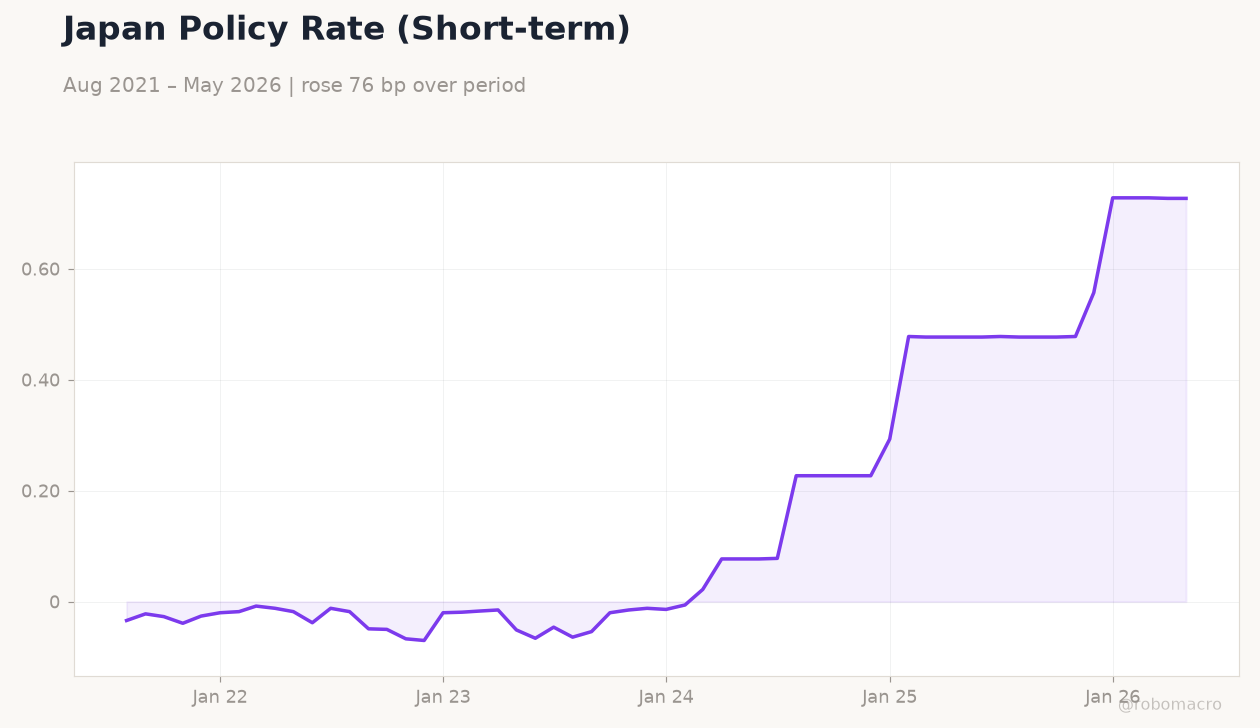
Structural yen weakness is increasingly viewed as the new normal by officials, limiting downside risks to imported inflation. The BoJ policy rate stands at 0.73%.
Global Macro News
US dollar strength drove yen to multi-decade lows, elevating intervention risks during the summer lull according to ING and Societe Generale. <i>↓ p.2</i>