Japan Macro Daily(Beta Mode)
Household Spending Beat Fuels Yen Intervention Talk
Market Snapshot
| Asset | Level | Change |
|---|---|---|
| Nikkei 225 | 69,737.69 | -0.01% |
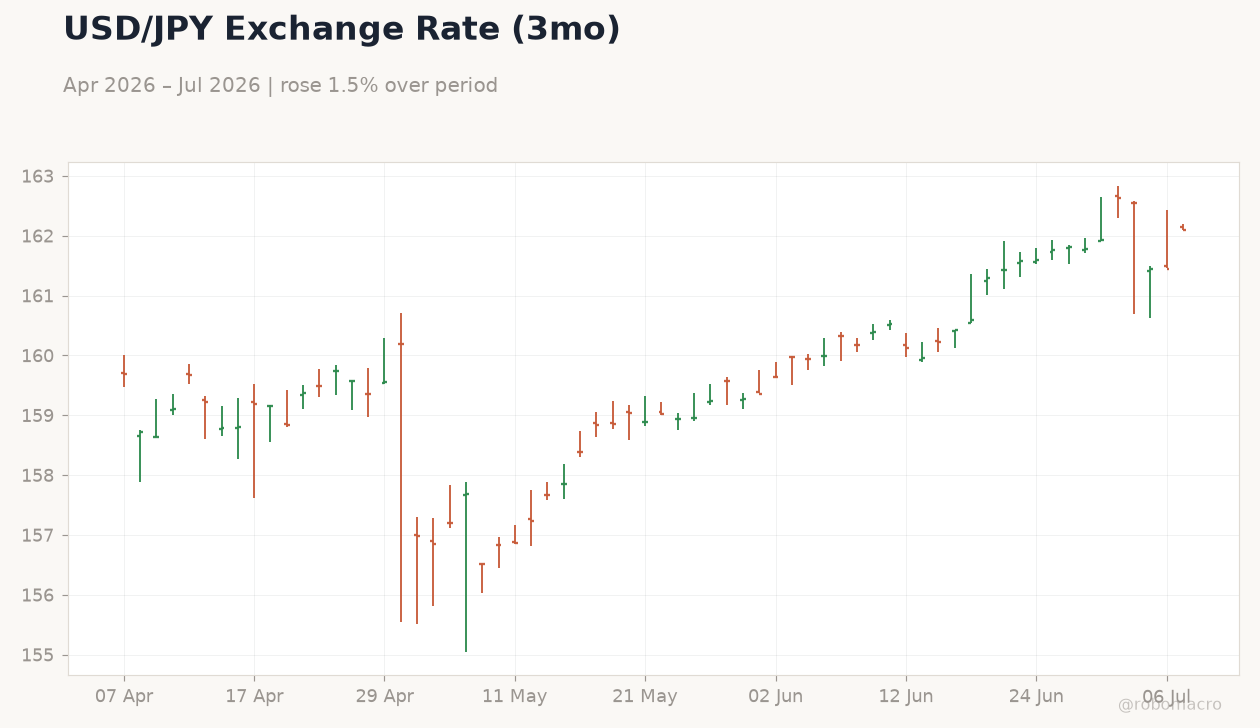
| USD/JPY | 162.11 | +0.41% |
| EUR/JPY | 184.89 | +0.13% |
| GBP/JPY | 216.43 | +0.40% |
| Gold | 4,111.60 | -1.05% |
| Brent Crude | 76.08 | +5.68% |
| Bitcoin | 63,437.14 | -0.87% |
| Japan 2Y Govt Yield | 0.73% | +0.00% |
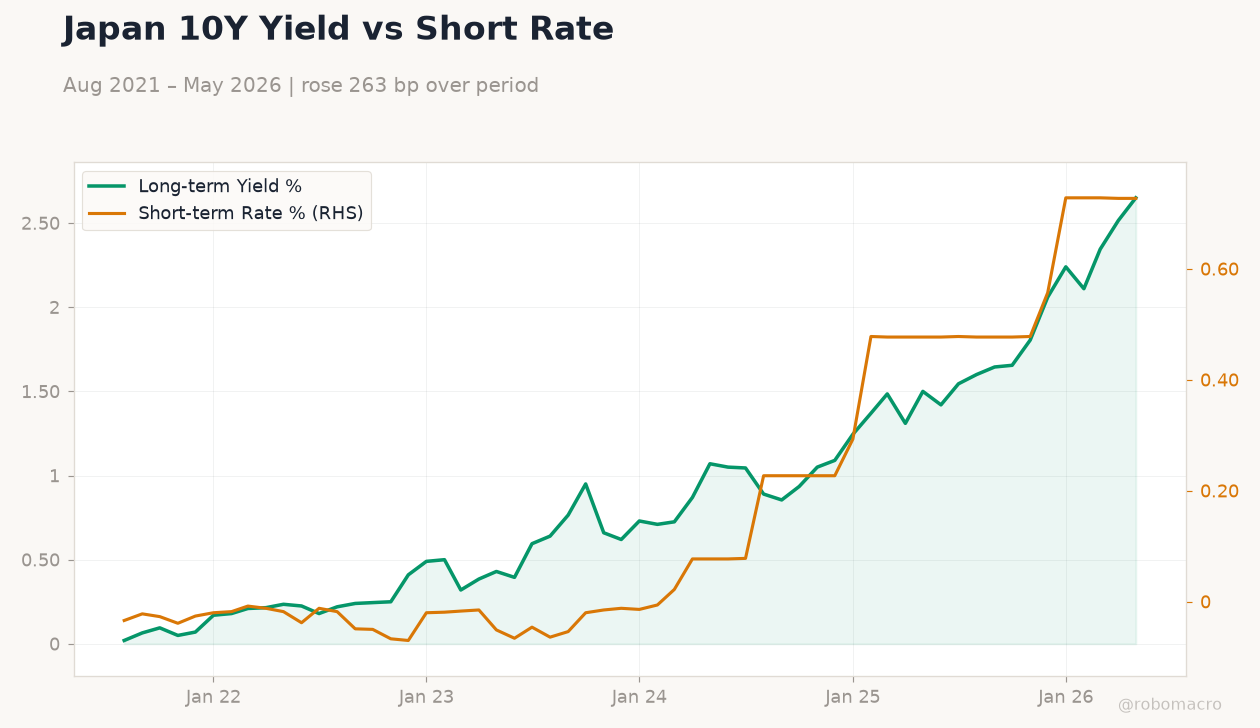
| Japan 10Y Govt Yield | 2.65% | +5.37% |
Prior Economic Events
| Data | Prior | Cons | Actual |
|---|---|---|---|
| Household Spending Month-over-Month | 1.60 | 1.40 | 3.70 |
| Household Spending Year-over-Year | -0.50 | -2.50 | -0.40 |
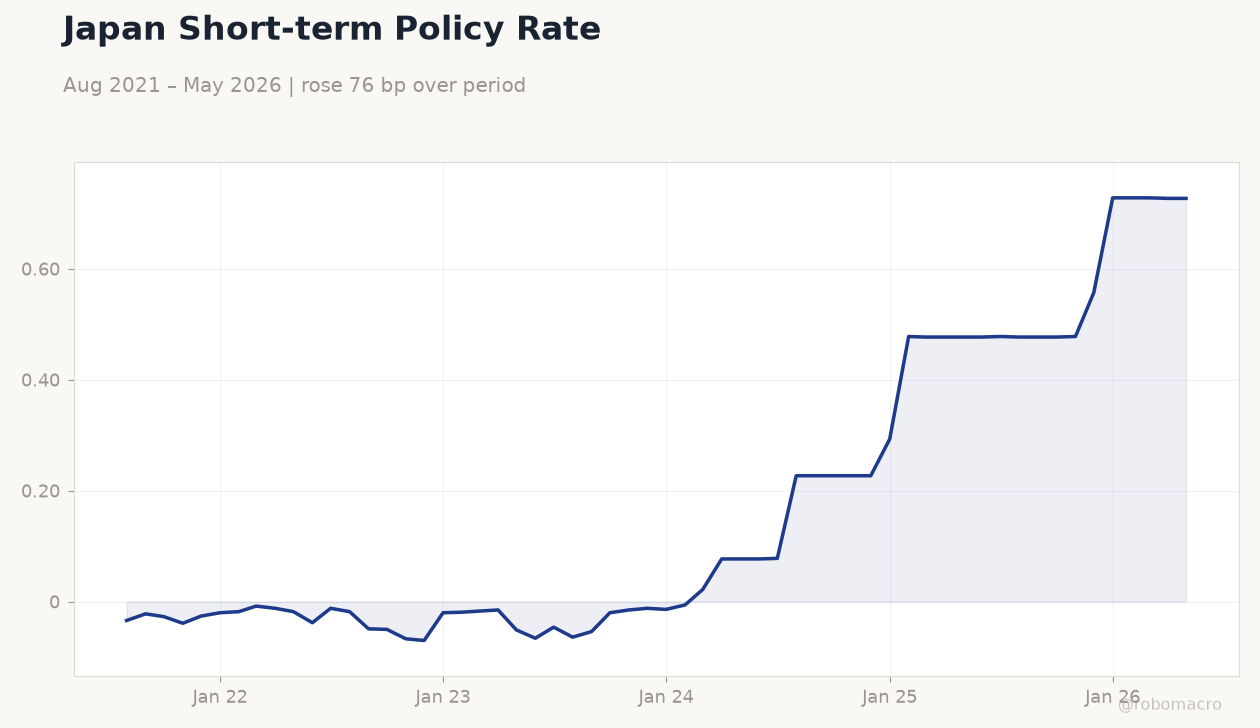 Japan Short-term Policy Rate | Type: macro_line | Short-term Rate %: 0.727 (2026-05-01) | Range: -0.07–0.728 | Trend(5pt): -0.034,-0.05,-0.012,0.478,0.727
Today's Economic Events
| Data | Prior | Cons | Time |
|---|---|---|---|
| Current Account Balance | 3,907,000m | 4,121,300m | 15:50 |
- June household spending jumped 3.7% MoM, far above 1.4% consensus, while YoY contraction narrowed to -0.4%.
- USD/JPY rose 0.41% to 162.11 as 10-year JGB yields climbed 5.37% to 2.65%, signalling fiscal concerns.
- Government denied pressuring BoJ to delay hikes, leaving policy normalisation path intact despite yen softness.
Yesterday's Recap
Japanese household spending posted a sharp 3.7% MoM gain in June versus 1.4% consensus, while the annual decline eased to -0.4% from -0.5%. The beat reinforced resilient consumer demand even as underlying inflation stayed moderate at 1.50% YoY. Nikkei 225 closed virtually unchanged at 69,737.69, while USD/JPY advanced to 162.11 amid thin holiday liquidity.
The 10-year JGB yield surged 5.37% to 2.65%, reflecting mounting fiscal worries, whereas the 2-year yield held steady at 0.73%. Brent crude gained 5.68% to 76.08, providing some support to energy-related exporters. Broader yen crosses also firmed, with EUR/JPY and GBP/JPY both higher on the day.
The Day Ahead
Markets await the June current account balance release at 15:50 JST, with consensus pointing to a 4.12 trillion yen surplus. The print will clarify the extent of Japan’s external surplus amid persistent yen depreciation. No other major domestic data are scheduled, leaving focus on any follow-up comments from officials on currency intervention.
Equity futures point to a cautious open after Samsung’s AI-related warning weighed on tech sentiment overnight. Traders will monitor USD/JPY for signs of further intervention threats ahead of the weekend.
Other Economic Notes
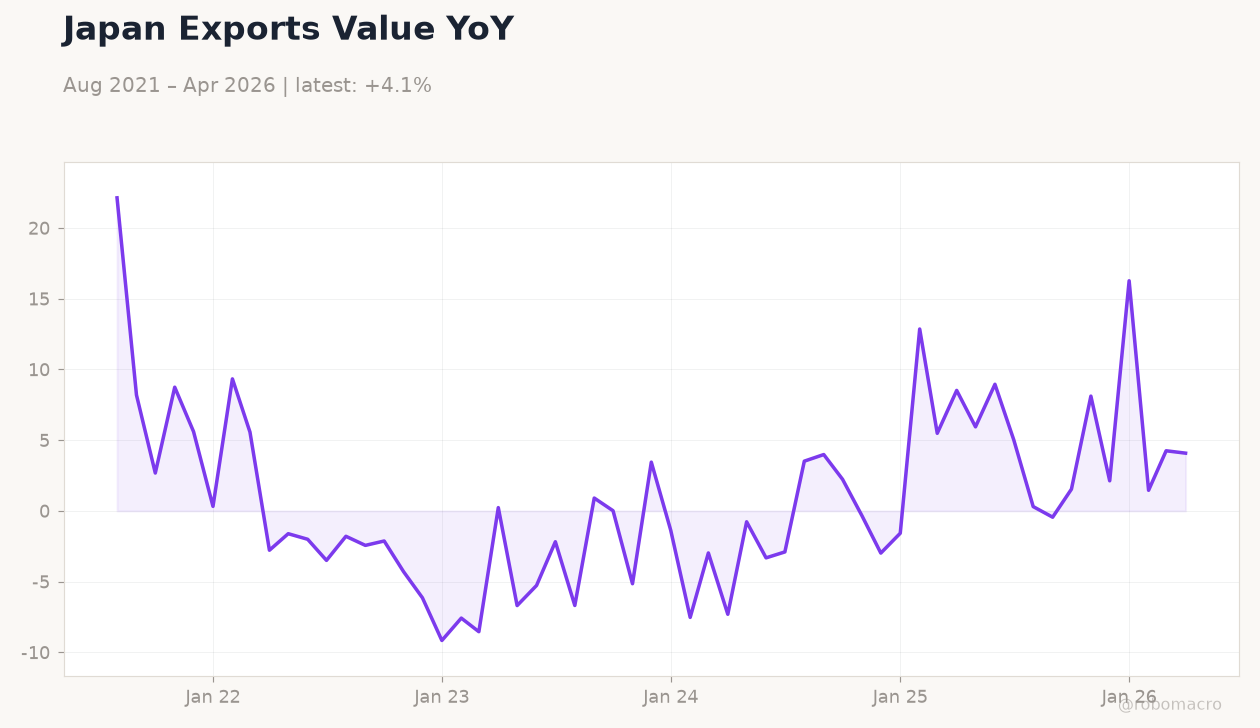
Persistent yen weakness continues to squeeze household purchasing power and raise imported inflation risks despite contained CPI at 1.50%. Fiscal concerns are pushing longer-dated JGB yields higher, with the 10-year approaching levels last seen before aggressive BoJ easing. Export-oriented sectors benefit from the weaker currency, yet the overall drag on consumption and real wages remains a policy headache.
Officials continue to stress that sustained wage growth must precede any further rate adjustments.
Global Macro News
Reports indicate coordinated G7 intervention could deliver a meaningful lift to the yen if deployed decisively. <i>↓ p.2</i>