Japan Macro Daily(Beta Mode)
JGB Yields Surge on BOJ Autonomy Concerns
Market Snapshot
| Asset | Level | Change |
|---|---|---|
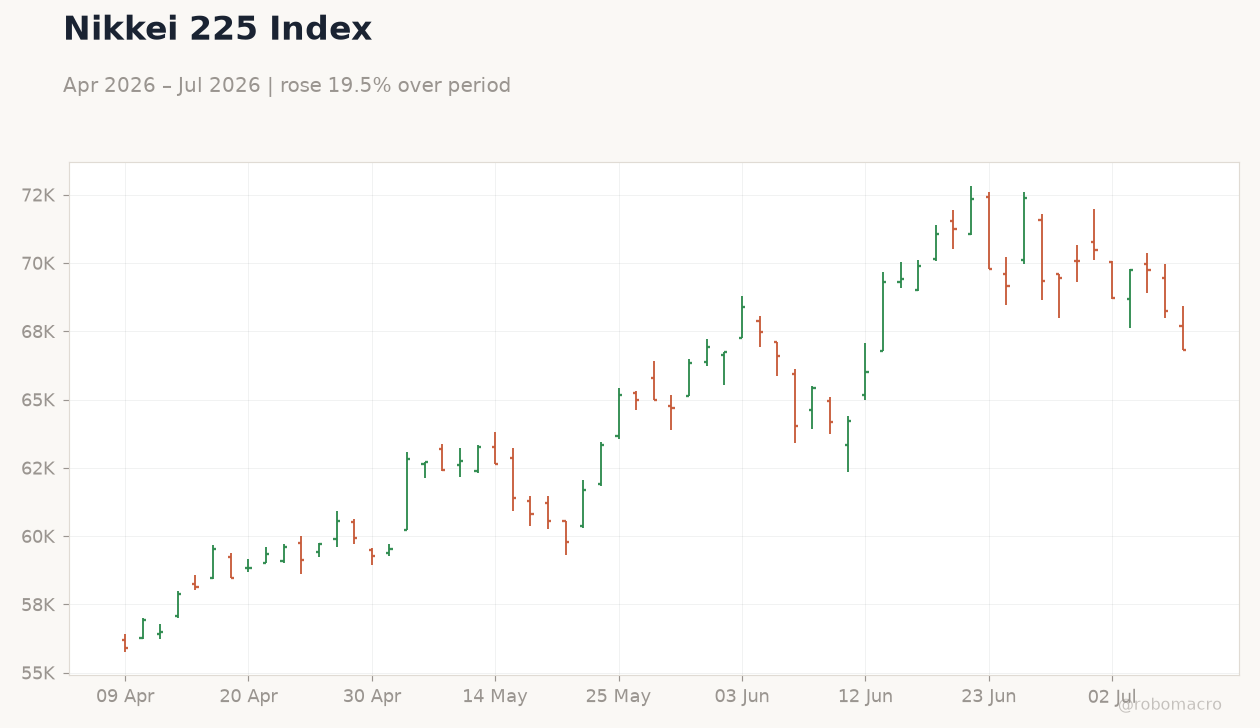
| Nikkei 225 | 66,819.05 | -2.11% |
| USD/JPY | 162.34 | -0.12% |
| EUR/JPY | 185.55 | -0.04% |
| GBP/JPY | 217.60 | -0.04% |
| Gold | 4,132.80 | +1.52% |
| Brent Crude | 76.02 | -2.56% |
| Bitcoin | 63,314.01 | +1.70% |
| Japan 2Y Govt Yield | 0.73% | +0.00% |
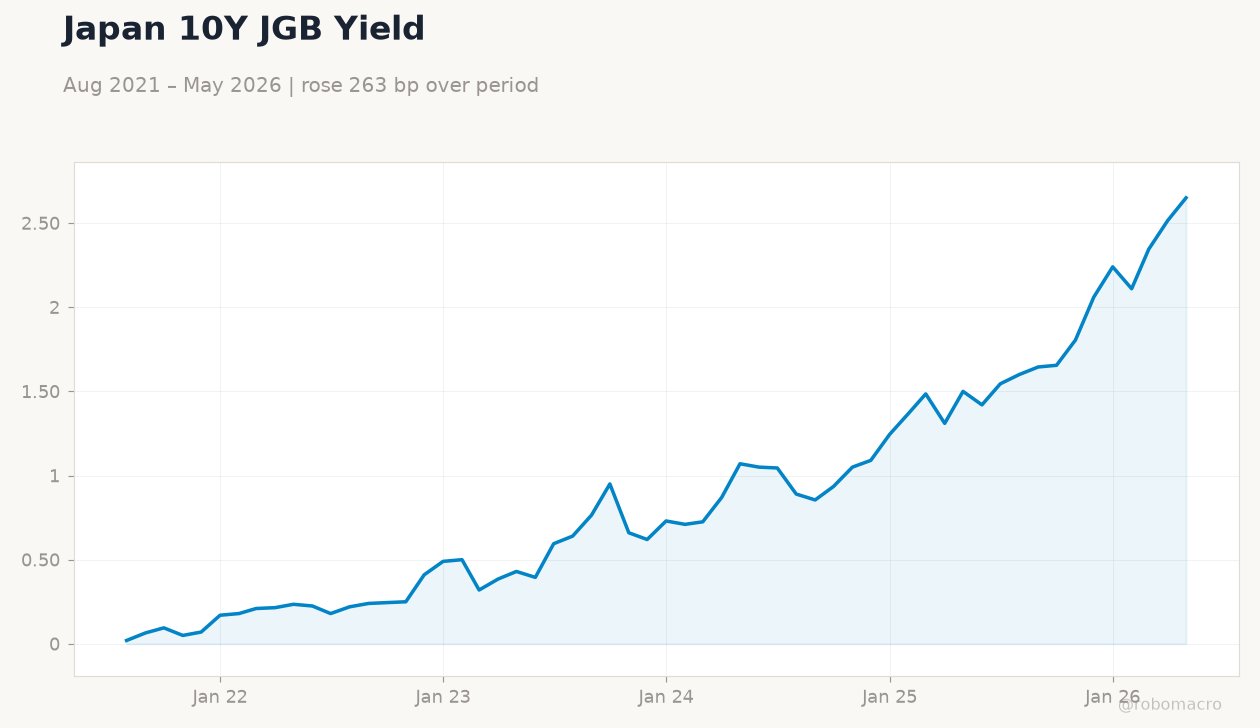
| Japan 10Y Govt Yield | 2.65% | +5.37% |
Prior Economic Events
| Data | Prior | Cons | Actual |
|---|---|---|---|
| Household Spending Month-over-Month | 1.60 | 1.40 | 3.70 |
| Household Spending Year-over-Year | -0.50 | -2.50 | -0.40 |
| Current Account Balance | 3,908,000m | 4,121,300m | 3,968,000m |
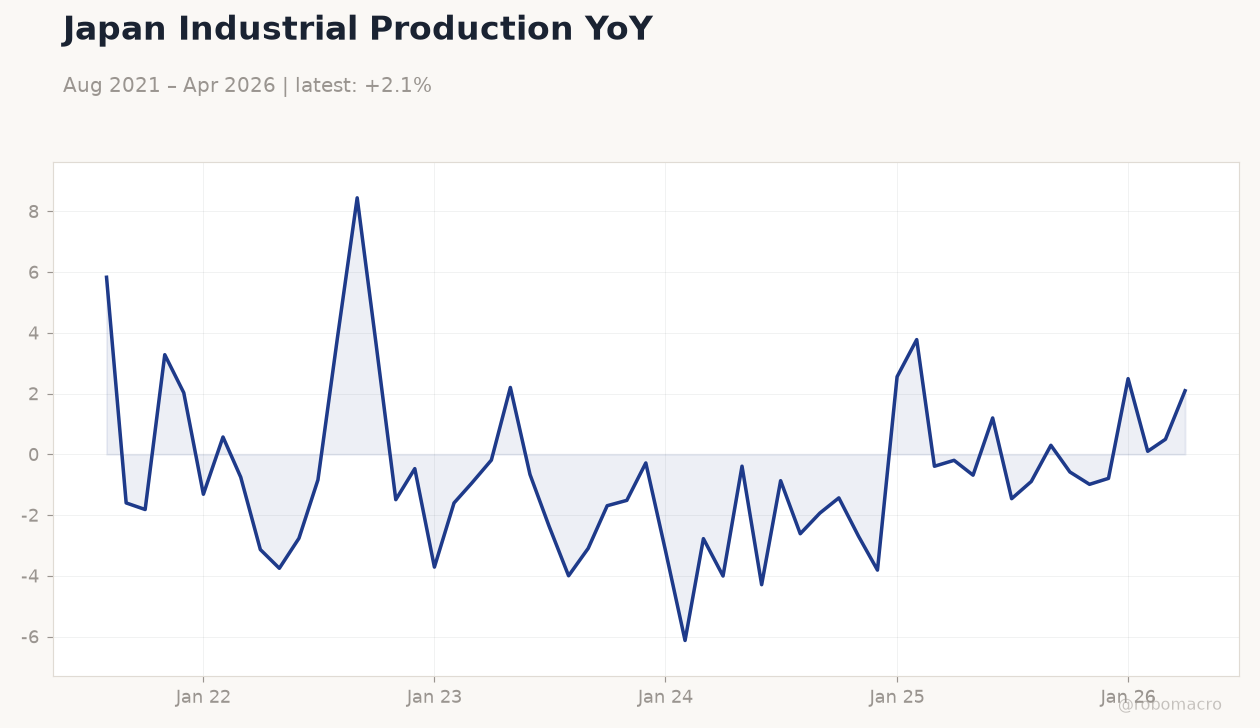 Japan Industrial Production YoY | Type: macro_line | YoY %: 2.092 (2026-04-01) | Range: -6.13–8.444 | Trend(5pt): 5.828,3.606,-0.2852,3.776,2.092
Today's Economic Events
| Data | Prior | Cons | Time |
|---|---|---|---|
| No events available | |||
- Household spending jumped 3.7% MoM in June, beating the 1.4% consensus and signalling resilient consumption.
- Japan 10-year JGB yields rose to 2.65% as markets repriced reduced BoJ control risks after blueprint revisions.
- USD/JPY held near 162.34 while officials renewed intervention warnings at the 160 level.
Yesterday's Recap
June household spending rose 3.7% month-over-month versus the 1.4% consensus, while the year-over-year reading improved to -0.4% from the -2.5% expected. The current account balance printed 3.968 trillion yen, below the 4.121 trillion consensus. The Nikkei 225 fell 2.11% to 66,819.05 as investors rotated out of equities amid higher yields.
USD/JPY eased 0.12% to 162.34, with EUR/JPY and GBP/JPY posting minor declines. The 10-year government yield surged to 2.65%, reflecting repricing of BoJ independence after proposed blueprint language changes. Bank lending growth slowed to 5.7% in June yet remained the fastest pace since the pandemic, supporting the central bank’s gradual normalisation path.
The Day Ahead
No major Japanese data releases are scheduled for 9 July or 10 July. Markets will monitor ongoing yen trading near the 160 intervention threshold and any follow-up statements from the Ministry of Finance. Traders await clarification on proposed changes to the government’s economic blueprint language regarding BoJ autonomy.
Regional assessments from the Bank of Japan remain unchanged across all nine districts. Focus stays on USD/JPY volatility and potential verbal intervention.
Other Economic Notes
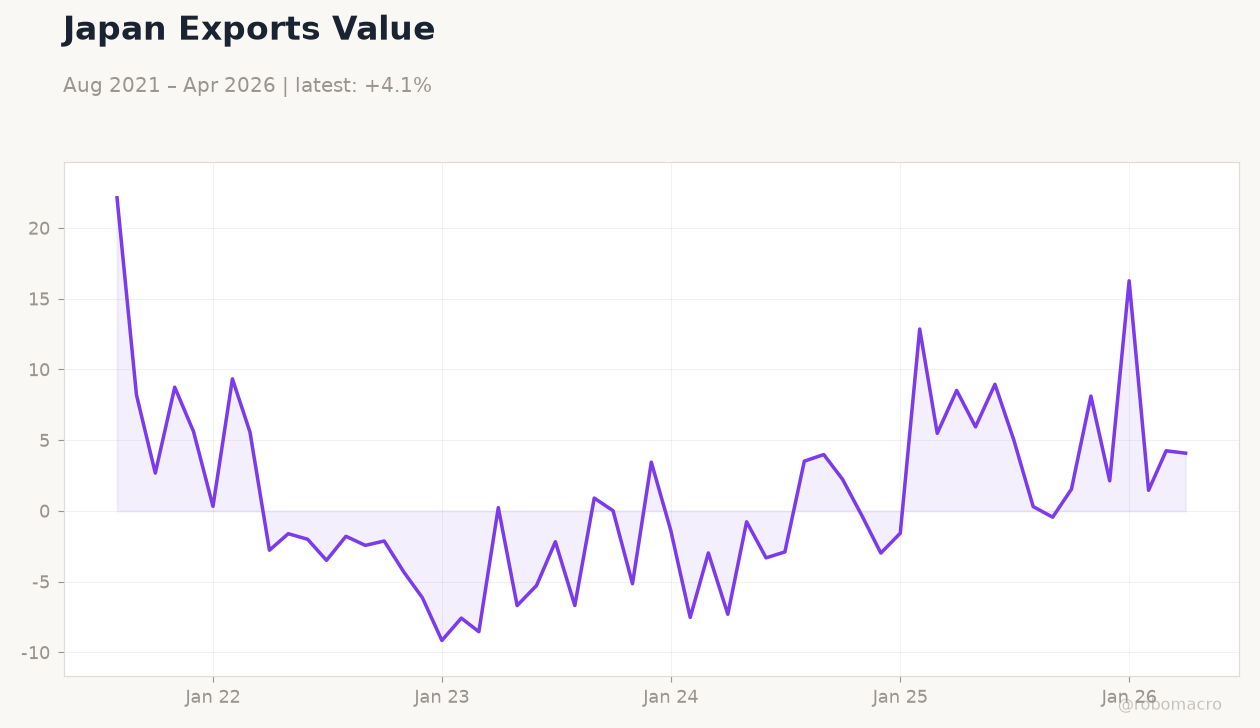
Bank lending expansion continues to validate the BoJ’s policy direction despite the June slowdown. A scholar highlighted that persistent yen weakness now imposes net negative effects on the broader economy through higher import costs. METI export volumes showed modest gains, but the weak currency has begun offsetting competitiveness benefits.
Fiscal authorities denied any attempt to pressure the central bank toward lower rates.
Global Macro News
Brent crude dropped 2.56% to 76.02 amid softer demand signals, easing imported inflation pressures for Japan. Gold rose 1.52% to 4,132.80 on safe-haven flows as yen intervention risks mounted. Bitcoin gained 1.70% while equities outside Japan showed mixed performance.
<i>↓ p.2</i>