Japan Macro Daily(Beta Mode)
BoJ Independence Reaffirmed as Yields Spike
Market Snapshot
| Asset | Level | Change |
|---|---|---|
| Nikkei 225 | 68,557.73 | +1.20% |
| USD/JPY | 161.70 | -0.41% |
| EUR/JPY | 184.39 | -0.67% |
| GBP/JPY | 216.51 | -0.58% |
| Gold | 4,113.70 | -0.41% |
| Brent Crude | 76.01 | -0.38% |
| Bitcoin | 64,166.59 | +0.57% |
| Japan 2Y Govt Yield | 0.73% | +0.00% |
| Japan 10Y Govt Yield | 2.65% | +5.37% |
Prior Economic Events
| Data | Prior | Cons | Actual |
|---|---|---|---|
| No events available | |||
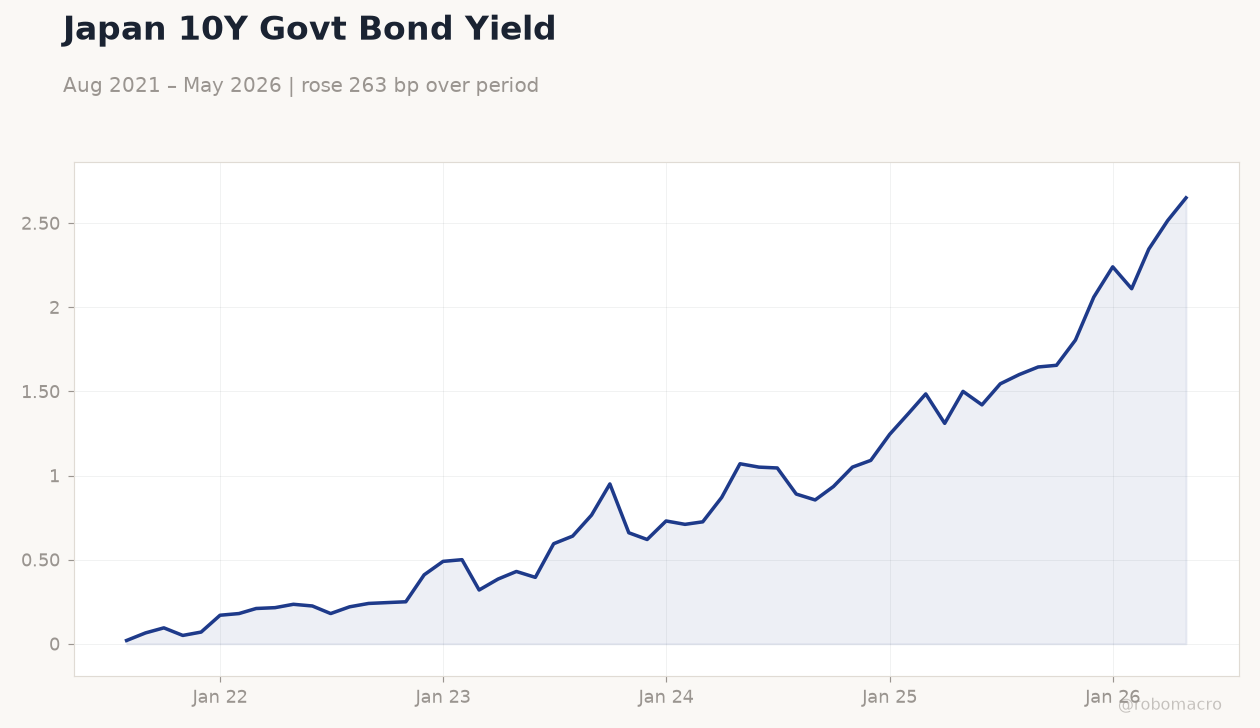 Japan 10Y Govt Bond Yield | Type: macro_line | Yield %: 2.65 (2026-05-01) | Range: 0.02–2.65 | Trend(6pt): 0.02,0.245,0.62,1.37,2.515,2.65
Today's Economic Events
| Data | Prior | Cons | Time |
|---|---|---|---|
| Tuesday (2026-07-14) | |||
| Machinery Orders Month-over-Month | 8.70 | -4.20 | 19:50 |
| Machinery Orders Year-over-Year | 15.60 | 12.90 | 19:50 |
- Japan 10-year yields jump 5.37% to 2.65% on pension reallocation signals and wholesale inflation surge.
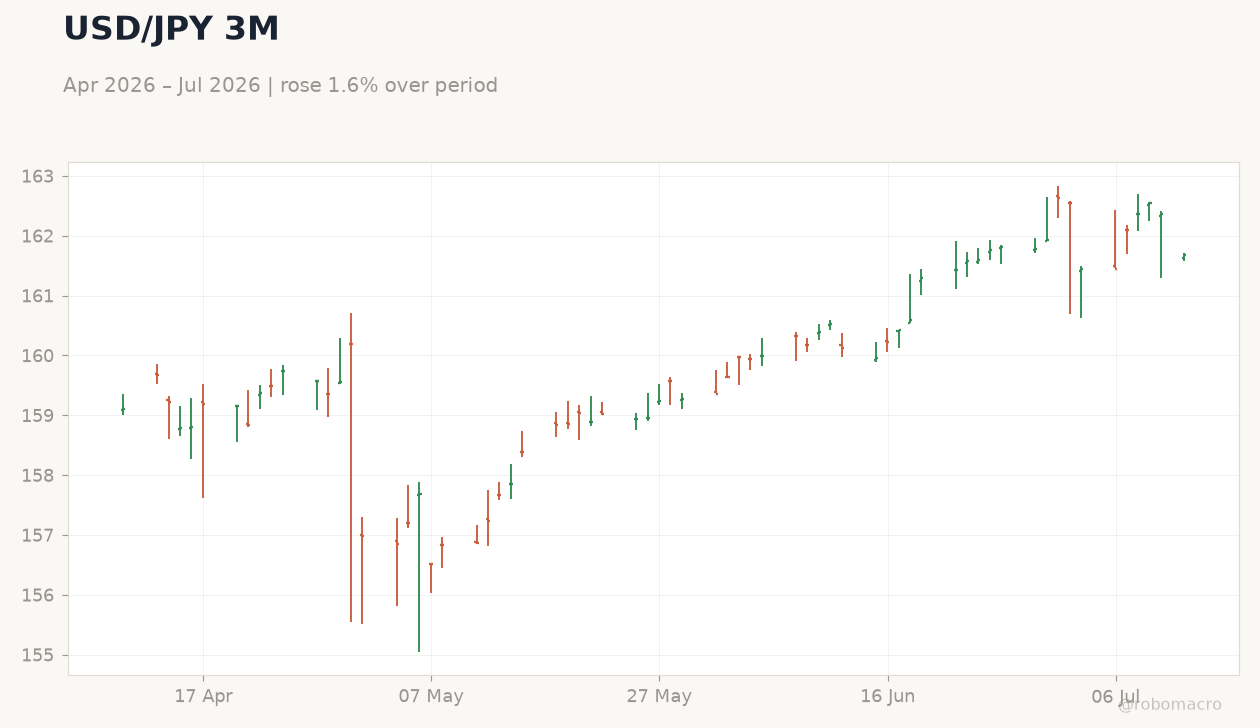
- Nikkei rises 1.20% while USD/JPY falls 0.41% to 161.70 as intervention threats intensify.
- Government moves to codify BoJ independence in basic economic policy without pre-signaling rate preferences.
Yesterday's Recap
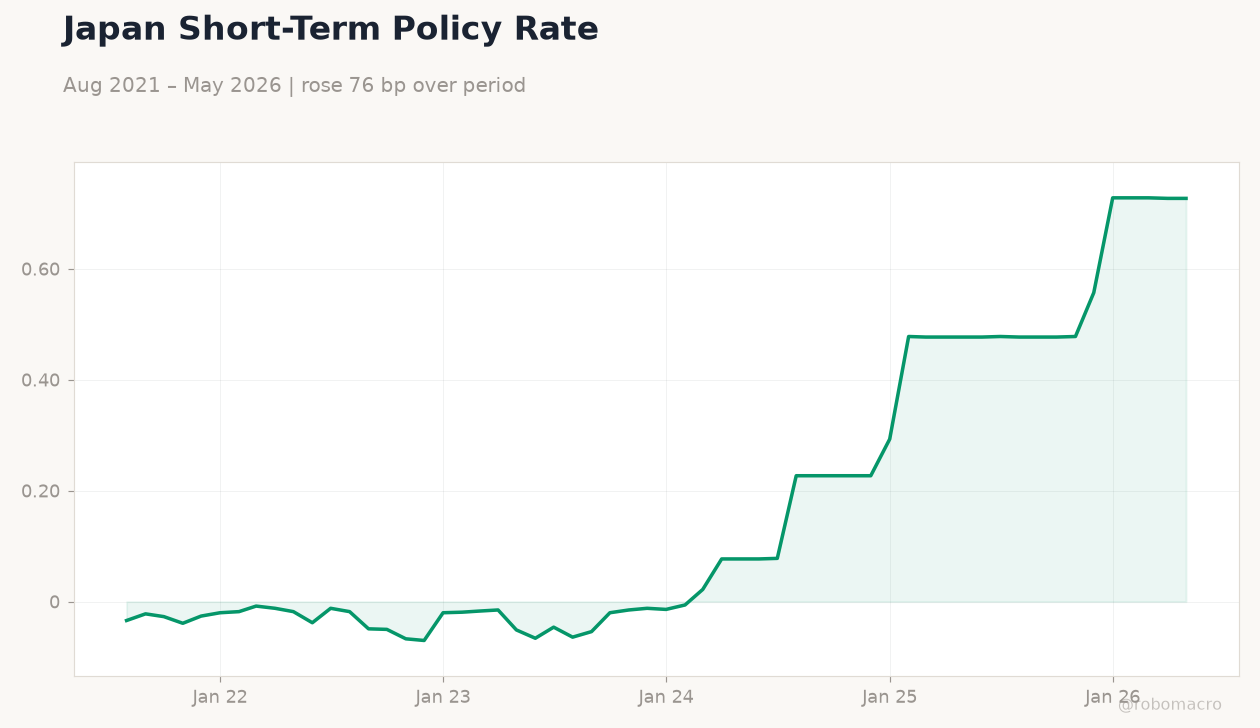
Equity markets advanced as the Nikkei 225 climbed 1.20% to 68,557.73, supported by renewed risk appetite and yen softening. The 10-year JGB yield surged 5.37% to 2.65%, reflecting expectations of sustained policy normalisation and pension fund shifts toward domestic bonds. Shorter-dated 2-year yields held steady at 0.73%.
USD/JPY declined 0.41% to 161.70, with similar losses in EUR/JPY and GBP/JPY pairs amid verbal intervention warnings from officials. Wholesale inflation data highlighted fresh fuel-cost and currency pressures, pushing the case for further BoJ tightening. No economic releases occurred yesterday, leaving price action driven by policy statements and cross-asset flows.
Bitcoin gained modestly while gold and Brent crude edged lower.
The Day Ahead
Attention turns to July 14 machinery orders data, with month-over-month consensus at -4.2% after an 8.7% prior print and year-over-year expected at 12.9%. A sharp downside surprise could temper rate-hike odds and support the yen. Officials continue to stress that monetary specifics remain the BoJ’s domain, reducing scope for pre-meeting guidance.
Yen intervention rhetoric stays active, with authorities prepared to act at any time if moves become disorderly. Broader market focus rests on whether pension-fund repatriation flows materialise and lift domestic assets further. No BoJ speakers are scheduled before the data release.
Other Economic Notes
Wholesale inflation reached a three-year high, driven by fuel costs and the weak yen, reinforcing the case for additional BoJ rate increases. Smaller Japanese firms accelerate exits from China amid economic and political risks, redirecting supply chains toward ASEAN and domestic markets. Asset managers expand global mandates even as yen-bond demand grows, creating tension between capital outflows and policy-driven repatriation.
The government’s basic economic policy will explicitly clarify BoJ independence, aiming to dispel market perceptions of political pressure on rates. These shifts underscore structural adjustments in corporate behaviour and capital allocation that extend beyond short-term cyclical data.